Start your trip in Brady, a town 28 miles southeast of Doole that’s got fuel, food, and lodging. Stock up on supplies before heading northwest on FM 503 and FM 765—paved roads any standard vehicle can handle. Once you arrive, you’ll find weathered church ruins, cement bleachers, and an old blacksmith shop frozen in time. Spring and fall offer the best conditions for exploring. There’s far more to plan before you go.
Key Takeaways
- Brady, Texas, serves as the ideal base camp, offering fuel, food, and accommodations before heading 28 miles northwest to Doole.
- Reach Doole via FM 503 and FM 765, a straightforward paved route suitable for any standard 2WD vehicle.
- Key ruins include a weathered blacksmith shop, church ruins, and cement bleachers reflecting Doole’s early 20th-century community life.
- Visit during spring or fall for mild weather; avoid summer midday heat by exploring early mornings instead.
- Pack water, sturdy shoes, sunscreen, and a paper map, and inform someone of your route before departing.
Where Is Doole, Texas and How to Get There
Tucked into the extreme western edge of McCulloch County, Doole sits about 28 miles northwest of Brady at the intersection of FM 503 and FM 765. You won’t need anything beyond a standard 2WD vehicle to reach it, making this ghost town genuinely accessible for any road tripper craving open land and real history.
Brady serves as your best launch point, offering fuel, food, and lodging before you head northwest. Once you arrive, you’ll find yourself standing among historical architecture that speaks louder than any museum exhibit. Crumbling church walls and cement bleachers carry local legends of a community that once held 250 residents.
The FM road system keeps the route straightforward, so you can focus less on navigation and more on absorbing everything this forgotten Texas crossroads still quietly holds.
What You’ll Actually See When You Arrive in Doole
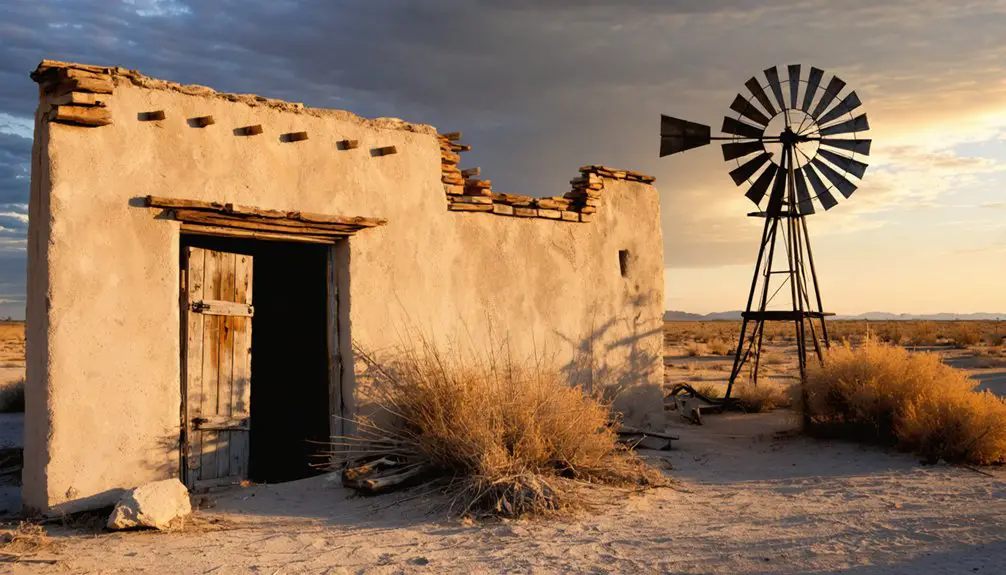
When you pull up to Doole, you won’t find a restored historic district or tourist signage — you’ll find raw, unfiltered remnants of a town that simply stopped.
The most recognizable structures are the church ruins and a set of cement bleachers, both standing as quiet proof that this community once had organized faith and school-day gatherings.
You can walk the area easily, and the compact layout lets you take in the ghost town’s full character in a single visit.
Visible Ruins and Remains
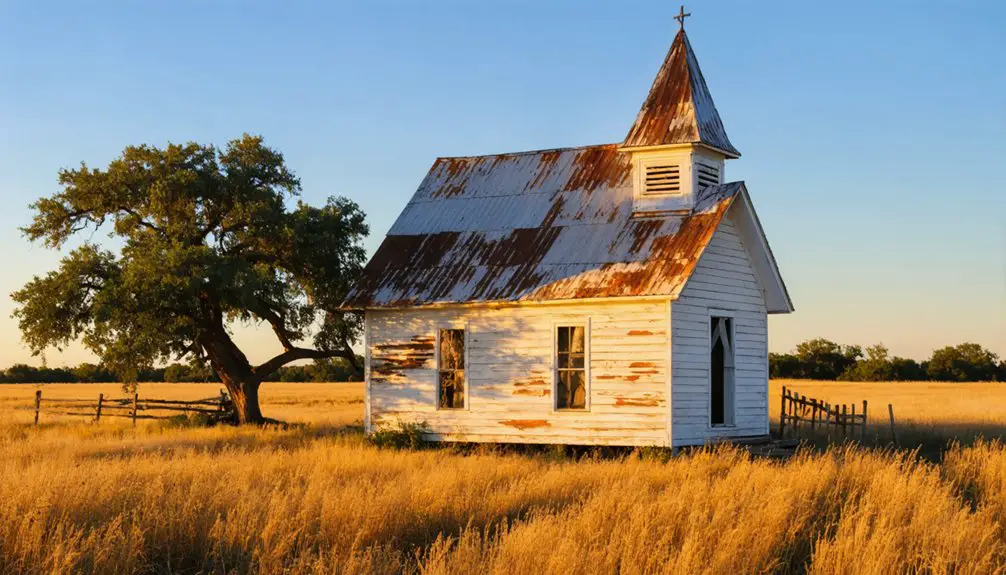
Arriving in Doole, you’ll notice right away that the town doesn’t hide its age. Church remains stand as quiet evidence of a once-active community, and the cement bleachers nearby hint at school days and local gatherings that shaped daily life here. These fragments of historical architecture speak louder than any marker could.
You’ll also spot what some sources identify as a blacksmith shop, its weathered frame holding ground against decades of Texas heat. Don’t expect preservation efforts that polish or restore — Doole keeps things raw and honest.
That’s exactly what makes it worth stopping for. You’re looking at early 20th-century rural life left largely as time took it, undisturbed and unfiltered, giving you a direct, unmediated connection to a vanished ranching world.
Church And Bleacher Remnants
Two remnants pull your attention almost immediately among Doole’s scattered ruins: the church remains and the cement bleachers. The church stands as a quiet example of historical architecture that once anchored this tight-knit ranching community, offering a tangible connection to the families who built their lives here.
Local folklore suggests the congregation persisted long after the town’s population began fading, making the ruins feel personally weighted rather than simply abandoned.
The cement bleachers are perhaps the more unexpected find — sturdy, geometric, and oddly out of place against the open Texas landscape. They hint at school events and community gatherings that once filled this now-silent ground.
Together, both structures tell you more about Doole’s former energy than any historical marker ever could.
How Doole Went From Ranching Hub to Ghost Town
By the 1940s, Doole had grown into a modest but thriving ranching community of around 250 residents, supporting a school, a church, and roughly ten businesses.
Then World War II ended, and the slow unraveling began. A brutal 1950s drought pushed struggling farmers off their land, and agricultural consolidation swallowed up small family operations. You can almost feel that loss walking through what remains today.
By the 1960s, the population had collapsed to around 40, and the decades that followed brought further erosion. Unlike towns that reinvented themselves with tourist amenities, Doole never pivoted.
What you find instead is raw historical preservation — crumbling walls, cement bleachers, and silence that speaks louder than any museum exhibit.
That authenticity is exactly what draws freedom-seeking travelers to places like this.
The Best Time of Year to Visit Doole
Timing your visit to Doole can make the difference between a rewarding road trip and a miserable one. West Texas weather shapes your experience markedly. The best seasons for exploring this site of historical significance are:
- Spring (March–May) – Mild temperatures and wildflowers make ruins photogenic and walkable.
- Fall (September–November) – Cooler air returns, ideal for unhurried exploration.
- Winter (December–February) – Crisp and quiet, though occasional ice affects FM roads.
- Summer (June–August) – Brutal heat makes outdoor exploration genuinely dangerous; avoid midday.
Preservation challenges mean structures are fragile year-round, so watch your footing regardless of season.
Visit Brady beforehand for supplies, since Doole offers nothing commercial.
Go early morning for the best light and manageable temperatures.
How to Drive From Brady to Doole
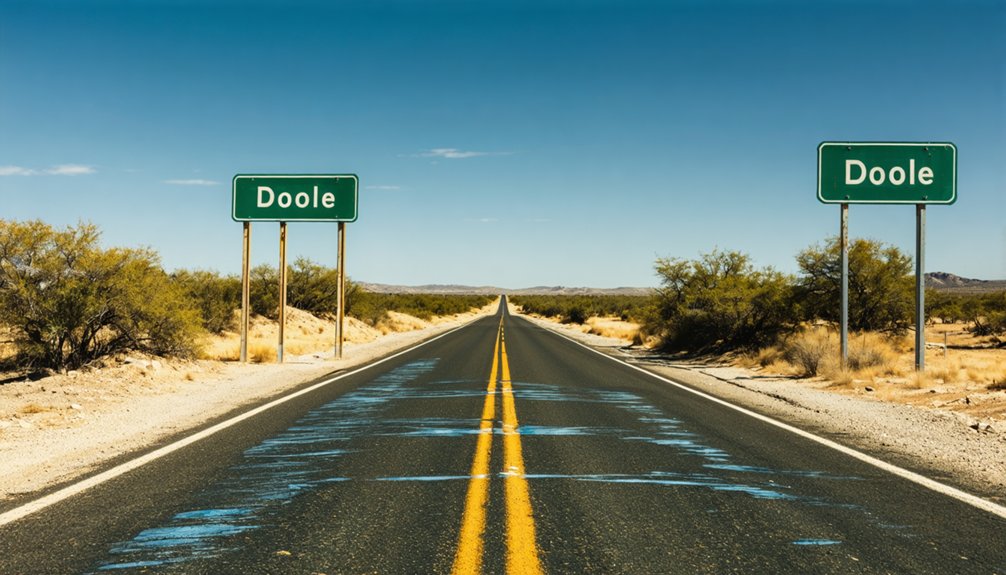
Once you’ve stocked up in Brady, the drive northwest to Doole covers roughly 28 miles along FM 503 and FM 765 through McCulloch County‘s open ranch land.
Grab some local cuisine before you leave Brady, since you won’t find restaurants or fuel stops along the route. The roads are paved and 2WD-accessible, so any standard vehicle handles the trip comfortably.
You’ll pass through wide-open terrain that sets the tone perfectly for what Doole delivers.
As you reach the intersection of FM 503 and FM 765 in extreme western McCulloch County, you’ve arrived.
The scattered historical landmarks — crumbling church walls, cement bleachers, and remnants of early storefronts — appear quickly given the town’s compact layout.
Keep your camera ready from the moment you turn off the highway.
What to Pack for a Remote West Texas Ghost Town Visit
Packing smart makes the difference between a comfortable ghost town visit and a miserable one. Doole sits far from any services, so you’re entirely self-reliant once you leave Brady. These travel essentials will keep you moving freely:
- Water – Carry at least two liters per person; West Texas heat is unforgiving.
- Sunscreen and hat – Shade is scarce among open ruins and cement bleachers.
- Sturdy walking shoes – Uneven ground and debris surround the old church remains.
- Fully charged phone and paper map – Cell signals drop unpredictably in McCulloch County.
Safety tips worth remembering: never enter unstable structures, and always tell someone your route before heading out. Respecting these basics lets you explore Doole’s raw, century-old ranching history on your own terms.
Nearby Ghost Towns to Combine With Your Doole Trip
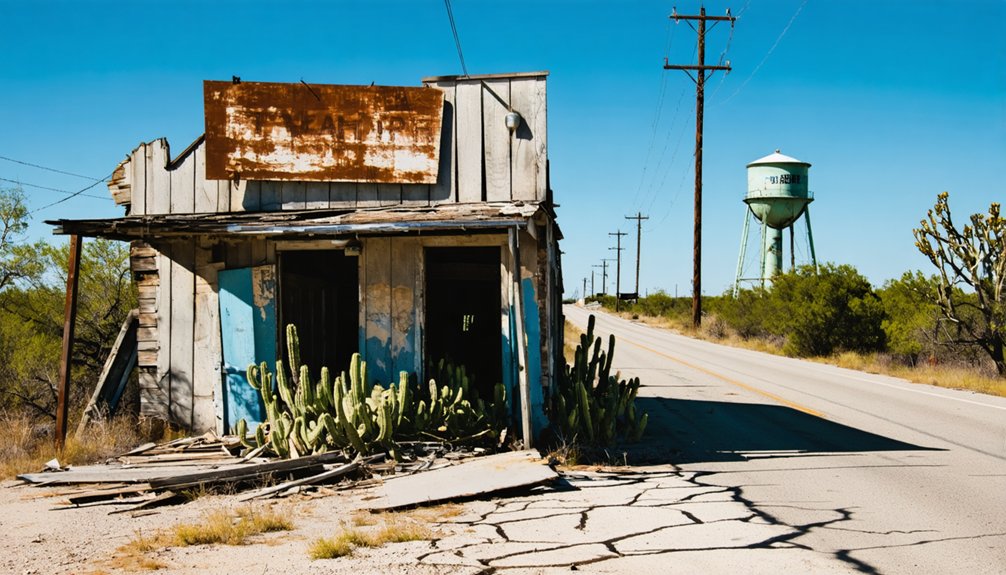
McCulloch County holds more ghost towns beyond Doole, making it easy to build a rewarding multi-stop route through the region. You can anchor your trip in Brady, then work outward along the FM roads to hit several abandoned communities in a single day.
Planning your stops in advance keeps driving efficient and guarantees you won’t miss smaller sites that don’t appear on standard road maps.
Other McCulloch County Ghost Towns
Since Doole sits in the heart of McCulloch County‘s wide-open ranch country, it pairs well with other forgotten communities scattered across the same region. Each site carries its own historical significance, giving you a richer picture of how rural Texas once thrived and faded.
As you plan your route, watch for these types of stops:
- Abandoned schoolhouses marking former settlements
- Collapsed storefronts along forgotten farm roads
- Weathered cemeteries tied to early ranching families
- Crumbling church foundations with surviving stone walls
Preservation efforts across McCulloch County remain minimal, so many structures won’t last another decade. That urgency makes now the right time to explore.
Brady serves as your practical base, keeping fuel and food within easy reach while you cover the county’s ghost-town circuit.
Planning A Multi-Stop Route
Brady anchors your route well, sitting roughly 28 miles southeast of Doole along FM 503 and FM 765. Stock up on fuel and supplies there before heading northwest.
Once you’ve explored Doole’s ruins, you can loop through other McCulloch County ghost towns without backtracking unnecessarily. The region’s FM road network keeps most sites within reasonable driving distance, so you’re not burning hours between stops.
Each abandoned community adds another layer to the area’s broader story of agricultural decline and historical preservation.
Brady’s tourist infrastructure, including motels, diners, and a local museum, gives you a practical home base. Plan your mileage carefully, start early, and carry water.
The open ranch land between stops is part of the experience, not wasted travel time.
Frequently Asked Questions
What Was Doole, Texas Originally Called Before It Was Renamed?
You’ll find that Doole was originally called Gansel, honoring the founding family. Exploring this ghost town history reveals how abandoned landmarks shaped its identity after authorities denied the Gansel post office application in 1911.
Who Was the Town of Doole, Texas Actually Named After?
Beyond haunted legends, you’ll find Doole’s name honors David Doole Jr., Brady’s postmaster, who guided the renaming effort. His ghost town preservation advice shaped the community’s identity forever, connecting you directly to its authentic frontier legacy.
Does Doole, Texas Still Have Its Own ZIP Code Today?
Yes, Doole still holds its own ZIP code, 76836, giving you a tangible connection to its historical landmarks. Though local festivals have faded, that active postal identity proves this spirited ghost town hasn’t fully disappeared.
How Many Residents Did Doole Reach During Its Peak Population Years?
At its peak in the 1940s, Doole reached roughly 250 residents — a vibrant community you’d barely recognize today. Exploring its ghost town attractions and historic site preservation reveals how drastically this once-thriving settlement faded into memory.
When Was the Very First Building Constructed in Doole, Texas?
You’ll find that Doole’s ghost town history began taking shape in 1908, when the very first building — a school — was constructed, making it one of the area’s most significant historic landmarks defining this community’s early rural roots.
References
- https://www.desertedtexas.org/category/texas-ghost-towns/
- https://www.texasescapes.com/TOWNS/Doole/Doole.htm
- https://www.tshaonline.org/handbook/entries/doole-tx
- https://www.youtube.com/watch?v=BilAMjeQIn8
- https://www.desertedtexas.org/blog/
- https://www.ghosttowns.com/states/tx/doole.html
- https://www.facebook.com/groups/1784294158550093/posts/4223803331265818/
- https://www.youtube.com/watch?v=mWe7ayBkudY