Planning a ghost town road trip to Hinkletown, Iowa means chasing a town that’s completely vanished into farmland in Keokuk County. Founded in 1858 by Harmon Hinkle, this once-thriving community disappeared after the railroad bypassed it in 1872, scattering residents to nearby towns like Keota and Kinross. Today, no buildings, markers, or foundations remain. You’ll need offline maps, rural navigation skills, and a full tank of gas before you go—and there’s plenty more to uncover about making this trip worthwhile.
Key Takeaways
- Hinkletown, founded in 1858 in Keokuk County, Iowa, vanished after being bypassed by the railroad in 1872, leaving no visible structures today.
- Start your trip from Keota, heading north along county roads, using GPS or offline maps since no signs or markers exist.
- Stock up on gas, water, snacks, and supplies in Keota before visiting, as the remote site offers absolutely no services or infrastructure.
- Arrive during golden hour for atmospheric photography, bringing wide-angle lenses and portable batteries to capture the haunting rural landscape.
- Extend your road trip by visiting nearby ghost towns Kinross, Parnell, and Green Valley to explore broader settlement patterns in Keokuk County.
What Is Hinkletown and Why Did It Disappear?
Tucked away in Keokuk County, Iowa, Hinkletown was a small but functioning settlement that Harmon Hinkle founded in 1858 after relocating from Richmond, Iowa. By 1863, the town had a post office, blacksmith shop, schoolhouse, and two community lodges — everything a frontier settlement needed to thrive.
But transportation decline sealed its fate. When railroad builders bypassed Hinkletown in 1872, residents migrated south to the newly formed Keota to access the economic opportunities the rail line offered.
Locals fought hard for a second railroad route in 1879, but that effort also failed. Urban decay followed quickly, and the remaining residents scattered to Kinross, Parnell, and Green Valley.
Today, you won’t find a single permanent resident there — just history waiting for you to explore it.
How Hinkletown Became a Ghost Town
When the railroad bypassed Hinkletown in 1872, it didn’t just redirect a train route — it redirected the town’s entire future. Residents needed railroad access to survive economically, so they packed up and moved south to the newly formed Keota.
Urban decay set in fast once people left, stripping the community of its post office, blacksmith shop, and schoolhouse.
Locals fought back, pushing hard for a second railroad route in 1879. That effort failed completely, and the railroad impact proved fatal.
The remaining residents scattered to Kinross, Parnell, and the Green Valley area, leaving nothing behind worth saving.
You won’t find buildings or street signs marking the spot today. Hinkletown simply ceased to exist, swallowed by the rural Keokuk County landscape it once called home.
Where Exactly Is Hinkletown, Iowa?
You’ll find Hinkletown tucked away in Keokuk County, eastern Iowa, a rural stretch of land that offers little indication a once-thriving settlement ever existed there.
The original town site sits north of where the 1872 railroad was built, a geographic detail that sealed its fate and redirected its population south toward Keota.
If you’re planning a visit, stock up on fuel and supplies in Keota, since no services exist at the site itself.
Though nearby towns like Kinross and Parnell round out a solid regional itinerary.
Keokuk County Geographic Location
Hinkletown sits in Keokuk County, eastern Iowa, a rural stretch of land that once buzzed with frontier ambition but now rolls quietly through farmland and forgotten roads. The county’s agricultural heritage shaped its settlement patterns, drawing pioneers westward who built tight-knit communities wherever land and opportunity aligned.
You’ll find the original Hinkletown site south of where the 1872 railroad eventually cut through, a detail that sealed the town’s fate. Keota lies nearby, absorbing what Hinkletown left behind.
Kinross, Parnell, and the Green Valley area also sit within reach, each carrying fragments of the same dispersed population.
No road signs mark the ghost town, so you’ll need county maps and a willingness to navigate rural routes on your own terms.
Nearby Towns And Access
Keota serves as your closest base camp, sitting just south of where Hinkletown once stood and offering the fuel, food, and lodging you won’t find at the ghost town itself.
From Keota, you can explore surrounding communities that absorbed Hinkletown’s displaced residents and uncover local legends tied to its collapse.
Hit these stops to complete your journey:
- Keota – Stock up on supplies and dig into vintage photographs at local historical resources.
- Kinross – A small community where former Hinkletown families resettled after the railroad bypassed them.
- Parnell – Another destination absorbing relocated residents, worth a quick detour.
- Green Valley area – Explore the rural landscape where Hinkletown’s last holdouts eventually landed.
Rural Keokuk County roads connect everything, so map your route before leaving.
What’s Actually Left at the Hinkletown Site?
When you arrive at the site of Hinkletown, don’t expect crumbling buildings or rusty relics—there’s fundamentally nothing left to see. The land has returned completely to rural Iowa countryside, offering no visible historical artifacts, no foundations, and no markers pointing to what once stood here. Preservation efforts never took hold, leaving this former settlement entirely erased by time and nature.
What you’ll find instead is open farmland typical of Keokuk County, quietly absorbing a history most people never knew existed. That absence itself tells the story powerfully—a community built, thrived briefly, then vanished because two railroads chose different routes.
You’re standing where real people once worked, traded, and raised families. Bring your imagination, because that’s genuinely your most essential tool at this site.
Is a Hinkletown Road Trip Worth the Drive?
If you’re drawn to 19th-century frontier history and railroad lore, Hinkletown rewards your curiosity with a rare glimpse into how a single infrastructure decision erased an entire community.
The remote rural location means you’ll need to plan ahead, since no services, gas stations, or food stops exist at the site itself. Fortunately, nearby Keota offers fuel and supplies, and you can easily pair the visit with other Keokuk County historical stops to make the drive genuinely worthwhile.
Historical Value Worth Exploring
Though Hinkletown won’t offer you a single standing building or roadside marker, it’s still worth the drive if you’re passionate about 19th-century American history. Its cultural heritage tells a powerful story about how railroad decisions shaped—and erased—entire communities. Preservation efforts live through historical records, keeping Hinkletown’s memory alive for curious travelers like you.
Here’s what makes the visit historically valuable:
- Founding story – Harmon Hinkle’s 1858 settlement reflects frontier independence and self-reliance.
- Community infrastructure – A post office, blacksmith shop, and schoolhouse reveal how settlers built civilization from scratch.
- Railroad bypass – The 1872 rail decision demonstrates how transportation dictated survival.
- Mass relocation – Residents scattering to Keota, Kinross, and Parnell shows remarkable human adaptability under pressure.
Remote Location Travel Challenges
Visiting Hinkletown means embracing the reality of remote, rural Iowa travel—there are no gas stations, no roadside diners, and no signage marking the site. You’ll need to fuel up and stock supplies in nearby Keota before heading out.
Local folklore surrounding Hinkletown’s railroad-driven collapse adds rich storytelling potential to your journey, making the drive feel purposeful rather than aimless.
While preservation efforts remain minimal, the raw, undisturbed landscape lets you experience the site authentically.
Bring a detailed map, a full tank, and enough water for an afternoon of exploration.
Rural Keokuk County roads are navigable but unforgiving if you’re unprepared.
For travelers who crave freedom and genuine off-the-beaten-path discovery, Hinkletown rewards the effort with honest, unfiltered American frontier history.
Nearby Towns Enhance Visit
While Hinkletown itself offers no services, the nearby towns of Keota, Kinross, and Parnell transform a simple ghost town visit into a fuller regional experience. Each town tells its own story of urban development shaped directly by Hinkletown’s population decline following the 1872 railroad bypass.
Before heading to the ghost town site, use these stops strategically:
- Keota – Fuel up, grab supplies, and explore the town that absorbed Hinkletown’s displaced residents.
- Kinross – A small community offering rural charm and context for understanding regional resettlement patterns.
- Parnell – Another destination where former Hinkletown families reestablished their lives post-abandonment.
- Green Valley area – Adds scenic rural Iowa landscape to round out your historical road trip itinerary.
How to Drive to Hinkletown From Keota
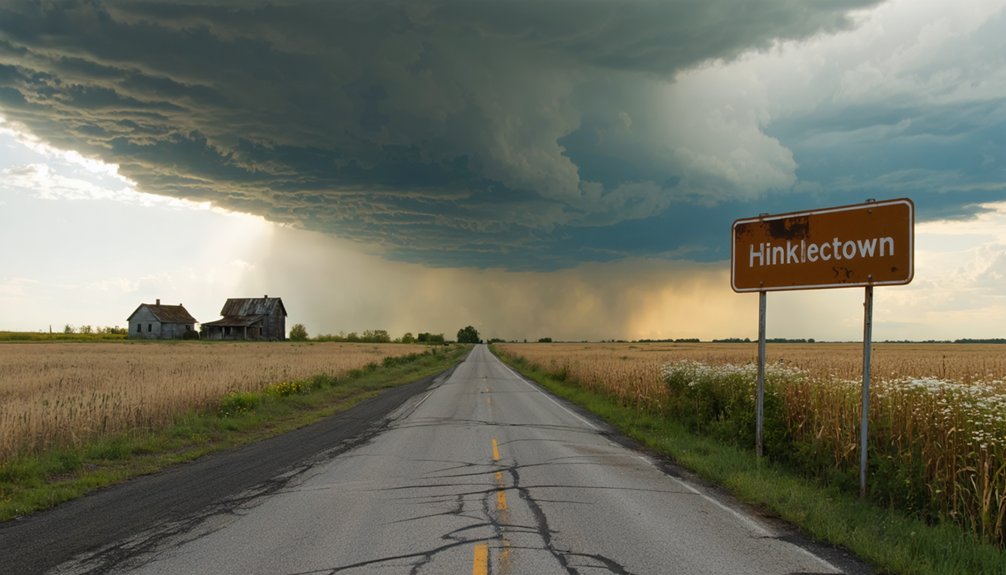
Since no road signs mark Hinkletown’s exact location, you’ll want to use Keota as your launching point before heading into rural Keokuk County. Stock up on fuel and supplies in Keota, because once you head north into the countryside, you’re on your own.
From Keota, drive north along local county roads toward the original settlement area. You won’t find abandoned structures greeting you dramatically — Hinkletown has largely vanished into farmland. That absence itself tells the story.
Locals carry forward the local legends about families who packed up and followed the railroad south, leaving everything behind.
Use a detailed county map or GPS with rural road support. The landscape is quiet, open, and honest — exactly what freedom-seeking road trippers come here to experience.
Why Keota Is the Best Overnight Stop Near Hinkletown
After you’ve explored what remains of Hinkletown’s footprint, you’ll want a real base camp to return to — and Keota fits that role better than anywhere else nearby. It’s the town that directly absorbed Hinkletown’s displaced residents after the 1872 railroad bypass, making it ground zero for community nostalgia and historical preservation in this corner of Keokuk County.
Here’s why Keota earns that overnight stop:
- Fuel and supplies — You’ll find services unavailable at any ghost town site.
- Historical context — Keota’s roots connect directly to Hinkletown’s collapse.
- Lodging access — Rest comfortably before or after your rural exploration.
- Strategic location — You’re positioned near Kinross, Parnell, and Green Valley for extended itinerary flexibility.
What to Bring for the Hinkletown Drive

Because Hinkletown offers no services, no signage, and no infrastructure of any kind, you’ll need to pack everything before leaving Keota. Load your travel essentials carefully — fuel up completely, carry extra water, pack snacks, and bring a downloaded offline map since cell service can be unreliable across rural Keokuk County.
Hinkletown has nothing — no services, no signs, no infrastructure. Pack everything before you leave Keota.
For photography tips, arrive during golden hour when low light creates dramatic contrast across the flat Iowa landscape, making empty fields feel hauntingly atmospheric. Bring a wide-angle lens to capture the open terrain where Hinkletown’s blacksmith shop, schoolhouse, and lodges once stood.
A portable battery pack keeps your camera and phone charged throughout the drive.
You’re exploring a place history forgot, so come fully prepared and let curiosity guide every mile.
Three More Keokuk County Ghost Town Stops Nearby
While Hinkletown makes a compelling centerpiece for your Keokuk County ghost town tour, you don’t have to stop there. The region’s settlement patterns reveal a broader story of frontier ambition and railroad-driven decline worth exploring.
Extend your route with these nearby stops:
- Keota – Once absorbed Hinkletown’s displaced residents, making it essential for understanding local historical significance and migration decisions.
- Kinross – A rural community where former Hinkletown families resettled after both railroad bypasses failed the town.
- Parnell – Another destination that welcomed relocating residents, reflecting the region’s interconnected settlement patterns.
- Green Valley area – Offers quiet rural landscapes where scattered former Hinkletown inhabitants rebuilt their lives after abandonment.
Together, these stops paint a complete picture of 19th-century Keokuk County’s rise and collapse.
Frequently Asked Questions
Who Was Harmon Hinkle Before Founding Hinkletown in 1858?
Harmon Hinkle was a Richmond, Iowa resident — one of the Early Iowa pioneers who shaped Historical settlement across the frontier. He’d relocate in 1858, forever marking Keokuk County’s history with his name.
What Services Did Hinkletown’s Blacksmith Shop Originally Provide Residents?
You’d have relied on Hinkletown’s blacksmith shop for crafting and repairing metal tools, farm equipment, and household items. Its historic blacksmith techniques and blacksmith shop community impact kept residents thriving through essential agricultural and domestic metalwork services.
Did Hinkletown Ever Have a Church or Religious Gathering Place?
While records don’t confirm a church, don’t let that diminish Hinkletown’s religious history significance. You’ll find ghost town architecture tells incomplete stories — the schoolhouse and lodges likely hosted community gatherings that filled spiritual needs.
How Many People Lived in Hinkletown at Its Population Peak?
Unfortunately, the records don’t tell you the exact peak population of this abandoned settlement history gem. You’ll still find ghost town tourism rewarding as you explore Hinkletown’s fascinating 1800s roots in Keokuk County, Iowa!
What Year Did the Last Resident Permanently Leave Hinkletown Behind?
Like a modern-day ghost, the exact year Hinkletown’s last resident left isn’t recorded, but after 1879’s railroad bypass failed, you’ll find this abandoned landmark completely empty, making it a fascinating ghost town tourism destination today.
References
- https://kids.kiddle.co/Hinkletown
- https://en.wikipedia.org/wiki/Hinkletown
- https://www.youtube.com/watch?v=YDd_wn2B2js
- https://pubs.lib.uiowa.edu/annals-of-iowa/article/13466/galley/121920/download/