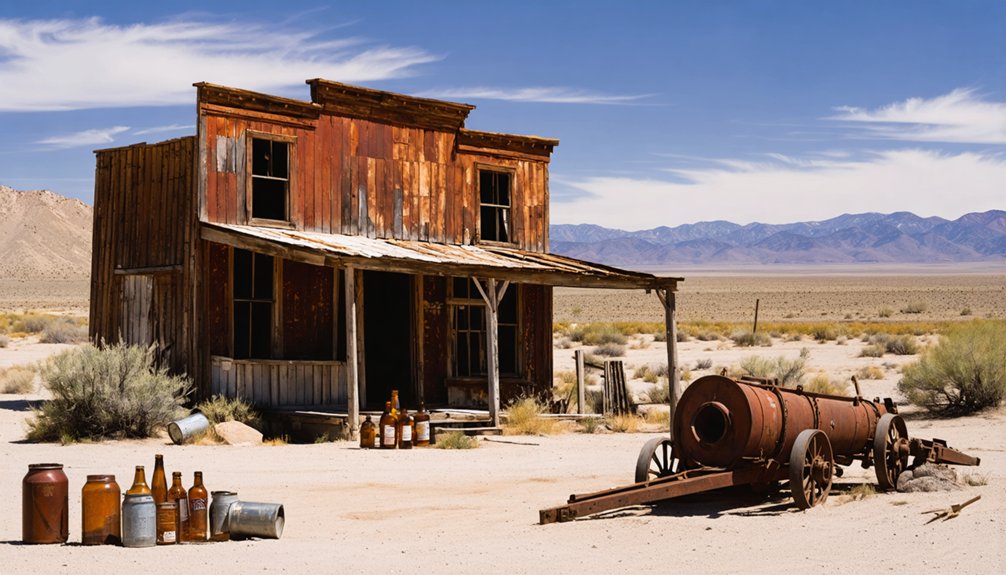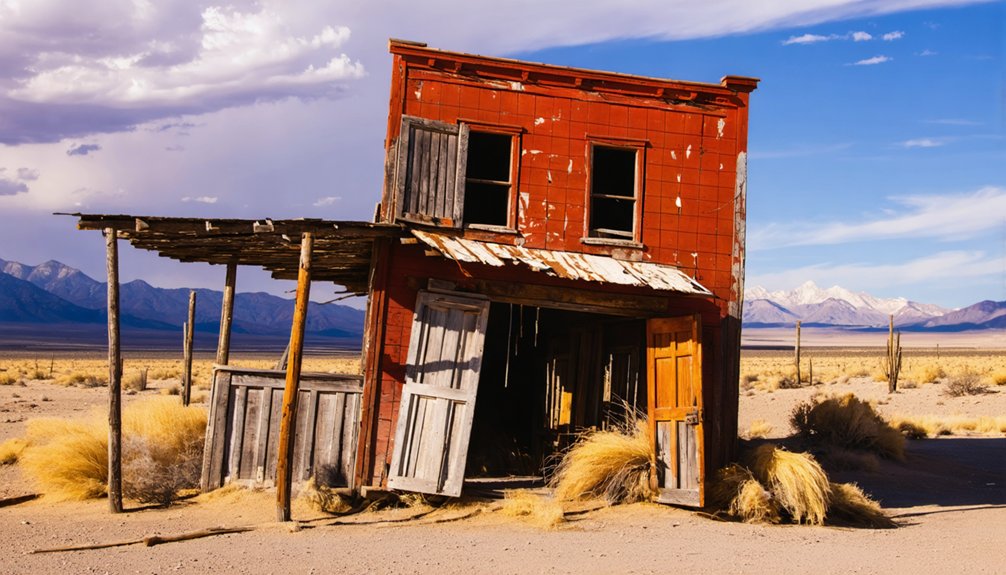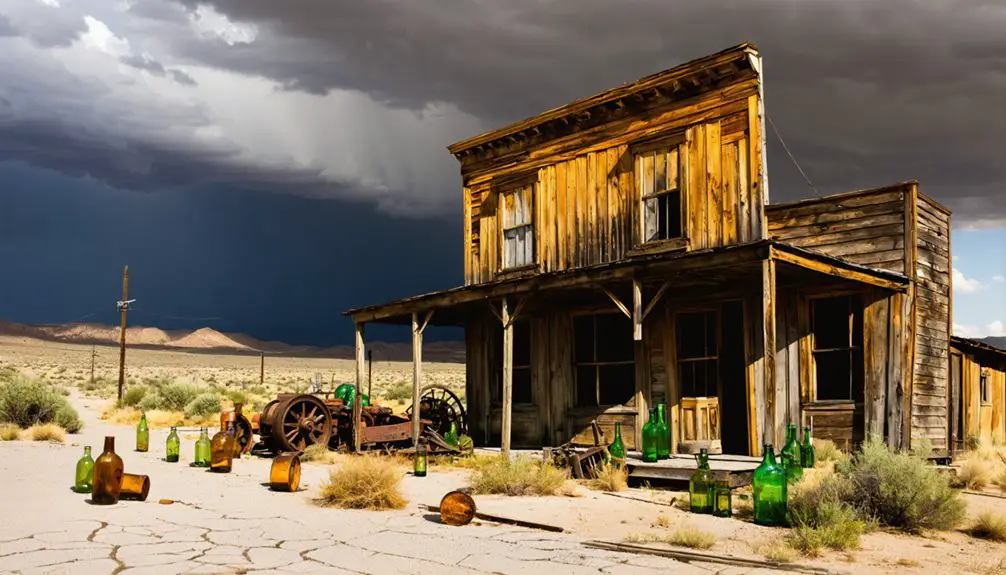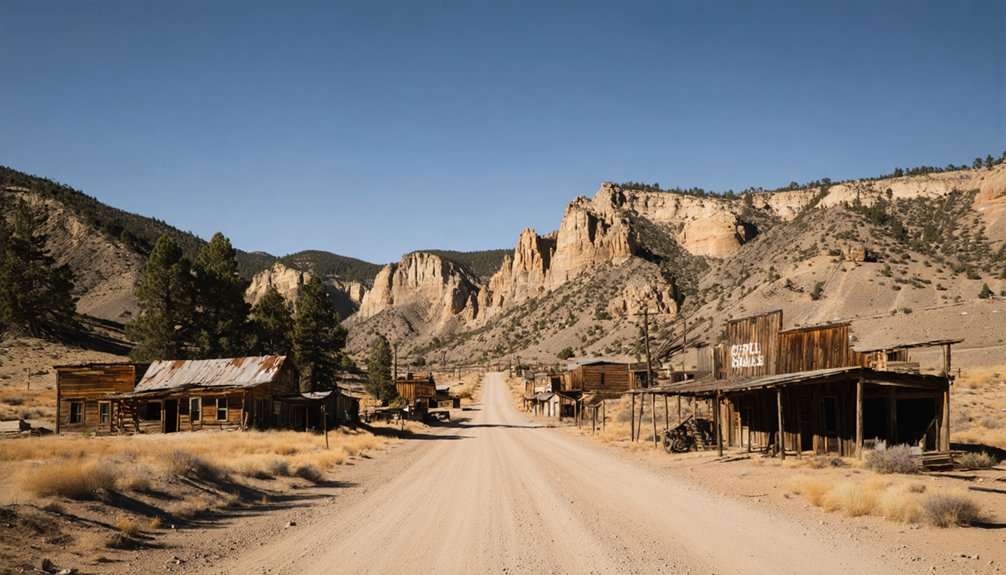
Planning a ghost town road trip to Jarbidge, Nevada means committing to two hours of unpaved dirt roads after the pavement ends—so pack extra fuel, water, food, and a paper map. Summer and early autumn offer the best access and most stunning scenery. You’ll find world-class fishing, dramatic hiking trails, dispersed camping, and a living history stretching back to the 1909 gold rush. There’s far more to this remote frontier town than you’d expect.
Key Takeaways
- Jarbidge, Nevada, is a historic gold rush ghost town with rich frontier history, including the last American stagecoach robbery in 1916.
- Visit during summer or early autumn when dirt roads are passable; winter snowfall makes access completely impossible.
- After pavement ends, expect two hours of rugged dirt roads requiring extra fuel, water, food, and basic repair tools.
- Outdoor attractions include world-class river fishing, dramatic slot canyon hiking, and dispersed camping in Humboldt-Toiyabe National Forest.
- Accommodation options are extremely limited, so pack camping gear and stock up on supplies before leaving Elko.
The Last Stagecoach Robbery and the Gold Rush That Built Jarbidge
When gold was discovered in Jarbidge Canyon in 1909, over 1,500 miners flooded the remote Nevada wilderness practically overnight, chasing rumors of $27 million worth of gold visible in the canyon walls. That mining history shaped an entire town — schools, a post office, and over 1,000 residents emerged by 1911, and the area produced roughly $10 million in gold during its peak years.
But Jarbidge earned a darker footnote too. On December 5, 1916, the last stagecoach robbery in the American West unfolded here when Ben Kuhl murdered driver Ed Rossignol during a horse-drawn stage heist.
The case made history as the first U.S. murder conviction secured using fingerprint evidence. You’re not just visiting a canyon — you’re walking through living American frontier history.
What Makes Jarbidge Nevada Worth the Long Drive?
Getting to Jarbidge demands two hours on dirt roads after the pavement runs out, plus another hour from Elko — but what waits at the end is unlike anything you’ll find at a roadside attraction.
Three hours of dirt roads stand between you and something no roadside attraction could ever replicate.
You’ll step into a slot canyon town with some of the purest air in the lower 48 states, a Class 1 Airshed that feels immediately different the moment you breathe it in.
Wildlife encounters are common along the surrounding Jarbidge Wilderness trails, and local legends about gold rushes and stagecoach bandits give every weathered building a story worth hearing.
The historic jail still stands. The 1909 Community Hall still anchors the town.
With only 15–20 year-round residents, you’re not visiting a curated experience — you’re walking into something genuinely untouched.
Road Conditions, Supplies, and What to Pack for Jarbidge
Reaching Jarbidge means committing to roughly two hours on unpaved dirt roads after the pavement disappears, and those roads close entirely once winter’s first snow hits the Elko side. Summer and early autumn are your windows, so plan accordingly.
Stock your vehicle with extra fuel, water, food, and basic repair tools — the nearest paved road sits 20 miles out, and you won’t find roadside assistance here.
Pack layers, since canyon temperatures shift fast. Bring a camera for the scenic slot canyon and a curiosity for local legends tied to the town’s rich mining history.
A paper map beats any phone signal you’re counting on. Treat this like a true backcountry adventure, and Jarbidge will reward every mile of rough road.
How to Get to Jarbidge Without Getting Stranded
Jarbidge sits about three hours from Elko, and the route breaks down simply: paved highway until it doesn’t exist anymore, then two hours of dirt road that’ll test your vehicle and your patience. Once snow hits, the Elko-side road closes completely, stranding anyone unprepared. Aim for summer or early autumn to keep your options open.
Watch for wildlife encounters along the canyon descent — mule deer and other animals move freely through this wilderness corridor.
Locals carry local legends about travelers who underestimated the route and spent unplanned nights in their trucks.
Check road conditions before leaving Elko, carry extra fuel, and don’t rely on cell service. The nearest pavement sits 20 miles out, so once you’re committed to those dirt roads, you’re fully on your own.
Best Time of Year to Visit Jarbidge Nevada
You’ll find summer your best bet for making it into Jarbidge without trouble, as the dirt roads stay passable and the canyon shows off its full scenic glory.
Early autumn hits a sweet spot, offering cooler temperatures, thinner crowds, and roads that are still reliable before the first snowfall shuts everything down.
Once winter arrives, don’t gamble on those dirt roads — they close fast, and getting stranded 20 miles from the nearest pavement is a real possibility.
Summer Offers Ideal Access
Because the only roads leading into Jarbidge are unpaved and prone to seasonal closures, summer and early autumn are your best windows for making the trip. Once winter’s first snow hits, the route from the Elko side becomes impassable, cutting off access entirely.
During summer, you’ll navigate those dirt roads with far greater confidence, arriving at a canyon setting rich with wildlife habitats and striking geological formations carved by the Jarbidge River over millennia.
The warm months also mean the surrounding Jarbidge Wilderness is fully alive and explorable, giving you real freedom to hike, fish, hunt, and camp.
Plan for a full day trip regardless, since even under ideal conditions, the journey from Elko runs close to three hours each way.
Early Autumn Sweet Spot
Early autumn edges out midsummer as the single best window for visiting Jarbidge. The brutal midday heat breaks, leaving crisp mornings and golden light that makes the slot canyon walls glow. You’ll photograph historical artifacts — the old jail, the 1909 Community Hall — without sweating through your shirt.
Crowds thin considerably after Labor Day, so you’re exploring on your own terms, the way a place this remote deserves. Locals linger longer before winter forces them inside, making it easier to hear local legends straight from the people who actually live them.
The dirt roads remain passable, wildflowers fade to russet and amber, and the wilderness feels genuinely wild. Come early September through mid-October and you’ll experience Jarbidge at its absolute finest.
Winter Road Closures Warning
Winter shuts Jarbidge down hard. Once the first snow falls, the dirt roads from the Elko side become completely impassable, cutting you off entirely. Winter road closures aren’t a suggestion—they’re a guarantee. Snow hazards here aren’t manageable with standard vehicles, and no rescue is coming quickly if you get stuck.
Before you attempt any late-season visit, know these four realities:
- The nearest paved road sits 20 miles away—already a serious commitment.
- Two hours of dirt road driving separates you from pavement.
- Winter road closures can trigger without warning after a single snowfall.
- Snow hazards include drifts, ice, and zero cell service.
Respect the season. Jarbidge rewards the prepared and punishes the reckless.
What to See and Do in Jarbidge
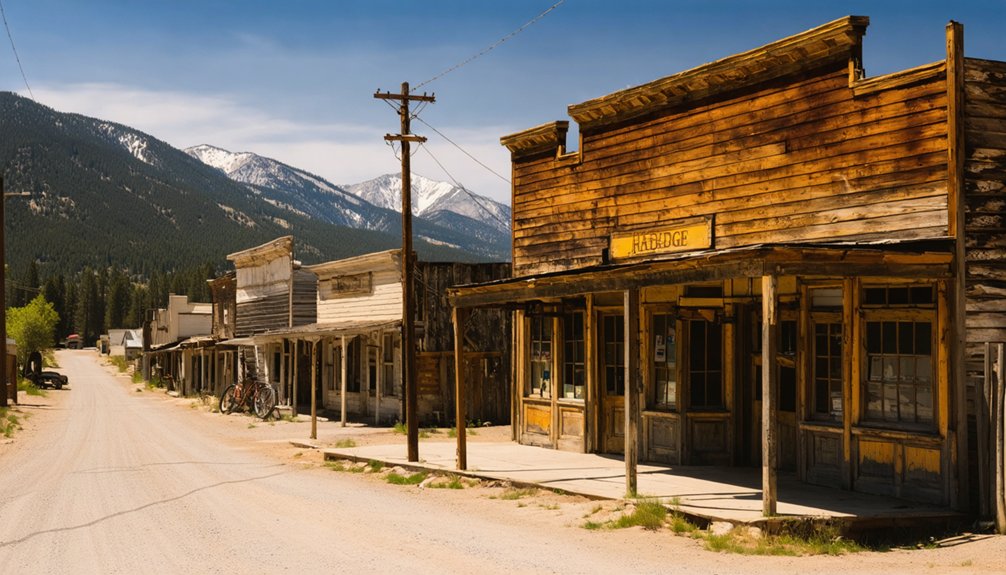
Though Jarbidge is small, it packs a surprising amount of history and natural beauty into its remote canyon setting. Explore the 1909 Community Hall, a standout example of historic architecture that’s survived fires, floods, and more than a century of frontier life. The old jail still stands too, quietly holding local legends of outlaws and the West’s last stagecoach robbery.
Step outside town and you’ll find world-class fishing along the Jarbidge River, hunting grounds in the surrounding wilderness, and hiking trails cutting through dramatic slot canyon scenery. Photographers won’t want to leave without capturing the canyon walls at golden hour.
Whether you’re drawn by history or wilderness, Jarbidge rewards every curious traveler willing to make the journey.
Where to Eat, Camp, and Stay in Jarbidge
After a long day exploring canyon trails and frontier history, you’ll want to know your options for food and rest in Jarbidge—and while they’re limited, they carry the same rugged charm as the town itself.
Pack your camping gear, because the Humboldt-Toiyabe National Forest surrounds you with prime wilderness sites. Here’s what you can count on:
- Local cuisine is available at the town’s small historic eatery, serving hearty, unpretentious meals.
- Dispersed camping throughout the national forest offers genuine off-grid freedom.
- Wilderness campsites near the Jarbidge River provide stunning canyon scenery.
- Basic visitor services remain sparse, so bring supplies from Elko before heading in.
Self-sufficiency isn’t optional here—it’s the whole point. Embrace it, and Jarbidge rewards you completely.
Frequently Asked Questions
Does Jarbidge Have Reliable Cell Service or Emergency Communication Options?
Don’t count on reliable cell service in Jarbidge—cell service limitations are very real here. Explore your emergency communication options before heading out, like satellite devices, so you’re prepared for this breathtakingly remote, freedom-filled adventure.
Are Pets Allowed on Trails Within the Jarbidge Wilderness Area?
The knowledge base doesn’t cover pet safety or trail regulations for Jarbidge Wilderness. You’ll want to contact Humboldt-Toiyabe National Forest directly to get accurate, current rules before hitting those rugged, breathtaking trails with your furry companion!
Is a Four-Wheel-Drive Vehicle Strictly Required to Reach Jarbidge?
You don’t strictly need four-wheel-drive, but off road vehicles handle Jarbidge’s terrain challenges far better. You’ll navigate rugged dirt roads that can become treacherous, so high-clearance vehicles aren’t just recommended—they’re your smartest ticket to freedom.
Can Visitors Access Jarbidge From the Idaho Side Year-Round?
You’ll find remote access from Idaho offers better year-round options than the Elko side, which faces seasonal closure after the first snowfall, letting you embrace the freedom of reaching this remarkable, isolated destination more reliably.
Does Jarbidge Have Any Annual Events or Festivals for Visitors?
Specific annual events aren’t documented, but you’ll feel Jarbidge’s living pulse through its historical landmarks and local traditions that breathe frontier freedom into every visit, especially during vibrant summer months when the community swells with life.
References
- https://en.wikipedia.org/wiki/Jarbidge
- https://travelnevada.com/ghost-town/journey-to-jarbidge/
- https://www.facebook.com/groups/927201403970017/posts/26803619132568223/
- https://www.youtube.com/watch?v=VK0Sv_hFInY
- https://www.youtube.com/watch?v=UaatKs9F_JI
- http://www.nv-landmarks.com/el/triptojarbidge.htm
- https://www.ghosttowns.com/states/nv/jarbidge.html
- https://ghost-towns.close-to-me.com/states/nevada/jarbidge-nv/
- https://www.nevadaghosttownsandmininghistory.com/portfolio-2/jarbidge
- https://www.moontravelguides.com/travel/trip-ideas/nevada-ghost-towns/