Planning a ghost town road trip to Lentz, South Dakota means embracing the unexpected. You won’t find roadside markers or a preserved Main Street — just scattered foundations, faint structural traces, and depressions where buildings once stood. Lentz follows the boom-and-bust pattern of over 600 abandoned Black Hills townsites, left behind when mining profits dried up. Confirm land access before you go, pack for remote conditions, and there’s much more to uncover before you hit the road.
Key Takeaways
- Lentz offers scattered foundations and faint structural traces, with no preserved Main Street or roadside historical markers welcoming visitors.
- Confirm land access before visiting, as many Black Hills ghost towns sit on private property requiring landowner permission.
- Pack extra fuel, water, paper maps, and emergency gear since remote ghost towns lack cell service and nearby assistance.
- Combine Lentz with nearby abandoned townsites, tracing railroad corridors and mining relics across the Black Hills region.
- Lentz declined following a common pattern of mining collapse and railroad bypasses that abandoned over 600 Black Hills towns.
What’s Actually Left to See at Lentz, South Dakota
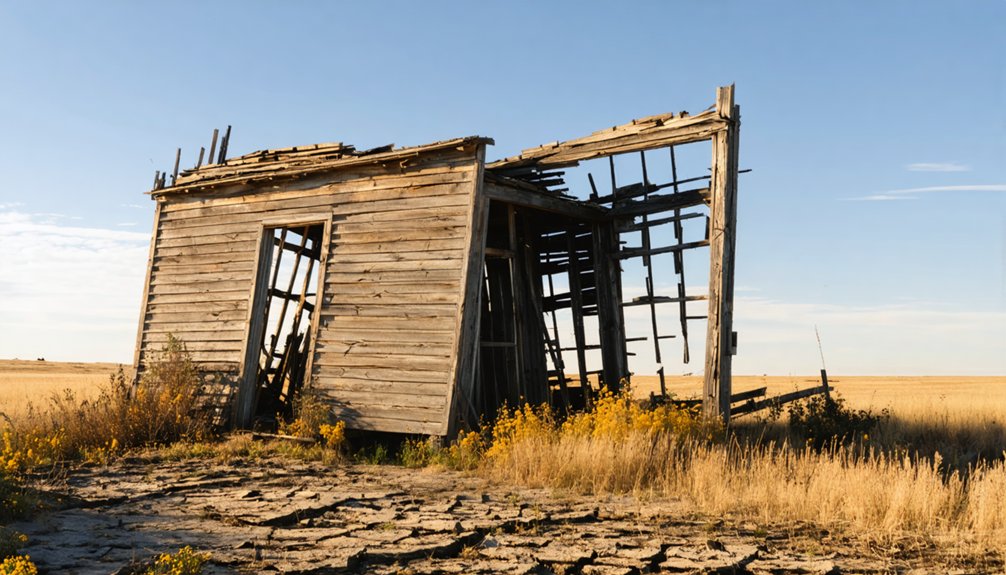
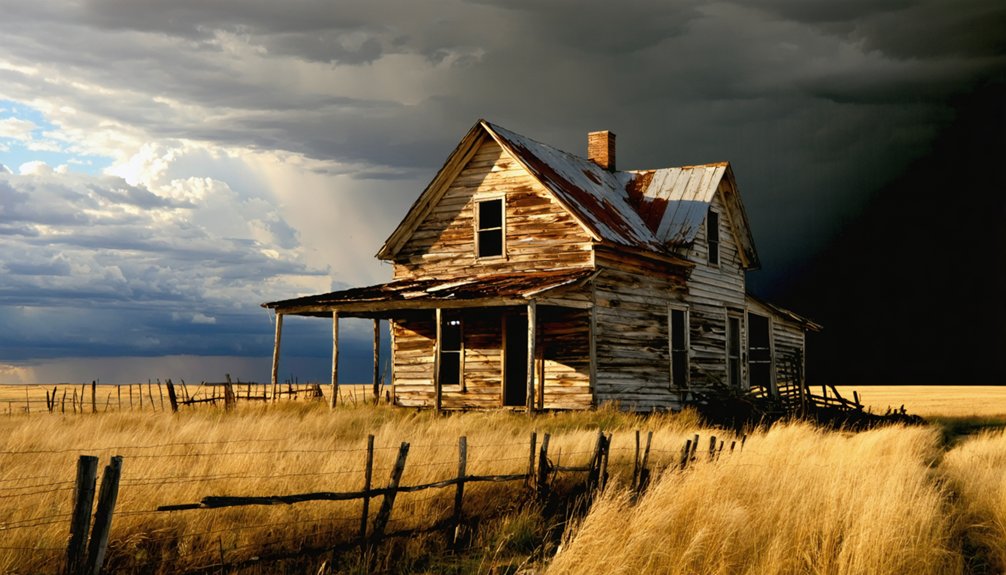
When you pull up to Lentz, don’t expect a preserved Main Street or a roadside historical marker pointing you toward a tidy row of storefronts. What you’ll likely find is something rawer — scattered foundations, faint structural traces, and the kind of quiet that only abandoned places carry.
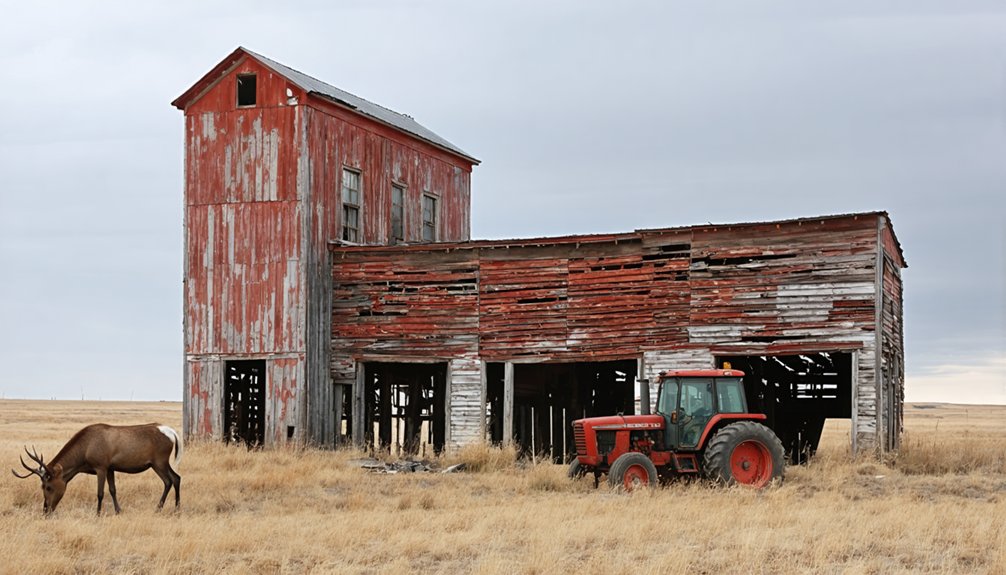
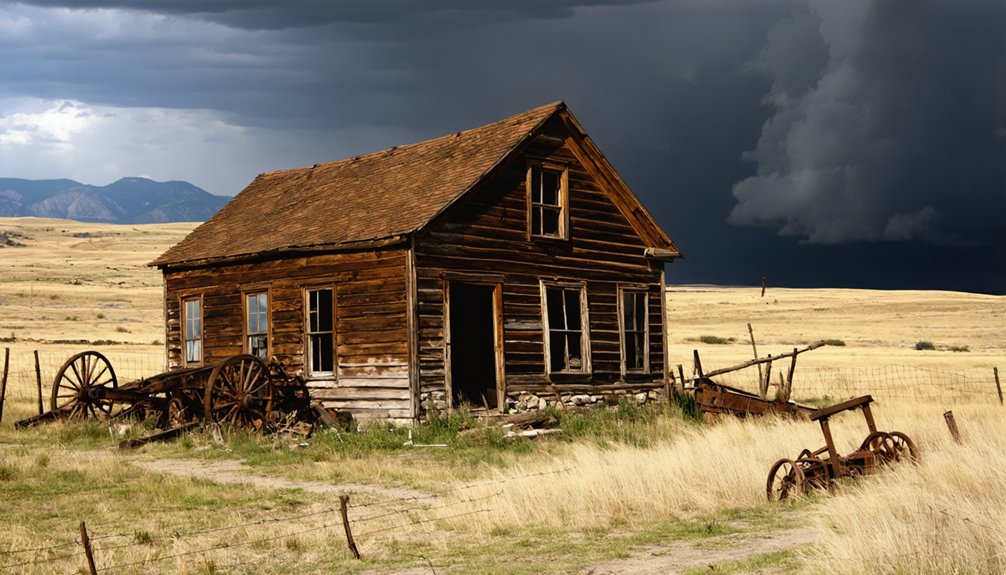
Ruins preservation here isn’t a formal effort; it’s simply what time has left behind. Some visits turn up standing walls or deteriorating frames. Others reveal nothing more than depressions in the earth where buildings once stood.
Historical artifacts, if present, belong to the land and its legal owner, so keep that in mind before you touch anything. Lentz rewards the observant traveler — someone willing to read a landscape rather than wait for it to explain itself.
Why Lentz Faded Like Hundreds of Other Black Hills Towns
The emptiness you’re reading in Lentz’s landscape didn’t arrive by accident — it followed a script repeated across more than 600 Black Hills ghost towns. Mining history shaped these communities fast, pulling people in with promise, then releasing them just as quickly when the ore ran thin or the economics collapsed.
The emptiness here followed a script — mining history wrote it fast, then erased the towns just as quickly.
Railroad influence played an equally decisive role. When rail lines bypassed a town or service ended, isolation followed almost immediately.
The pattern looked something like this across the region:
- Mineral discovery triggered rapid, unplanned settlement
- Railroad influence determined which towns survived and which got cut off
- Mining history peaked, profits dropped, and residents simply left
You’re not looking at failure when you visit Lentz — you’re reading the honest biography of the frontier West.
How to Confirm Access Before You Drive to Lentz

Before you load the car and point it toward Lentz, you’ll want to confirm that you can actually access the site — because many South Dakota ghost towns sit on private land, and showing up unannounced can mean a wasted drive or an uncomfortable encounter with a landowner.
Start by contacting Lawrence County or the relevant local authority to check land status. Online ghost-town databases and South Dakota historical society records can also surface ownership details tied to mining history and railroad remnants left behind at these sites.
If the land is privately held, reach out directly and ask permission — most landowners appreciate the courtesy. Build your access confirmation into your planning before you finalize your route, not after you’ve already burned the fuel to get there.
Ghost Towns Close Enough to Combine With a Lentz Stop
Once you’ve locked down access to Lentz, it makes sense to stretch the drive into a fuller ghost-town loop — southwestern South Dakota and the Black Hills hold well over 600 abandoned townsites, so you’re rarely more than a short detour from another piece of boom-and-bust history.
Stack your route with stops that reward the extra miles:
- Mining relics sites — look for collapsed headframes, ore dumps, or shaft openings that mark where extraction once drove everything
- Railroad remnants corridors — trace abandoned grades and rotting depot foundations connecting towns that vanished when rail service died
- Structurally intact ruins — prioritize sites still holding standing walls, giving you visual payoff beyond empty prairie
Each additional stop deepens the story, turning a single destination into a genuine regional expedition through frontier rise and rapid collapse.
What to Pack for a Remote South Dakota Ghost Town Drive
Packing for a remote ghost-town drive isn’t like prepping for a standard road trip — you’re often pushing into areas with no cell service, no gas stations, and no one nearby if something goes sideways.
Forget the road trip checklist — ghost-town exploring means no signal, no fuel stops, and no rescue nearby.
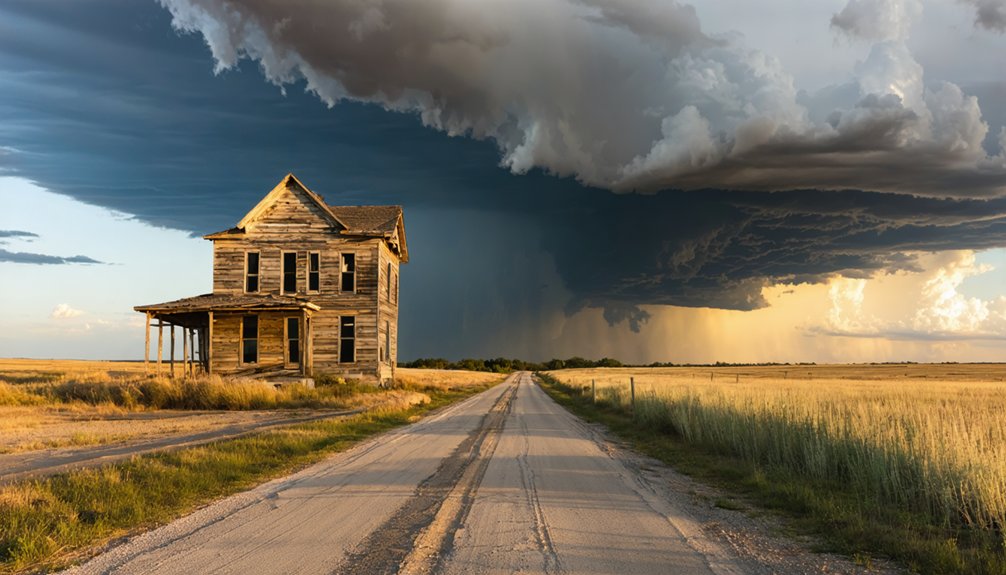
Weather preparedness matters enormously out here; southwestern South Dakota can shift from clear skies to severe storms fast, so pack layers, rain gear, and sun protection.
Carry extra fuel, water, and food since services disappear quickly once you leave main highways.
A paper map and compass back up any digital navigation.
Bring a first-aid kit, tow strap, and a fully inflated spare.
If you’re hoping to photograph hidden artifacts or structural remnants, pack a quality camera and sturdy boots.
Leave everything you find untouched — documenting beats disturbing every time.
Frequently Asked Questions
Is Photography of Lentz Ruins Legally Permitted for Personal Use?
You’ll need to verify land ownership first, as photography restrictions often apply due to private property concerns. If you’re on public land, you’re generally free to capture Lentz’s haunting ruins for personal use.
What Time of Year Offers the Best Visibility at Ghost Town Sites?
Hit the road in late spring or early fall—you’ll find the sweet spot where longer daylight hours and mild seasonal weather clear the way for sharp visibility at Lentz’s weathered ruins and open ghost town landscapes.
Are There Guided Ghost Town Tours Available in Southwestern South Dakota?
You’ll find some guided tours covering southwestern South Dakota’s ghost towns, offering structured history exploration through abandoned sites. However, you’re often freer crafting your own self-guided adventure, discovering forgotten places like Lentz entirely on your own terms.
Can Children Safely Visit Remote Ghost Town Sites in South Dakota?
Yes, you can bring children, but you’ll want to prioritize historical preservation by keeping them on safe paths, while staying alert for wildlife safety concerns like snakes hiding among crumbling ruins and remote terrain.
How Long Does a Typical Ghost Town Road Trip Through This Region Take?
You could explore these sites for an eternity! A typical trip takes two to four days. You’ll balance historical preservation stops with travel safety planning, covering remote terrain at your own unhurried, freedom-driven pace.
References
- https://kids.kiddle.co/List_of_ghost_towns_in_South_Dakota
- https://www.sdpb.org/rural-life-and-history/2023-08-21/some-black-hills-ghost-towns-and-their-origins
- https://www.youtube.com/watch?v=_0WNYsFLSLA
- https://www.sdhspress.com/journal/south-dakota-history-2-2/some-black-hills-ghost-towns-and-their-origins/vol-02-no-2-some-black-hills-ghost-towns-and-their-origins.pdf