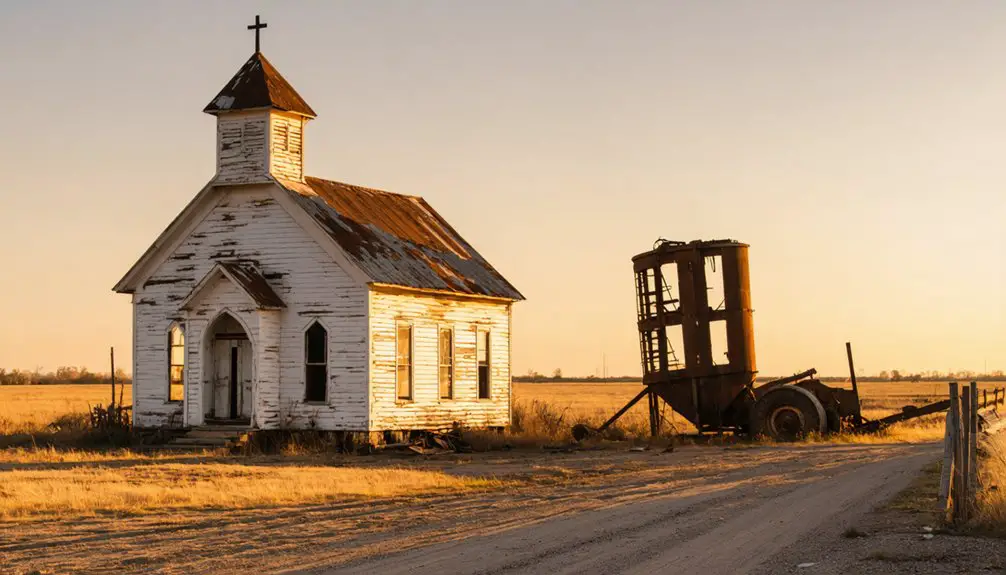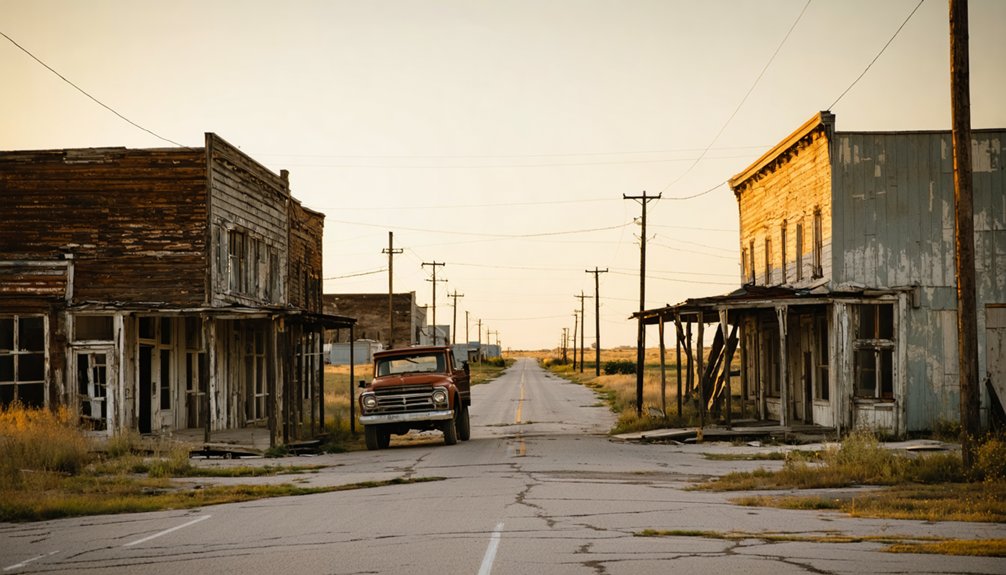
Planning a ghost town road trip to Lone Star, Oklahoma means trading your car for a boat. This small LeFlore County farming community didn’t fade away — it vanished entirely beneath Wister Lake when the Army Corps of Engineers completed Wister Dam in 1949. You can still explore its submerged foundations, but timing and preparation matter. Stick around to uncover everything you’ll need to make this unforgettable underwater ghost town adventure a success.
Key Takeaways
- Lone Star, Oklahoma, is a submerged ghost town beneath Wister Lake, flooded in 1949 following completion of the Army Corps of Engineers’ Wister Dam.
- The site is accessible only by boat from public launch ramps near Wister Lake, as no roads lead to the submerged ruins.
- Visit during late fall through early spring when winter draw-downs lower water levels, improving visibility of submerged foundations.
- Check current lake levels through the Army Corps of Engineers website before your trip to plan the best possible visit.
- Enhance your road trip by adding nearby ghost towns like Texola, Alluwe, and America, Oklahoma, for a richer historical experience.
What Happened to Lone Star, Oklahoma?
Once a small farming community nestled in LeFlore County, Lone Star, Oklahoma, thrived from around 1880 until the late 1940s — when the completion of Wister Dam in 1949 sealed its fate. Rising waters from Wister Lake swallowed the entire town, submerging foundations, homes, and agricultural land beneath the surface.
Community relocation efforts did preserve one meaningful piece of the past — authorities moved graves from the local cemetery to higher ground before the flooding began. Beyond that, historical preservation was largely left to chance.
Today, winter draw-down levels occasionally expose submerged foundations, offering rare glimpses into what once stood. You can explore the site by boat, but you’ll find no roads, no facilities, and no infrastructure — just quiet water covering a forgotten community’s remains.
How Wister Dam Swallowed an Entire Town
The story of how Lone Star disappeared isn’t just about rising water — it’s about a deliberate federal decision that permanently reshaped the landscape. In 1949, the Army Corps of Engineers completed Wister Dam on the Poteau River, and the rising lake swallowed everything — homes, farmland, and a community built over nearly 70 years.
Officials did make one concession to historical preservation: they relocated graves from the local cemetery before the waters rose. Everything else stayed behind.
The environmental impact permanently transformed the surrounding ecosystem, converting fertile agricultural land into a reservoir. You can still glimpse submerged foundations during winter draw-downs when water levels drop, but the town itself is gone — a quiet reminder that federal infrastructure projects don’t negotiate with history.
How to Reach Lone Star’s Submerged Ruins by Boat
Reaching Lone Star’s submerged ruins requires a boat — there are no roads leading to the site, and Wister Lake now owns everything the town once was. Boat navigation challenges include shifting water depths and submerged debris, so move slowly and stay alert.
Here’s what you’ll need to plan for:
- Launch from public ramps near Wister Lake; no private access points exist at the ruins
- Underwater photography works best during winter draw-downs when visibility improves and foundations sit closer to the surface
- Dive carefully around fragile structures; disturbing them risks collapse and destroys what little remains
You’re exploring a place that time didn’t erase — water did. Respect that, bring your own supplies, and let the silence of the lake tell the story.
When to Visit Lone Star for the Best Underwater Visibility
Knowing when to go matters just as much as knowing how to get there. Seasonal water levels directly affect your visibility once you’re beneath the surface of Wister Lake.
Winter draw-downs typically expose or shallow out submerged foundations, giving divers and underwater photography enthusiasts the clearest conditions. You’ll want to plan your dive between late fall and early spring when operators lower the reservoir for flood control purposes.
Summer brings murky runoff and heavy recreational boat traffic, which cuts visibility considerably. Spring rains also cloud the water, making detailed photography frustrating.
Check current lake levels through the Army Corps of Engineers before you commit to a trip. Arriving during ideal draw-down conditions means you’ll actually see the ghostly foundations rather than swimming blindly through murky water.
Other Ghost Towns Near Wister Lake Worth Visiting
While you’re already making the trek to Wister Lake, it’d be a shame to stop there when LeFlore County and the surrounding region hold several other forgotten communities worth adding to your itinerary.
Historic preservation efforts across Oklahoma have kept community stories alive, giving you a richer picture of the region’s past.
Consider adding these stops to your route:
- Texola, Oklahoma – A semi-ghost town on Route 66 near the Texas border, featuring faded signage and weathered storefronts frozen in time.
- Alluwe, Oklahoma – A documented ghost town with deep community stories tied to early settlement history.
- America, Oklahoma – Another vanished community reflecting the broader wave of abandonment that reshaped the state’s rural landscape.
Each stop layers your road trip with meaning beyond Wister Lake.
Before You Go: Safety at Abandoned Sites
Ghost town structures have stood without maintenance for decades. Floors, stairs and roof timbers fail without warning, and a building that looks solid from outside may not hold your weight. Stay out of standing structures unless the site is actively maintained and open to visitors.
Mine workings are the more serious hazard. Vertical shafts can be hundreds of feet deep, are often unfenced, and may be hidden by brush or capped with rotted boards. Never enter an adit, tunnel or shaft: abandoned workings can hold oxygen-poor or toxic air that gives no warning before you lose consciousness.
Enclosed spaces with rodent droppings carry a risk of hantavirus, which is contracted by breathing contaminated dust. Do not sweep or stir up dust inside old cabins and outbuildings.
Cell coverage at these sites is usually poor or absent. Tell someone your route and expected return time, and carry more water than you think you need.
Frequently Asked Questions
Are There Any Guided Diving Tours Available at Lone Star’s Submerged Ruins?
No guided diving tours exist, but you can explore Lone Star’s submerged ruins independently. Practice smart diving safety tips, respect fragile foundations, and capture stunning underwater photography of this ghostly, freedom-calling, flooded Oklahoma treasure beneath Wister Lake’s surface.
Can Visitors Legally Remove Artifacts Found Near Lone Star’s Underwater Foundations?
You can’t legally remove artifacts near Lone Star’s underwater foundations. Strict legal restrictions govern artifact ownership in submerged historical sites, protecting Oklahoma’s heritage. Respect these boundaries, document your discoveries through photography, and preserve the experience for future explorers.
What Permits Are Required to Dive or Boat Near the Submerged Town?
Like a key to hidden treasure, no special permits are required to boat or dive here. You’ll follow standard diving safety regulations and Oklahoma boating laws. Grab your gear, embrace underwater photography, and explore freely!
Are There Nearby Campgrounds Close to Wister Lake for Overnight Stays?
You’ll find great camping options near Wister Lake accommodations at the Army Corps of Engineers campgrounds! They’re close by, offering you the freedom to set up camp, explore submerged Lone Star’s history, and enjoy Oklahoma’s beautiful outdoors overnight.
What Other Oklahoma Ghost Towns Were Submerged Due to Dam Construction?
Like whispers beneath water, Oklahoma’s drowned towns tell haunting tales. Beyond Lone Star, you’ll find other submerged communities lost to dam projects, where historical preservation battles environmental impact, but specific documented examples aren’t captured in current available records.
References
- https://www.youtube.com/watch?v=gctV_3kGeGo
- https://www.ghosttowns.com/states/ok/lonestar.html
- https://gateway.okhistory.org/ark:/67531/metadc2123396/
- https://gateway.okhistory.org/ark:/67531/metadc2546087/
- https://route66travelinfo.com/route-66-texola-oklahoma/
- https://www.randomconnections.com/lone-star-barbecue-mercantile-and-ghost-town/
- https://en.wikipedia.org/wiki/Wikipedia:Featured_list_candidates/List_of_ghost_towns_in_Oklahoma/archive1
- https://okcfox.com/news/local/oklahomas-secret-past-ghost-towns-of-oklahoma
- https://kids.kiddle.co/List_of_ghost_towns_in_Oklahoma
- https://www.okhistory.org/publications/enc/entry?entry=GH002