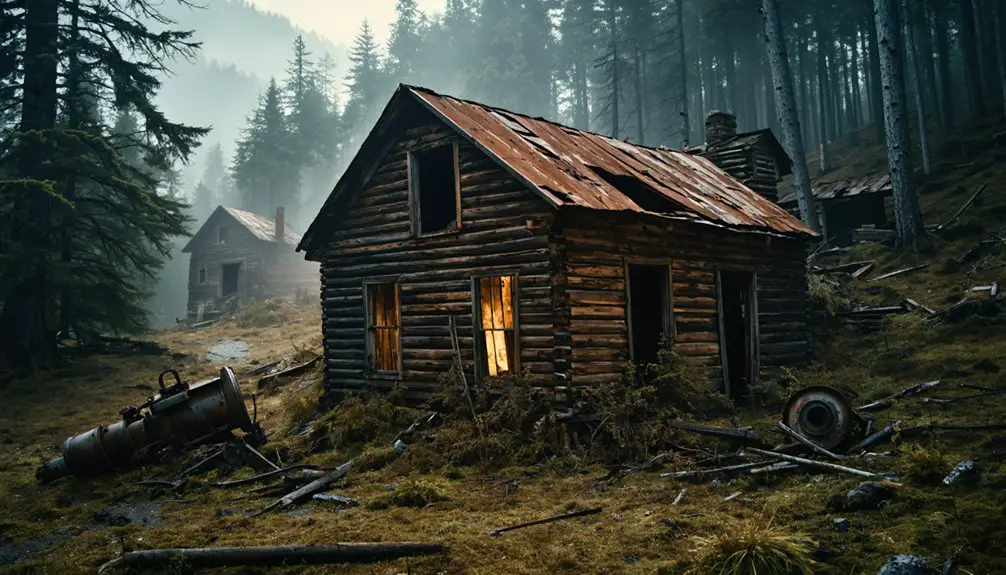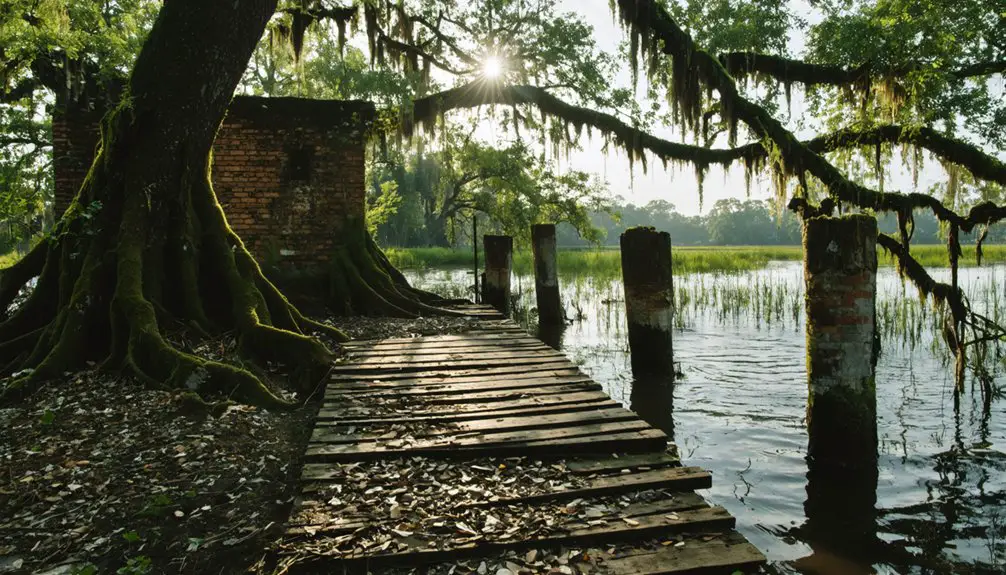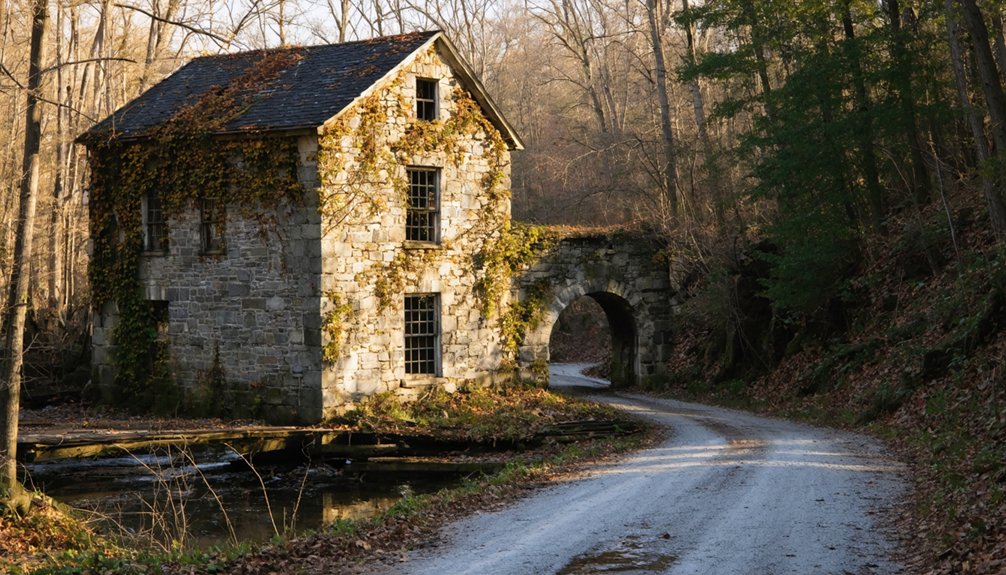
Planning a ghost town road trip to Daniels, Maryland doesn’t require much — just waterproof boots and a sense of adventure. Located about 12 miles west of Baltimore inside Patapsco River Valley State Park, this abandoned 1800s mill town offers haunting church ruins, a historic dam, and railroad remnants along a 3-to-4-mile trail. You’ll navigate shallow water crossings and uneven terrain while spotting wildlife. Everything you need to plan your visit is just ahead.
Key Takeaways
- Daniels, Maryland, is located 12 miles west of Baltimore in Patapsco River Valley State Park, featuring abandoned ruins from its 1820s mill town origins.
- The Alberton Road Trail is 3–4 miles round-trip, passing key ruins like St. Stanislaus Kostka Church, Daniels Dam, and railroad pilings.
- Park from the small lot at Dogwood and Alberton Roads intersection, as motorized vehicles are prohibited beyond the gate during dawn-to-dusk hours.
- Wear waterproof footwear for shallow water crossings, and avoid unstable structures by staying on established paths throughout the trail.
- Visit during spring or fall for mild weather, or winter for clearer views of ruins with unobstructed sightlines through bare trees.
What Is the Ghost Town of Daniels, Maryland?
Tucked into the Patapsco River Valley State Park about 12 miles west of Baltimore, Daniels, Maryland is a ghost town with deep industrial roots. Textile manufacturing drove this settlement’s identity beginning in the 1820s, with a mill operating for well over a century before the town closed in 1968.
Daniels, Maryland — a ghost town born from textile mills, quietly operating for over a century before vanishing in 1968.
Hurricane Agnes struck in 1972, washing away much of what remained and cementing Daniels’ fate as an eerily preserved relic.
Today, you’ll find abandoned structures frozen in time — church ruins, a historic dam, and railroad remnants half-swallowed by the river. Local legends swirl around the site, adding mystery to every crumbling wall and overgrown path you’ll encounter.
Daniels isn’t just a hike; it’s a direct encounter with a vanished American community waiting to be explored on your own terms.
The History Behind Daniels Mill Town
What started as a single mill on the banks of the Patapsco River in the 1820s grew into a fully functioning community that sustained families, businesses, and faith communities for well over a century.
Textile manufacturing drove the town’s economy, shaping everything from daily routines to architectural styles visible in the church ruins still standing today.
By 1968, the mill had closed, residents had departed, and Daniels fell silent.
Then Hurricane Agnes struck in 1972, washing away much of what remained.
Local legends describe the town as frozen in time, a place where echoes of working-class life linger in crumbling stone and rusted remnants.
Walking through Daniels, you’re not just exploring ruins — you’re stepping into a community that thrived, adapted, and ultimately surrendered to time.
What Ruins and Landmarks Can You Still See?
Despite the decades of abandonment and the destruction left by Hurricane Agnes, Daniels still holds several striking remnants that’ll stop you in your tracks.
You’ll spot the hauntingly beautiful ruins of St. Stanislaus Kostka Catholic Church standing along the riverbank, a powerful historical artifact tied to local legends of the mill workers who once worshipped there.
The 1833 Daniels Dam remains visible behind the trail path, offering a tangible connection to the town’s industrial past.
Look for the Pentecostal Holiness Church ruin near the abandoned town center and scattered B&O Railroad pilings embedded in the river mud.
Remarkably, the Gary Memorial Church still operates within these ghost town boundaries.
Each structure tells a story that rewards curious, attentive explorers willing to look closely.
Trail Distance, Terrain, and What You’ll Pass
You’ll cover roughly 3 to 4 miles on an out-and-back trail that demands steady footing, as the path winds through uneven terrain, shallow water crossings, and remnants of washed-out bridges.
Along the way, you’ll pass the striking ruins of St. Stanislaus Kostka Catholic Church on the riverbank, the partially standing Pentecostal Holiness Church, and the 1833 Daniels Dam rising behind the trail.
Keep your eyes sharp, because washed-out vehicles and crumbling infrastructure blend into the landscape in ways that are easy to miss.
Trail Length And Terrain
Stretching roughly 3 to 4 miles out and back, the Alberton Road Trail gives you enough ground to cover without wearing you out before the good stuff appears. The terrain stays relatively flat, following the old mill road alongside the Patapsco River, making it accessible for most fitness levels.
You’ll move through dense tree cover where wildlife sightings are common — keep your eyes open for herons, deer, and turtles along the riverbank.
Trail maintenance varies seasonally, so expect uneven surfaces, muddy patches after rain, and sections where nature has clearly reclaimed its space. Some areas require you to navigate shallow water crossings or remnants of old bridges.
Wear sturdy shoes, move at your own pace, and let the landscape unfold naturally around you.
Notable Ruins Along The Way
As you move deeper along the Alberton Road Trail, ruins begin surfacing like pages from a discarded history book. Historic architecture emerges between the trees, each crumbling wall carrying local legends passed down by curious explorers before you.
Watch for these standout remnants:
- St. Stanislaus Kostka Catholic Church – its riverbank walls remain hauntingly recognizable
- The 1833 Daniels Dam – a primary structure still visible behind the trail path
- B&O Railroad pilings – ancient timber and iron persist stubbornly in the river mud
You’ll also spot the partially intact Pentecostal Holiness Church near the abandoned town center. These structures don’t just mark a location — they frame an entire vanished community that once thrived and quietly disappeared.
Water Crossings, Ruins Access, and Park Rules to Know
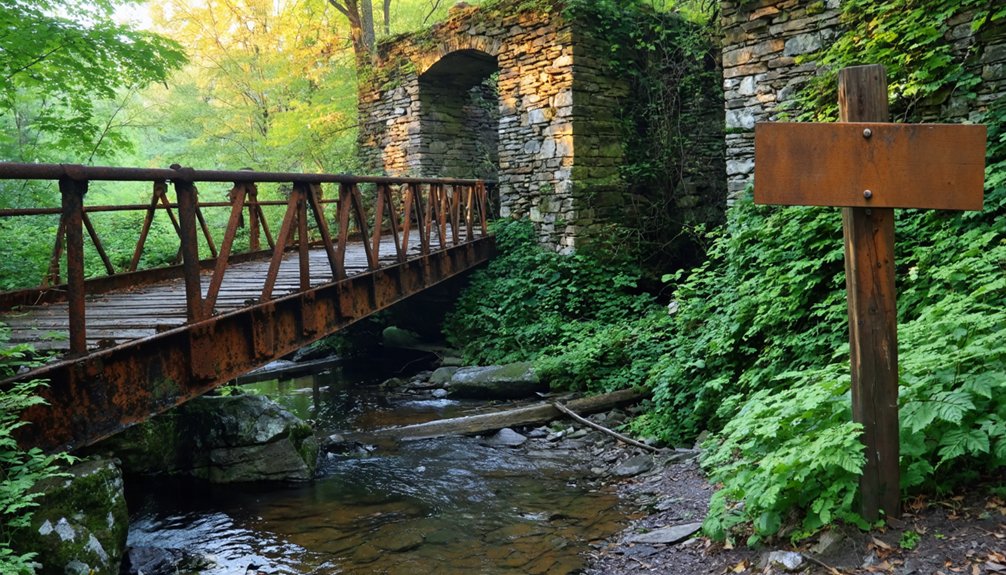
You’ll likely need to cross shallow water or navigate remnants of old train bridges to reach some of the most compelling ruins, so wear waterproof footwear and watch your step on unstable surfaces.
The St. Stanislaus Kostka Church ruins and the 1833 Daniels Dam are worth the effort, but approach them carefully since weathered stone and uneven ground make footing unpredictable.
Keep in mind that the park strictly enforces dawn-to-dusk hours, prohibits motorized vehicles beyond the gate, and expects visitors to respect the fragile remnants of this historic site.
Navigating Shallow Water Crossings
Reaching some of Daniels’ most compelling ruins means getting your feet wet—literally. Shallow water crossings along the Patapsco River grant you access to sites that reward bold explorers with stunning photography tips and surprise wildlife encounters around every bend.
Come prepared with the right mindset and gear:
- Wear water-resistant footwear or quick-dry shoes you don’t mind soaking
- Check water levels beforehand, especially after heavy rainfall when crossings run dangerously high
- Move slowly and deliberately across slippery rocks to maintain balance and avoid injury
The crossings aren’t technical, but they demand respect. You’ll navigate train bridge remnants and wade through shallow stretches to reach church ruins and crumbling foundations that most casual visitors never see.
That inaccessibility is exactly what makes Daniels worth every wet step.
Accessing Key Ruins Safely
Once you’ve crossed the water and stepped into Daniels’ overgrown streets, the real adventure begins—but so does the responsibility.
St. Stanislaus Kostka Church and the Pentecostal Holiness Church ruins are striking, but unstable—don’t climb crumbling walls or duck under deteriorating archways. Stay on established paths and read your surroundings carefully.
Wildlife sightings are common here; deer, foxes, and various birds move through the valley, so stay alert and keep noise low.
For photography tips, golden hour light filters beautifully through the tree canopy onto moss-covered stone, making early morning visits ideal.
Essential Park Rules Reminder
Before you head deeper into the ruins, a few park rules will keep your visit both legal and safe. Operating hours run strictly from dawn to dusk, so plan your timeline accordingly.
Keep these essentials in mind:
- No motorized vehicles are permitted beyond the park gate, protecting both ruins and wildlife habitats.
- Water crossings require careful footing near train bridge remnants and shallow river sections.
- Ruins access means staying alert around unstable structures, especially along the riverbank.
For photography tips, shoot during golden hour before dusk for dramatic lighting on the crumbling stonework.
Wildlife encounters are common along the Patapsco River trail, so move quietly and respectfully.
Treating this landscape with care guarantees future explorers experience the same raw, untouched freedom you’re enjoying today.
When Is the Best Time to Visit Daniels?
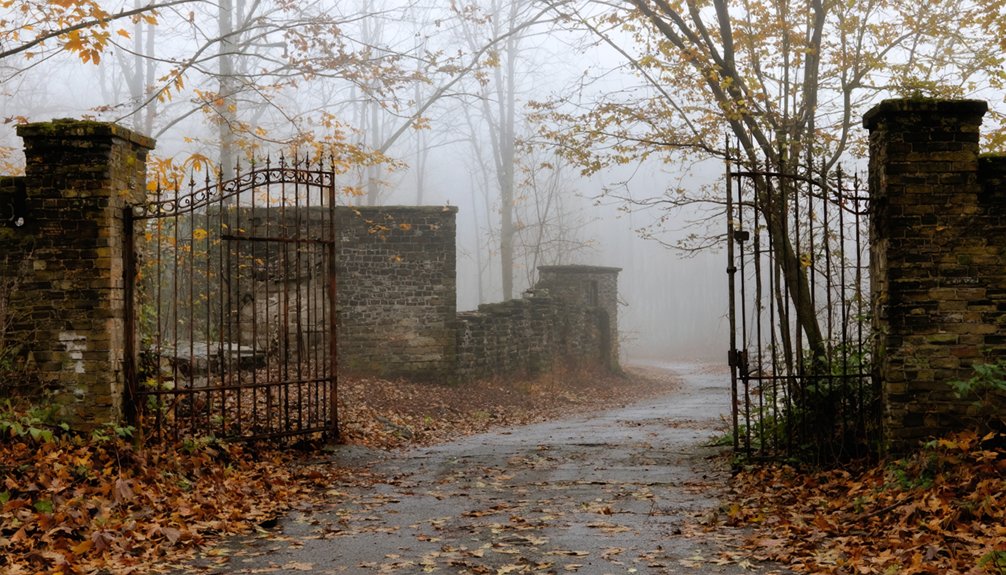
Timing your visit to Daniels can make or break the experience. Spring and fall offer the most rewarding conditions — mild temperatures, manageable crowds, and stunning natural backdrops perfect for photography tips like capturing golden-hour light filtering through the ruins. Arrive early on weekends since the parking lot fills fast, and you’ll want the trails to yourself.
Summer brings dense foliage that partially conceals structural details, though wildlife spotting peaks during these warmer months. Watch for deer, herons, and river otters along the Patapsco’s edge.
Winter strips the trees bare, revealing hidden ruins more clearly and giving photographers unobstructed sightlines.
Weekday visits across any season dramatically reduce foot traffic. Remember, the park strictly operates from dawn to dusk, so plan your arrival and departure accordingly.
How to Get to Daniels, Maryland
Getting to Daniels requires a bit of traversing through Maryland’s backroads, but the route is straightforward once you know the turns. Head west on US Route 40, turn right at Rogers Avenue, then right onto Old Frederick Road, and left onto Daniels Road.
From US 29 north, turn right on Rogers Avenue, navigate the roundabout left, and follow Old Frederick Road until it becomes Holifield Road after crossing the Patapsco River.
Keep these navigation essentials in mind:
- Holifield Road ends at Dogwood Road; turn left, then immediately left onto Alberton Road
- Park at the small lot on the corner of Dogwood and Alberton Roads
- A footpath leads directly to the ghost town’s historical architecture and local legends
Arrive early on weekends — the parking lot fills fast.
Where to Park and Access the Trail
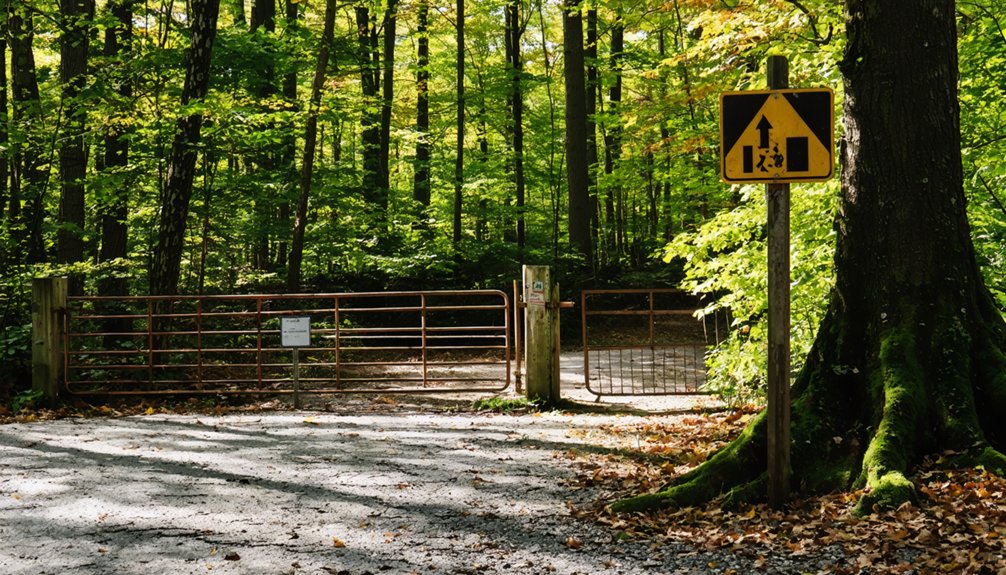
Once you’ve reached the corner of Dogwood Road and Alberton Road, you’ll find a small parking lot that serves as your gateway into Daniels. Arrive early on weekends, as spots fill quickly and you don’t want to miss your window.
From the lot, a footpath leads directly toward the ghost town and church ruins, putting you in control of your own exploration.
Keep your camera ready from the start — wildlife sightings are common along the riverbank, and the soft morning light creates ideal conditions for photography.
For photography tips, shoot during golden hour to capture the atmospheric decay of the ruins.
The southern section is also accessible via Daniels Road in Ellicott City if you prefer a different entry point into this hauntingly beautiful landscape.
Where to Eat and Explore After Hiking Daniels
After working up an appetite on the trail, you’ll find Ellicott City’s historic main street ready to reward you with plenty of great options. The area’s brick buildings and local cuisine make post-hike exploration genuinely worthwhile.
Stroll through streets lined with historic architecture while choosing your next stop:
- Manor Hill Tavern serves wood-fired pizzas and local craft beers, perfect for refueling after miles of hiking.
- The Little Market Café offers coffee and sweet treats when you need a lighter, quicker option.
- Sweet Elizabeth Jane stocks unique home décor and clothing if you’d rather browse than bite.
You’re free to mix eating and exploring however suits you — Ellicott City rewards curiosity at every turn.
Frequently Asked Questions
Is Daniels, Maryland, Suitable for Young Children or Stroller Use?
Daniels isn’t ideal for stroller accessibility or child friendly activities. You’ll navigate rugged, uneven terrain, shallow water crossings, and trail debris, making it better suited for older, adventurous hikers craving raw, untamed exploration.
Are Pets Allowed on the Alberton Road Trail in Daniels?
The knowledge doesn’t confirm pet policies, so check with Patapsco Valley State Park before visiting. If you’re bringing your furry companion, prioritize pet safety by following all leash regulations to keep your adventure worry-free!
Can Visitors Legally Enter the Gary Memorial Church During Their Visit?
You can visit the Gary Memorial Church, as it’s an active religious site within Daniels’ bounds. Respect historical preservation efforts and follow safety regulations to guarantee you’re exploring this freedom-filled ghost town responsibly and legally.
Is There Cell Phone Service or Emergency Contact Available Along the Trail?
Ironically, a ghost town offers no cell service—fitting for a place frozen in time! You’ll want to share emergency contacts with someone before hitting the trail, as you’re truly off the grid here.
Are Guided Tours of the Daniels Ghost Town Available for Visitors?
No official guided tours exist, but you’ll uncover Daniels’ historical significance independently, exploring ruins that reflect quiet preservation efforts. Roam freely along the trail, discovering the ghost town’s fascinating secrets entirely on your own terms.
References
- https://www.tripadvisor.com/Attraction_Review-g41131-d10035193-Reviews-Daniels_Ghost_Town-Ellicott_City_Maryland.html
- https://midatlanticdaytrips.com/2015/10/visiting-marylands-ghost-town-daniels/
- https://www.youtube.com/watch?v=nJzauuAFgr0
- https://midatlanticdaytrips.com/2020/11/does-daniels-marylands-ghost-town-actually-have-ghosts/
- https://www.youtube.com/watch?v=XgE8IPwHdI0
- https://www.youtube.com/watch?v=JSy6MyeJZ8Q
- https://www.youtube.com/watch?v=A2b6AJUddgs
- https://chesapeake-inspired.com/discovering-the-forgotten-charm-of-daniels-a-ghost-town-walk/
- https://www.atlasobscura.com/places/daniels
- https://www.facebook.com/groups/thingstodoimaryland/posts/1747274972597423/