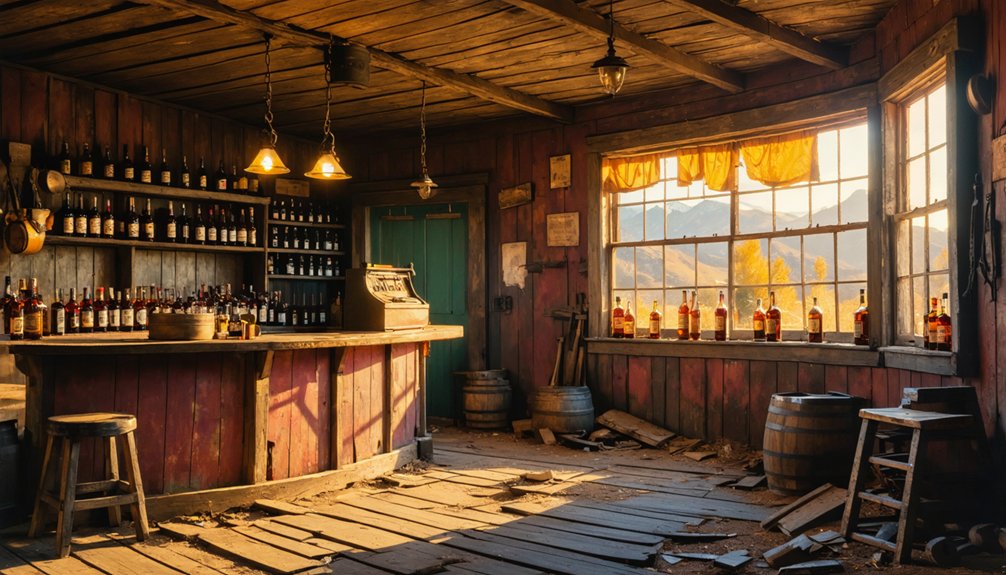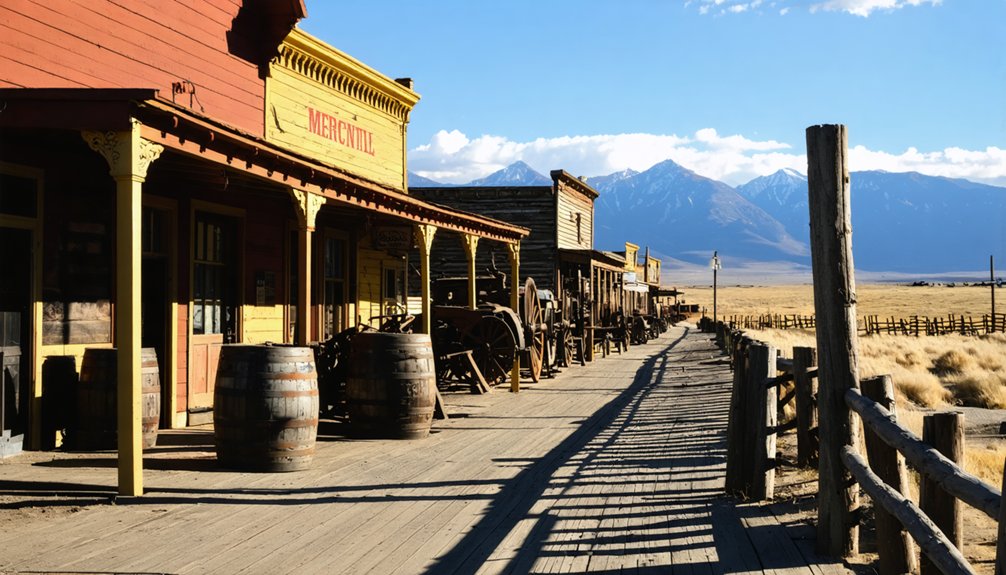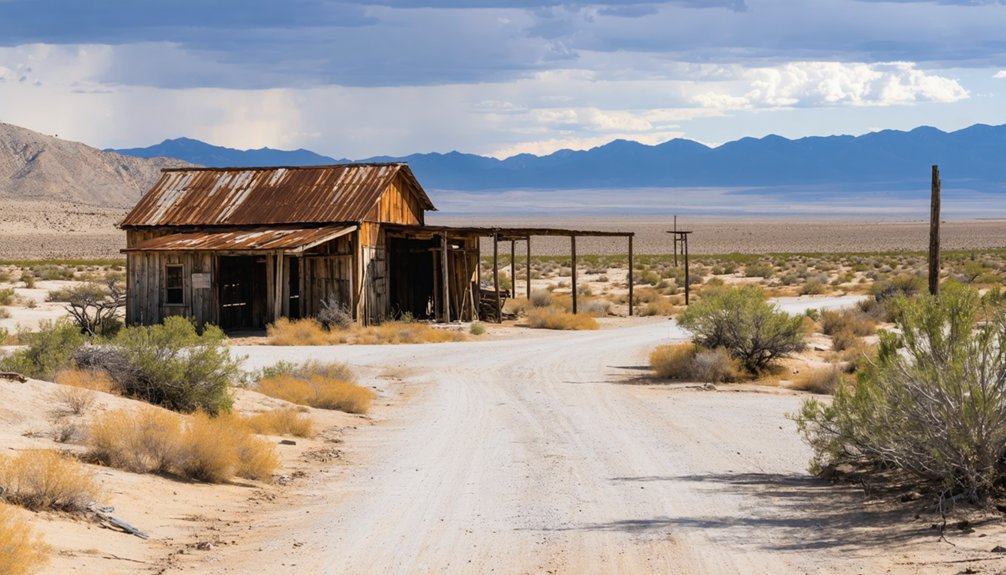
Planning a ghost town road trip to Atolia, California puts you 60 miles north of Hesperia along Highway 395, where you’ll find the crumbling remains of what was once the world’s largest tungsten mine. This half-square-mile stretch of Mojave Desert holds rusting railways, abandoned equipment, and deep shafts from a booming community of nearly 2,000 workers. It’s raw, unfiltered history sitting right off the highway—and there’s far more to this remarkable site than first meets the eye.
Key Takeaways
- Atolia sits along Highway 395, roughly 60 miles north of Hesperia, making it an easy, straightforward stop on a desert road trip.
- Once the world’s largest tungsten mine, Atolia supported nearly 2,000 residents before market fluctuations caused rapid abandonment.
- The site spans over half a square mile, featuring rusting railways, abandoned equipment, deep shafts, and crumbling structures.
- Wear sturdy boots, bring plenty of water, and watch for rattlesnakes and hidden shafts when exploring the unpolished terrain.
- Atolia is one of nine stops on a 770-mile California ghost town route, completable within three to six days.
What Makes Atolia Worth a Ghost Town Road Trip?
Tucked along Highway 395 about 60 miles north of Hesperia, Atolia isn’t just another dusty desert stop — it’s a frozen snapshot of America’s boom-and-bust past. Once the world’s largest tungsten mine, this Mojave ghost town drew over 2,000 residents at its peak, supporting stores, saloons, and railway lines across half a square mile of desert terrain.
You’ll walk among rusting mining technology — abandoned equipment, shafts, dugouts, and rock piles that tell the story better than any museum could.
Local legends surrounding the town’s rise and collapse echo through every crumbling structure you encounter. Even the name carries history, blending the surnames of two mine officers, Atkins and Degolia, into one lasting identity.
Atolia rewards curious, independent travelers who appreciate raw, unfiltered American history.
Where Exactly Is Atolia, and How Do You Get There?
Atolia sits in the heart of the Mojave Desert, roughly 60 miles north of Hesperia, California, where the arid landscape stretches endlessly in every direction.
You’ll find it right on Highway 395, making it an easy and straightforward drive with no complicated detours or backroads to navigate.
Keep your eyes open for the visible sign along the highway, and you’ll know you’ve arrived at what was once the world’s largest tungsten mining operation.
Atolia’s Desert Location
Sitting deep in the Mojave Desert, this ghost town rests about 60 miles north of Hesperia along Highway 395 — and you’ll actually spot it right from the road thanks to a visible sign marking the site. The surrounding landscape rewards curious travelers who crave wide-open spaces and raw, unfiltered terrain.
Here’s what defines Atolia’s desert setting:
- Rugged Mojave terrain stretches across roughly half a square mile of abandoned history
- Desert flora dots the landscape, framing crumbling ruins with stubborn natural beauty
- Unobstructed night sky offers stunning stargazing far from city light pollution
- Highway 395 access makes the site easy to reach without venturing off-road
You’ll feel the freedom the moment you step out onto that dusty, wind-swept ground.
Reaching Atolia Via Highway
If you’re planning a drive out to Atolia, Highway 395 does most of the work for you — the ghost town sits roughly 60 miles north of Hesperia, and a visible roadside sign marks the spot so you won’t blow past it without realizing.
The highway cuts straight through Mojave Desert terrain, giving you open road and wide sky the entire way. As you close in on Atolia, desert flora like creosote and Joshua trees frame the landscape, and local wildlife occasionally darts across the asphalt.
You don’t need a guide or special access — just fuel up, hit 395 heading north, and keep your eyes open. The freedom of arriving on your own terms is half the experience before you even step foot on the site.
The Rise and Fall of the World’s Largest Tungsten Mine
When you visit Atolia, you’re standing on ground that once supported the world’s largest tungsten mine, drawing nearly 2,000 workers and their families to this remote Mojave stretch in the early 1900s.
The demand for tungsten, used in hardening steel, drove explosive growth here, filling the town with stores, saloons, and railway lines.
But when the market shifted, so did the population, and the boom quietly collapsed into the abandoned ghost town you’ll explore today.
Tungsten’s Early Mining Boom
Once the world’s largest tungsten mine, Atolia roared to life in the early 1900s, drawing nearly 2,000 residents to this remote stretch of Mojave Desert. You’d have found a thriving industrial hub buzzing with activity amid the desert flora.
Early mining techniques transformed this rugged landscape into a powerhouse of mineral extraction. Here’s what defined the boom:
- Workers carved shafts deep into the desert floor
- Stores, saloons, and railways supported the growing population
- Tungsten demand surged alongside global industrial needs
- Mining techniques evolved rapidly to maximize ore output
The metal market fueled everything. When demand spiked, Atolia delivered. You can still see the remnants of that relentless productivity scattered across the half-mile site today.
Peak Production and Population
At its peak, Atolia’s population swelled to over 2,000 residents, transforming a barren stretch of Mojave Desert into a self-sustaining industrial town complete with stores, saloons, and railway connections. Workers and families flooded in, driven by tungsten’s surging value and the promise of steady wages.
But mining history rarely moves in straight lines. As tungsten markets shifted, demand collapsed, and Atolia emptied just as fast as it had filled. The infrastructure froze in place, and today, ghost town preservation efforts keep this industrial skeleton accessible for curious travelers like you.
When you visit, you’re walking through a genuine boom-and-bust story written in rusting rails and abandoned shafts. Atolia doesn’t romanticize its past — it just shows you exactly what ambition and economic reality left behind.
Market Decline and Abandonment
Tungsten’s value didn’t crash overnight — it eroded through cycles of wartime demand spikes and peacetime collapses that left mining operations like Atolia perpetually vulnerable.
Once the market softened, workers scattered, and the desert climate reclaimed what ambition built.
Local flora crept back through cracked foundations as the town quietly surrendered.
What drove Atolia toward abandonment:
- Unstable tungsten prices made long-term investment impossible
- Post-war demand drops gutted the workforce almost immediately
- Harsh desert climate accelerated structural decay once maintenance stopped
- No economic diversification left residents with zero reason to stay
You’ll see this collapse written across every rusted rail and crumbling wall.
Atolia didn’t fade — it was swallowed whole by market forces and Mojave silence.
How Atolia Got Its Unusual Name
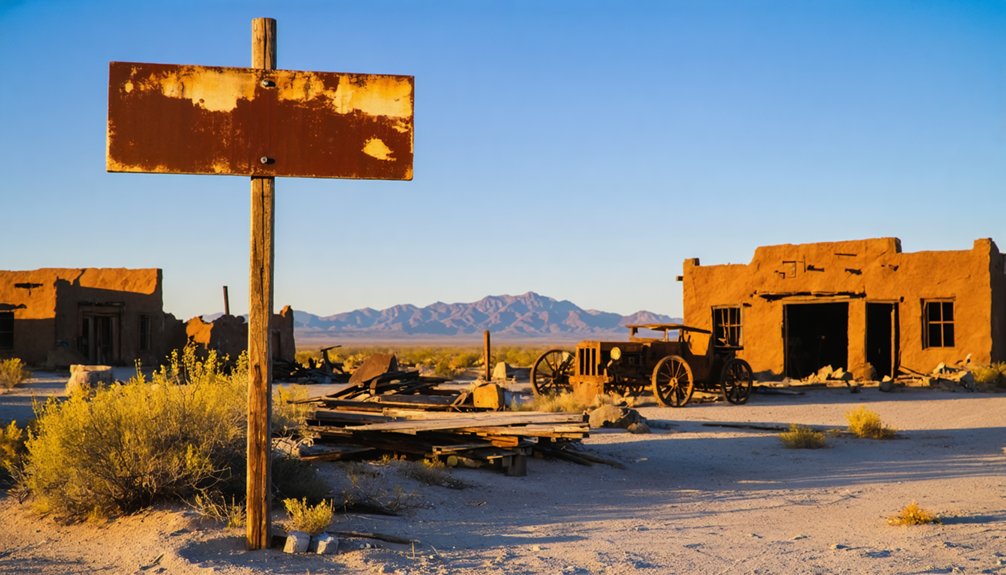
While many ghost towns carry names rooted in geography or folklore, Atolia’s name tells a more personal story. Forget local legends or ancient mining techniques — this town’s identity traces directly to two mine officers: Atkins and Degolia.
Someone simply merged their names, and Atolia was born. It’s a small detail, but it adds a human layer to what might otherwise feel like just another desert ruin. Two real people helped shape this operation at its peak, and their combined legacy literally became the town’s identity.
As you stand among the shafts and rock piles along Highway 395, knowing that history makes the place feel less like an abandoned site and more like a preserved chapter of someone’s real working life.
What Does Atolia Actually Look Like Today?
Stepping into Atolia feels like stumbling onto a set that time forgot to clear. You’ll notice the desert hasn’t swallowed everything — it’s preserved enough to make the cultural impact undeniable.
Historical preservation here isn’t polished or curated; it’s raw and unfiltered.
Here’s what you’ll actually see when you arrive:
- Rusting railway remnants cutting through sand and silence
- Deep shafts and dugouts scattered across the half-mile stretch
- Anthill-like rock piles marking where miners once worked furiously
- Abandoned equipment frozen mid-task, exactly where workers left it
Watch your step — the terrain demands it. Every crumbling structure and weathered shaft tells you something real about boom-and-bust America.
You’re not viewing history behind glass here; you’re standing directly inside it.
How to Stay Safe Among the Shafts and Dugouts
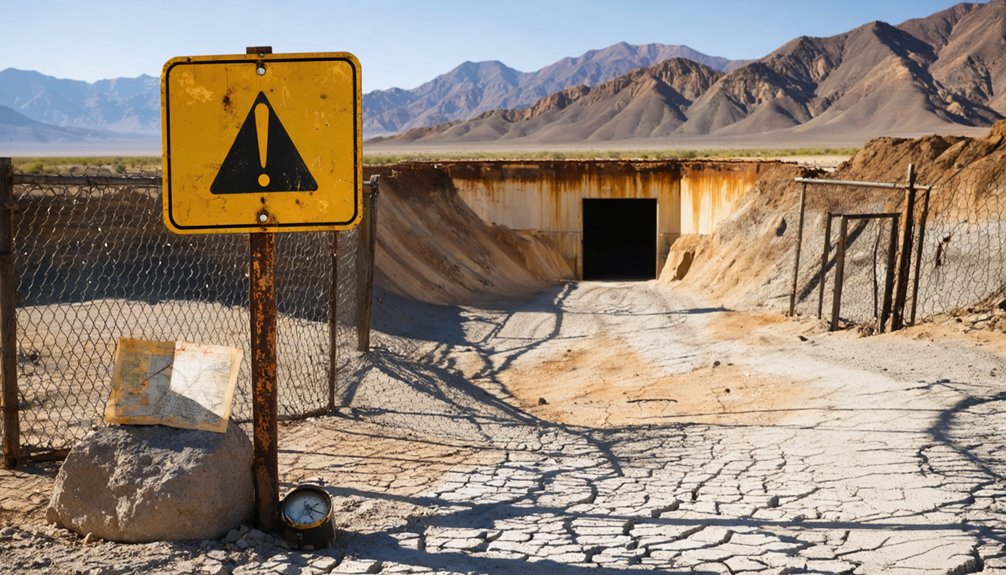
Atolia’s terrain doesn’t forgive careless footwork — shafts drop without warning, dugouts hide beneath loose sand, and anthill-like rock piles shift underfoot. Wear sturdy boots, watch every step, and never explore alone. Bring water; the Mojave heat hits hard and fast.
Wildlife encounters add another layer of caution. Rattlesnakes and desert creatures claim these ruins as their own, so check before reaching into crevices or flipping rocks. Stay alert and give animals their space.
Cultural preservation matters here, too. Don’t remove artifacts, disturb structures, or carve into remaining surfaces. These frozen fragments of industrial history belong to the landscape and to every future visitor who’ll walk this ground. Respect the site, and Atolia rewards you with an unfiltered, extraordinary glimpse into America’s mining past.
How Atolia Fits Into a 770-Mile California Ghost Town Road Trip
Tucked along Highway 395 roughly 60 miles north of Hesperia, Atolia is one of nine stops on a 3-to-6-day, 770-mile California ghost town road trip that traces the state’s boom-and-bust mining history across the desert landscape. You’ll move freely between forgotten settlements, piecing together California’s raw industrial past one abandoned site at a time.
Atolia anchors the route with its distinctive character:
- Former world’s largest tungsten mine
- Rusting railways and scattered mining equipment
- Dramatic desert landscape dotted with shafts and rock piles
- Visible roadside access directly off Highway 395
You won’t need to wander far off-course to reach it. Atolia sits right on your path, making it an effortless yet unforgettable addition to your desert exploration.
Driving Highway 395 to Atolia: What to Know
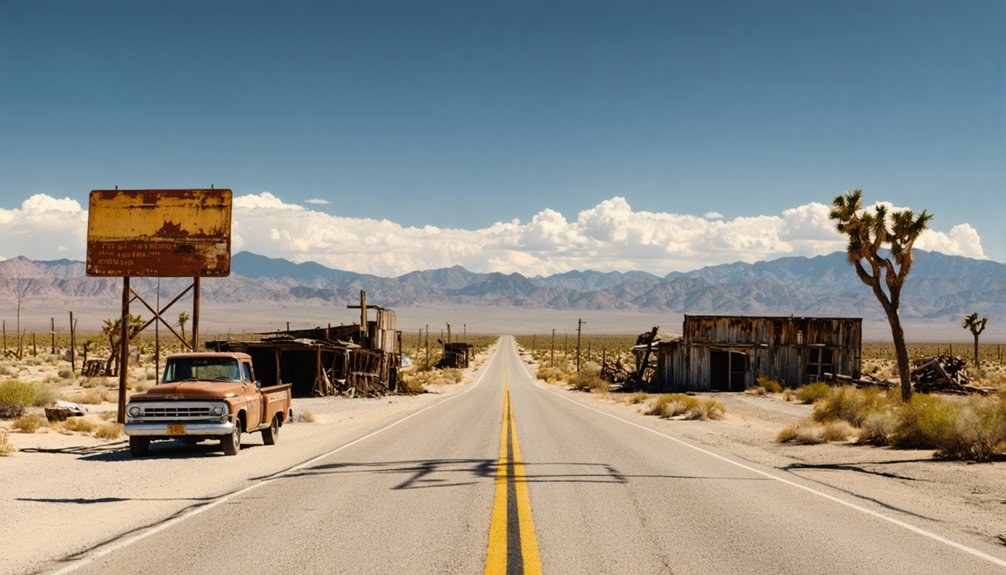
Highway 395 delivers you straight to Atolia’s doorstep, no detours required. You’ll spot the sign roadside about 60 miles north of Hesperia, making navigation effortless. Pull over, cut the engine, and step into a landscape frozen in industrial time.
The desert terrain greets you with mining relics scattered across half a square mile — rusting equipment, abandoned shafts, and anthill-like rock piles that tell stories no guidebook fully captures.
Local folklore surrounds this former tungsten powerhouse, where 2,000 residents once built lives around boom cycles and market swings.
Watch your footing carefully. Shafts and uneven dugouts hide beneath the surface. You’re roaming a working ghost town, not a curated museum, and that raw authenticity is precisely what makes Atolia worth the drive.
Frequently Asked Questions
Is There an Admission Fee to Visit Atolia Ghost Town?
There’s no admission fee to explore Atolia’s historical landmarks — you’re free to roam! Watch your step near shafts, and don’t forget your camera for stunning photography tips capturing rusting railways and eerie desert remnants.
Are Pets Allowed When Exploring the Atolia Ghost Town Site?
On the fence about bringing your pet? Dog friendly policies aren’t confirmed for Atolia, so prioritize pet safety—watch out for shafts and rough terrain that could put your furry companion in harm’s way.
What Is the Best Time of Year to Visit Atolia?
Spring and fall offer you the best seasonal weather for exploring Atolia’s haunting desert landscape. You’ll capture stunning photography opportunities during golden-hour light, avoiding summer’s brutal heat and winter’s bitter cold.
Is There Parking Available Directly at the Atolia Ghost Town Site?
Covering half a square mile, Atolia’s open desert terrain lets you pull off Highway 395 freely. You’ll find informal parking near historic landmarks, giving you flexibility for photography tips while exploring this vast, hauntingly beautiful abandoned mining site.
Are Guided Tours Available at the Atolia Ghost Town Location?
No guided tours are available at Atolia, so you’ll explore freely on your own terms. You’ll discover incredible photography opportunities among historical landmarks like rusting railways and abandoned equipment — just watch your step near dangerous shafts!
References
- https://www.exploratography.com/blog-cal/2paby382jd9spqrtp3u1gg1ks4t9jc
- http://www.mytripjournal.com/travel-450714-red-mountain-ghost-town-ghost-towns-hwy-area
- https://www.youtube.com/watch?v=o0dUihzgYDY
- https://www.youtube.com/watch?v=8AwwoYHUYkY
- https://www.youtube.com/watch?v=FYgoDcRx4uE
- https://www.youtube.com/watch?v=6ZydRtiOXQs
- https://www.visitcalifornia.com/now/california-ghost-towns-road-trip/
- https://www.exploratography.com/blog-cal/tag/395
- https://www.youtube.com/watch?v=AeGXVs8t4_0
- https://www.ghosttowns.com/states/ca/atolia.html