Planning a ghost town road trip to Manseau, Michigan means heading to Leelanau County, where Antoine Manseau’s 1859 grist mill still stands along Kenosha Creek. You’ll find weathered ruins, a historic dam at Belanger Pond, and the quiet remnants of a railroad siding that once connected this mill to regional trade. Manseau never became a full town, making it one of Michigan’s most overlooked historic sites. There’s far more to this forgotten stop than you’d expect.
Key Takeaways
- Manseau features Antoine Manseau’s 1859 grist mill, the oldest in the Grand Traverse area, listed on Michigan Historic Places.
- Visit in late summer or early fall for the clearest views of the mill structure and Belanger Pond dam.
- Explore independently, as Manseau has no visitor amenities, so come prepared for unstructured, self-guided exploration.
- Pair Manseau with nearby ghost towns like Fouch, Gills Pier, Keswick, and Norrisville for a comprehensive road trip.
- The site highlights a quieter agricultural and industrial decline, contrasting with more dramatic mining or lumber ghost towns.
Is Manseau, Michigan Actually a Ghost Town?
While Manseau never became a full town in the traditional sense, it earns its ghost-town label through what remains: the shell of Antoine Manseau’s 1859 grist mill, a silent dam, and a landscape that still carries traces of a once-active agricultural and rail hub in Leelanau County.
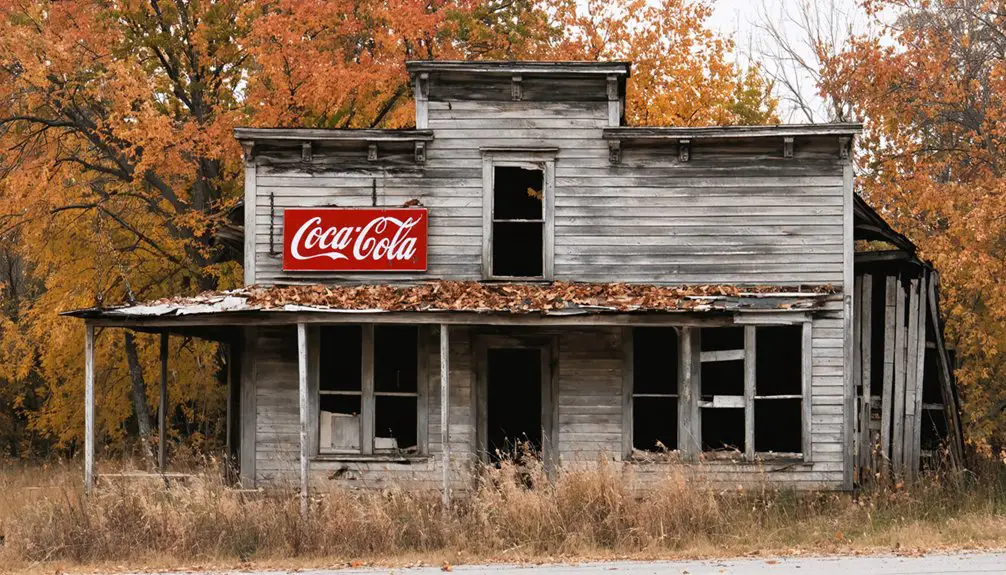
You’ll find no bustling streets or storefronts here. Instead, you’ll encounter industrial ruins that speak louder than any signpost. The mill, now listed on Michigan Historic Places, represents meaningful historical preservation of the Grand Traverse region’s earliest grain-processing heritage.
A railroad siding once connected this spot to broader trade routes, making it more than a simple mill site. If you’re drawn to places where history lingers in crumbling walls and still water, Manseau delivers exactly that kind of raw, unfiltered story.
What You’ll See When You Visit the Manseau Mill Site?
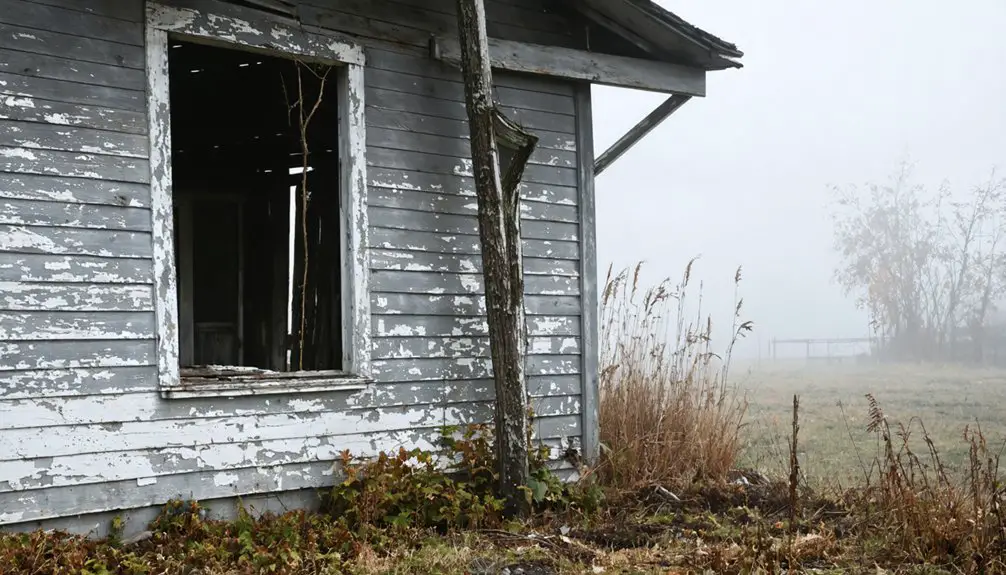
When you step onto the Manseau Mill site, the first thing that commands your attention is the mill itself—a weathered, empty structure that Antoine Manseau built in 1859, making it likely the oldest grist mill in the Grand Traverse area.
Its cultural significance is undeniable. Preservation efforts have kept it standing, earning it a spot on Michigan Historic Places. Here’s what you’ll encounter:
- The original 26-by-30-foot mill structure, still intact
- Belanger Pond’s dam, a quiet remnant of the water-powered operation
- The former railroad siding that once connected farmers to regional trade
- Surrounding landscape shaped by Kenosha Creek’s historic course
You’re walking through a place where agriculture, industry, and community once converged—and the ruins tell that story honestly.
The Mill Antoine Manseau Built in 1859
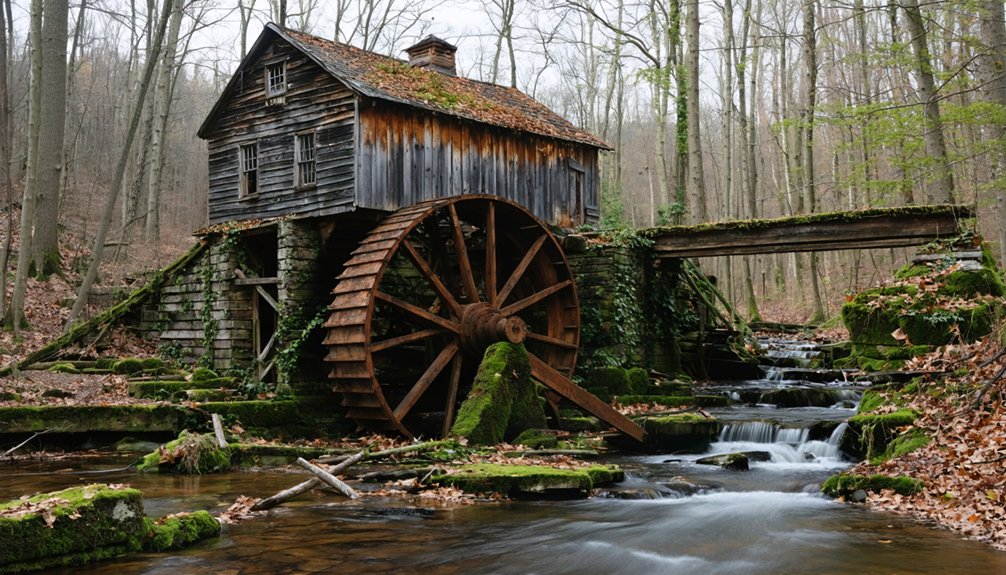
In 1859, Antoine Manseau dammed a creek, imported millstones, and raised a 26-by-30-foot structure that would become the Grand Traverse area’s oldest grist mill. He named the waterway Kenosha Creek and built something farmers across Leelanau County genuinely depended on.
They hauled grain here for grinding or sale, turning a rural mill site into a working engine of the local cash economy.
When you visit today, you’re standing inside a story of historical preservation that doesn’t get dressed up for tourists. The industrial ruins speak plainly.
The mill still stands, empty but intact, alongside the dam at Belanger Pond. You’re not looking at a reconstruction — you’re looking at the real structure Manseau built, which makes this stop worth every mile of the drive.
Where Does Manseau Fit on the Leelanau Ghost Town Trail?
Manseau fits into the Leelanau ghost town trail as a mill-and-rail stop rather than a collapsed mining camp or a burned-out lumber town, which makes it a useful contrast if you’re piecing together a fuller picture of how this region died and changed.
Manseau isn’t a mining collapse or a lumber fire — it’s a quieter, slower kind of ending that reframes the whole trail.
When you map your route, consider how Manseau’s industrial heritage connects to four distinct layers of local history:
- Agricultural decline that ended grain-mill demand by 1934
- Railroad integration through its dedicated siding near Omena
- Water infrastructure still visible at Belanger Pond’s dam
- Michigan Historic Places designation preserving the physical record
Each layer tells a different story. You’re not just visiting ruins here — you’re reading an economic timeline written in millstones, pond water, and abandoned rail schedules.
What’s the Best Time of Year to Visit Manseau?
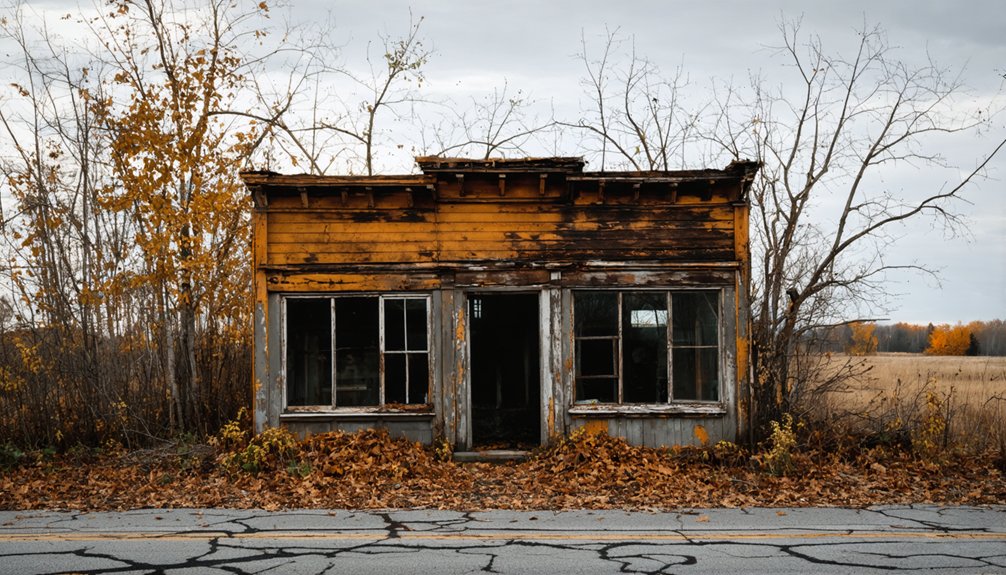
Late summer and early fall give you the clearest look at what Manseau actually is — a mill site slowly being reclaimed by the landscape around it. The seasonal flora thins just enough to expose the old structure and dam without blocking your sightlines completely.
You’ll also avoid the peak tourist crowds that push through Leelanau County during July.
Spring works too, especially if you want to see the creek running strong near Belanger Pond.
Winter visits are possible but expect limited access and no visitor amenities whatsoever — this isn’t a managed park.
Go when the roads are clear and the light is good.
Manseau rewards visitors who show up prepared to explore on their own terms, not those expecting guided infrastructure.
Which Other Michigan Ghost Towns Belong on This Route?
Once you’ve marked Manseau on your map, you can easily extend the route to include other Leelanau County remnants that share the same story of mills, logging, and economic decline.
Michigan’s ghost-town circuit rewards planning, since the best stops combine visible ruins, historic markers, and surviving industrial structures that give each site real context.
Build your route around places that cluster geographically, so you’re not backtracking and you can move efficiently from one abandoned chapter of Michigan history to the next.
Nearby Ghost Towns Worth Visiting
While Manseau makes a compelling anchor for your road trip, Leelanau County and the broader northwestern Michigan region are dotted with ghost towns that round out the journey. Each stop carries its own urban legends and folklore stories tied to Michigan’s logging and industrial past.
Consider adding these nearby destinations:
- Fouch – A former logging settlement with visible remnants and rich local folklore stories.
- Gills Pier – A once-active harbor community that quietly faded after maritime commerce declined.
- Keswick – A small agricultural hamlet whose abandonment sparked lasting urban legends among locals.
- Norrisville – A mill-era ghost town echoing Manseau’s own industrial story.
Each location deepens your understanding of how northwestern Michigan’s resource-driven economy rose, thrived, and ultimately collapsed.
Building Your Ghost Town Route
Building a ghost town route around Manseau means thinking beyond Leelanau County and pulling in Michigan’s wider map of industrial ruins. Start at Manseau, where historical preservation keeps the 1859 grist mill standing as a rare, tangible anchor for your route.
Then push north or south along the peninsula before heading inland toward the Upper Peninsula, where industrial remnants from copper and iron booms scatter across the landscape. Towns like Central Mine and Fayette offer dramatic ruins with strong interpretive context.
You’re not just collecting stops — you’re tracing Michigan’s full arc from agricultural settlement to logging, mining, and eventual decline. Map your route around surviving structures, historic markers, and accessible sites so every stop delivers real historical weight rather than an empty field.
How Do You Drive to Manseau From Traverse City?
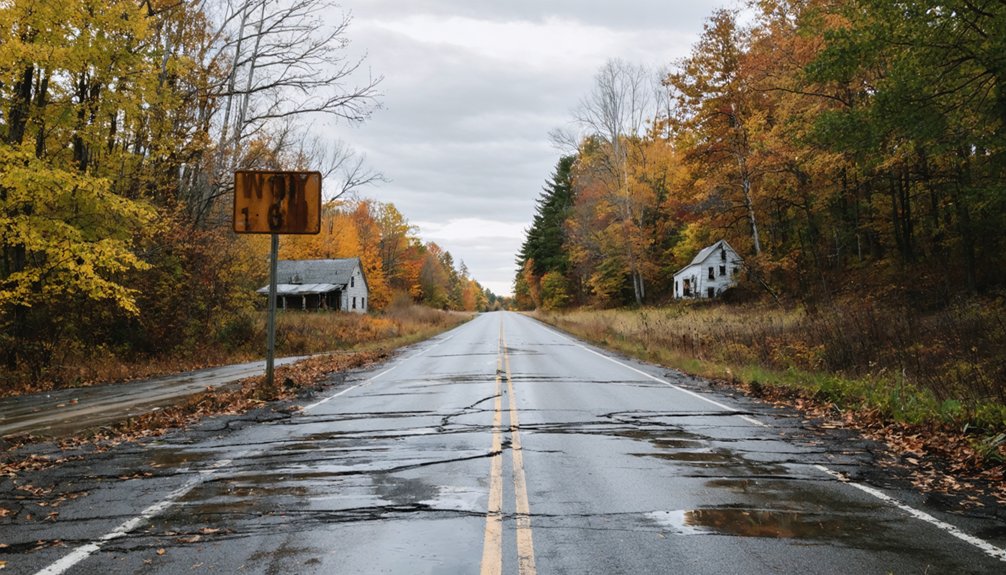
Driving from Traverse City to Manseau takes you northwest along the Leelanau Peninsula, roughly toward Omena, where the old mill site sits tucked near Belanger Pond. The route rewards curious travelers chasing local legends and historical preservation.
Follow these steps:
- Head northwest on M-22 from Traverse City toward Suttons Bay.
- Continue north on M-22, passing through Suttons Bay and following the bay’s shoreline.
- Turn toward Omena as you approach the northern stretch of the peninsula.
- Look for the Manseau Mill site near Belanger Pond, just outside Omena.
The drive runs roughly 25 miles and takes under an hour. You’ll pass orchards, bay views, and quiet farm roads — all reminders of the agricultural world that once kept Manseau’s mill grinding.
Frequently Asked Questions
Is There Parking Available at the Manseau Mill Site?
Parking details aren’t officially documented, but you’ll likely find roadside spots near the mill. It’s worth stopping for historical preservation exploration and amazing photography opportunities—you’re free to capture this ghost town’s haunting, rustic beauty!
Who Owns the Manseau Mill Property Today?
The current ownership isn’t confirmed in available records, but you’ll find the mill’s historic preservation status keeps it protected. While you’re exploring, you can enjoy wildlife observation along the scenic Belanger Pond surroundings.
Can Visitors Enter the Manseau Mill Building?
The mill’s historical preservation status likely keeps its doors beyond reach, but you can admire its architectural significance from outside. You’ll still soak in the ghost town’s atmosphere, exploring the dam and surrounding remnants freely.
Is the Manseau Mill Site Accessible for People With Disabilities?
Accessibility improvements haven’t been confirmed for the Manseau Mill site, so you’ll likely encounter uneven terrain. Historical preservation priorities may limit modifications, but you can still explore the surrounding area and Belanger Pond’s scenic landscape.
Are There Any Guided Tours Offered at the Manseau Site?
Like a forgotten whisper, Manseau holds its haunted legends close. No official guided tours are available, but you’ll uncover historic stories independently as you explore the mill ruins and dam that still stand today.
References
- https://omenapreservation.org/omenas-ghost-towns/
- https://www.visitkeweenaw.com/listing/mandan-the-ghost-town/517/
- https://www.youtube.com/watch?v=YYm9FXZ4mCk
- https://www.reddit.com/r/upperpeninsula/comments/1jpqd2n/up_michigan_hidden_gems_n_ghost_towns/
- https://en.wikipedia.org/wiki/List_of_ghost_towns_in_Michigan
- https://library.kirtland.edu/eg/opac/record/32165
- https://en.wikipedia.org/wiki/Crescent
- https://www.nps.gov/slbe/learn/historyculture/ghosttowns.htm
- https://www.visitkeweenaw.com/things-to-do/museums-history/ghost-towns/