Mesquite Ghost Town sits sixteen miles northwest of Gail, Texas, along Farm Road 1054, where abandoned structures and quiet rural landscapes tell a forgotten story. You’ll need offline maps, plenty of water, and a full fuel tank before leaving Gail. Spring and fall offer the best conditions for exploring and photography. Local legends, haunted road lore, and nearby ghost towns make this trip unforgettable. Everything you need to plan your journey is waiting just ahead.
Key Takeaways
- Mesquite ghost town, established around 1905, declined after its school closed in the late 1920s or early 1930s, leaving abandoned structures still visible today.
- Located sixteen miles northwest of Gail, Texas, via Farm Road 1054, requiring intentional navigation planning due to unreliable GPS and rural isolation.
- Spring and fall offer the best visiting conditions, with mild temperatures, wildflowers, and cooler weather ideal for photography and exploration.
- Pack at least one gallon of water per person, high-energy snacks, a full fuel tank, offline maps, and a first aid kit.
- Nearby ghost towns Terlingua and Glenrio, plus Lynn County’s dramatic caprock scenery, provide additional exploration opportunities to enrich your road trip.
How Mesquite Ghost Town Grew and Then Disappeared
Tucked above the Caprock along Farm Road 1054, Mesquite, Texas, started as a modest rural farming settlement that quietly took root around 1905 when the county established a local school district to serve the scattered families working the isolated land.
That school became the heartbeat of this rural community, keeping residents connected for decades.
That one-room schoolhouse was the thread stitching scattered homesteads into something resembling a community.
But by the late 1920s or early 1930s, the school closed, and Mesquite’s ghost town origins began taking shape. Without that anchor, the settlement slowly unraveled.
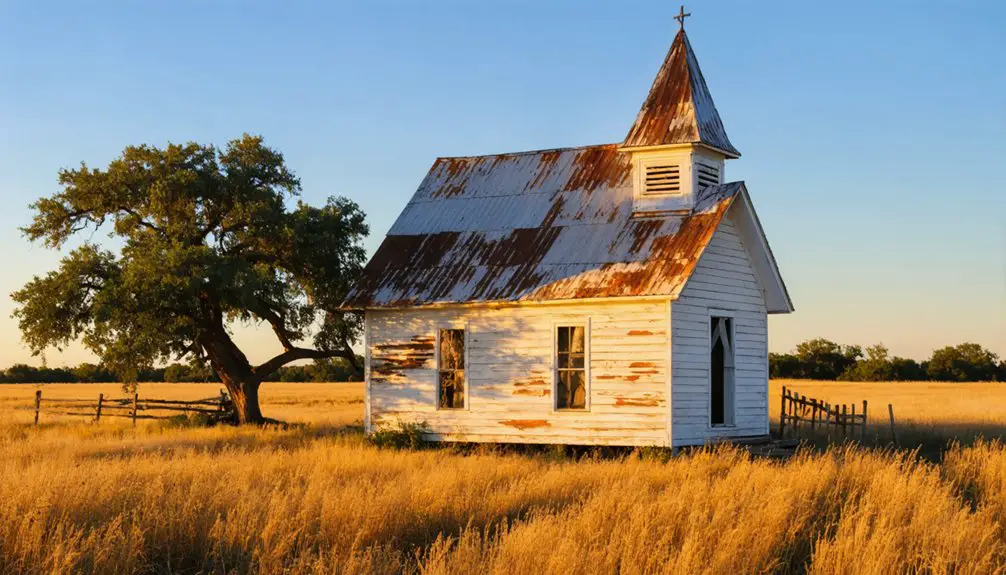
By the 1970s and 1980s, you’d find only scattered houses and an abandoned schoolhouse standing against the West Texas sky.
Today, Mesquite sits sixteen miles northwest of Gail, a quiet reminder that even determined communities can’t always outrun isolation, distance, and time.
Where Exactly Is Mesquite Ghost Town Located?
Now that you know how Mesquite faded from a living community into a ghost town, finding it’s your next challenge—and it’s not exactly a straightforward drive.
Its rural isolation is real—no GPS shortcut cuts through this landscape easily.
Here’s how to orient yourself:
- Start in Gail – Head sixteen miles northwest toward Borden County’s upper reaches.
- Take Farm Road 1054 – Your primary route above the Caprock, cutting through open terrain.
- Watch for the Lynn County line – Mesquite sits seven miles south of it.
- Embrace the remoteness – Ghost town legends thrive here precisely because civilization feels distant.
This isn’t a casual detour—it’s a deliberate journey into forgotten Texas, and that’s exactly what makes it worth taking.
Why Mesquite Qualifies as One of Texas’s Forgotten Ghost Towns
When you look at Mesquite’s history, you’ll see a textbook case of rural Texas abandonment — a farming settlement that peaked around a small school district established in 1905, then quietly faded as the school closed by the early 1930s.
You can still picture the isolation that sealed its fate: no major highways, no economic anchor, just scattered houses and an abandoned schoolhouse holding on through the 1970s and 1980s.
Texas claims more ghost towns than any other state, and Mesquite earns its place among them as a forgotten rural outpost that time simply left behind.
Rural Roots And Abandonment
Few places in Texas embody quiet rural abandonment quite like Mesquite, a once-active farming settlement perched above the Caprock in northwest Borden County.
Its rural heritage tells a story of people who carved lives from isolated land, then gradually disappeared.
Here’s what shaped Mesquite’s decline:
- School established around 1905 served as the community’s heart for roughly two decades.
- The school closed by the late 1920s or early 1930s, signaling population retreat.
- Abandoned structures, including the crumbling schoolhouse, stood visibly through the 1980s.
- Scattered houses remained but no organized community survived beyond mid-century.
You’re visiting a place where freedom once meant wide-open farmland and self-reliance — now replaced by silence, wind, and weathered ruins worth exploring.
Decades Of Decline
Mesquite didn’t fade overnight — it unraveled slowly, the way most forgotten Texas towns do. Economic shifts pulled families toward larger centers, leaving behind scattered houses and an abandoned schoolhouse that stood through the 1970s and 1980s as a quiet monument to what once was.
Community changes followed naturally — when the school closed in the late 1920s or early 1930s, the social backbone of the settlement collapsed with it. Without that anchor, there was little reason to stay.
You can still find Mesquite marked on county highway maps, but that’s about all that remains of its identity. No population estimates exist beyond 2000.
What you’ll discover when you arrive is raw, unfiltered Texas history — untouched, unhurried, and completely on your own terms.
Texas Ghost Town Status
That slow unraveling tells you everything you need to know about why Mesquite earns its ghost town label. Texas claims over 500 ghost towns, more than any other state, and Mesquite fits that pattern of rural abandonment perfectly.
Ghost town legends grow from places exactly like this — isolated, forgotten, stripped of purpose.
Your rural exploration checklist for understanding Mesquite’s status:
- School closure signaled community collapse in the late 1920s
- Highway bypass cut off economic lifelines permanently
- Scattered remnants like the abandoned schoolhouse confirm true ghost town classification
- Zero population data post-2000 seals its forgotten status
You’re not visiting a reconstructed attraction here. You’re standing inside authentic Texas history — raw, unfiltered, and completely yours to discover.
How to Get to Mesquite Ghost Town From Gail
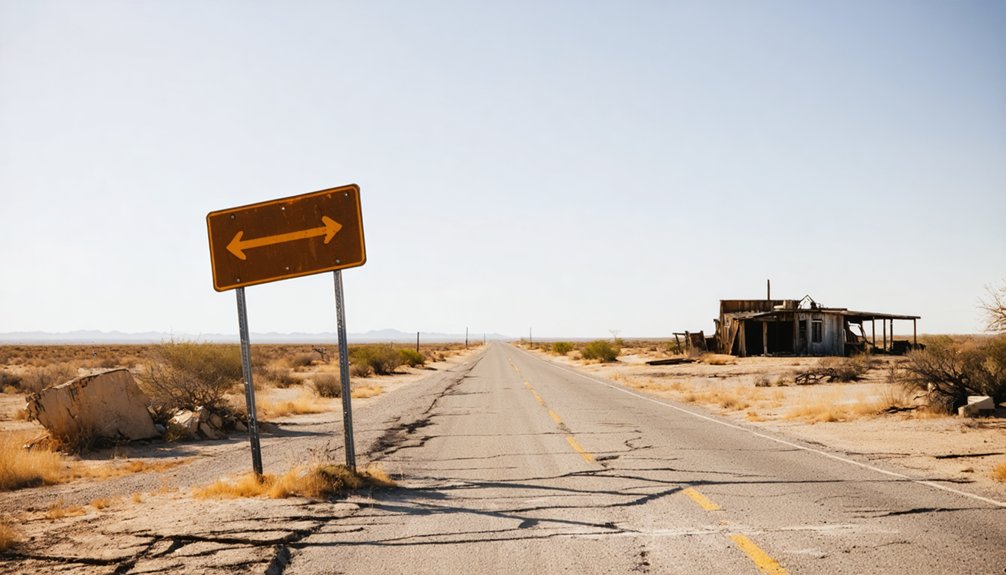
If you’re planning a road trip to the Mesquite ghost town, Farm Road 1054 out of Gail is your primary route. Head sixteen miles northwest from Gail in Borden County, and you’ll find this remote settlement sitting above the Caprock, just seven miles south of the Lynn County line.
Don’t expect heavy traffic or roadside conveniences — this is genuine rural exploration at its most unfiltered. The isolation is part of the experience, so fuel up and pack essentials before leaving Gail.
While ghost town myths paint these places as effortlessly discoverable, reaching Mesquite demands intentional planning. County highway maps from 2000 still mark the location, making them a reliable navigation reference.
Consider combining your visit with nearby Lynn County sites to maximize your journey.
Best Time of Year to Visit Mesquite Ghost Town
Planning your visit around the seasons can make or break a trip to Mesquite ghost town. West Texas weather shapes everything from road conditions to photography tips for capturing those haunting ruins.
- Spring (March–May): Mild temperatures and wildflowers create stunning backdrops for ghost town photography.
- Fall (September–October): Cooler air and the October Mesquite Meander seasonal events make this the prime window for combining history and walking tours.
- Summer (June–August): Brutal heat and isolated roads demand serious preparation — carry extra water and fuel.
- Winter (November–February): Sparse crowds and sharp light offer dramatic photography opportunities, though cold winds can cut through quickly.
You’ve got the freedom to choose your season — just choose wisely.
Supplies You Need for Mesquite’s Isolated Caprock Location
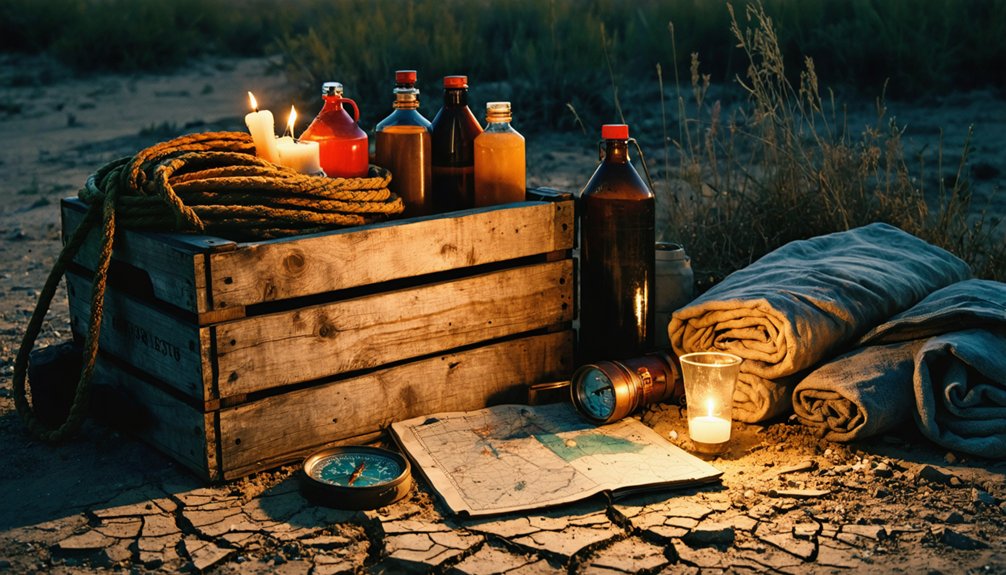
Because Mesquite ghost town sits sixteen miles northwest of Gail on isolated Caprock terrain, you’ll need to treat this road trip like a backcountry expedition rather than a casual drive.
Your supplies checklist should cover every basic need since no services exist along Farm Road 1054.
Pack these essentials for proper isolation preparation:
- Water — carry at least one gallon per person
- Food — pack high-energy snacks and a full meal
- Fuel — top off your tank before leaving Gail
- Navigation — download offline maps since cell service is unreliable
- First aid kit — handle minor emergencies independently
- Flashlight — essential if you’re exploring at dusk
- Spare tire — unpaved stretches punish neglected vehicles
Arriving self-sufficient means you’ll explore freely without depending on nonexistent help.
What’s Still Standing at Mesquite Ghost Town
Few remnants survive at Mesquite ghost town, but what’s left tells the settlement’s story clearly.
These ghostly remnants reward curious travelers willing to explore off the beaten path. When you arrive, expect to find Mesquite relics that reflect decades of rural Texas life.
Mesquite’s ghostly relics await off-path explorers, quietly reflecting decades of forgotten rural Texas life.
- Abandoned schoolhouse – Standing since the 1970s, it anchors the settlement’s identity as an early 1900s rural community.
- Scattered farmhouses – Isolated structures dot the landscape, hinting at families who once worked this Caprock land.
- Farm Road 1054 – The route itself remains a navigable thread connecting Mesquite’s forgotten past to modern travelers.
- County highway map markings – Even in 2000, Mesquite earned recognition, preserving its place in recorded Texas history.
Walk carefully and photograph everything you discover.
Haunted Roads and Ghost Stories Around Mesquite
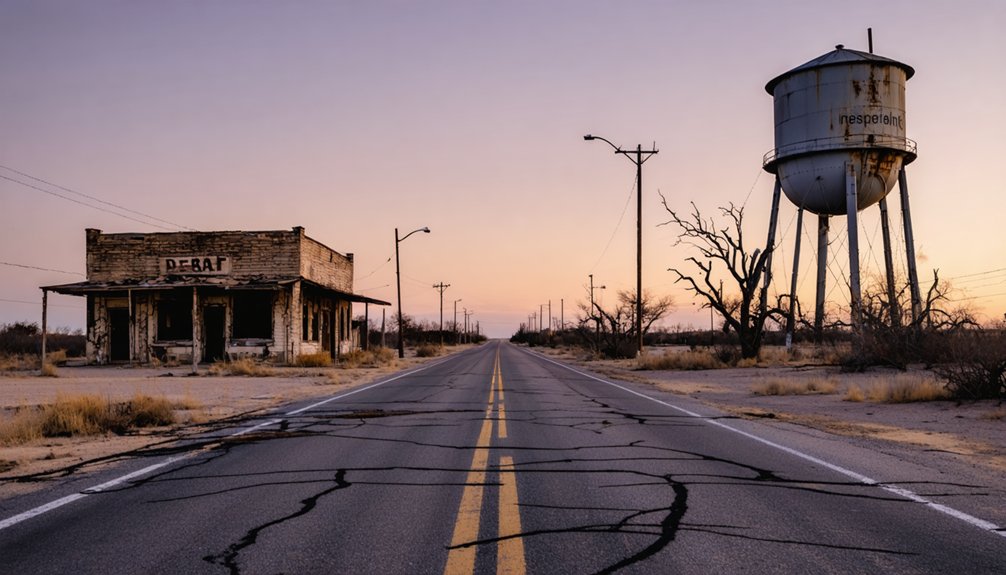
If you’re chasing chills beyond crumbling buildings, Holloman Road will put your nerves to the test — locals tie this stretch of asphalt to alleged killings, body dumps, and an eerie tree line that seems to whisper dark stories.
Ghost hunters and folklore enthusiasts have shared their unsettling experiences online, building a growing reputation for the area that draws paranormal visitors year after year.
You’ll find no shortage of local lore to research before your trip, and standing on that road at dusk, you may start to understand why the stories refuse to die.
Holloman Road’s Dark History
Holloman Road in Mesquite carries a dark reputation that goes well beyond rural folklore.
Locals whisper about haunted legends tied to alleged killings and body dumps along its isolated stretch. If you’re chasing eerie encounters, this road delivers an unsettling atmosphere unlike anything you’ll find on a standard highway.
Before you venture out, know what you’re stepping into:
- Alleged crime history — Reports suggest violent acts occurred along this corridor.
- Ghostly tree line — The dense trees bordering the road amplify the haunting atmosphere.
- Unexplained sightings — Visitors report strange activity after dark.
- Online folklore — Searchable stories deepen the road’s mysterious reputation.
You’re free to investigate, but respect the area’s history and stay aware of your surroundings.
Ghost Stories and Folklore
Mesquite’s dark reputation doesn’t stop at Holloman Road. Local legends weave through this ghost town like shadows at dusk, drawing curious travelers who crave something beyond ordinary sightseeing.
You’ll find that eerie encounters aren’t hard to imagine when you’re standing among abandoned structures and empty stretches of rural Texas land.
Residents and visitors have shared unsettling stories passed down through generations, tales that keep Mesquite alive in folklore even as its buildings crumble.
If you want to dig deeper, a quick online search will surface paranormal accounts and firsthand testimonials that’ll make your road trip feel genuinely adventurous.
Come prepared with an open mind. Mesquite rewards those willing to explore its mysteries, offering a raw, unfiltered experience that no polished tourist destination can replicate.
Paranormal Visitor Experiences
Visitors who’ve traveled Holloman Road after dark describe an unease that goes beyond the usual isolation of rural Texas.
Reports of paranormal activities and ghostly encounters keep drawing curious travelers back to this stretch of forgotten land. If you’re planning your visit, here’s what others have experienced:
- Unexplained lights flickering near the tree line with no identifiable source
- Sudden temperature drops felt while standing along the roadside at night
- Audible whispers reported near areas historically associated with violent events
- Shadow figures glimpsed briefly before disappearing into the darkness
You don’t have to believe in ghosts to feel something unsettling here.
The road’s history alone makes every sound feel loaded with meaning.
Borden and Lynn County Sites Worth Adding to Your Mesquite Trip
While you’re making the trek out to Mesquite Ghost Town on Farm Road 1054, it’s worth extending your road trip to explore what Borden and Lynn counties have to offer just beyond the ghost town’s boundaries.
Among the standout Borden landmarks, Gail serves as the county seat and offers a quiet, authentic slice of West Texas small-town life.
Gail, the Borden County seat, offers travelers a quiet, authentic taste of West Texas small-town life.
Head seven miles north across the Lynn County line to discover Lynn attractions that complement your ghost town experience perfectly.
The wide-open terrain between both counties rewards curious travelers with dramatic caprock scenery and a genuine sense of rugged isolation.
You’re not just visiting a ghost town here — you’re immersing yourself in a landscape that history quietly shaped and largely left behind.
Texas Ghost Towns Close Enough to Combine With Mesquite
If you’re already making the trek to Mesquite, you can stretch your ghost town adventure by adding Terlingua, the haunting remnants of a once-thriving mining community in far West Texas.
Glenrio, straddling the Texas-New Mexico border along the iconic Route 66, offers another eerie stop where crumbling storefronts tell the story of a town that traffic simply left behind.
You’ll also want to factor in the nearby Lynn County sites you’ve already scouted, letting you build a multi-stop road trip that squeezes the most out of your time in this historically rich region.
Terlingua Mining Ghost Town
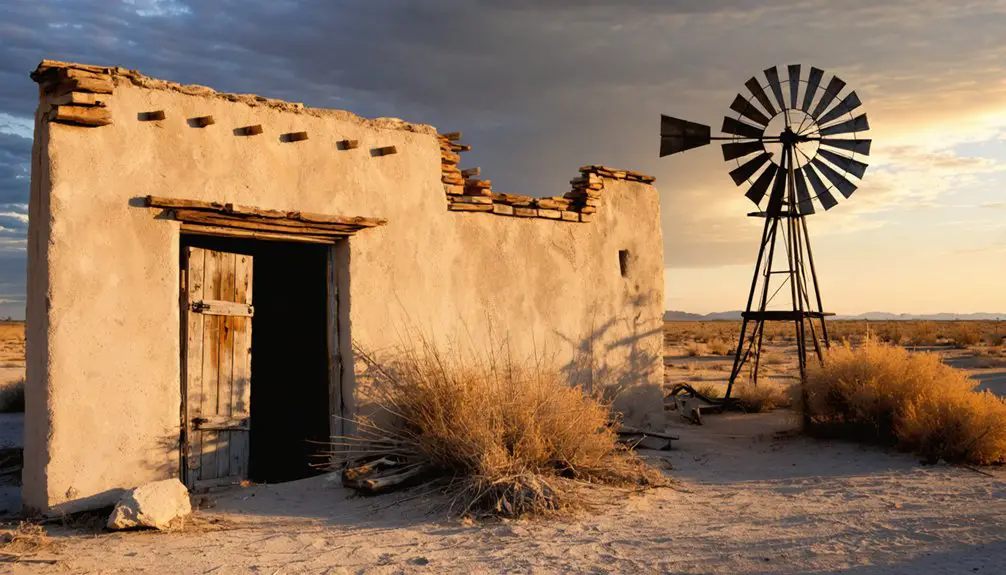
Tucked in the rugged Chihuahuan Desert of far west Texas, Terlingua once thrived as a booming quicksilver mining hub before collapsing into a haunting shell of crumbling adobe ruins and weathered graves.
Terlingua history runs deep, and its mining legacy draws adventurers craving raw, unfiltered history.
Here’s what you’ll experience:
- Ghostly ruins — Walk through collapsed adobe structures that once housed miners and families.
- Historic cemetery — Browse weathered graves reflecting the town’s dangerous mining era.
- Mining artifacts — Discover remnants of quicksilver extraction equipment scattered across the landscape.
- Stark desert scenery — Marvel at Big Bend’s dramatic backdrop surrounding the abandoned settlement.
Terlingua sits near Big Bend National Park, making it a natural companion stop worth building your entire west Texas road trip around.
Glenrio Route 66 Border
Swap Big Bend’s desert heat for the windswept Texas Panhandle, and you’ll find Glenrio straddling the New Mexico border like a forgotten relic of Route 66‘s golden age.
Glenrio history reads like a classic American rise-and-fall story — a thriving roadside community that lived and died by Route 66 traffic. When Interstate 40 bypassed it completely, Glenrio didn’t just slow down; it stopped entirely.
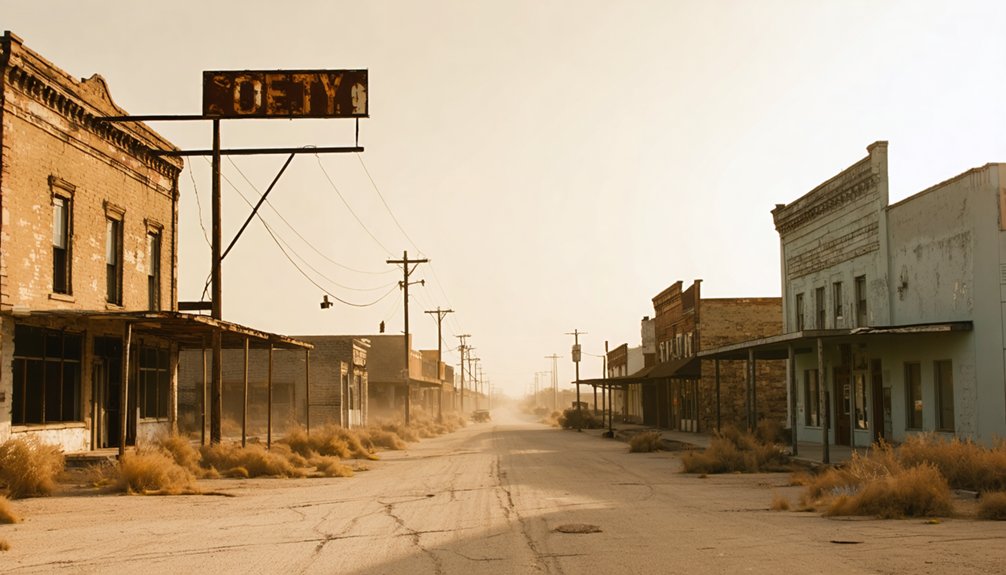
Today you’ll walk streets where gas stations, motels, and diners once buzzed with cross-country travelers chasing freedom on America’s most iconic highway. Weathered storefronts and crumbling foundations tell that story without a single tour guide.
Pairing Glenrio with Mesquite gives your road trip genuine range — from isolated Borden County farmland to a legendary border ghost town frozen in mid-century America.
Nearby Lynn County Sites
Lynn County sits just seven miles north of Mesquite, making it a natural extension of any Borden County ghost town run.
You’re already deep in rural exploration territory, so pushing north costs you nothing but opens up serious historical landmarks and ghost town lore worth discovering.
Pack these stops into your Lynn County swing:
- Abandoned rural schoolhouses mirroring Mesquite’s own forgotten education history
- Historic cemetery sites predating major Texas settlement patterns
- Unmarked ghost town remnants scattered across isolated farm roads
- Local Mesquite attractions crossover points where county histories intersect
You’ll find that Lynn County rewards the curious traveler willing to navigate unpaved stretches.
Combined with Mesquite’s haunted road folklore and crumbling foundations, this two-county loop delivers an authentic, unfiltered slice of forgotten Texas.
Frequently Asked Questions
Is There Cell Phone Service Available Near Mesquite Ghost Town?
With over 500 Texas ghost towns, you’ll find cell service coverage sparse near Mesquite’s remote location. Don’t count on strong signal strength — it’s an isolated farming area, so you’ll want to prepare accordingly before heading out.
Are There Any Entrance Fees to Visit Mesquite Ghost Town?
You won’t pay any entrance fees to explore Mesquite’s ghost town history — it’s freely accessible! Roam the remote ruins, soak in local attractions, and embrace the open road’s spirit of adventure and discovery.
Can You Camp Overnight Near the Mesquite Ghost Town Site?
You’ll find no designated camping options directly at the ghost town, but you can explore nearby local attractions and set up camp in the surrounding rural areas, embracing the freedom of Texas’s wide-open landscapes overnight.
Is Mesquite Ghost Town Accessible for Visitors With Mobility Limitations?
Mesquite Ghost Town’s remote, unpaved terrain limits mobility options considerably. You’ll find no visitor accommodations for accessibility needs, so it’s best to prepare thoroughly before venturing out to explore this rugged, isolated rural site.
Are Guided Tours of Mesquite Ghost Town Available for Booking?
No formal guided tour options exist for this ghost town history treasure! You’ll carve your own path through endless eerie silence, exploring Mesquite’s abandoned schoolhouse and rural mysteries completely independently, making your freedom-fueled adventure uniquely yours.
References
- https://www.allacrosstexas.com/texas-ghost-town.php?city=Mesquite
- https://www.youtube.com/watch?v=Ptbi6r-psdM
- https://www.youtube.com/watch?v=SvLlUehwRtQ
- https://www.atlasobscura.com/itineraries/6-ways-to-take-in-the-history-of-mesquite-texas
- https://mix941kmxj.com/texas-ghost-town-visit/
- https://dallasexpress.com/state/road-trip-across-texas-explore-13-of-the-spookiest-ghost-towns/
- https://myfamilytravels.com/the-spookiest-road-trips-in-texas-with-abandoned-landmarks
- https://en.wikipedia.org/wiki/List_of_ghost_towns_in_Texas