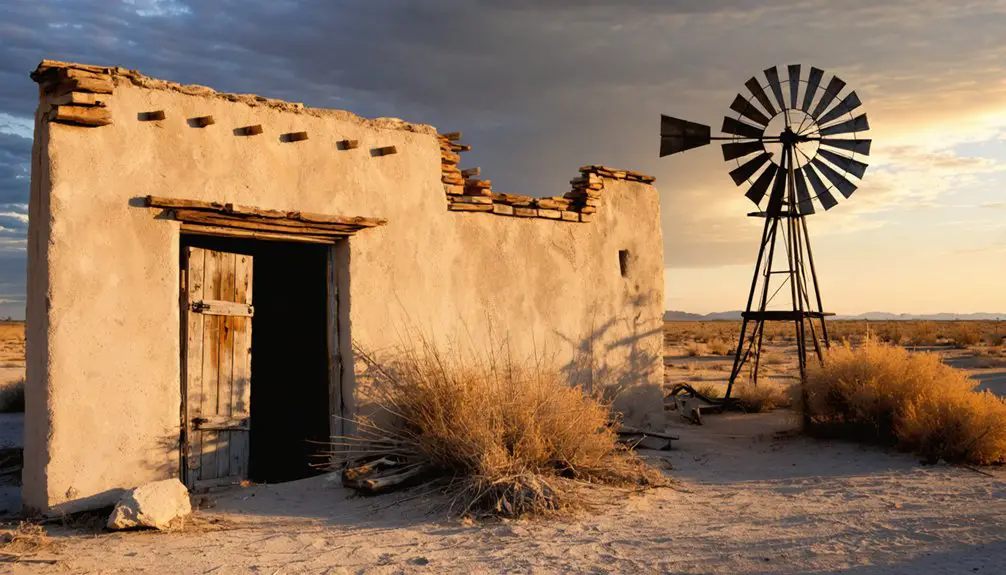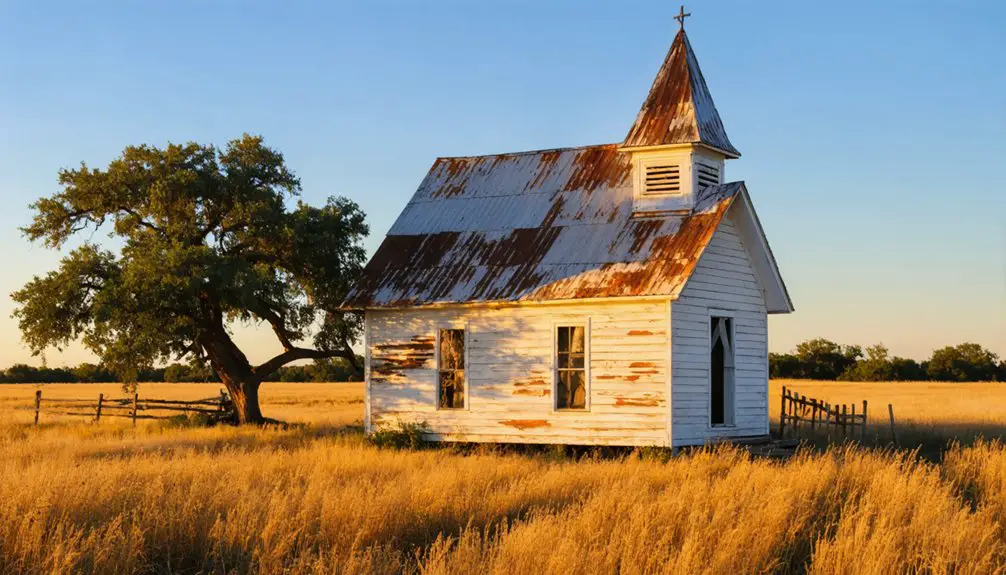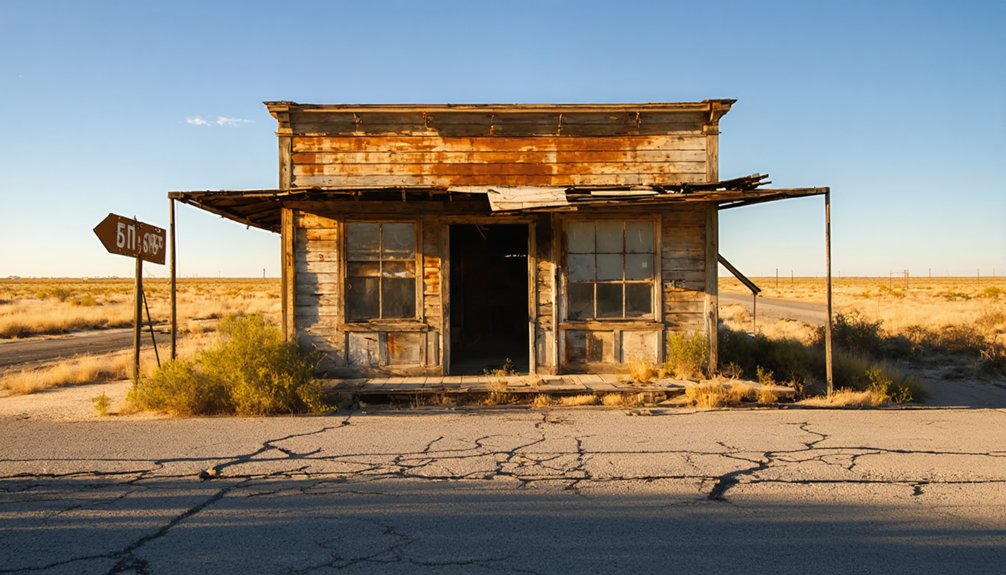
Perico, Texas sits along US Highway 87 in Dallam County, roughly 25 miles northwest of Dalhart and 11 miles southeast of Texline. You’ll spot its grain elevator rising from flat ranchland before you even arrive. What’s left of this 1888 railroad siding—once essential to the XIT Ranch—is scattered, weathered, and quietly haunting. Plan your visit for cooler months or early mornings, and keep your eyes open for pronghorn along the way. There’s far more to this forgotten corridor than a quick drive-by reveals.
Key Takeaways
- Perico, Texas sits along U.S. Highway 87, about 25 miles northwest of Dalhart, making it easily accessible by any standard 2WD vehicle.
- Key remnants include an abandoned school gymnasium and grain elevator, visible directly from Highway 87, though no amenities exist onsite.
- Visit during fall, winter, or spring, ideally at sunrise, to avoid dangerous heat and capture optimal photography lighting.
- Bring extra water, prepare for harsh sun exposure, and set realistic expectations about minimal preservation at this largely faded site.
- Extend your trip by including nearby ghost towns like Texline, Romero, and Cactus for a richer understanding of regional decline.
Where Perico Sits Between Dalhart and Texline
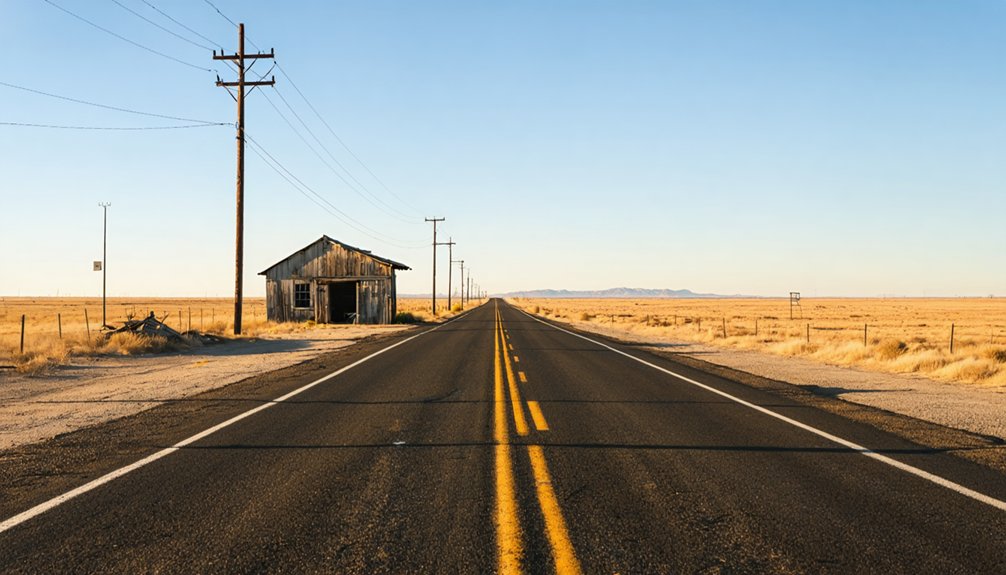
Tucked along U.S. Highway 87 in the western Texas Panhandle, Perico sits roughly 25 miles northwest of Dalhart and 11 miles southeast of Texline. You’ll find it in Dallam County, straddling a stretch of open road that rewards drivers craving real solitude.
The terrain is flat, exposed, and unfiltered — exactly what freedom-seekers want. Since the road is 2WD-friendly, any vehicle handles the trip comfortably.
Flat, exposed, and unapologetically raw — Perico’s terrain delivers pure Panhandle freedom on any road-worthy vehicle.
Stop in Dalhart beforehand to grab local cuisine that fuels a long day of exploring.
As you approach Perico along the highway, scan the surrounding grasslands for wildlife spotting opportunities — pronghorn and prairie birds frequent this corridor.
The site isn’t a developed attraction, so treat it as a highway-based discovery woven into the wider Panhandle landscape.
How Perico Grew From a Railroad Siding Into a Farm Community
What started as a simple railroad siding in 1888 tells you a lot about how the Texas Panhandle filled in. Originally called Farwell, the site served the XIT Ranch before becoming Perico in 1905. Settlers followed the rails, turning local legends of open range into cultivated farmland.
Key milestones shaped Perico’s rise:
- Fort Worth and Denver Railway established the original siding corridor
- W. P. Soash Land Company promoted surrounding farmland development
- A post office opened in November 1907, signaling real community roots
- Section houses, a boxcar station, and a water tower became early historic landmarks
- Local farms relied on Perico for supplies and education
You’re looking at a place that transformed organically from a rail stop into a working rural community.
What’s Left to See at Perico Today
That community energy is long gone now, and what remains at Perico is a quiet proof to how completely a town can fade. You’ll find abandoned structures scattered across a landscape that once hummed with railroad workers and farm families.
The old school gymnasium still stands as the most recognizable remnant, weathered but unmistakable. A grain elevator rises nearby, visible from U.S. Highway 87, giving the site its only real vertical presence.
Local folklore ties the name Perico to the Spanish word for small parrot, though nobody left can confirm why. A mobile home sits across the highway, the closest thing to active habitation.
Drive slowly, look carefully, and let the silence fill in what the buildings no longer can.
How to Reach Perico on US Highway 87
You’ll find Perico by driving US Highway 87 through the wide, windswept Texas Panhandle, where the road stretches between Dalhart and Texline like a long thread across shortgrass prairie.
From Dalhart, you’ll travel roughly 25 miles northwest before the ghost town’s remnants appear roadside.
If you’re coming from the New Mexico border, Texline sits just 11 miles to the northwest, making Perico an easy first stop heading southeast into Dallam County.
Highway 87 Route Overview
Running straight through the Texas Panhandle, U.S. Highway 87 delivers you directly to Perico without detours or complicated navigation. This corridor connects Dalhart and Texline, placing Perico roughly 25 miles northwest of Dalhart and 11 miles southeast of Texline. The route is fully 2WD-friendly, so any standard vehicle handles it comfortably.
Key route details worth noting:
- Highway 87 runs northwest-to-southeast through open ranchland.
- Dalhart serves as your nearest hub for fuel and tourist amenities.
- Historical preservation efforts are minimal, so manage expectations.
- Texline marks the New Mexico border, useful for extended road trips.
- Flat terrain offers long sightlines, making Perico’s grain elevator visible before you arrive.
Plan your drive during fall, spring, or winter to avoid punishing summer heat.
Dalhart To Perico Distance
Once you’ve got Highway 87 locked in as your corridor, the actual drive from Dalhart to Perico takes you just 25 miles northwest through wide-open Panhandle ranchland — the same stretch of country that once fed cattle and crops into Perico’s railroad economy.
You’ll feel the landscape open up almost immediately, flat and unguarded under a broad Texas sky. Watch for local wildlife along the roadside margins — pronghorn and prairie birds still move through this corridor freely.
If you spot any vintage signage weathered to near-illegibility, slow down; those fragments are often the only markers left announcing a place that once mattered.
The drive is straightforward on a paved two-lane, no special vehicle required, and Perico arrives quietly, almost without announcement, which feels exactly right.
Texline Approach Direction
If you’re approaching from Texline instead, Perico sits just 11 miles southeast down US 87 — a short run across the same high plains terrain that once marked the edge of XIT Ranch territory. Fuel up in Texline and keep your eyes open for wildlife spotting opportunities along the open roadside before reaching the site.
Watch for these landmarks and travel notes heading southeast:
- New Mexico border fades behind you within minutes
- Flat grassland corridors invite pronghorn and hawk sightings
- No local cuisine stops exist between Texline and Perico
- The grain elevator appears as your first visual signal of arrival
- Road conditions remain 2WD-friendly throughout this stretch
The drive is brief but loaded with that raw panhandle freedom that ghost town seekers actively chase.
Best Times of Year to Visit Perico, Texas
You’ll find Perico most rewarding during winter, spring, or fall, when the Texas Panhandle’s open skies and wide horizons make the ruins and remnants easier to absorb without the burden of punishing heat.
Summer temperatures on the exposed plains push well past comfortable, and the site offers no shade, no shelter, and no amenities to soften a midday visit.
Plan your drive for the cooler months, and you’ll get the best light, the most bearable conditions, and a clearer sense of what this windswept railroad ghost town once meant to Dallam County’s early settlers.
Ideal Visiting Seasons
Though the Texas Panhandle is open year-round, Perico rewards visitors most during winter, spring, and fall, when the high desert air stays cool enough to make roadside exploration comfortable. Summer midday heat discourages lingering, so plan accordingly if historic preservation matters to your experience.
Seasons that suit Perico best:
- Winter – crisp visibility reveals the stripped landscape and surviving structures clearly
- Spring – mild temperatures invite slower stops and local folklore discovery along US 87
- Fall – golden light flatters the grain elevator and gymnasium ruins beautifully
- Early morning visits – avoid afternoon heat in any season
- Avoid summer midday – exposed highway sites offer little shade
You’ll read the land honestly during cooler months, when Perico’s silence speaks loudest.
Summer Heat Considerations
Summer along US 87 hits hard and fast, turning Perico’s exposed highway corridor into a punishing stretch of radiant asphalt and windless heat by midday. The Texas Panhandle offers no shade, no shelter, and no mercy once temperatures climb.
Local wildlife retreats early, leaving the site eerily still during peak afternoon hours. If you’re determined to visit in summer, weather preparedness isn’t optional — carry extra water, check your vehicle’s cooling system, and plan arrival before 9 a.m.
The ruins don’t move, but heat exhaustion will end your exploration quickly. Perico’s ghost-town character actually deepens in brutal summer light, but you’ll absorb it better when you’re not fighting the elements.
Sunrise visits reward the self-sufficient traveler with golden light and manageable temperatures.
The Best Dallam County Ghost Towns to Add to Your US 87 Route
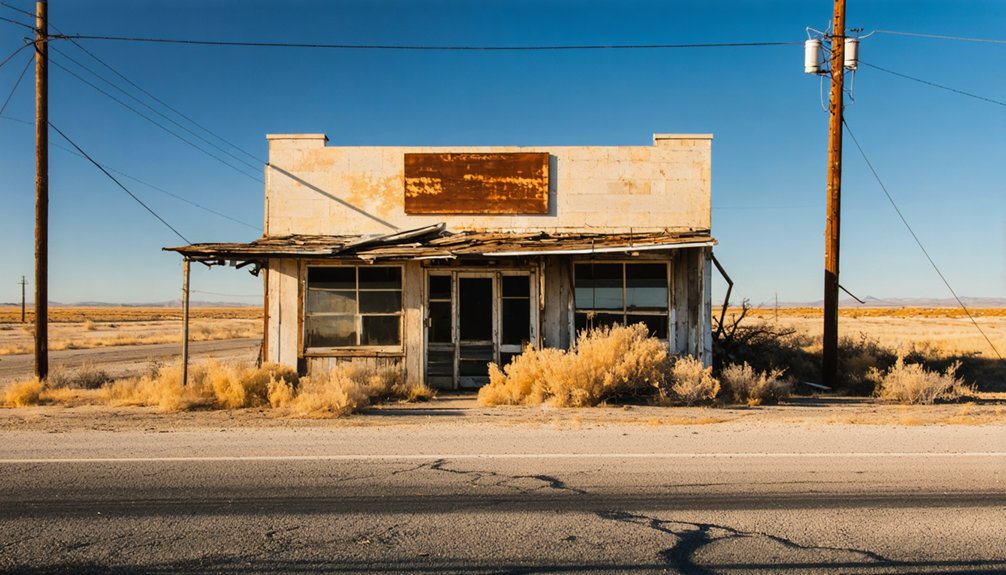
Once you’ve made Perico your anchor stop on US 87, it’s worth pushing the route further into Dallam County, where the same forces that hollowed out Perico — railroad shifts, drought, and the gravitational pull of larger towns — left their mark on several other communities worth tracking down.
Local legends and abandoned structures scattered across the county reward the curious traveler willing to wander. Consider adding these stops:
- Texline — the last Texas town before New Mexico, carrying railroad bones
- Dalhart — a living hub with deep XIT Ranch history
- Romero — a quiet site with fading agricultural roots
- Cactus — shifted by industry, worth a detour
- Kerrick — a stripped-down crossroads frozen in decline
Each one extends your freedom to read the land honestly.
Frequently Asked Questions
Why Did Perico’s Original Name Change From Farwell in 1905?
The railroad requested the name change, replacing Farwell with Perico in 1905. As you explore ghost town tourism and historical landmarks, you’ll find this shift reflects the railroad’s lasting grip on this evocative Texas Panhandle community.
What Does the Spanish Word Perico Actually Mean?
With over 400 million Spanish speakers worldwide, you’ll find the Spanish language influence fascinating — “perico” means “small parrot.” Its cultural significance adds a colorful, mysterious charm to this quiet, windswept ghost town’s identity.
Which Land Company Promoted Early Settlement Around Perico, Texas?
The W. P. Soash Land Company drove Perico’s land development history, actively recruiting early settlers origins from across the region. They’d lure you with promises of fertile Panhandle soil, wide-open freedom, and boundless opportunity on Texas’s untamed frontier.
When Did Perico’s Post Office Permanently Close Its Doors?
All good things must end — Perico’s post office closed its doors by 1970, leaving you to explore haunted landmarks steeped in local legends, where silence now speaks louder than any postmark ever could.
How Many Residents Did Perico Have During the 1960S?
You’ll find that Perico had about 40 residents in the 1960s, a dwindling soul count that echoes through its ghost town attractions and fading historic landmarks, reminding you how freedom-seekers once carved life from the Texas Panhandle.
References
- https://www.ghosttowns.com/states/tx/perico.html
- https://www.youtube.com/watch?v=Rbo7FmTW-MY
- https://en.wikipedia.org/wiki/List_of_ghost_towns_in_Texas
- https://www.texasescapes.com/TexasGhostTowns/Perico-Texas.htm
- https://www.tshaonline.org/handbook/entries/perico-tx
- https://en.wikipedia.org/wiki/Perico
- http://wikimapia.org/9714021/Perico-Texas
- https://www.texasalmanac.com/places/perico
- https://www.youtube.com/watch?v=dXpGuS0tKUs
- https://www.facebook.com/groups/1458313368105855/posts/1853128871957634/