Planning a ghost town road trip to Princeton, Texas starts with setting your sights on southeast Newton County, about 30 miles northeast of Beaumont along the Sabine River. You’ll need printed maps and sturdy footwear since rural backroads replace major highways here. Fall and spring offer the best conditions for exploring this mostly open, reclaimed landscape. Princeton’s forgotten story of river crossings, post offices, and quiet abandonment runs deeper than you’d expect.
Key Takeaways
- Princeton, Texas, sits along the Sabine River in Newton County, roughly 30 miles northeast of Beaumont, near Deweyville.
- Access requires navigating rural backroads, so bring printed maps since cell service is unreliable in the area.
- Visit during fall or spring for mild weather, lower humidity, and safer exploration conditions along the river.
- The site is mostly open land with few remnants, offering a raw, uncurated ghost town experience.
- Book accommodations in Beaumont in advance and consider visiting nearby Newton County ghost towns for a fuller itinerary.
Why Princeton Bluff Is Newton County’s Most Overlooked Ghost Town
Tucked along the Sabine River in southeast Newton County, Princeton Bluff sits quietly forgotten — a ghost town that most Texans have never heard of, let alone visited. Originally laid out in 1839, Princeton once served as a ferry and boat landing for Sabine River travelers, making it a genuine crossroads of early Texas life.
Yet today, few people know it existed. Deweyville’s rise pulled residents away, and by the early 1900s, Princeton was empty. No major historical preservation efforts have spotlighted it, and local folklore about the bluff rarely travels beyond Newton County’s borders.
That’s exactly what makes it worth your time. You won’t find crowds here — just open land, river history, and the rare freedom of discovering a forgotten place entirely on your own terms.
Where Princeton, Texas Fits on the Texas Ghost Town Map
You’ll find Princeton tucked away in southeast Newton County, about thirty miles northeast of Beaumont near the Sabine River and the present-day town of Deweyville. Once you’ve got your bearings, Princeton Bluff — also known as Possum Bluff — serves as your key navigational landmark for pinpointing where this forgotten settlement once stood.
Use Deweyville as your base reference point, since Princeton’s original townsite sat close enough to its more successful neighbor that the latter’s growth ultimately swallowed the former’s relevance.
Princeton’s Remote Texas Location
Nestled along the Sabine River in southeast Newton County, Princeton sits about thirty miles northeast of Beaumont — far enough off the beaten path to feel genuinely remote. You won’t find it on most modern maps, but that’s exactly what makes it worth seeking out.
The settlement once occupied Princeton Bluff, also known as Possum Bluff, where historical landmarks hint at a community that briefly thrived as a ferry and boat landing. Local legends surrounding the bluff add mystery to an already compelling destination.
Getting here requires intention — no major highways lead directly to the site. But if you crave open roads, forgotten history, and landscapes untouched by commercial development, Princeton’s isolation isn’t a drawback. It’s the entire point of the journey.
Nearby Landmarks And Towns
Princeton doesn’t exist in isolation — Deweyville, the town that fundamentally replaced it, sits just nearby along the Sabine River and offers a grounded reference point for understanding how regional growth shifted away from the bluff. When you visit, you’ll notice how close these two places actually are, which makes Princeton‘s abandonment feel even more striking.
Beaumont lies roughly thirty miles southwest, giving you a solid urban base for your road trip.
Princeton Bluff itself remains a recognizable landmark tied to local legends about river crossings and early Texas settlers pushing boundaries. While formal preservation efforts haven’t transformed the site into a curated destination, that raw, untouched quality is precisely what draws independent explorers. You’re free to absorb history on your own terms here.
Getting to Princeton Bluff means orienting yourself around Deweyville, the small community that effectively replaced Princeton along the Sabine River. Head roughly thirty miles northeast of Beaumont into southeast Newton County, and you’ll find yourself in the territory where Princeton once stood. Deweyville acts as your anchor point, so use it as your primary landmark when traversing rural backroads.
Once you’re in the area, Princeton Bluff — historically called Possum Bluff — rises near the riverbank where the original 1839 townsite was planned. Explore carefully, as historical artifacts from the settlement era may still exist on the landscape.
Locals carry vivid local legends about the old ferry crossing and the people who once depended on it. Embrace the freedom of discovery that ghost town exploration naturally offers.
The Rise and Fall of Princeton, Texas
When you visit Princeton, Texas, you’re stepping into a place that traces its roots back to 1839, when settlers officially laid out the townsite on Princeton Bluff — also called Possum Bluff — along the Sabine River.
The settlement served a clear purpose as a ferry and boat landing for travelers crossing the river, giving it an early sense of usefulness.
But as Deweyville rose to prominence nearby, Princeton lost its footing, and by the early 1900s, the last residents had packed up and left, turning it into the ghost town you can explore today.
Princeton’s Founding And Purpose
Back in 1839, settlers officially laid out Princeton on a prominent stretch of land along the Sabine River known as Princeton Bluff — or Possum Bluff, as locals called it. Situated thirty miles northeast of Beaumont in southeast Newton County, this modest settlement had a clear and essential purpose: ferry transportation across the Sabine River.
Princeton functioned as a river crossing hub, giving travelers a dependable way to move between Texas and Louisiana. That ferry landing made the town genuinely useful in its early days, drawing enough people to justify a post office by 1880.
The town wasn’t built for grandeur — it was built for movement and survival. Understanding that practical foundation helps you appreciate why Princeton existed at all before it quietly faded from the map.
Princeton’s Decline And Abandonment
Princeton’s usefulness had a shelf life. Once Deweyville emerged nearby, Princeton’s role as a ferry and boat landing quickly lost its value. Travelers rerouted, residents followed, and the settlement slowly hollowed out.
The post office shuttered after just one year of operation, from 1880 to 1881, signaling the town’s fading relevance.
By the early 1900s, Princeton was fully abandoned. What once bustled with river crossings and frontier activity became silent ground.
Today, you’ll find historical relics tied to a community that simply couldn’t compete with its growing neighbor. Abandoned structures, if any remain visible, stand as quiet evidence of Princeton’s brief existence.
When you visit, you’re walking through a place that chose function over permanence — and ultimately, lost both.
How Deweyville Replaced Princeton on the Sabine River
As the 19th century drew to a close, Deweyville steadily rose to prominence along the Sabine River, pulling ferry traffic, settlers, and economic activity away from Princeton. You can almost picture the shift happening gradually — boats docking at Deweyville instead, families packing up and heading toward a town with more promise.
Princeton simply couldn’t compete. Without growth or infrastructure, it faded quietly into history. Today, preservation efforts keep its story alive, and historical artifacts from the era help paint a picture of what river life once looked like along Princeton Bluff.
When you visit this stretch of southeast Newton County, you’re standing where that transition happened. Deweyville won the future, but Princeton claims something equally powerful — an untouched, honest slice of forgotten Texas history worth exploring.
What’s Still Standing at Princeton Bluff Today
Standing at Princeton Bluff today, you’ll find mostly open land where a once-active ferry settlement quietly vanished. The site offers little in terms of standing structures, but the bluff itself remains a compelling piece of living history along the Sabine River.
Few historical artifacts survive from Princeton’s 1839 origins, as decades of abandonment and natural reclamation have erased most physical evidence. You won’t find restored buildings or marked trails, but the landscape still carries a raw, undisturbed character that many freedom-seeking travelers appreciate.
Preservation efforts in the area remain minimal, leaving Princeton Bluff largely untouched and uninterpreted. If you visit, bring curiosity and respect for the land.
The absence of crowds and commercialization makes this ghost town feel genuinely forgotten — exactly what draws adventurous road trippers here.
How to Get to the Princeton Site Near Deweyville
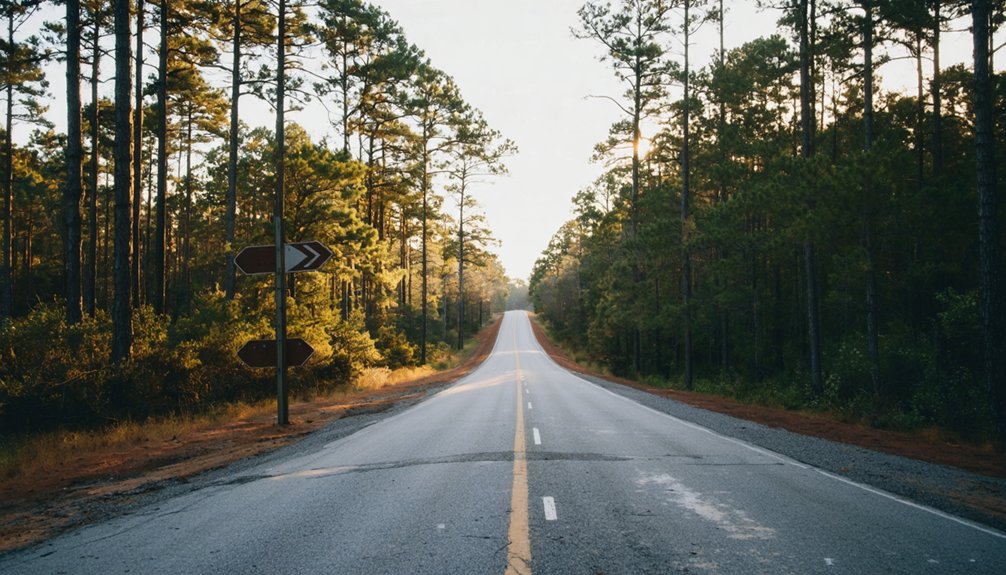
Reaching the Princeton site takes you about thirty miles northeast of Beaumont into southeast Newton County, near the present-day community of Deweyville. You’ll want to use Deweyville as your base, since it’s the closest modern landmark to Princeton Bluff, also known as Possum Bluff, where the original townsite was laid out in 1839.
From Beaumont, head northeast and follow the Sabine River corridor until you reach Deweyville. The bluff area sits close to the riverbank, so wear sturdy shoes for exploring uneven terrain.
Tourist accommodations are limited nearby, so book lodging in Beaumont ahead of time. For local dining, Deweyville and surrounding communities offer casual spots worth stopping at before or after your visit.
Keep a map handy since signage in this rural area is sparse.
Best Time of Year to Visit Princeton Bluff
You’ll want to plan your visit to Princeton Bluff during the fall or spring months, when southeast Texas temperatures stay mild and manageable for outdoor exploration.
Summers in Newton County can bring brutal heat and humidity, making a trek through an overgrown ghost town site far less enjoyable.
Winter visits are possible, but occasional cold snaps and wet conditions along the Sabine River can make the terrain slippery and difficult to navigate.
Ideal Visiting Seasons
When planning a visit to Princeton Bluff, timing matters more than you might think. Southeast Texas summers are brutal — oppressive heat and humidity can drain your energy before you’ve had a chance to appreciate the site’s historical significance.
Fall and spring offer the sweetest windows for exploration. From October through November, cooler temperatures and lower humidity make hiking and photography far more enjoyable. March through May brings wildflowers and mild weather, letting you move freely through the landscape.
Winter visits are surprisingly rewarding too. Thinned-out vegetation reveals more of the terrain, giving you clearer sightlines across the bluff and toward the Sabine River.
Whatever season you choose, you’ll want sturdy footwear and respect for preservation efforts protecting what little remains of this forgotten settlement.
Weather Considerations For Travelers
Southeast Texas weather can make or break your trip to Princeton Bluff, so knowing what to expect before you go saves you from an unpleasant surprise. Local weather in Newton County runs hot and humid from June through September, with temperatures regularly climbing past 95°F.
Heavy rainfall and occasional flooding near the Sabine River can make access roads treacherous, directly affecting your travel safety.
Spring and fall offer the most comfortable conditions, with mild temperatures and lower humidity giving you the freedom to explore without exhaustion.
Winter visits are possible but expect occasional cold snaps and wet ground.
Always check local weather forecasts 48 hours before departing, carry water, and wear moisture-wicking clothing regardless of season.
Preparation keeps your ghost town adventure memorable for the right reasons.
What to Bring When You Visit Princeton Bluff
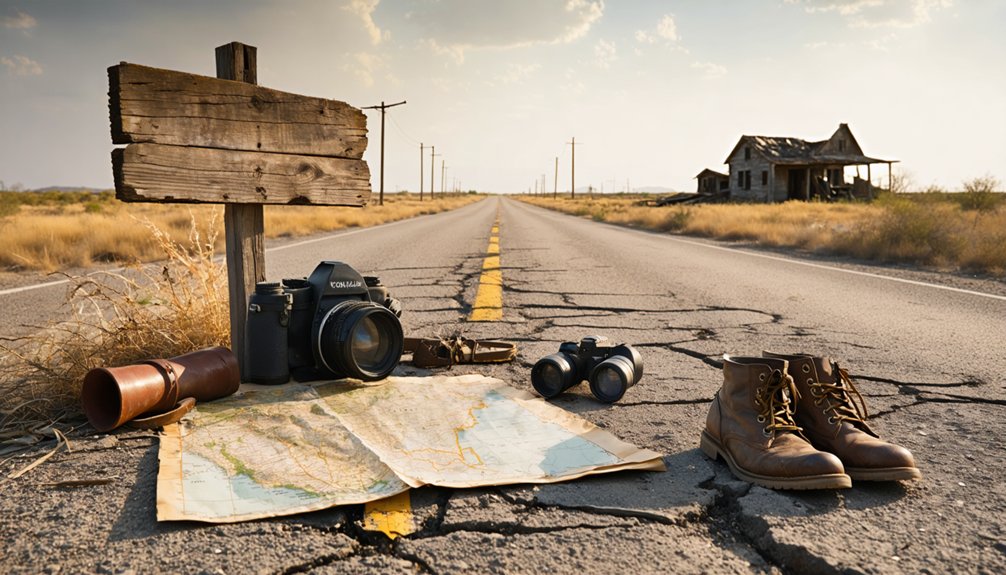
Packing the right gear makes all the difference when exploring a remote ghost town like Princeton Bluff. Wear sturdy boots since the terrain near the Sabine River can be uneven and overgrown.
Bring plenty of water, sunscreen, and insect repellent — southeast Texas heat is unforgiving. Carry a camera to document any historical artifacts or remnants of the original 1839 settlement you might discover along the way.
A printed map helps since cell service is unreliable this far out. Pack a notebook to record local legends you’ve researched beforehand, keeping context fresh as you explore.
Bring a first aid kit for minor trail injuries. Most importantly, travel with a sense of curiosity — Princeton Bluff rewards those who come prepared and open-minded.
Other Ghost Towns Near Princeton Worth Stopping At
Once you’ve soaked in everything Princeton Bluff has to offer, there’s no shortage of forgotten settlements nearby that deserve a spot on your itinerary. Southeast Texas is scattered with ghost towns that tell equally compelling stories of boom, bust, and abandonment. Many of these sites still hold historical artifacts just waiting to be discovered by curious travelers like you.
Towns throughout Newton County offer glimpses into 19th-century life along the Sabine River corridor, where ferry crossings and timber industries once drove settlement. Some locations benefit from active preservation efforts, meaning you’ll find maintained markers and accessible paths.
Plotting a multi-stop route through this region lets you piece together a richer picture of how communities rose, faded, and ultimately surrendered to time and changing fortunes.
How to Build a Full Weekend Around Princeton, Texas
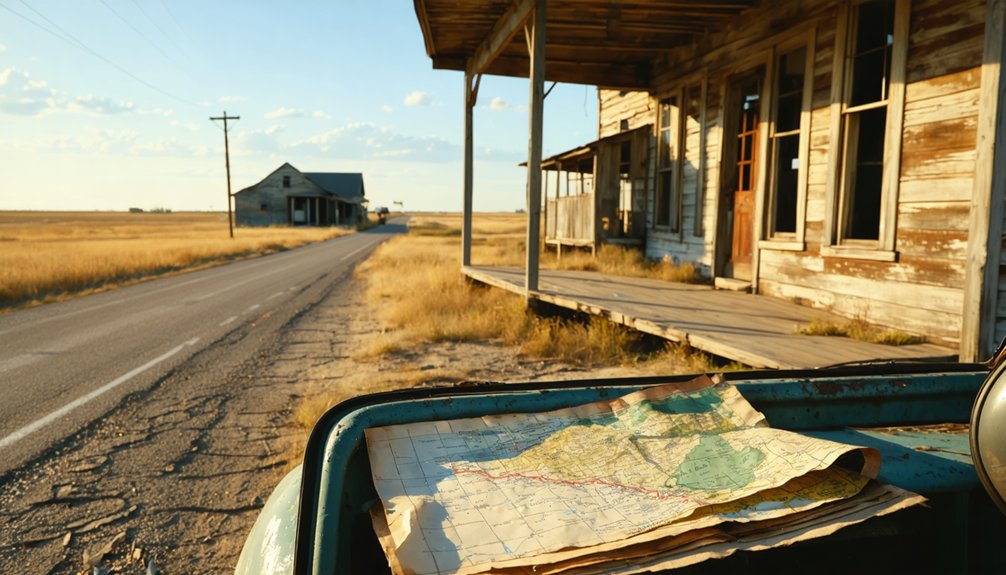
Building a full weekend around Princeton, Texas means anchoring your trip in Newton County and letting the Sabine River corridor set the pace.
Arrive Friday evening near Deweyville, settle in, and wake up Saturday ready to explore Princeton Bluff. Walk the site where the 1839 townsite once stood, search for historical artifacts along the riverbank, and soak in the quiet that ghost towns carry.
Ask locals about the legends surrounding Possum Bluff — you’ll find that local legends run deep in this corner of southeast Texas.
Sunday, trace the river road toward Beaumont, stopping at nearby ghost towns you mapped earlier. Keep your pace loose, your eyes open, and let the region’s forgotten history reward every mile you drive.
Frequently Asked Questions
Is Princeton, Texas Listed on Any Official Texas Historical Registry?
You won’t find Princeton on an official Texas historical registry, but you can explore its historical landmarks and uncover local legends tied to Princeton Bluff, a ghost town that’s freely yours to discover!
Were Any Famous Settlers or Families Associated With Princeton’s Founding?
The knowledge doesn’t highlight famous settlers or historic families tied to Princeton’s founding. You’d likely uncover those personal stories through local Newton County historical archives, where pioneer family records often reveal the real human roots behind forgotten settlements.
Did Princeton Ever Have a School, Church, or Named Community Leader?
You won’t find records of a school, church, or named community leader in Princeton’s sparse history. Its local legends and historic landmarks center on the river bluff, ferry crossing, and quiet abandonment that define this ghost town.
Are There Any Preserved Maps Showing Princeton’s Original 1839 Town Layout?
Only 1% of 1839 Texas settlements have surviving maps. You won’t find preserved documents showing Princeton’s historic map restoration, but exploring town planning evolution reveals how Possum Bluff’s simple ferry layout shaped this fascinating, freedom-inspiring ghost town.
Can You Legally Metal Detect or Artifact Hunt at Princeton Bluff Today?
You’ll want to check local metal detecting regulations before hunting at Princeton Bluff, as artifact hunting guidelines vary by land ownership. Always get permission first — it’s your freedom, but respect the rules protecting history!
References
- https://www.youtube.com/watch?v=WF8UH6LQ8UY
- https://en.wikipedia.org/wiki/Princeton
- https://kids.kiddle.co/Princeton
- https://www.texasescapes.com/CentralTexasTownsNorth/Princeton-Texas.htm
- https://www.tshaonline.org/handbook/entries/princeton-tx-newton-county
- https://princetontx.gov/168/History-of-Princeton
- https://texashistory.unt.edu/ark:/67531/metapth61101/m1/167/
- https://texashistory.unt.edu/ark:/67531/metapth61101/m1/153/
- https://www.texasescapes.com/EastTexasTowns/Deweyville-Texas.htm
- https://www.collincountyhistory.com/princeton1.html