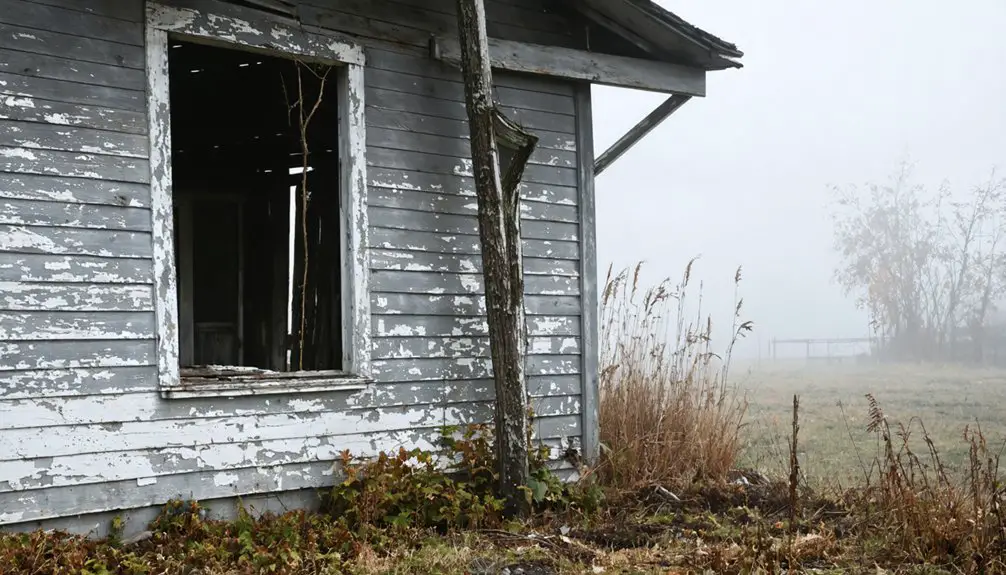
Planning a ghost town road trip to Rattle Run, Michigan, means exploring one of the state’s most forgotten settlements in St. Clair County, southwest of Port Huron. Named after a creek whose rattling pebbles inspired early settlers, this eerie spot is best known for an unsolved 1909 church murder. Today, only a weathered cemetery remains. Visit in late spring or fall for the best conditions, and pair it with nearby ghost towns like Fayette and Singapore for a complete Michigan adventure.
Key Takeaways
- Rattle Run is located in Columbia Township, St. Clair County, southwest of Port Huron, making it accessible for a southeastern Michigan road trip.
- The site’s main attraction is its cemetery with weathered headstones, as no structures remain beyond a historical road marker.
- Visit in late May, early October, or early September for ideal weather, foliage, and photography conditions.
- Pack water, snacks, offline maps, and comfortable shoes, as the rural site lacks amenities and may have poor cell service.
- Pair Rattle Run with nearby ghost towns Fayette and Singapore for a diverse, historically rich Michigan road trip experience.
Where Is Rattle Run, Michigan?
Tucked away in Columbia Township, St.. Clair County, Rattle Run sits southwest of Port Huron in Michigan’s southeastern corner. You won’t find a bustling village here — just echoes of a settlement that time quietly swallowed.
The town takes its name from Columbus Creek, a nearby waterway locals once called the Rattle Run River. On still nights, water moving over pebbles created a rattling sound that inspired both the name and early local legends about the area.
Historical myths and forgotten stories define this place more than any surviving architecture. The clearest landmark you’ll find today is the old cemetery along Rattle Run Road, marking where a real community once stood.
It’s a rewarding stop for anyone chasing Michigan’s lost history off the beaten path.
How Rattle Run Got Its Unusual Name
Few ghost town names capture the imagination quite like Rattle Run. Unlike many towns named after founders or distant cities, this settlement earned its identity from the land itself.
Few ghost town names rival Rattle Run — a settlement that took its identity from the land, not its founders.
The naming origins trace back to a nearby waterway — the Rattle Run River, also known as Columbus Creek — which produced a distinctive rattling sound as water tumbled over pebbles on quiet nights. Locals noticed it, and the name stuck.
You can almost picture early settlers pausing at the creek’s edge, listening to that rhythmic sound in the darkness. Those kinds of local legends give a place real character.
The name isn’t just quirky — it’s a genuine echo of the natural landscape that once shaped daily life here before the town quietly disappeared.
The Ghost Town That Time Forgot: Rattle Run’s Rise and Abandonment
Like so many small Michigan settlements, Rattle Run rose quietly and disappeared just as fast, leaving behind little more than a cemetery and a name on a road sign. You won’t find a preserved town square or a main street frozen in time here.
What you’ll find instead is a place that slipped out of daily life as populations shifted and economies moved on.
Rattle Run joins a long list of Michigan’s lost communities, towns that thrived briefly before fading into local legends and footnotes. No official record captures every ghost town the state has swallowed, but Rattle Run earns its place among them.
Its historical landmarks are sparse, its story fragmented, yet that rawness is exactly what makes this road trip stop worth your time.
The 1909 Church Murder That Haunts Rattle Run
If you think Rattle Run’s abandonment alone makes it worth the drive, wait until you hear what happened inside its Methodist church in 1909.
A caretaker arrived to find blood staining the snow outside, the church in disarray, and human body parts burning inside the wood stove.
The minister, Rev. John Haviland Carmichael, had vanished — and the grim story that followed would cement Rattle Run’s place in Michigan’s darkest local history.
Blood In The Snow
What makes Rattle Run more than just another forgotten Michigan settlement is a chilling true-crime story that dates back to 1909. When the church caretaker arrived one winter morning, he discovered blood in the snow outside the local Methodist church.
Inside, the scene was worse. Human body parts were found inside the wood stove used to heat the building. The minister, Reverend John Haviland Carmichael, had vanished.
Local legends grew quickly around what happened next, and ghost stories followed just as fast. Investigators eventually pieced together that Carmichael had killed a carpenter, then confessed and took his own life.
You’re not just visiting a quiet cemetery when you stop here — you’re standing near the ground zero of one of Michigan’s darkest historical footnotes.
Body Parts In The Stove
When the caretaker stepped inside that Methodist church in 1909, he wasn’t prepared for what the wood stove held. Human body parts had been burned inside it.
What started as blood in the snow became one of Michigan’s darkest true-crime cases, far beyond typical urban legends or folklore stories.
The victim was a local carpenter. The killer was Rev. John Haviland Carmichael, the congregation’s own minister.
After investigators connected Carmichael to the crime, he confessed and died by suicide before facing justice.
The church itself is long gone, leaving no physical monument to the horror that unfolded there.
You’re left with only the story, the cemetery down Rattle Run Road, and the unsettling knowledge that a small Michigan town witnessed something this brutal.
The Minister Disappears
The body parts in the stove told investigators someone had tried hard to erase a crime, but the one detail they couldn’t erase was the minister’s absence. Rev. John Haviland Carmichael had vanished, and that disappearance became the centerpiece of local folklore surrounding Rattle Run’s darkest chapter.
Investigators eventually pieced together a grim conclusion: Carmichael had killed a carpenter, then fled before taking his own life after confessing. The church where it happened is gone now, leaving only the story embedded in regional history.
When you visit historic landmarks like the Rattle Run Cemetery, you’re standing near ground that once held a community shaken by betrayal and violence. The minister’s disappearance didn’t just end a life — it ended whatever remained of Rattle Run’s identity as a living town.
What’s Actually Left to See at Rattle Run Today?
If you’re hoping to find a preserved village frozen in time, Rattle Run will quickly reset your expectations. What remains is modest but meaningful. Your clearest landmark is the old cemetery along Rattle Run Road, where weathered headstones mark the lives of early settlers who built this now-vanished community.
The original Methodist church, ground zero for the 1909 murder that spawned countless urban legends and ghost stories, is completely gone. No business district survives. No original structures greet you along the roadside.
What you do get is something rawer — a quiet stretch of Michigan countryside carrying a genuinely dark history. Bring your curiosity, walk the cemetery, and let the place-name itself do the storytelling. Sometimes absence speaks louder than any preserved building ever could.
The Rattle Run Cemetery: Best Stop on the Route
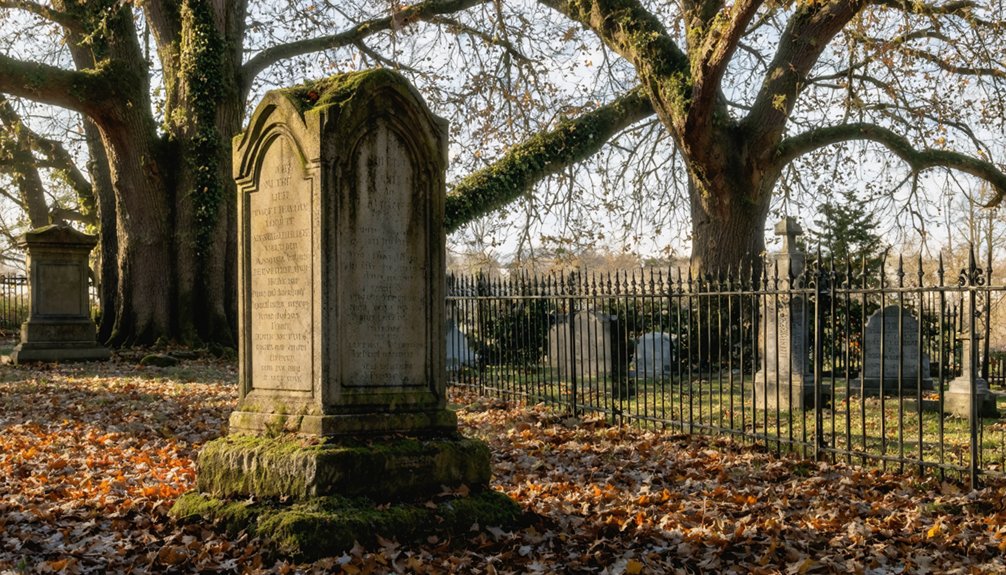
Tucked along Rattle Run Road, the old cemetery stands as the site’s most tangible connection to a community that otherwise left almost nothing behind. You won’t find preserved storefronts or restored buildings here — just weathered headstones carrying names of early settlers who shaped this forgotten corner of St. Clair County.
It’s one of Michigan’s understated historic landmarks worth adding to your route.
Here’s what makes the cemetery worth your stop:
- Headstone inscriptions reveal 19th-century family histories tied to the region’s settlement era.
- Local legends surrounding the 1909 church murder add a compelling layer to your visit.
- The surrounding landscape reflects the quiet rural atmosphere that defines genuine ghost-town exploration.
Bring a camera, walk slowly, and let the silence do the storytelling.
Nearby Ghost Towns to Pair With Your Rattle Run Trip
If you’re already making the drive to Rattle Run, you can easily extend your route to include other vanished Michigan communities worth seeing.
Columbus, a nearby St. Clair County ghost town, grew from a postal stop and railway station before fading into history, making it a natural addition to your itinerary.
Further afield, Singapore’s sand-buried ruins along Lake Michigan and Fayette’s remarkably preserved iron-smelting village offer two very different but equally compelling windows into Michigan’s lost past.
Columbus Township Ghost Town
While you’re already exploring the ghost towns of St. Clair County, Columbus Township is worth adding to your route. This nearby settlement grew from a simple postal stop and railway station, making it a natural companion to Rattle Run‘s story.
Local legends tie both communities to the same corridor of abandoned 19th-century Michigan towns, and the town legends here reflect the same pattern of population shifts that erased so many settlements from the map.
Three reasons to stop in Columbus Township:
- It shares direct historical ties to Rattle Run’s early transportation routes
- The railway-era origins add context to regional settlement patterns
- It deepens your understanding of how quickly frontier communities vanished
Together, both stops create a richer, more complete ghost-town experience.
Singapore’s Buried Ruins
Singapore, Michigan takes ghost-town history to a dramatic extreme — it’s literally buried under sand dunes along Lake Michigan’s eastern shore. Once a thriving lumber town, Singapore disappeared beneath shifting sands after its forests were clear-cut and residents abandoned it in the 1870s.
Unlike Rattle Run‘s cemetery remnants, Singapore offers almost nothing visible above ground, making historical preservation nearly impossible in the traditional sense. Local legends describe entire building rooftops occasionally surfacing after strong winds reshape the dunes.
You won’t walk Singapore’s streets, but you can stand above them near Saugatuck and feel the weight of what’s underneath. Pairing this stop with Rattle Run gives your road trip two completely different ghost-town experiences — one marked by memory, the other swallowed whole by nature.
Fayette’s Historic Remains
Fayette stands apart from Rattle Run in one striking way — much of it’s still standing. This ghost town on Michigan’s Upper Peninsula offers preserved 19th-century ironmaking ruins you can actually walk through, making it a rewarding contrast to Rattle Run’s cemetery-only remnants. Its historical significance draws visitors who want more than just a roadside pause.
When you visit Fayette Historic State Park, you’ll explore:
- Restored ironworks and industrial buildings from the 1860s–1880s
- Original townsite structures including a hotel and opera house
- A scenic harbor setting that frames the entire ghost town
If you’re already making the drive for Rattle Run’s true-crime history and quiet cemetery, adding Fayette gives your road trip a fuller picture of Michigan’s abandoned past.
What to Bring for a Day Trip to Rattle Run
Since Rattle Run offers little more than a cemetery, a road marker, and open countryside, you’ll want to pack smart before making the drive out to St. Clair County. Bring water, snacks, and comfortable walking shoes since there are no amenities waiting for you at the site.
A camera helps you document the cemetery’s aging stones and capture the quiet landscape tied to local folklore surrounding the 1909 church murder. Pack a notebook if you’re serious about historical preservation and want to record inscriptions or observations.
A printed map or downloaded offline directions are smart choices since rural cell service can be unreliable. Dress in layers, especially in shoulder seasons, and respect the grounds by leaving everything exactly as you found it.
Best Time of Year to Visit Rattle Run

Late spring and early summer offer the most rewarding window for visiting Rattle Run, when the countryside around St. Clair County turns green and the cemetery remains easy to navigate. Seasonal foliage peaks beautifully in October, making fall another strong option for atmosphere and local folklore exploration.
Three ideal times to plan your visit:
- Late May–June: Mild weather, clear sightlines through the cemetery, and comfortable walking conditions.
- October: Autumn color frames the old gravestones dramatically, deepening the ghost town’s eerie character.
- Early September: Crowds stay minimal, temperatures drop pleasantly, and golden light makes photography rewarding.
Avoid winter visits since snow obscures grave markers and road conditions on Rattle Run Road can become unpredictable. You’ll experience the site most fully when the ground is accessible.
Frequently Asked Questions
Is Rattle Run Cemetery Open to the Public for Visitors?
You can visit Rattle Run Cemetery along Rattle Run Road, where haunted legends and local folklore surround the grounds. It’s an accessible, open-air historical stop perfect for exploring Michigan’s mysterious, abandoned past on your own terms.
Are There Any Guided Tours Available at Rattle Run?
You won’t find guided tours at Rattle Run—it’s a self-directed experience. Like most historical ghost towns and abandoned mining sites, you’ll explore freely, uncovering the cemetery, eerie history, and haunting 1909 murder story independently.
Is There an Admission Fee to Visit the Rattle Run Site?
You’ll walk freely through windswept graves and echoing haunted legends without paying a cent. No admission fee exists — you’re free to explore Rattle Run’s ghost stories and overgrown cemetery on Rattle Run Road anytime you choose.
You’ll find this ghost town easily using navigation apps — just search Rattle Run Road in St. Clair County. Your GPS will guide you straight there, where an old cemetery marks the site.
Are There Any Local Museums Dedicated to Rattle Run’s History?
Like whispers lost to wind, no museums capture Rattle Run’s soul. You’ll chase its local legends and historical landmarks through scattered blogs, St. Clair County archives, and the haunting silence of its roadside cemetery.
References
- https://lostinmichigan.net/the-ghosts-of-rattle-run/
- https://michiganhomeandlifestyle.com/the-towns-that-once-were-michigans-ghost-towns/
- https://www.facebook.com/LostInMichigan.net/posts/i-think-this-cemetery-is-all-the-remains-of-the-town-of-rattle-run-other-than-th/329077255242429/
- https://99wfmk.com/columbus-michigan/
- https://www.facebook.com/groups/StClarions/posts/1239635409458820/
- https://www.youtube.com/watch?v=atedub07nJM
- https://en.wikipedia.org/wiki/List_of_ghost_towns_in_Michigan
- https://lostinmichigan.net/page/77/
- https://lostinmichigan.net/gruesome-murder-rattle-run-church/
- https://www.lansingcitypulse.com/stories/lost-in-time