Planning a road trip to Hagan, New Mexico means stepping into a frozen moment of early 1900s coal country history. You’ll find crumbling adobe walls, a tilting railroad way station, and remnants of a boomtown that collapsed almost as fast as it rose. But here’s the catch — Hagan sits on private Diamond Tail Ranch land, so you’ll need to join an organized tour to visit legally and safely. Stick around to uncover everything you need to know before you go.
Key Takeaways
- Hagan is a privately owned ghost town on Diamond Tail Ranch, so accessing it requires joining an organized tour through local historical societies.
- From Albuquerque, head north on I-25, exit near San Felipe Casino, then follow a dirt road about three miles past the arroyo.
- Check weather before visiting, as dirt roads become impassable after rain, and the terrain contains hazardous abandoned mine shafts.
- Remaining highlights include crumbling adobe walls, a tilting railroad way station, a two-story general store facade, and a surviving reservoir.
- Hagan was a coal mining town that boomed in 1902 and was completely abandoned before World War II.
How Hagan Went From Boomtown to Ghost Town?
When coal was discovered in Una de Gato Arroyo in 1902, The New Mexico Fuel and Iron Company wasted no time establishing a mining camp that would evolve into the town of Hagan. By 1905, sixty miners had settled in, and the town’s historical significance grew as Italian and Slavic workers joined local Hispanic residents.
Named after AT&SF Railroad official William Hagan in 1904, the town secured a railroad spur to serve its mines.
But Hagan’s mining legacy couldn’t sustain the boom. High hauling costs killed operations as early as 1910, and coal resources dried up by 1930. The railroad ceased operation in 1933, the post office closed in 1931, and the town sat completely abandoned before World War II ever began.
What’s Left to See at Hagan Ghost Town
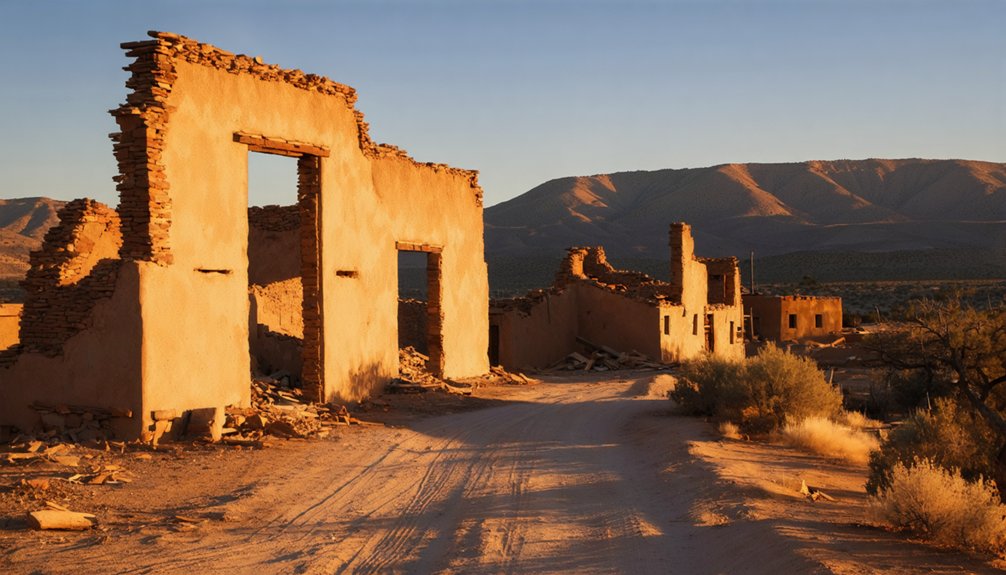
Despite Hagan’s rapid collapse, the ghost town didn’t disappear without a trace. You’ll find crumbling adobe walls, a capsizing railroad way station, and foundations where the power plant once hummed with activity. These historical artifacts paint a vivid picture of what life looked like during Hagan’s brief peak.
Crumbling adobe walls and a tilting railroad station are all that remain of Hagan’s fleeting glory.
The most striking remnant is the two-story general store facade, which once housed a bank, post office, pool hall, barbershop, and mercantile under one roof. A reservoir and several smaller structures also survive.
While preservation efforts remain minimal, these ruins speak loudly for themselves.
Keep your eyes sharp and your footing careful — mine shafts dot the area. What remains at Hagan isn’t polished or protected, but that raw authenticity makes exploring it genuinely unforgettable.
Can You Actually Visit Hagan Ghost Town?
Visiting Hagan is technically possible, but the land is privately owned by the Diamond Tail Ranch, and “no trespassing” signs make the boundaries clear. Respecting private property isn’t just a legal obligation — it protects what little historical preservation remains at this fragile site.
Past vandalism has already damaged irreplaceable remnants, and trespassing risks accelerating that loss further.
Your best legitimate option is joining an organized tour, which occasionally grants access to the ruins.
Beyond legal concerns, the terrain itself demands caution. Rain renders the dirt road impassable, and hidden mine shafts create serious hazards underfoot.
If you’re driving out from the San Felipe Casino, check weather conditions before heading into those hills.
Hagan rewards the prepared and respectful traveler, not the impulsive one.
How to Get to Hagan Ghost Town From Albuquerque
Getting to Hagan from Albuquerque is straightforward once you know where to turn. Head north on I-25 and exit near the San Felipe Casino, which sits north of Albuquerque on the east side of the highway.
From the casino parking lot, a dirt road stretches toward Madrid and into the surrounding hills.
Follow that road about three miles past the arroyo, and you’ll reach Hagan sitting on a bluff above the landscape.
The drive itself tells a quiet story of mining history and railroad decline — you’re tracing the same route that once supplied a booming coal community.
One critical warning: skip this trip after rain. The road turns impassable fast, and flooded arroyos can cut off your return completely.
Check conditions before you go.
When Hagan Ghost Town Opens for Organized Tours
Since Hagan sits on privately owned Diamond Tail Ranch land, you can’t simply show up and wander the ruins. Occasional organized tours offer your best legitimate access to explore the mining history and railroad legacy firsthand.
Hagan’s ghost town ruins sit on private land — organized tours are your only legitimate way in.
Watch for tour opportunities through these channels:
- Local historical societies in Albuquerque and Sandoval County periodically coordinate guided access with the Diamond Tail Ranch
- New Mexico ghost town enthusiast groups announce seasonal tours through social media and community boards
- Heritage travel organizations sometimes package Hagan alongside other regional mining history sites
Without confirmed tour access, you’re facing posted “no trespassing” signs and genuine hazards from open mine shafts. Checking these sources regularly increases your chances of securing a legitimate visit before planning your road trip.
Frequently Asked Questions
Who Originally Founded the Town of Hagan, New Mexico?
The New Mexico Fuel and Iron Company founded Hagan in 1902, and you’ll find its historic architecture steeped in local legends. They established this mining community after discovering coal, shaping a town that’s still worth exploring today.
What Ethnic Groups Made up Hagan’s Mining Community?
Back in the day, you’d find incredible cultural diversity shaping Hagan’s ethnic heritage! Local Hispanics from Madrid and Los Cerrillos mingled alongside Italian and Slavic miners who’d migrated from Raton and Dawson’s bustling coalfields, creating a vibrant, freedom-loving community.
Why Was the Town Named Hagan Instead of Another Name?
You’ll find that Hagan’s ghost town legends tie directly to railroads — they named it after AT&SF official William Hagan in 1904, hoping to lure a spur line to these now-abandoned landmarks and serve the coal mines.
What Was the Peak Population of Hagan During Its Prime?
You’d find Hagan’s peak population reached around 200 people during its prime years from 1924 to 1930. Today, ghost town legends surround its abandoned structures, whispering stories of the vibrant community that once thrived there.
What Multiple Businesses Were Once Housed in Hagan’s General Store?
You’ll find that Hagan’s general store, a stunning piece of historical architecture, once housed a bank, post office, pool hall, barbershop, and mercantile — spaces steeped in local legends where free-spirited townsfolk gathered daily.
References
- https://newmexiconomad.com/coyote-hagan/
- https://en.wikipedia.org/wiki/Hagan
- https://cityofdust.blogspot.com/2011/05/hagan-new-mexico.html
- https://sharingsantafe.com/new-mexico-ghost-towns-hagan/
- https://www.newmexico.org/places-to-visit/ghost-towns/hagan/
- https://www.newmexico.org/places-to-visit/ghost-towns/
- https://urbexunderground.com/ghost-towns-in-new-mexico/
- https://www.ghosttowns.com/states/nm/hagan.html
- https://www.youtube.com/watch?v=ZCSA9kp49KE