Planning a ghost town road trip to Sulphurdale, Utah means driving about 180 miles south of Salt Lake City through Provo, Nephi, and Fillmore before reaching this remote high-desert site at 6,190 feet. You’ll pass the historic Cove Fort just three miles north. Once a sulfur boomtown dominating the U.S. market, Sulphurdale is now private land hosting a $125 million geothermal plant. There’s far more to this layered story than you’d expect.
Key Takeaways
- Sulphurdale is approximately 180 miles south of Salt Lake City via Interstate 15, with key stops including Provo, Nephi, Fillmore, and Cove Fort.
- The site is private property with no public access, signage, or facilities; it can only be viewed from the public roadway.
- Today, Sulphurdale hosts an active geothermal power plant, replacing original mining remnants with modern industrial infrastructure.
- Cove Fort, just 3 miles north, offers guided tours, restrooms, and pioneer history, making it an ideal pre-visit stop.
- Nearby ghost towns like Frisco and Newhouse, plus hiking trails and scenic overlooks, enrich the overall road trip experience.
Sulphurdale’s History: Sulfur Mines, Ghost Town, and Geothermal Energy
Tucked into the high desert terrain of Beaver County, Utah, Sulphurdale’s story begins in the mid-1850s when settlers first discovered sulfur deposits at this remote site. Charles Dickart established the mine in 1870, and by the 1890s, mineral extraction here dominated the entire United States sulfur market.
The operation temporarily carried the name “Morrisey” before large-scale mining launched in 1883.
The community never fully developed, and after the mine owner died, residents abandoned the site entirely. Unreliable sulfur quality had already stalled growth, making historical preservation efforts virtually nonexistent.
Today, the story takes a modern turn. Enel Green Power North America Inc. operates a $125 million geothermal power plant on the grounds, transforming this forgotten ghost town into an active energy production site you can glimpse from nearby Interstate 15.
What Makes Sulphurdale Different From Other Utah Ghost Towns?
While most Utah ghost towns offer little more than crumbling foundations and faded history, Sulphurdale sets itself apart by actively generating power. You won’t find another abandoned settlement in the state where mining history shifts so directly into geothermal development.
Most ghost towns simply freeze in time, but Sulphurdale keeps evolving. Where miners once extracted sulfur in the 1880s, Enel Green Power now operates a $125 million geothermal plant on the same land.
Most ghost towns freeze in time. Sulphurdale keeps evolving — from sulfur mines to a $125 million geothermal plant.
That layered identity — boom-era mine, abandoned community, modern energy hub — gives Sulphurdale a depth you won’t encounter elsewhere on Utah’s ghost town circuit.
It’s also uniquely inaccessible. Private property status keeps you at a distance, making it a destination you observe rather than explore, which only sharpens its mysterious appeal.
Driving to Sulphurdale From Salt Lake City
You’ll head south from Salt Lake City on Interstate 15 for roughly 181 miles, making Cove Fort a natural stopping point before you reach Sulphurdale just three miles beyond it.
The drive offers a straightforward route with Cove Fort serving as both a historical detour and a practical rest stop before your final approach.
Once you arrive, remember that Sulphurdale sits on private property, so you’ll need to respect those boundaries and view the site from the public roadway near I-15.
Route From Salt Lake City
Driving to Sulphurdale from Salt Lake City is straightforward — you’ll head south on Interstate 15 for roughly 180 miles until you reach the area near Cove Fort in Beaver County.
The drive takes you through open high-desert terrain, where wildlife habitats stretch across sagebrush flats and rolling hills, giving you a genuine sense of Utah’s untamed backcountry. Keep your eyes open — pronghorn and raptors frequently appear roadside.
As you approach the exit near Cove Fort, local legends about the old sulfur mining days start feeling tangible against that rugged landscape. You’re arriving at an elevation of 6,190 feet, so your vehicle may notice the altitude.
The ghost town sits just three miles south of Cove Fort — close enough to feel, yet quietly removed from the highway’s flow.
Key Stops Along The Way
The 180-mile haul south on I-15 isn’t just a means to an end — it’s packed with worthwhile stops that’ll break up the drive and add real historical weight to your trip. Each stop deepens your understanding of the region’s mining history and geothermal shift before you even reach Sulphurdale.
- Provo — Grab fuel and food before heading into less-populated terrain.
- Nephi — A quiet town marking roughly the halfway point; stretch your legs here.
- Fillmore — Utah’s original state capital offers a quick historical detour worth your time.
- Cove Fort — Just three miles north of Sulphurdale, this restored pioneer fort provides essential historical context and public restroom access.
Plan these stops intentionally — you’ll arrive informed, not just present.
Arrival And Access Tips
Once you’re packed and ready to head south, getting to Sulphurdale from Salt Lake City means a straightforward 180-mile run down I-15 — no complex navigation required.
Exit near Cove Fort and you’ll find yourself just three miles from the site.
Keep in mind that Sulphurdale sits at 6,190 feet, so check weather conditions before departing — mountain storms can roll in fast and catch travelers off guard.
Watch for local wildlife crossing the highway, especially at dusk.
Since the property is privately owned, you can’t walk the grounds, but the view from the public roadway still delivers atmosphere.
No facilities exist on-site, so fuel up, pack water, and treat Cove Fort as your last reliable stop before arrival.
What You’ll Actually See at Sulphurdale Today?
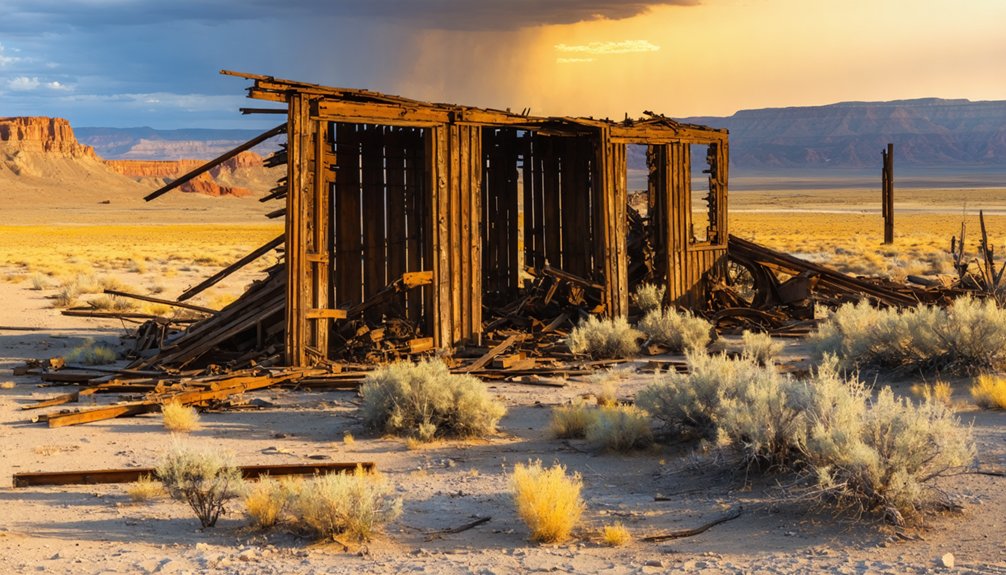
Approaching Sulphurdale from Interstate 15, you’ll notice the landscape has traded its historic sulfur operations for something far more modern — a sprawling $125 million geothermal power plant owned by Enel Green Power North America Inc.
This shift from mining history to geothermal energy defines everything you’ll observe here today.
From the public roadway, expect to see:
- Industrial geothermal infrastructure replacing any remnants of the original mining settlement
- No public signage, visitor access points, or designated viewing areas
- Private property boundaries clearly limiting how close you can get
- Open high-desert terrain surrounding the facility at 6,190 feet elevation
You won’t find preserved buildings or ghost town artifacts.
What remains is a working energy site — historically significant, visually industrial, and completely off-limits to casual exploration.
Sulphurdale Is Private Land: What That Means for Your Visit
Because Sulphurdale sits entirely on private property, you can’t simply pull off the road and wander the grounds — doing so would mean trespassing, regardless of your intentions as a curious history enthusiast. The land has evolved from a historic sulfur mine into an active geothermal energy facility, meaning access restrictions exist for both legal and safety reasons.
Beyond the industrial operation, the surrounding high-elevation terrain functions as a wildlife habitat, sheltering species that thrive precisely because human foot traffic stays minimal.
Local legends about the mine’s colorful past are best explored through Utah ghost town guides rather than unauthorized entry.
Your smartest move is viewing the site from public roadways near Interstate 15, then heading to nearby Cove Fort for historical grounding without crossing any legal boundaries.
Stop at Cove Fort on Your Way Through
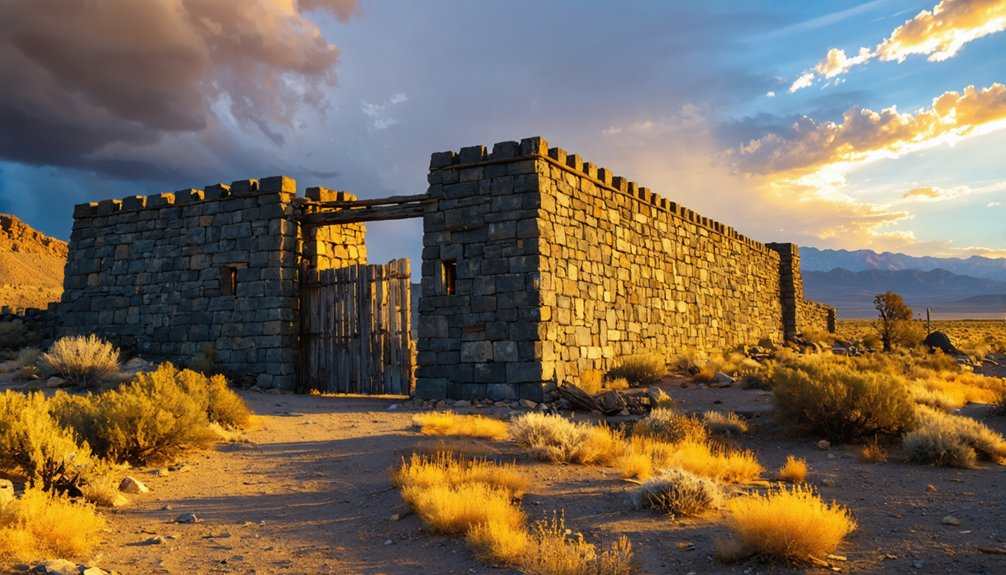
Just three miles north of Sulphurdale, Cove Fort offers a well-preserved 19th-century pioneer stopover that adds real historical depth to your road trip.
Pull off Interstate 15 to tour the fort’s stone walls, explore its restored rooms, and use the clean restrooms and picnic areas before continuing south.
Check the fort’s visiting hours ahead of time so you’re not caught rushing past one of Utah’s most accessible and underrated landmarks.
Cove Fort’s Historical Significance
Since Sulphurdale sits on private property with no visitor access, Cove Fort becomes your most rewarding stop along this stretch of I-15. Built in 1867, this restored pioneer fort connects you directly to Utah’s frontier era, offering real historical grounding before you reflect on Sulphurdale’s mining history and geothermal transformation nearby.
Here’s what makes Cove Fort worth your time:
- Free admission lets you explore without financial commitment
- Guided tours walk you through original rooms and artifacts
- Restored architecture preserves authentic 19th-century construction techniques
- Knowledgeable volunteers share stories connecting regional pioneer and mining heritage
You’ll leave with sharper context for understanding why settlements like Sulphurdale rose and collapsed so quickly across this rugged Utah landscape.
Nearby Rest And Facilities
Cove Fort delivers more than historical perspective—it’s also your best practical stop along this stretch of I-15. You’ll find clean restrooms, shaded grounds, and knowledgeable staff who can answer questions about the region’s history. The fort sits just off the highway, making it an effortless detour before you continue south toward Sulphurdale.
For local dining, Fillmore and Beaver bracket your route and offer casual restaurants worth stopping at before or after your visit.
If outdoor activities interest you, the surrounding terrain provides hiking trails and scenic overlooks that reward curious travelers.
Since Sulphurdale itself offers no public facilities, amenities, or visitor infrastructure whatsoever, planning your comfort stops here makes the difference between a frustrating drive and a genuinely rewarding ghost town road trip.
Planning Your Fort Visit
When you’re heading south on I-15 toward Sulphurdale, stopping at Cove Fort is a natural and worthwhile addition to your itinerary. Just three miles north of the ghost town, it offers historical grounding before you explore the area’s mining legacy.
Make the most of your fort visit by focusing on these priorities:
- Tour the preserved 1867 fort interior for authentic pioneer context
- Observe local wildlife around the surrounding landscape, including birds and small mammals
- Study nearby geological formations that shaped Utah’s mineral-rich terrain
- Use the rest facilities before continuing south toward private Sulphurdale
The fort won’t take long, but it adds meaningful depth to your road trip. It transforms a simple drive into a layered journey through Utah’s rugged history and natural landscape.
More Utah Ghost Towns Near Sulphurdale
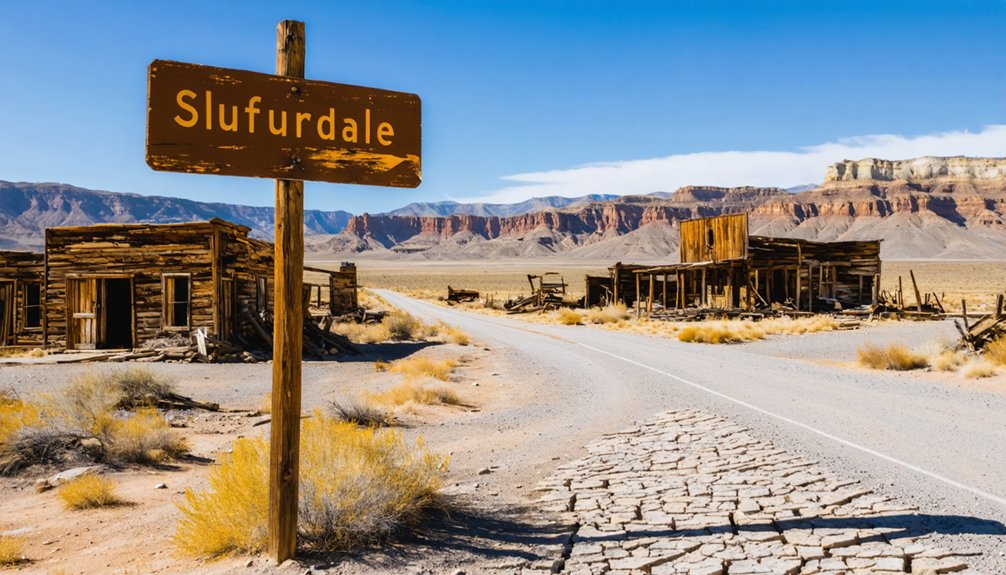
Utah’s ghost town landscape extends well beyond Sulphurdale, and you’ll find several abandoned settlements scattered throughout Beaver County and the surrounding region. Towns like Frisco, just west of Milford, offer accessible mining relics including crumbling kilns and shaft ruins you can actually explore on public land.
Newhouse, another nearby forgotten settlement, once rivaled regional mining hubs before collapsing into silence.
As you travel these back roads, you’ll notice how geothermal development has reshaped parts of this volcanic plateau, mirroring Sulphurdale’s own transformation. Each ghost town tells a distinct story of boom, bust, and reinvention.
Grab a detailed Utah ghost town map before heading out, and you’ll discover a network of forgotten communities that reward curious, independent travelers willing to venture off Interstate 15.
Frequently Asked Questions
What Is the GPS Coordinate Elevation Impact on Older Vehicles?
At 6,190 feet, vehicle altitude strains older engines, reducing power and fuel efficiency. You’ll notice sluggish performance as thin air limits combustion. Check your GPS accuracy for precise navigation, ensuring your aging vehicle handles Sulphurdale’s demanding elevation confidently.
Can I Find Sulphurdale Images on Wikimedia Commons for Free?
You can find free Sulphurdale images on Wikimedia Commons, where you’ll discover archived photos capturing its historic landmarks and local folklore, letting your free spirit explore this mysterious ghost town’s visual story anytime!
Does Enel Green Power Offer Public Tours of the Geothermal Plant?
Like a locked door to discovery, Enel Green Power doesn’t publicly confirm geothermal plant tours at Sulphurdale. You’ll want to contact them directly about renewable energy education opportunities, as the site remains private property.
Was Sulphurdale Ever Assigned a Temporary Name Before Its Current One?
Yes, you’ll find that Sulphurdale carried the temporary name “Morrisey” before large-scale mining began in 1883. Its historical name origins reflect early development, with name change reasons tied directly to the site’s growing sulfur mining ambitions.
How Far Is Sulphurdale From the Nearest Town With Accommodations?
Cove Fort, just three miles away, is your nearest stop! You’ll love the scenic desert drives connecting these historical ghost towns, and it’s a quick, freeing detour offering rest facilities before exploring Sulphurdale’s fascinating geothermal-meets-mining heritage.
References
- https://en.wikipedia.org/wiki/Sulphurdale
- https://www.rockngem.com/rock-science-sulphurdale-utah/
- https://onlineutah.us/sulphurdalehistory.shtml
- https://www.onlineutah.com/sulphurdale.shtml
- https://mapcarta.com/23441314
- https://jacobbarlow.com/2021/05/03/sulpherdale-utah/
- https://commons.wikimedia.org/wiki/Category:Sulphurdale