Planning a ghost town road trip to Warren, Texas means chasing one of the Lone Star State’s most forgotten frontier stories. You’ll be searching for a settlement that Abel Warren established in 1836 as a Red River trading post, later became Fannin County’s first county seat, and then vanished so completely that no structures remained by 1930. Spring and fall offer the best conditions for exploring this hauntingly empty landscape. Keep going to uncover everything you’ll need to find it.
Key Takeaways
- Warren, Texas, sits near Choctaw Bayou along the Red River, close to the Fannin–Grayson county line in northeast Texas.
- No physical structures or historic markers remain, so bring county records, old maps, and land survey references to locate the site.
- Visit during spring (March–May) or fall (September–November) to avoid extreme summer heat exceeding 100°F.
- Watch for seasonal Red River bottomland flooding, which may restrict site access during certain times of year.
- Stop in nearby Bonham for regional frontier history context and local knowledge from residents familiar with the area.
What Was Warren, Texas: and Why Does It Matter to Ghost Town Hunters?
Before Warren, Texas vanished into the Red River bottomlands of Fannin County, it was one of the most consequential frontier settlements in early Texas—and that’s exactly what makes it worth hunting down today.
Warren, Texas vanished into the Red River bottomlands—but before it did, it shaped the entire frontier.
Abel Warren established a trading post here in 1836, and the site quickly grew into a county seat, complete with a courthouse, a school, and even the thirteenth Masonic lodge in Texas.
Unlike ghost towns tied to mining history, Warren’s rise and fall followed a different arc—frontier trade with Native tribes including the Kiowa, Caddo, Tonkawa, and Wichita, then county-seat status, then quiet erasure after railroads and political shifts bypassed it entirely.
If you’re drawn to places where history ran deep before disappearing completely, Warren belongs on your map.
How Abel Warren Built a Red River Frontier Trading Post in 1836
When you trace Warren’s origins, you arrive at Abel Warren, who planted a trading post on the Red River in 1836 and changed the frontier landscape of what’s now Fannin County.
He didn’t build a modest outpost — he constructed a wooden stockade fort with corner towers, designed to hold its ground in contested territory.
From behind those walls, Warren tapped into a busy trade network connecting Kiowa, Caddo, Tonkawa, and Wichita peoples to the goods and commerce flowing along the Red River corridor.
Warren’s 1836 Arrival
Long before Texas earned its statehood, Abel Warren arrived at the Red River’s edge in 1836 and built something ambitious: a frontier trading post that would anchor one of north Texas’s earliest organized settlements. His vision shaped early trade networks and defined what frontier forts could accomplish beyond military defense.
Here’s what made Warren’s arrival remarkable:
- He constructed a wooden stockade with corner towers for real protection
- His post opened trade with Kiowa, Caddo, Tonkawa, and Wichita peoples
- Daniel Montague and William Henderson added a trading house just one year later
- The site sat strategically near Choctaw Bayou along the Red River
- Warren’s efforts helped organize Fannin County’s earliest civic identity
You’re standing at the beginning of something that shaped north Texas permanently.
Stockade Fort Construction
Abel Warren didn’t just plant a flag on the Red River and call it a settlement — he built a defensive structure designed to survive the frontier. His 1836 fort featured stockade defenses — heavy wooden walls anchored into the earth — along with corner towers that gave defenders clear sightlines in every direction.
This wasn’t decorative frontier architecture; it was functional protection against an unpredictable landscape where conflict could arrive without warning.
When you visit the Warren townsite today, picture what that structure meant to early settlers. It signaled permanence, security, and the will to hold ground.
Warren fundamentally handed those first residents something rare on the Texas frontier: a fighting chance. That stockade shaped everything that followed, from trade relationships to county formation.
Red River Trade Networks
That stockade didn’t just protect people — it attracted them. Abel Warren’s 1836 trading post became a genuine crossroads, pulling diverse nations into commerce along the Red River frontier. You’re looking at cultural preservation in action — a place where exchange shaped early Texas identity.
Traders and travelers converged here representing:
- Kiowa riders carrying horses and hides
- Caddo communities with deep regional knowledge
- Tonkawa bands moving through traditional corridors
- Wichita traders skilled in regional networks
- Anglo settlers seeking goods and alliances
These interactions left historical artifacts embedded in the land’s memory, even if nothing stands today. When you visit Warren’s ghost site, you’re standing where frontier Texas negotiated its earliest relationships — raw, complicated, and consequential.
That invisible history makes this stop genuinely worth your time.
Why Warren Became Fannin County’s First County Seat
When Abel Warren planted his trading post on the Red River frontier in 1836, he unknowingly set the stage for Warren to become Fannin County’s first county seat. By 1837, Daniel Montague and William Henderson had added a trading house, and the settlement was already functioning as a legitimate hub for commerce and frontier diplomacy with Kiowa, Caddo, Tonkawa, and Wichita peoples.
When Fannin County organized, Warren’s existing infrastructure made it the natural choice for the seat of government. Officials erected a two-story courthouse, opened a school by 1839, and established the thirteenth Masonic lodge in Texas in 1840.
These historic landmarks transformed local legends into documented history. Warren wasn’t just surviving the frontier — it was actively governing it.
Why Bonham Replaced Warren as the County Seat
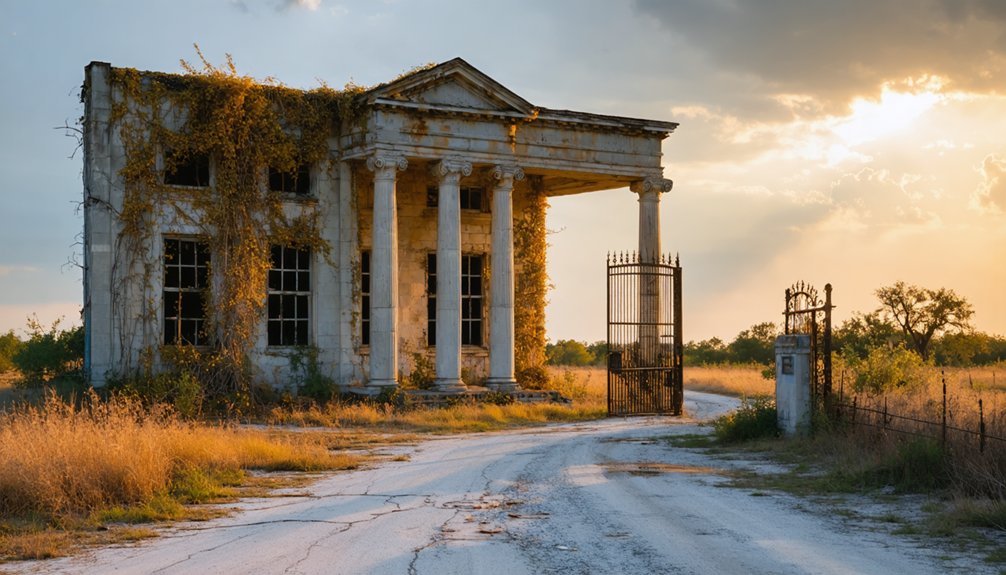
Warren’s days as county seat were numbered the moment Bonham’s more central location started making administrative sense to Fannin County’s growing population. By 1843–1845, officials made it official, leaving Warren to fade into local legends and abandoned structures.
Warren’s reign as county seat quietly ended when Bonham’s central location made administrative sense — and history moved on.
Here’s why Bonham won out:
- Bonham sat closer to the county’s geographic center, reducing travel burdens for residents
- Warren’s Red River edge made it logistically inconvenient as settlements spread southward
- Population growth demanded a more accessible administrative hub
- Bonham offered better connectivity to emerging roads and trade corridors
- Warren’s frontier-fort identity no longer matched the county’s evolving civic needs
Once the county seat left, Warren lost its institutional anchor. Without that foundation, decline became inevitable, eventually swallowing the courthouse, the commerce, and the community itself.
Why Warren Disappeared After the Civil War and the Railroad Era
Once Warren lost its county seat status to Bonham, the town’s decline became almost inevitable.
But the railroad era delivered the final blow. You can trace Warren’s slow fade through three clear milestones: the county seat’s departure stripped it of civic relevance, the railroad bypassed it entirely, and the post office shuttered in 1876, cutting the last thread of official recognition.
County Seat Lost
Though Warren had already lost its county seat status to Bonham by the mid-1840s, the Civil War briefly gave the town a second purpose, functioning as a logistical and food-supply station for Confederate forces.
After the war, however, Warren never recovered. The railroad bypassed it entirely, and local legends say the town simply faded into the Red River soil. Even its historical architecture vanished — the old courthouse was removed in the 1920s with relocation plans that never materialized.
Here’s what sealed Warren’s fate:
- Bonham’s central location won the county seat
- Confederate supply use couldn’t sustain postwar growth
- No railroad connection meant economic isolation
- Stage routes shifted away from the settlement
- The post office closed permanently in 1876
Railroad Bypassed Warren
When the railroad boom reshaped north Texas after the Civil War, it didn’t just build new towns — it erased old ones. Warren had already lost its county seat status, but railway development delivered the final blow.
Tracks laid through more strategically positioned towns pulled commerce, settlers, and opportunity away from Warren’s Red River corridor. Unlike towns connected to mining history and industrial supply chains that attracted rail investment, Warren offered neither ore nor enough population density to justify a stop.
Stage routes followed the rails, not the old frontier paths. Without transportation infrastructure, Warren’s post office shut down in 1876.
Post Office Closes
A post office closing might sound like a minor administrative detail, but in 1876, Warren’s closure marked something far more final — the federal government’s official acknowledgment that a community no longer existed in any meaningful way.
For ghost town enthusiasts chasing pioneer stories and historical anecdotes along the Red River frontier, that date matters. Consider what it signals:
- Mail stopped flowing, cutting residents’ last civic lifeline
- Remaining settlers had no institutional reason to stay
- Property values collapsed without postal service
- Community identity dissolved faster without official recognition
- By 1930, no structures remained standing
Warren didn’t vanish overnight — it faded through accumulated losses. You’re now standing where a county seat once thrived, traded with native nations, and housed Texas’s thirteenth Masonic lodge. The silence itself tells the story.
What Survives at the Warren Ghost Town Site Today: and What Doesn’t
If you’re expecting crumbling walls, rusted signage, or even a weathered foundation, Warren will humble you fast. Almost nothing physical survives. The courthouse, once a two-story cabin serving early Fannin County, was removed in the 1920s with plans to relocate it to Bonham — plans that never materialized.
By 1930, no structures remained at the townsite.
What you’ll find instead is open land near the Fannin–Grayson county line, shaped more by local legends and ghost stories than by anything you can photograph. The Red River corridor still carries the atmosphere of a vanished frontier, but Warren itself exists primarily in county records and historical memory.
Come prepared with research, not expectations — this stop rewards curiosity, not sightseeing.
How to Find the Warren Ghost Town Site in Fannin County
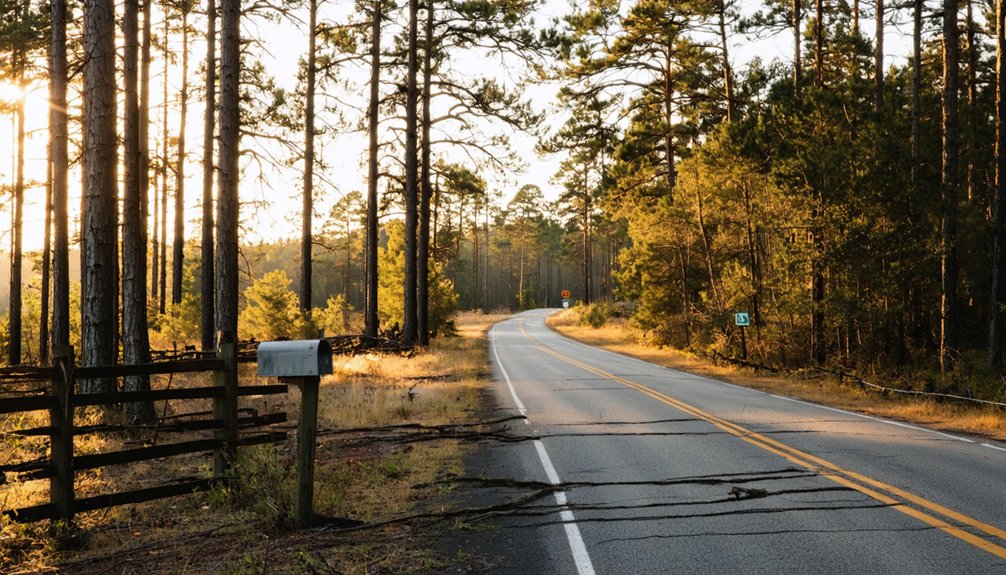
Finding Warren means steering toward the Fannin–Grayson county line in north Texas, close to where Choctaw Bayou once met the Red River — there’s no historic marker waiting to confirm you’ve arrived. You’ll need to rely on county records, old maps, and local legends to orient yourself.
Ghost town myths often romanticize the site, but the real reward is piecing together its location yourself.
Use these navigation anchors before heading out:
- Target the Fannin–Grayson county line near the Red River
- Research Choctaw Bayou/Choctaw Slough for geographic reference
- Pull historical Fannin County land survey maps
- Cross-reference early Texas Republic settlement records
- Talk to Bonham locals who carry regional frontier knowledge
Freedom-minded explorers treat the search itself as part of the experience.
Which Nearby Frontier Sites Pair Well With a Warren Ghost Town Visit?
Warren’s ghost town appeal grows stronger when you build a full north Texas frontier loop around it, pairing the vanished county seat with other sites tied to early river trading, Republic-era settlement, and the county-seat relocation stories that reshaped the region.
Warren doesn’t stand alone — it anchors a vanished frontier network stretching across north Texas’s earliest edges.
Head into Bonham, Warren’s successor, where historic landmarks tied to Fannin County’s reorganization still stand.
Explore the Red River corridor for additional frontier trading post remnants and early settlement patterns that echo Warren’s own rise.
Local legends surrounding vanished communities cluster throughout this stretch of north Texas, giving you rich storytelling material at every stop.
Each site reinforces why Warren matters — not as an isolated curiosity, but as one piece of a larger frontier network that once defined Texas Republic expansion along its northern edge.
When Is the Best Time to Visit North Texas Ghost Town Sites?
Once you’ve mapped out your frontier loop, timing your trip well makes the difference between a rewarding historical visit and a frustrating one. North Texas weather and local conditions shape what you’ll actually experience on the ground.
- Spring (March–May): Mild temperatures make outdoor exploration comfortable before summer heat sets in.
- Fall (September–November): Cooler air returns, and rural roads stay accessible after summer storms.
- Avoid midsummer: Heat above 100°F turns open-site visits miserable fast.
- Check preservation efforts: Local historical societies occasionally host events tied to frontier heritage.
- Research local legends beforehand: County archives and regional history groups sometimes organize guided tours near significant sites.
You’ll also want dry conditions since many access roads near the Red River bottomlands flood seasonally, cutting off the Warren area entirely.
How to Build a Full North Texas Ghost Town Road Trip Around Warren
Building a full ghost town road trip around Warren means treating it as the historical anchor of a broader north Texas frontier loop rather than a standalone stop.
Warren anchors a broader north Texas frontier loop, transforming isolated ghost town curiosity into a historically rich road trip.
Pair it with other vanished or reduced settlements tied to early county formation and Red River trading history. You’ll find old landmarks scattered across Fannin and Grayson counties that reward curious travelers willing to explore beyond paved convenience.
The Red River corridor also offers wildlife habitats worth pausing for between historical sites, giving your route natural texture alongside frontier lore.
Connect Warren’s story to the broader pattern of Texas towns lost to county-seat relocations and railroad bypasses. That thematic thread turns a series of quiet roadside stops into a coherent journey through the Republic of Texas era.
Frequently Asked Questions
Was Warren, Texas Ever Featured in Any Books or Documentaries?
You’ll find Warren, Texas mentioned in ghost town chronicles and Texas history books that highlight its historic architecture and local legends, though it hasn’t starred in major documentaries—it’s a hidden gem awaiting your discovery.
Are There Any Descendants of Abel Warren Still Living in Texas?
Over 40 million Americans actively trace ancestry today. You’ll find genealogy research on Abel Warren’s descendants surprisingly elusive, but local legends keep his frontier spirit alive — connecting you to living Texans who proudly claim his pioneering legacy.
Did Warren, Texas Have a Cemetery, and Does It Still Exist?
Warren’s history suggests a cemetery likely existed, but records don’t confirm it’s still accessible. You’ll find historical landmarks tied to local legends scattered nearby — so explore freely and uncover Red River frontier secrets yourself!
Is the Warren Townsite Located on Private or Public Land?
The Warren townsite sits on private land, so you’ll want to secure permission before exploring. Public access isn’t guaranteed, but respectful outreach to local landowners can open this fascinating piece of forgotten Texas frontier history.
Were Any Artifacts From Warren Ever Recovered or Preserved in Museums?
With 88 land warrants issued by 1838, Warren’s mining history runs deep. You won’t find preserved artifacts in museums, but ghost stories and historical records keep this vanished frontier spirit alive for freedom-seeking explorers like you.
References
- https://en.wikipedia.org/wiki/Warren
- https://en.wikipedia.org/wiki/List_of_ghost_towns_in_Texas
- https://www.tshaonline.org/handbook/entries/warrens-bend-tx
- https://www.youtube.com/watch?v=SJaT60GFAf8
- https://redriverhistorian.wordpress.com/2019/12/02/warren-once-was/
- https://www.tshaonline.org/handbook/entries/warren-tx-tyler-county
- https://www.tshaonline.org/handbook/entries/old-warren-tx
- https://www.texasalmanac.com/places/warren-4