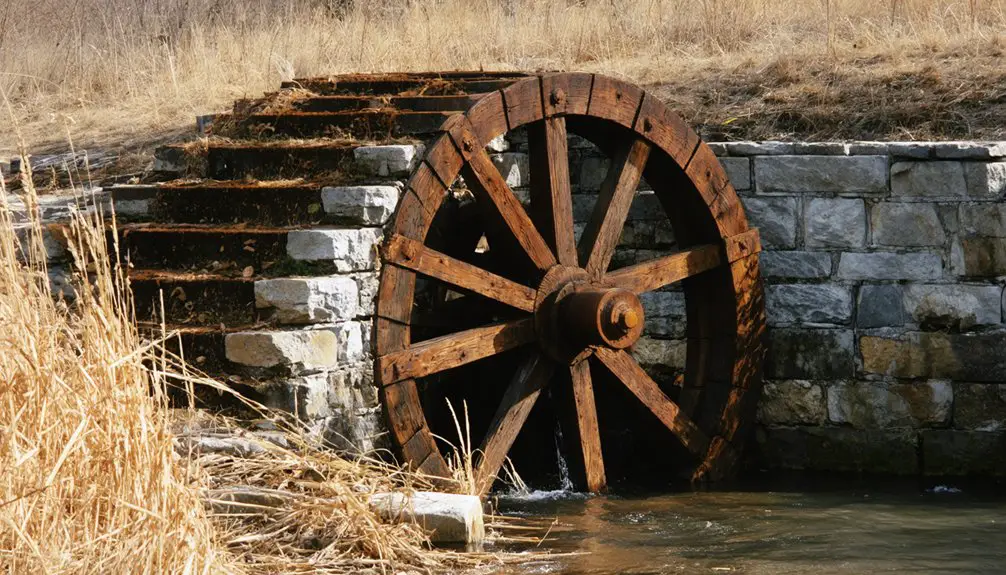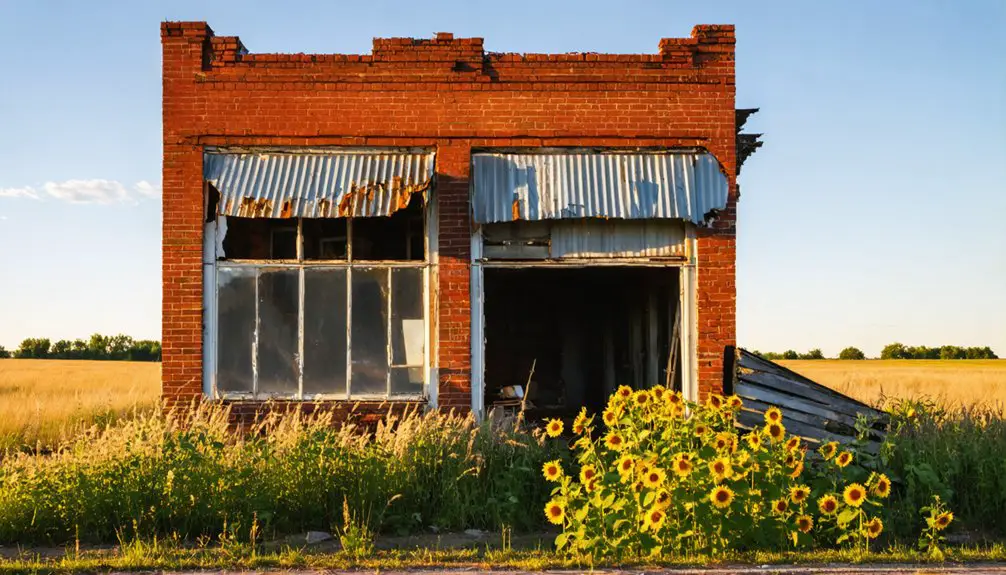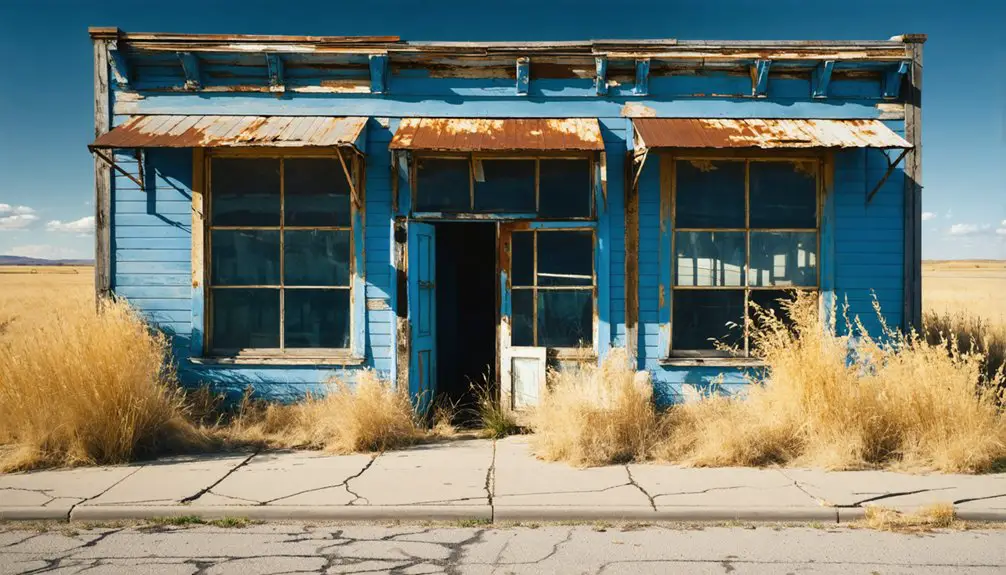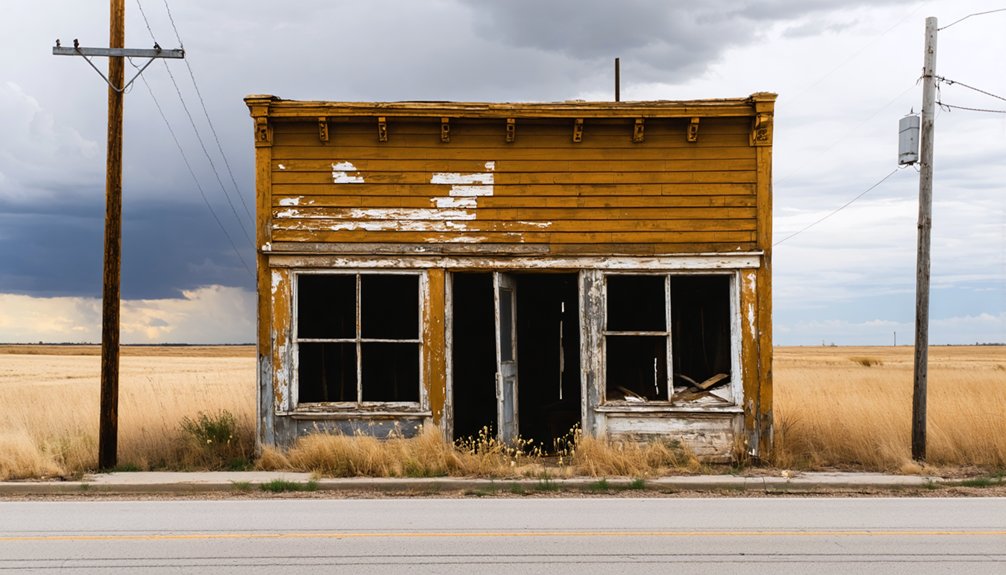
Planning a ghost town road trip to Wilmington, Kansas puts you face-to-face with raw, unfiltered history that polished tourist sites can’t match. Navigate using U.S. Highway 160 and State Highway 49, then follow county roads to the site. Visit in fall for ideal weather and dramatic skies. Wear sturdy boots, verify land ownership, and bring your camera. Wilmington’s weathered foundations and artifacts are waiting—and there’s much more to uncover about this fascinating Dust Bowl relic.
Key Takeaways
- Wilmington, Kansas, is a ghost town with scattered stone foundations, weathered cisterns, overgrown cemeteries, and historical artifacts worth exploring.
- Use U.S. Highway 160 and State Highway 49 for navigation, then follow county roads or gravel paths to reach the townsite.
- Visit in spring or fall for comfortable temperatures, ideal lighting, and fewer crowds; avoid summer heat exceeding 100°F.
- Stay in Wellington (30 miles southwest) or Winfield, both offering lodging and easy highway access for multi-day exploration.
- Extend your trip by visiting Sumner County’s six ghost towns and nearby Dust Bowl-era agricultural communities for a comprehensive historical circuit.
What’s Left of Wilmington, Kansas Today
Though Wilmington, Kansas has largely faded from official records and geographic databases, scattered remnants of its existence may still dot the landscape for curious road-trippers willing to dig deeper. You might stumble across weathered foundations, forgotten fence lines, or historical artifacts half-buried beneath decades of prairie growth. These quiet clues tell a story that no highway marker bothers to explain.
Don’t expect a polished tourist stop. Wilmington rewards the independent traveler who’s comfortable doing their own research and exploring off the beaten path. Preservation efforts for sites like this remain minimal, meaning what’s left today may not survive another decade.
If you’re driven by authentic discovery rather than curated experiences, Wilmington’s erased landscape offers exactly the kind of raw, unfiltered history you’re chasing.
The Rise and Fall of Wilmington, Kansas
What you’re seeing in those crumbling foundations and overgrown lots didn’t happen overnight. Wilmington’s historical significance traces through decades of boom-and-bust cycles that eventually silenced the town entirely. Archaeological findings suggest a community that once had real momentum before economic and environmental forces dismantled it piece by piece.
Several factors accelerated Wilmington’s decline:
Several forces didn’t just slow Wilmington down — they dismantled it, layer by layer, until nothing was left to save.
- Failed agricultural markets stripped residents of their livelihoods
- The 1930s Dust Bowl drove families to abandon their properties permanently
- Infrastructure decay made rebuilding economically impossible
- Population loss created a self-reinforcing cycle of business closures
Once the people left, nature moved in fast. What remained became the layered, silent record you’re walking through today — a place where history didn’t just fade, it collapsed under the weight of circumstances nobody could outrun.
What Structures and Landmarks Survive at the Wilmington Site
When you arrive at the Wilmington site, you’ll find scattered stone foundations that hint at the town’s former layout, giving you a tangible sense of where buildings once stood.
Several structural remnants have survived decades of weathering, and you can walk among them to piece together what daily life here might’ve looked like.
Keep your eyes open for notable features like partial walls and foundation outlines, as these landmarks serve as the most reliable markers of Wilmington’s lost community.
Remaining Stone Building Foundations
As you walk the quiet grounds of Wilmington, the most immediate reminders of the town’s former life are the stone building foundations scattered across the landscape. These silent remnants speak volumes about the community that once thrived here.
Historical preservation efforts have kept these structures identifiable, while archaeological findings continue revealing details about daily life.
Look closely and you’ll notice:
- Limestone block arrangements outlining former storefronts and homes
- Hearth and fireplace bases indicating where families once gathered
- Cellar depressions marking where root cellars and storage areas existed
- Irregular stone clusters suggesting outbuildings like stables or workshops
Each foundation tells its own story. You’re free to explore, photograph, and interpret these remnants on your own terms, connecting directly with Wilmington’s forgotten past.
Preserved Structural Landmarks Today
Beyond the scattered foundations, a handful of more substantial structures still stand at Wilmington, giving you a clearer sense of the town’s architectural character. A weathered stone building near the town’s former commercial center remains partially intact, its thick limestone walls demonstrating the craftsmanship settlers brought to the Kansas plains.
You’ll also notice remnants of a brick structure that once served the community’s civic life, its arched doorway still recognizable despite decades of neglect.
These survivors carry real archaeological significance, offering tangible connections to 19th-century settlement patterns. But preservation challenges are considerable here. Harsh Kansas winters, unchecked vegetation, and limited funding threaten what’s left.
If you visit, tread carefully and resist the urge to remove anything. What stands today may not survive another decade without serious intervention.
Notable Surviving Site Features
Stepping past those resilient stone and brick remnants, you’ll find the Wilmington site holds a few other features worth tracking down. Historical artifacts scattered across the grounds tell stories that official records rarely capture, giving you direct contact with the town’s raw past.
Site preservation efforts have kept several key elements accessible for independent explorers.
Watch for these surviving features as you move through the area:
- Deteriorating foundation outlines marking where homes and businesses once stood
- Weathered cisterns and hand-dug wells indicating early water infrastructure
- Overgrown cemetery plots with legible headstones revealing resident surnames and death dates
- Remnant fence posts and iron hardware embedded in the soil
Each feature rewards careful attention, so slow down, look closely, and let the landscape speak.
How to Get to the Wilmington, Kansas Ghost Town Site
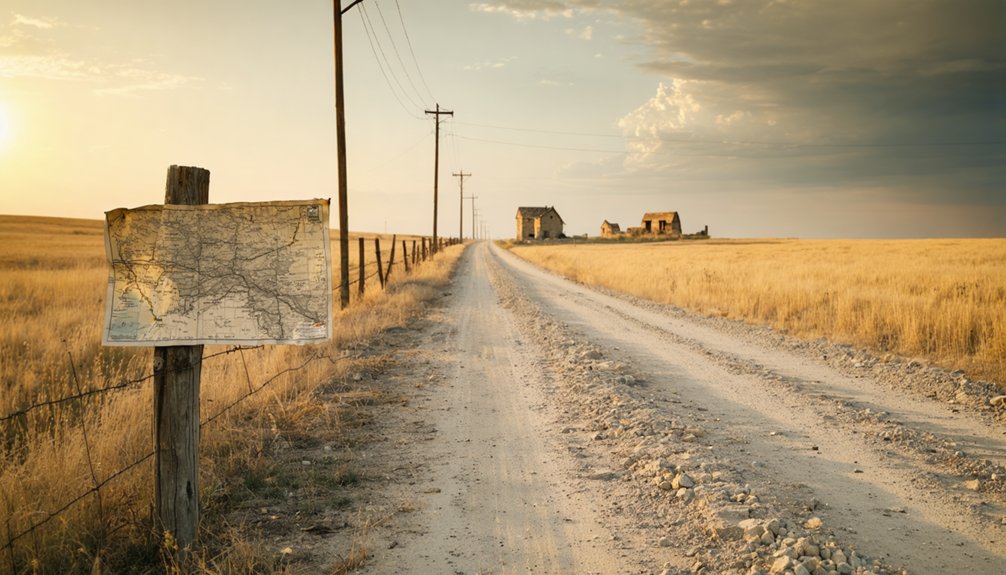
To start your route to the Wilmington ghost town site, pull up a Kansas state map and anchor your planning around the nearest verified highways, since rural ghost towns rarely appear in standard GPS databases.
Once you’ve identified the closest major road corridor, you’ll navigate a final stretch of county roads or gravel paths that lead into the site itself.
Pack a paper map as backup, confirm land access permissions beforehand, and note that Kansas’s open plains make visual landmarks your most reliable guide on the final approach.
Starting Your Route Planning
Planning your route to Wilmington, Kansas starts with understanding that this ghost town sits in a region where GPS alone won’t always guide you reliably. Cross-reference multiple sources before you hit the road, since historical preservation efforts have documented surrounding areas with greater accuracy than digital maps reflect.
The site carries real archaeological significance, so arriving prepared means you’ll spend less time searching and more time exploring.
Before you leave, gather these essentials:
- Download offline maps covering southeastern Kansas back roads
- Contact the Kansas State Historical Society for verified coordinates
- Check county road conditions through local township offices
- Print historical preservation documentation showing the town’s recorded boundaries
Freedom on the open road means preparation beforehand. Treat this trip like the genuine historical expedition it is.
Nearest Major Roads
Getting yourself to the Wilmington, Kansas ghost town site means working with a regional road network that rewards patience and solid prep. U.S. Highway 160 cuts through southern Kansas and serves as your primary east-west corridor, connecting you to smaller county roads that branch toward lesser-known sites.
State Highway 49 offers a solid north-south option once you’re deeper into rural territory.
You’ll want detailed county maps because GPS sometimes misses unpaved cutoffs leading to remote locations where historical artifacts quietly deteriorate. Preservation challenges intensify at sites far from maintained roads, so reaching them early matters.
Fuel up before leaving any town with a population under 2,000. Cell service gets unreliable fast, so download offline maps and confirm your route before you leave pavement behind.
Final Approach Directions
Once you’ve turned off State Highway 49, the final stretch to the Wilmington site demands your full attention. Unpaved roads and seasonal conditions can shift quickly, so stay alert and respect the land you’re crossing into.
Watch for these landmarks as you close in:
- Gravel road junction marked by a weathered fence line heading east
- Abandoned tree rows indicating former homestead boundaries
- Low creek crossing that floods during spring runoff
- Open field clearing where the original townsite once stood
The historical significance of what remains here is fragile. Preservation challenges mean structures you’ve read about may have deteriorated since documentation.
Park responsibly, stay on established paths, and photograph everything. You’re stepping into land that carries real history worth protecting.
Best Time of Year to Visit Wilmington, Kansas
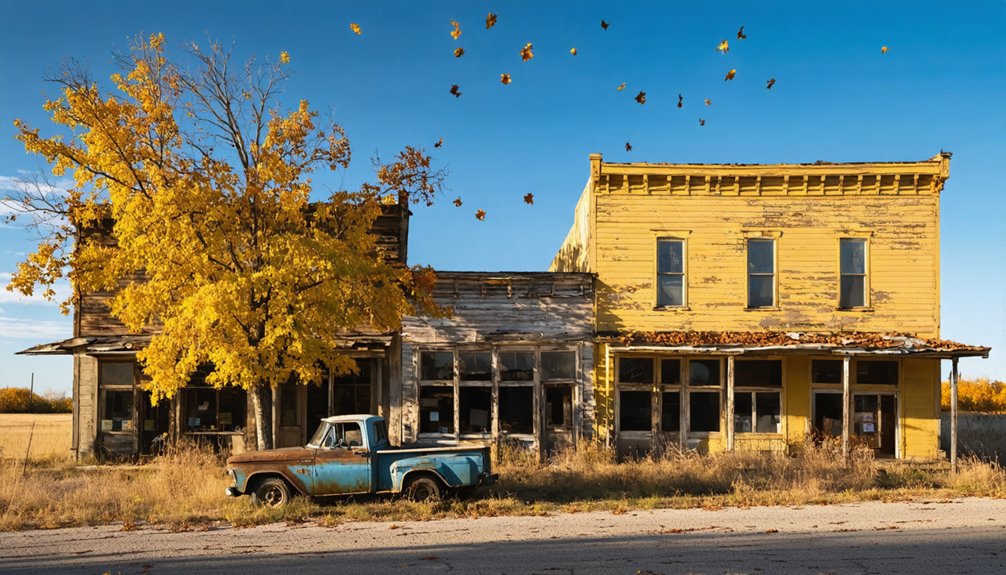
Whether you’re chasing mild weather or golden-hour photography, timing your visit to Wilmington, Kansas can make a real difference in what you experience. Spring and fall offer the sweet spot — temperatures stay comfortable, and the light hits abandoned structures beautifully during those early morning and late afternoon hours.
Summer brings longer days, giving you more time to explore, but Kansas heat can push past 100°F, so pack water and start early.
Winter visits are quieter and surprisingly atmospheric, though dirt roads can turn muddy after snowmelt, limiting visitor accessibility to certain areas.
Fall specifically rewards history enthusiasts — cooler air, fewer crowds, and dramatic skies complement the historical preservation efforts visible throughout the site.
Whatever season you choose, check road conditions before you head out.
Safety Gear, Permits, and Camera Tips for Wilmington
Before you set foot in Wilmington, prep your gear and know the rules — exploring abandoned sites without the right equipment or permissions can turn an exciting trip into a risky one fast.
Visitor safety depends on smart preparation, and historical preservation starts with you respecting what’s left standing.
- Wear sturdy boots and a hard hat — unstable structures collapse without warning
- Carry a first aid kit and charged phone — cell coverage is unreliable in rural Kansas
- Check land ownership beforehand — trespassing on private property carries legal consequences
- Use a wide-angle lens and natural light — flash damages fragile surfaces and misrepresents textures
Always photograph before touching anything. Document what you find rather than disturbing it. Your camera becomes a preservation tool when you shoot responsibly and leave every piece exactly where you found it.
Nearest Towns With Lodging to the Wilmington Site
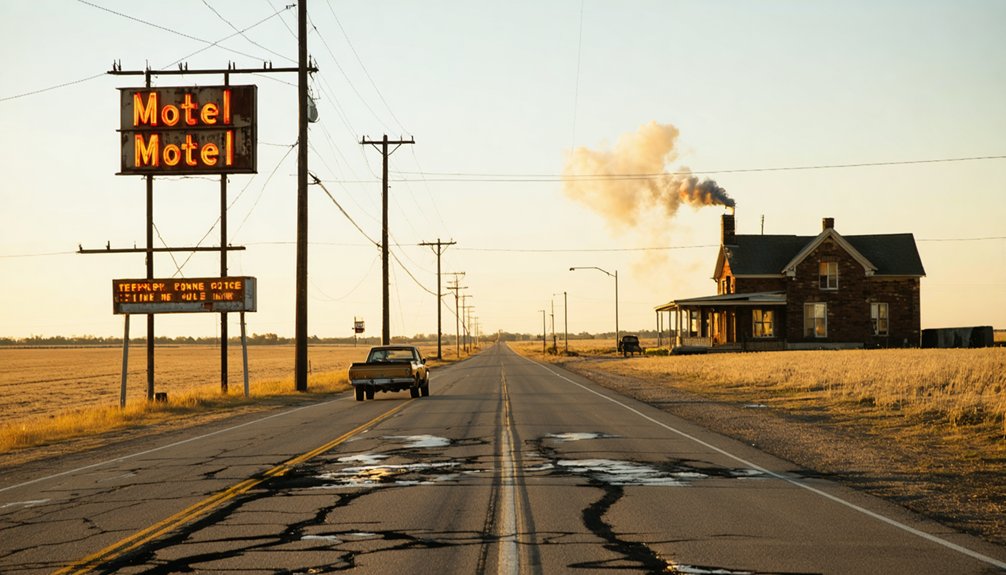
After a long day of exploring Wilmington’s remnants, you’ll want a comfortable base camp within reasonable driving distance, and the surrounding region delivers a handful of solid options. Wellington, roughly 30 miles southwest, offers motels and diners that put you close to Sumner County’s broader network of tourist attractions. It’s a practical hub for multi-day exploration.
Winfield, another nearby city, provides additional lodging with easy highway access. Both towns sit within striking distance of historical preservation sites, so you’re never wasting drive time.
If you prefer rustic stays, several bed-and-breakfasts dot the rural landscape between these communities. Book accommodations early during warmer months, since travelers chasing Kansas history fill rooms faster than you’d expect. Confirm availability before you hit the road.
Combining Wilmington With Nearby Kansas Ghost Town Sites
Pairing Wilmington with the surrounding region’s ghost towns turns a single-site visit into a rewarding multi-day circuit through Kansas’s forgotten history. Sumner County alone holds six notable sites where historical artifacts and preservation efforts give each stop genuine depth. You’re not just passing through ruins — you’re tracing the rise and fall of entire communities.
Consider building your route around these nearby highlights:
- Sumner County ghost towns — six sites packed with documented history
- Kansas-Missouri border communities — mining-era settlements near Galena worth exploring
- Mineral springs towns — tourism-driven settlements from the 1880s
- Agricultural ghost towns — Dust Bowl-era sites revealing Kansas’s hardest decade
Map your stops in advance, confirm land access, and you’ll move through Kansas history like few travelers ever do.
Frequently Asked Questions
Are Guided Ghost Town Tours Available Near the Wilmington, Kansas Site?
You’ll find guided tours aren’t confirmed near Wilmington, Kansas, as it’s unverified. However, you can explore historical preservation efforts and tourism opportunities across Kansas’s 64 documented ghost towns, where guided experiences await your adventurous spirit!
Can Metal Detecting or Artifact Collecting Be Done Legally at Wilmington?
You’ll need to research legal restrictions carefully before metal detecting at Wilmington, since artifact regulations vary by land ownership. Always secure permission from landowners and check Kansas state laws to avoid violating federal antiquities protections.
Is the Wilmington Site Accessible for Visitors With Mobility Limitations?
Since Wilmington’s existence isn’t confirmed, you’ll want to verify accessibility improvements before visiting any Kansas ghost town. Always check if mobility assistance options are available, as many rural sites lack paved paths or accessibility accommodations.
Were Any Famous Historical Figures Associated With Wilmington, Kansas?
You won’t find confirmed famous residents or historical landmarks tied to Wilmington, Kansas, as records don’t verify this ghost town’s existence. Consider exploring documented Kansas ghost towns where you’ll discover rich, freedom-filled histories instead!
Does Cell Phone Service Exist Near the Wilmington, Kansas Ghost Town Site?
Ever wonder if you’ll stay connected in the middle of nowhere? Cell service near Wilmington, Kansas is unreliable at best — you’ll want to check your signal strength before venturing out to explore freely.
References
- https://www.youtube.com/watch?v=KBXINX0xqnU
- https://en.wikipedia.org/wiki/List_of_ghost_towns_in_Kansas
- https://esirc.emporia.edu/server/api/core/bitstreams/995731a8-3d76-4b97-afc4-571de97814d5/content
- https://www.youtube.com/watch?v=alC1wDdSVvg
- https://www.youtube.com/watch?v=dF7vGl5xasI