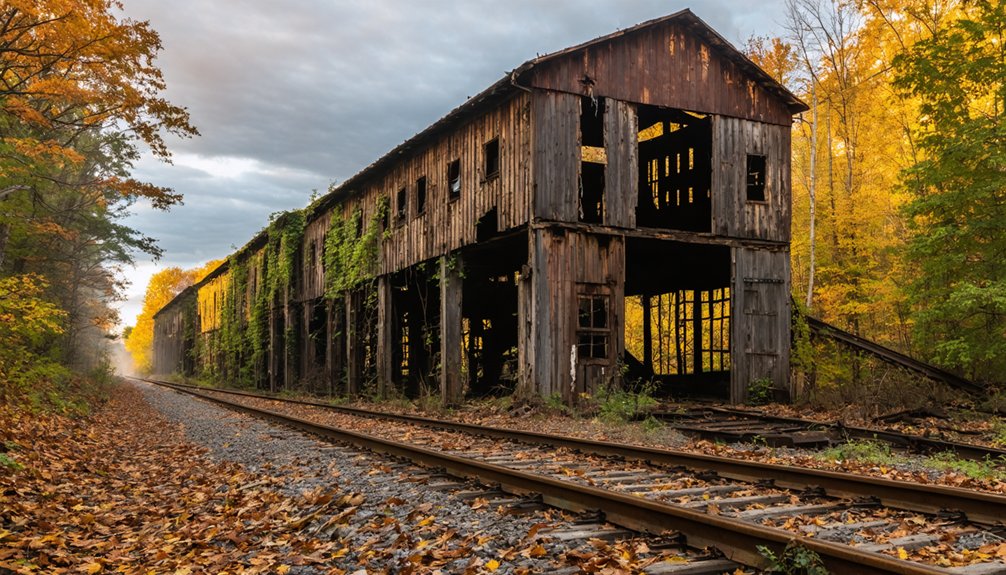
Planning a ghost town road trip to Berlin, Indiana means exploring two forgotten settlements with surprisingly different stories. Clinton County’s Berlin thrived briefly after 1847 before railroad bypasses and post office closures sealed its fate. Hancock County’s Berlin never even got off the ground after being platted in the 1830s. You won’t find dramatic ruins at either site — just open land, silence, and history hiding in plain sight. Keep going to uncover everything you need to find them.
Key Takeaways
- Indiana has two distinct Berlin ghost towns: one in Clinton County and one in Hancock County, each with unique histories.
- Clinton County’s Berlin, established in 1847, is the more accessible site, located in Johnson Township near Indian Prairie.
- Both towns declined due to bypassed railroad routes, post office closures, and residents migrating to nearby communities.
- Expect open land and silence rather than dramatic ruins, as neither site retains preserved structures.
- Research county deed records, engage local historians, and explore Indiana’s 41+ documented ghost towns for a fuller road trip.
What Happened to Berlin, Indiana’s Ghost Towns?
Indiana’s ghost towns tell stories of ambition, poor timing, and the brutal economics of 19th-century settlement—and Berlin is no exception.
You’re actually dealing with two distinct Berlins here, each reflecting different ghost town origins and settlement patterns that defined Indiana’s expansion era.
Clinton County’s Berlin emerged in 1847 on agricultural prairie land, thriving briefly before disappearing from maps by the early 1900s.
Clinton County’s Berlin flourished briefly after 1847, only to vanish from Indiana’s maps within a few generations.
Hancock County’s Berlin never even got off the ground—platted in the 1830s near an existing gristmill, it existed on paper but never functioned as a real community.
Both towns collapsed for familiar reasons: railroad routes bypassed them, post offices closed, and nearby communities simply offered more.
When infrastructure abandoned these settlements, residents followed. Freedom meant moving somewhere with actual opportunity.
Which Berlin Ghost Town Is Worth the Drive?
Honestly, neither Berlin ghost town offers much regarding physical remains—but that doesn’t mean the drive is pointless.
Clinton County’s Berlin gives you something tangible: a real location in Johnson Township where you can stand on ground that once held an actual community. That connection to Berlin History makes it the stronger choice for ghost town enthusiasts who want geographical grounding.
Hancock County’s Berlin is fundamentally a mystery—its exact location was uncertain even in 1885. You’d be searching for a town that never truly existed beyond paper lots and ambitious plans.
If you’re chasing Ghost Towns with purpose, head to Clinton County.
Pack a county map, accept the absence of dramatic ruins, and appreciate the quiet prairie for what it is—history dissolved into landscape.
Where Exactly Are the Berlin Ghost Town Sites Located?
Pinpointing either Berlin ghost town requires patience, but Clinton County’s version gives you a clearer starting point.
Head to Johnson Township, where historical records place the original settlement on Indian Prairie near the southeast corner. Once a community tied to agricultural transportation routes, it vanished from maps by the early 1900s, leaving only documentation behind.
Hancock County’s Berlin proves far trickier. Even by 1885, locals couldn’t confirm its exact location, and researchers had to dig through deed records just to piece together its historical significance.
William Curry platted it near an operating gristmill during the 1830s, but it never truly materialized.
Your best strategy? Visit county historical societies before hitting the road. They’ll give you the sharpest coordinates available for both vanished settlements.
What Will You Actually Find When You Get There?
What greets you at either Berlin site isn’t a weathered saloon or a crumbling foundation—it’s open land, silence, and the faint suggestion that something once existed here.
That’s the unfiltered reality of ghost town exploration in rural Indiana.
Clinton County’s Berlin sits on agricultural prairie in Johnson Township, where farmland has long reclaimed what settlers once built.
Hancock County’s Berlin is even more elusive—its exact location remained uncertain as far back as 1885, leaving you with little more than deed records and imagination to guide you.
Don’t expect markers or preserved ruins.
The historical significance lives in the absence itself—the quiet reminder that 19th-century ambition doesn’t always outlast the century.
Bring your curiosity, a county map, and appreciation for what you can’t see.
Which Indiana Ghost Towns Near Berlin Are Worth Visiting Next?
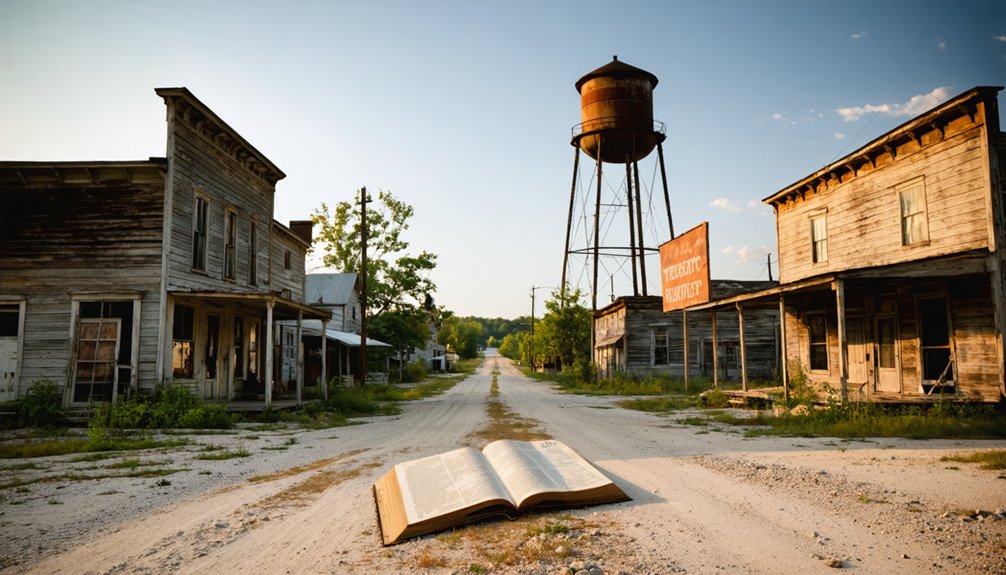
Indiana documented at least 41 ghost towns, so once you’ve visited Berlin, you’re barely scratching the surface of what the state’s abandoned communities have to offer.
Clinton County and Hancock County both contain forgotten settlements worth exploring on an extended road trip.
Research county deed records and historical preservation archives before you hit the road — many sites lack signage or formal recognition.
Focus on crossroads communities that lost railroad access during the 19th century, since those settlements share Berlin’s story of sudden decline.
Carry historical maps, talk to local historians, and document what you find.
These places disappear faster than researchers can record them.
Every visit you make contributes to keeping Indiana’s forgotten settlement history alive before the last physical traces vanish permanently.
Frequently Asked Questions
What Is the Best Time of Year to Visit Berlin Ghost Towns?
You’ll find spring and fall offer the best seasonal attractions for exploring Berlin’s ghost towns. Cooler temperatures enhance your adventure, and you’ll capture stunning photography tips-worthy shots amid vibrant foliage or blooming wildflowers framing these forgotten landscapes.
Are There Any Guided Ghost Town Tours Available in Indiana?
Like Steinbeck’s wanderers, you’ll find Indiana’s ghost town history comes alive through self-guided exploration. No formal tours exist, but you can freely roam haunted locations like Berlin’s abandoned sites on your own terms.
Is It Legal to Access Private Land Near Abandoned Indiana Town Sites?
You can’t access private land without permission — Indiana’s trespassing laws strictly protect property rights. Always secure landowner consent before exploring abandoned sites, or you’ll risk fines and legal trouble that’ll derail your ghost town adventure.
What Should I Pack for a Ghost Town Road Trip in Indiana?
History’s whisper calls you forward! Pack these ghost town essentials for Indiana’s forgotten Berlin: sturdy boots, water, maps, camera, and snacks. These packing tips’ll keep you exploring freely, uncovering stories time buried beneath Indiana’s quiet, haunting prairies.
How Many Indiana Ghost Towns Can Realistically Be Visited in One Day?
You can realistically visit 3-5 Indiana ghost towns in one day by planning smart travel routes. Prioritize sites with historical significance, and you’ll maximize your adventure without rushing the freedom of exploration!
References
- https://en.wikipedia.org/wiki/Berlin
- https://blog.history.in.gov/lost-towns-of-hancock-county/
- https://en.wikipedia.org/wiki/List_of_ghost_towns_in_Indiana
- https://www.youtube.com/watch?v=X6kmlnj7oYs
- https://www.ezhomesearch.com/blog/ghost-towns-in-indiana/