Fillmore, Douglas County sits quietly in east-central Illinois, where crumbling foundations and overgrown lots replace what was once a living, breathing community. You’ll reach it easily from Tuscola or Arcola along flat agricultural backroads, but you won’t find fuel or services once you’re there. Spring and fall offer the best conditions for exploring its haunted stillness. Stick around, and you’ll uncover everything you need to make this ghost town road trip unforgettable.
Key Takeaways
- Fillmore, located in east-central Douglas County, Illinois, is a ghost town featuring crumbling foundations, weathered timber frames, and overgrown lots.
- Access Fillmore from Tuscola by heading west on County Road 1400N for approximately 10 miles; no services are available there.
- Spring and fall are ideal visiting seasons, with late October offering dramatic photography lighting and early spring providing a haunting misty atmosphere.
- Nearby ghost towns including Murdock, Brushy, Raritan, and Benton City make excellent additions to your Douglas County road trip itinerary.
- Pack camera gear, layered clothing, sturdy boots, a first-aid kit, physical maps, and road snacks before departing for Fillmore.
What Is Fillmore, Douglas County, Illinois?
Fillmore is a ghost town tucked into Douglas County, Illinois — a quiet, forgotten speck on the map where the past lingers in weathered wood and crumbling foundations.
Once a living, breathing community, it’s now a place where Fillmore history whispers through empty lots and overgrown streets. You won’t find it on most modern itineraries, and that’s exactly the point.
This is a destination for those who crave open roads, unfiltered stories, and the raw honesty of a place time left behind. Local legends still circulate among nearby residents — tales of who lived here, what thrived here, and why it faded.
When you roll into Fillmore, you’re not just visiting a location; you’re stepping into a chapter most people never bother to read.
Where Does Fillmore Sit on the Illinois Map?
Fillmore sits at approximately 39°42′N latitude and 88°09′W longitude, tucking itself into the quiet interior of Douglas County in east-central Illinois.
You’ll find it neighbor to towns like Tuscola and Arcola, modest communities that once shared a similar rural rhythm before time thinned their populations differently.
Pull out a county map, and Fillmore appears almost ghostly even on paper — a small dot clinging to the agricultural flatlands that stretch endlessly in every direction.
Fillmore’s Exact Illinois Coordinates
Tucked into Douglas County, this quiet ghost town rests at approximately 39.85°N latitude and 88.15°W longitude, placing it in the heart of central Illinois’s flat, wide-open prairie country.
These coordinates’ significance extends beyond simple numbers — they anchor Fillmore’s geographic history to a landscape where settlers once carved out lives from raw, unbroken earth.
You’re standing at a crossroads where ambition met reality, where optimism slowly surrendered to time.
Pull up those coordinates on your map before you head out, because Fillmore won’t announce itself loudly.
The land here stretches endlessly, the sky feels enormous, and the silence carries weight.
Knowing exactly where you’re going makes the journey feel intentional — like you’re reclaiming a forgotten piece of Illinois history on your own terms.
Nearby Towns and Borders
Nestled within Douglas County, Fillmore sits close to the small communities of Tuscola and Arcola, towns that managed to hold on while Fillmore quietly faded.
As you plan your rural exploration, you’ll notice that Highway 36 cuts through this part of Illinois, connecting these surviving towns like stitches across a faded quilt. Fillmore rests roughly between these communities, close enough that you can make each stop meaningful on a single day’s drive.
When you’re chasing this ghost town, you’re not just visiting one forgotten place — you’re tracing the invisible borders where survival and abandonment once competed.
Douglas County’s flat, open terrain makes navigation straightforward, letting you feel that raw sense of freedom that only comes from exploring Illinois’s quieter, overlooked corners.
How to Get to Fillmore From Nearby Cities
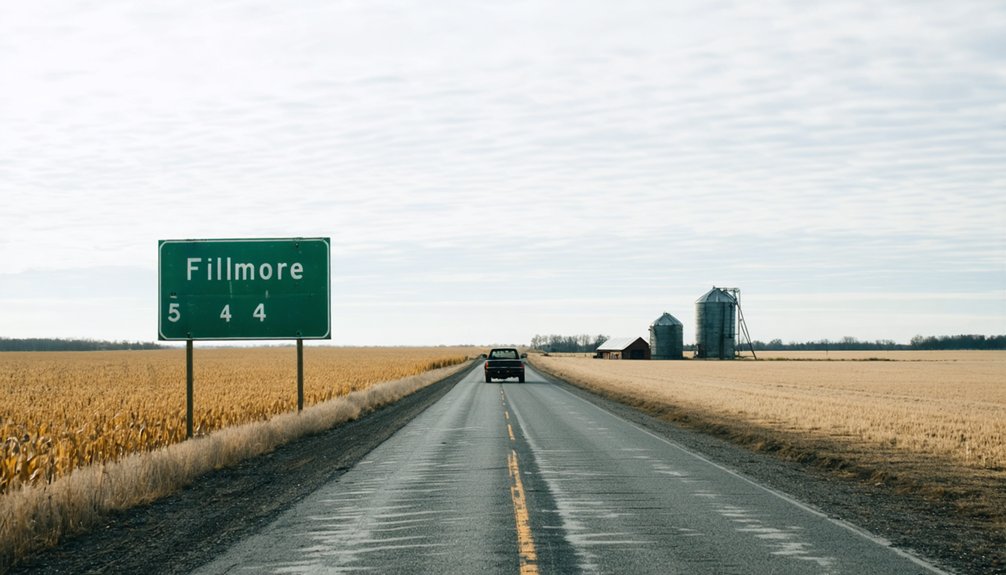
Getting to Fillmore, Illinois is a straightforward drive through the flat, open farmland of Douglas County. From Tuscola, head west on County Road 1400N — about 10 miles of open road that feels like stepping back in time.
From Arcola, travel northwest along similar rural ghost town routes, passing weathered barns and quiet crossroads that hint at a forgotten era. Champaign sits roughly 30 miles north via US-45, making Fillmore an easy half-day detour.
If you’re mapping nearby attractions, Arthur’s Amish country lies just south, worth pairing with your visit. Keep your tank full before leaving any of these towns — Fillmore offers no services.
Roll down your windows, let the prairie air in, and embrace the quiet freedom of the open road.
What’s Left to See in Fillmore Today?
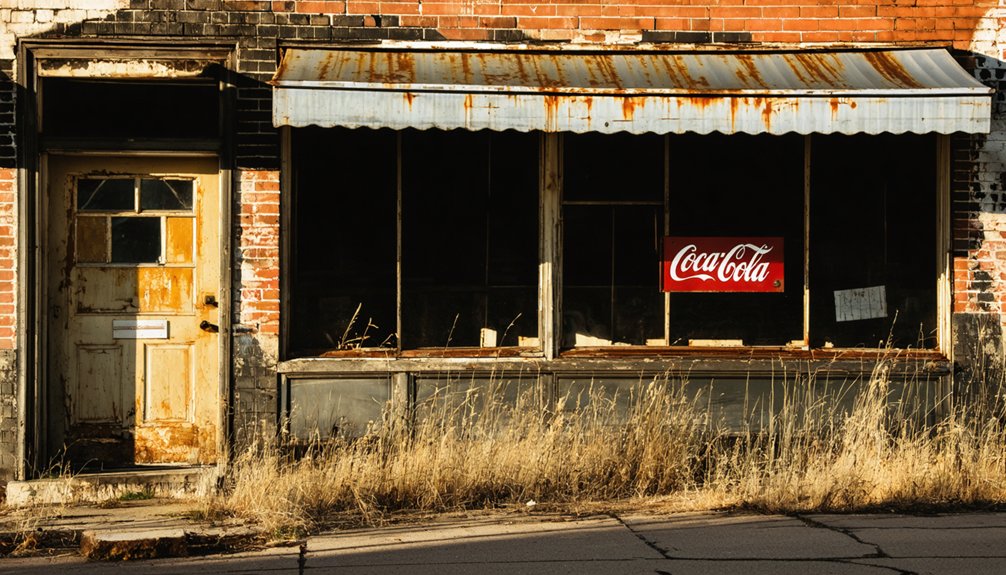
When you arrive in Fillmore, you’ll find only whispers of the town it once was — crumbling foundations, weathered remnants of old structures, and overgrown lots where homes and businesses once stood.
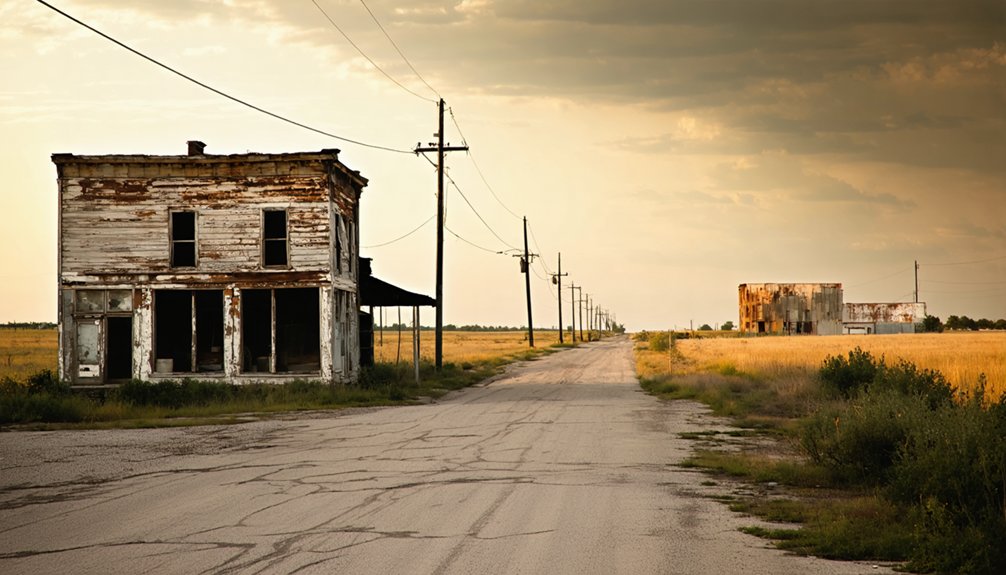
You can walk the abandoned roads that seem to lead nowhere now, their cracked surfaces reclaimed by weeds and silence.
Beyond the ghost of the town itself, the surrounding rural landscape stretches out in quiet beauty, the flat Illinois farmland offering a stark but oddly moving backdrop to all that’s been lost.
Remnants Of Historic Structures
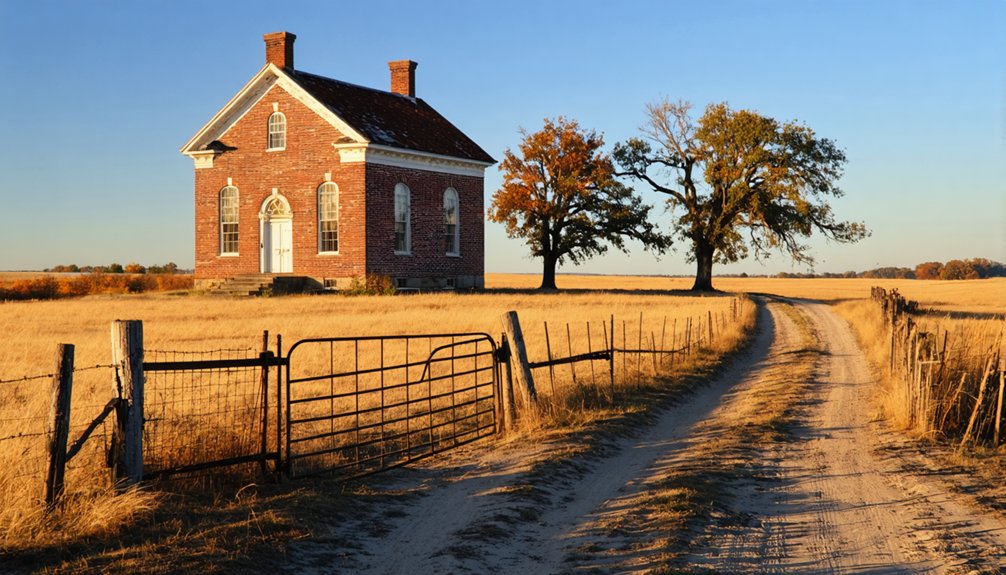
Though the years have quietly swallowed most of Fillmore’s former life, a handful of weathered structures still stand as silent witnesses to the town’s past.
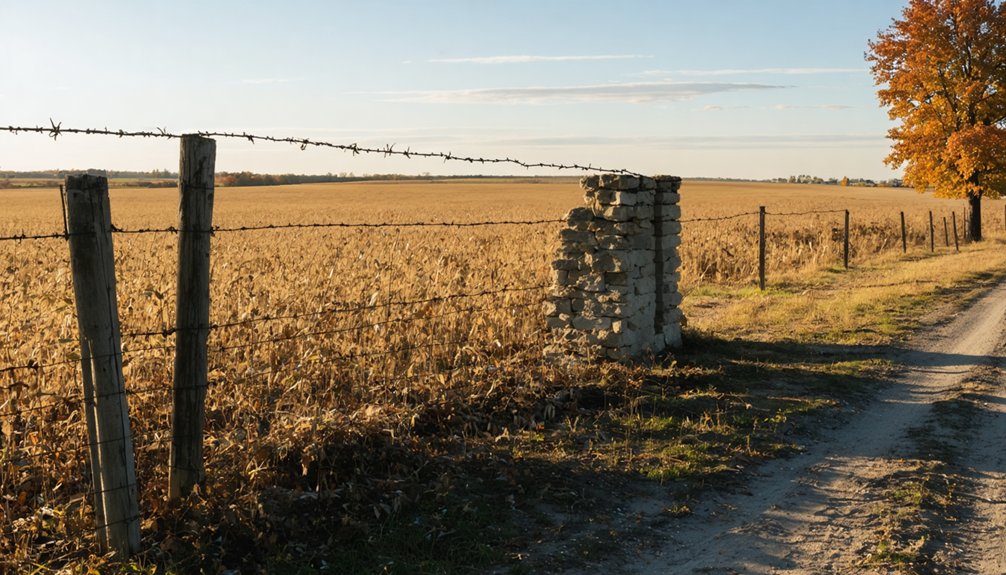
You’ll notice architectural remnants scattered across the landscape — crumbling foundations, aged timber frames, and stone walls that refuse to surrender completely. These fragments speak louder than any written record.
Historic preservation hasn’t been a formal priority here, which makes what survives feel even more raw and authentic.
You’re walking through a place that time forgot rather than curated. Run your hand along a weathered wall and you’re touching something real — unpolished, unrestored, and entirely honest.
Fillmore doesn’t perform its history; it simply holds it, quietly waiting for those curious enough to come looking.
Abandoned Roads And Lots
Beyond the standing structures, Fillmore’s road grid tells its own fading story. You’ll notice forgotten roads that once connected neighbors, businesses, and lives now dissolving back into prairie grass and soil. The platted streets exist mostly as concept — faint depressions in the earth hinting at where wagons and early automobiles once traveled.
Walk the overgrown lots and you’re tracing the footprint of a community that simply stopped. Former residential parcels sit empty, their boundaries invisible yet somehow felt. Abandoned structures once anchored these spaces, giving them purpose and identity.
There’s something freeing about standing where a town used to breathe. No crowds, no noise — just open sky, rustling grass, and the quiet satisfaction of finding a place most travelers completely overlook.
Surrounding Rural Landscapes
Pull your eyes up from those ghost lots and let the bigger picture settle in — Fillmore sits inside a landscape that’s quietly stunning in its own flat, unassuming way.
The rural beauty here isn’t dramatic, but it’s honest. Scenic drives through Douglas County reward patient travelers.
Look for these four things beyond Fillmore’s lots:
- Endless cornfields stretching to the horizon, shifting gold and green with the seasons
- Gravel backroads cutting straight lines through open farmland, perfect for slow, aimless driving
- Weathered fence lines marking boundaries nobody’s argued over in decades
- Big, unobstructed skies that remind you exactly how much open space still exists in this country
Out here, freedom isn’t metaphorical — it’s the view through your windshield.
Why Fillmore Qualifies as a True Illinois Ghost Town
Fillmore fits the ghost town label not because it’s dramatic or desolate in the Hollywood sense, but because the quiet evidence of abandonment is everywhere you look.
Fillmore isn’t dramatic or desolate — it’s quietly abandoned, and somehow that makes it harder to ignore.
There’s no tumbleweed, no crumbling saloon — just empty lots where businesses once stood, a post office long shuttered, and streets that carry more memory than traffic.
That’s what makes ghost town history here so compelling. Fillmore didn’t vanish overnight; it faded slowly, the way a voice trails off mid-sentence.
For anyone drawn to rural exploration, that gradual disappearance tells a more honest story than any ruin. You’re not visiting collapse — you’re visiting stillness.
And in that stillness, Douglas County’s forgotten corner speaks clearly to anyone willing to slow down and listen.
Other Ghost Towns Near Fillmore Worth a Stop
While you’re already out exploring Douglas County’s forgotten corners, it’d be a shame to turn around without checking out the other ghost towns scattered along the region’s back roads.
You’ll find hidden pockets of abandonment throughout the area, each with its own quiet story etched into crumbling foundations and overgrown lots.
String these sites together into a regional ghost town route, and you’ve got a full day’s worth of haunted Illinois history right at your fingertips.
Nearby Abandoned Illinois Towns
Once you’ve soaked in Fillmore’s quiet decay, Douglas County and its neighboring counties reward curious road-trippers with a handful of other forgotten towns worth tracking down on a paper map.
Each carries its own abandoned structures and ghostly tales waiting for those willing to wander off the beaten path.
- Murdock, Douglas County – A near-vanished settlement with crumbling foundations swallowed by prairie grass.
- Brushy, Coles County – Blink and you’ll miss its last remaining structures along forgotten back roads.
- Raritan, Hamilton County – A riverside ghost town echoing with faded commerce.
- Benton City, Knox County – Once ambitious, now reduced to scattered remnants that speak louder than any history book.
Pack provisions, fuel up, and let Illinois surprise you.
Regional Ghost Town Routes
Stretching your ghost town road trip beyond Fillmore opens up a surprisingly rich network of forgotten Illinois communities, each one worth penciling onto your route.
Douglas County sits near several vanished settlements whose ghost town history echoes across the central Illinois prairie. Head toward Coles and Moultrie counties, where collapsed storefronts and overgrown cemetery plots whisper regional folklore stretching back to the 1800s.
You’ll find old mill sites, abandoned rail depots, and crumbling farmsteads that once anchored thriving communities.
Plot your route along county roads rather than highways — that’s where the real discoveries wait. Carry a paper map, leave room for detours, and let curiosity guide you.
These forgotten places reward the traveler who moves slowly and pays attention.
Hidden Douglas County Sites
Douglas County itself holds ghost town secrets worth pulling over for before you ever leave the county line.
These hidden treasures dot forgotten crossroads, whispering local legends if you’re willing to listen. Load up your map and chase these nearby stops:
- Bourbon – A vanished settlement where weathered foundations still push through overgrown fields.
- Sargent – Once a thriving rural hub, now reduced to a name on aging plat maps.
- Newman’s outskirts – Crumbling structures mark where commerce once buzzed along dusty wagon routes.
- Brushy Fork area – Quiet creek bottomlands hide remnants of homesteads swallowed by time.
Each site rewards the curious traveler who slows down, steps out, and reads the landscape honestly.
When Is the Best Time to Visit Douglas County Ghost Towns?
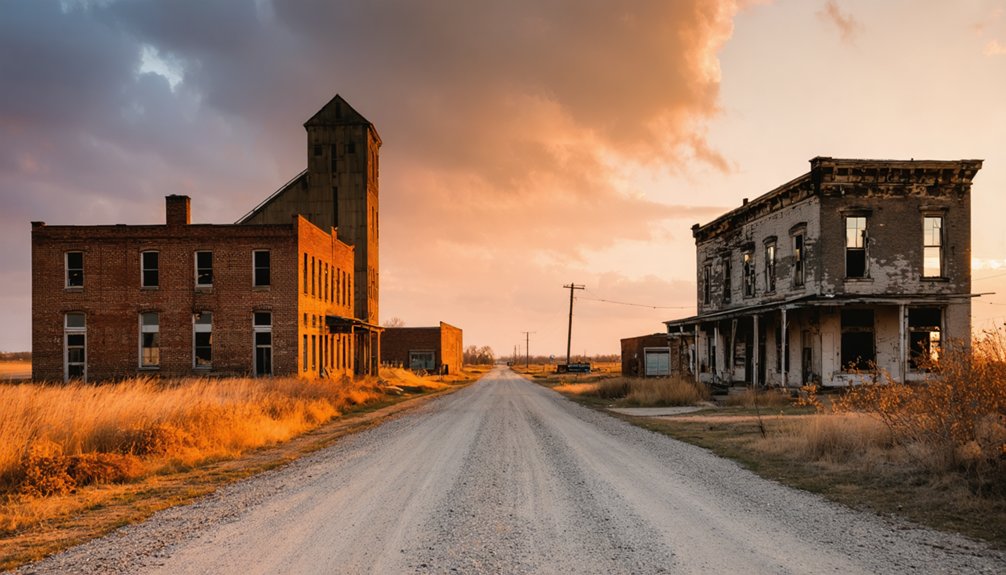
Timing your visit to Douglas County’s ghost towns can make all the difference between a memorable experience and a miserable one.
Spring and fall offer the best visiting seasons, when mild temperatures let you wander freely without summer’s brutal heat or winter’s icy grip. Late October wraps Fillmore’s forgotten streets in amber light, making it ideal for ghost town photography — shadows fall dramatically across crumbling foundations, and the silence feels almost sacred.
Late October transforms ghost towns into golden, shadow-draped worlds where silence feels almost sacred.
Spring’s early mornings bring soft mist that amplifies the haunted atmosphere perfectly. Avoid midsummer weekends when humidity turns exploration into endurance.
Weekday visits give you solitude, letting you genuinely connect with the past without distraction. Pack comfortable walking shoes, a wide-angle lens, and arrive at golden hour — you won’t regret it.
What to Pack for Exploring Fillmore and Douglas County?
Seven essential items can transform your Fillmore excursion from frustrating to unforgettable. Douglas County’s weathered landscapes demand smart preparation, so pack deliberately and roam freely.
Packing Essentials for Fillmore:
- Camera Gear – Bring wide-angle lenses and extra batteries; abandoned structures offer hauntingly beautiful compositions you’ll want to capture completely.
- Weather Considerations – Illinois temperatures swing dramatically, so layer clothing and pack rain gear regardless of forecasts.
- Safety Tips – Carry a first-aid kit, sturdy boots, and a physical map since cell service disappears unexpectedly in rural Douglas County.
- Local Cuisine Supplies – Pack a cooler with road snacks, but save appetite for nearby small-town diners serving honest, homestyle Midwestern comfort food.
Travel light, stay curious, and let Fillmore’s forgotten streets surprise you.
Where to Eat and Sleep Near Douglas County
Once you’ve stuffed your pack and laced your boots, your stomach and tired bones will eventually need tending to. Fortunately, the towns ringing Douglas County still know how to feed and shelter a weary traveler.
The towns ringing Douglas County still know how to feed and shelter a weary traveler.
Tuscola and Arcola sit close by, offering local dining that ranges from honest diner breakfasts to home-cooked plates that taste like somebody’s grandmother still runs the kitchen. You won’t find pretension here — just good food and strong coffee.
For overnight accommodations, small motels and inns line the nearby highways, giving you a clean bed without corporate sterility. Wake up early, eat well, and you’ll feel ready to hit those forgotten roads again.
Fillmore waits quietly, and it rewards those who arrive rested and unhurried.
How to Photograph Abandoned Buildings in Fillmore Safely and Legally
Photographing abandoned buildings in Fillmore carries its own quiet thrill, but you’ll want to earn that shot the right way. Respect the land, follow safety guidelines, and your abandoned photography will tell honest stories worth keeping.
- Get permission first — trespassing isn’t freedom; it’s a fine waiting to happen.
- Wear sturdy boots — rotted floors and broken glass don’t care about your timeline.
- Bring a partner — unstable structures can shift without warning, and you’ll want backup.
- Never touch or remove artifacts — leave the rusted tools and peeling wallpaper exactly where time placed them.
Move through these spaces like a guest, not a conqueror.
Your lens captures memory best when you approach with humility and awareness.
Frequently Asked Questions
Is Fillmore, Douglas County Listed on Any Official Illinois Ghost Town Registries?
You won’t find Fillmore’s ghost town history on any official Illinois registry, but its Fillmore significance speaks for itself — you’ll feel the nostalgic freedom of its forgotten streets whispering stories only true explorers dare uncover.
Can Visitors Legally Enter or Explore Any Structures Still Standing in Fillmore?
You’ll want to respect private property laws before exploring any standing structures in Fillmore. Follow exploration guidelines carefully, prioritize safety measures, and always seek owner permission — those weathered walls hold nostalgic stories worth protecting for future wanderers like you.
Are There Any Local Guided Tours Specifically Focused on Douglas County Ghost Towns?
You won’t find formal guided tours, but you can uncover ghost town history and local legends yourself, wandering freely through Douglas County’s forgotten roads, where every crumbling detail whispers nostalgic stories of lives once beautifully lived.
Has Fillmore Ever Been Featured in Any Films, Documentaries, or Paranormal Investigations?
You won’t find Fillmore starring in films, but its ghost town legends and whispered paranormal activities draw curious souls who’ve documented eerie encounters, keeping its forgotten spirit alive through personal stories that transcend any Hollywood script.
Do Any Descendants of Fillmore’s Original Residents Still Live in Douglas County Today?
Some descendants likely still call Douglas County home, carrying their family heritage quietly forward. You’d find echoes of local history in their stories, names, and land — living threads connecting today’s free spirits to Fillmore’s forgotten past.
References
- https://en.wikipedia.org/wiki/List_of_ghost_towns_in_Illinois
- https://www.youtube.com/watch?v=anFCnaFkH9A
- https://www.onlyinyourstate.com/experiences/illinois/abandoned-places-road-trip-il
- https://sites.rootsweb.com/~iltttp/ghosttowns.htm
- https://www.youtube.com/watch?v=DX90D-hf5QE
- https://drloihjournal.blogspot.com/2022/09/lost-towns-of-illinois-fillmore-illinois.html
- https://archive.org/stream/TalesPart15/Tales_Part_15_djvu.txt
- https://savingplaces.org/guides/ghost-towns-on-route-66
- http://www.sipscameraclub.com/attachments/064_GhostTownList2012.pdf
- https://www.onlyinyourstate.com/experiences/illinois/creepy-ghost-towns-il