Planning a ghost town road trip to North Duxbury, Vermont means stepping into a place that nature literally swallowed whole. The catastrophic 1927 flood erased this once-thriving village, leaving behind crumbling mill foundations, forgotten cemeteries, and farmland ruins frozen in time. You’ll want sturdy boots, offline maps, and at least four hours to explore properly. Locals still whisper about unexplained sightings along Duxbury Road, and the legends surrounding this haunted landscape run far deeper than you’d expect.
Key Takeaways
- North Duxbury, Vermont, was a thriving village destroyed by the catastrophic 1927 flood, leaving abandoned structures and cemeteries to explore.
- Key landmarks include Little Wingate Cemetery, crumbling farm ruins, and the Little Block Sawmill foundations amid an overgrown landscape.
- Visit in late September to mid-October for autumn foliage; avoid late November through March due to dangerous snow and ice.
- GPS can be unreliable, so use offline maps, follow County Road, turn right at the river fork, and allow four hours.
- Pack water, layered clothing, sturdy boots, a first aid kit, a trail map, and a fully charged phone before visiting.
What Is North Duxbury and Why Did It Disappear?
Tucked away in the mountains of Duxbury, Vermont, North Duxbury was once a thriving village that survived nearly a century before the Great Vermont Flood of 1927 wiped it off the map. The devastating storm killed over 50 people and rendered the settlement completely uninhabitable, ending its story almost overnight.
What makes North Duxbury history so compelling is how abruptly everything stopped. Farms, mills, and families simply vanished beneath floodwaters, leaving ruins frozen in time.
Today, ghost town exploration here feels like stepping through a portal — the land holds its secrets quietly but powerfully.
Exploring North Duxbury feels like stepping through time — the land holds its secrets quietly but powerfully.
You’ll discover a place where nature reclaimed human ambition, where foundations still peek through overgrowth, and where the past feels surprisingly close.
North Duxbury doesn’t just tell history; it makes you feel it.
How the 1927 Flood Wiped North Duxbury Off the Map
When you stand among North Duxbury’s ruins today, it’s hard to imagine the catastrophic wall of water that erased this thriving village in November 1927, killing over 50 people across Vermont and displacing entire families overnight.
The storm struck with such ferocity that residents had no realistic path to rebuilding, forcing the community to permanently abandon land their families had worked for nearly a century.
What you’re walking through now isn’t just a ghost town — it’s a flood cemetery, a place where an entire way of life drowned and never resurfaced.
Storm’s Devastating Impact
The 1927 Great Vermont Flood didn’t just damage North Duxbury — it erased it. Raging floodwaters tore through the village, destroying homes, farms, and mills that families had built over nearly a century. The storm claimed over 50 lives across Vermont, leaving communities shattered and landscapes permanently altered.
North Duxbury’s flood aftermath was particularly brutal. The village never recovered, forcing survivors to abandon everything they’d known and built. What once thrived as a self-sufficient rural settlement became uninhabitable almost overnight.
Today, the site carries enormous historical significance as a stark reminder of nature’s unchecked power. Walking through the ruins, you’ll feel the weight of that catastrophic moment — where one storm rewrote the future of an entire community and left only silence behind.
Casualties And Displacement
What the 1927 flood stole from North Duxbury wasn’t just buildings — it was an entire way of life. Casualty statistics tell part of the story: over 50 Vermonters perished statewide, and entire communities vanished overnight.
For North Duxbury, recovery simply wasn’t an option.
The displacement left behind:
- Families forced to abandon century-old homesteads permanently
- Agricultural operations destroyed beyond any practical rebuilding
- Community infrastructure — mills, roads, farms — completely severed
- Generational knowledge and traditions lost with the scattered population
Community resilience existed, but geography and economics crushed any realistic comeback.
You’re walking into a place where people made an impossible choice: leave everything or survive nothing. That raw reality is exactly what makes visiting North Duxbury such a profoundly human experience.
Village’s Permanent Abandonment
After a century of carving out a life in Vermont’s unforgiving terrain, North Duxbury’s fate arrived in November 1927 — not gradually, but all at once. The floodwaters didn’t just destroy homes and mills; they erased the village’s entire reason for existing.
Roads washed out, farmland became swampland, and the community’s infrastructure collapsed beyond any practical hope of rebuilding.
Residents had no real choice — they left and never returned. What the flood couldn’t physically destroy, isolation finished off.
North Duxbury quietly transformed from a functioning settlement into one of Vermont’s most compelling ghost town legends.
That permanent abandonment is precisely what gives the site its historical significance today. You’re not visiting a curated museum; you’re walking through a place time genuinely forgot.
The Abandoned Farms, Cemeteries, and Mill Ruins Still Standing Today
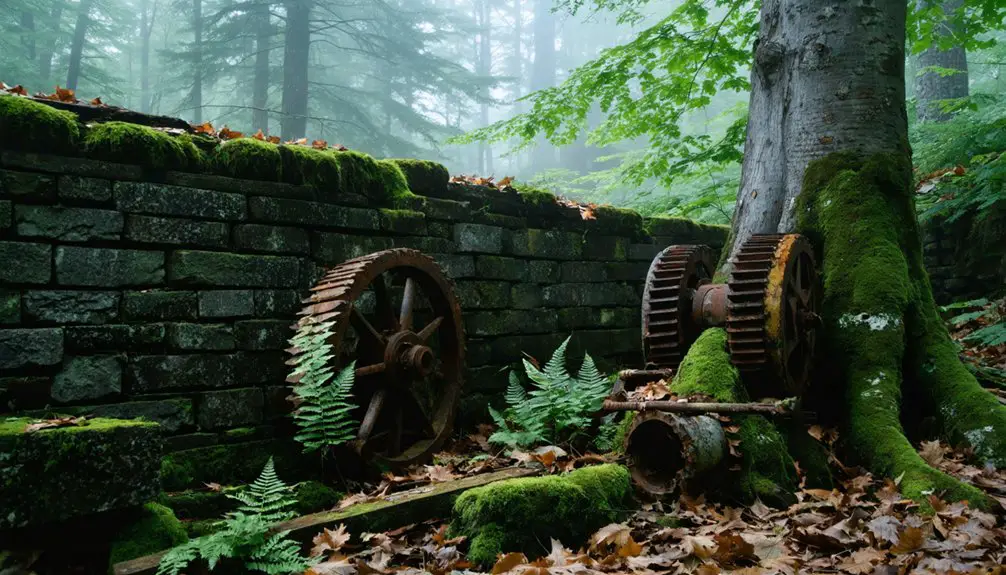
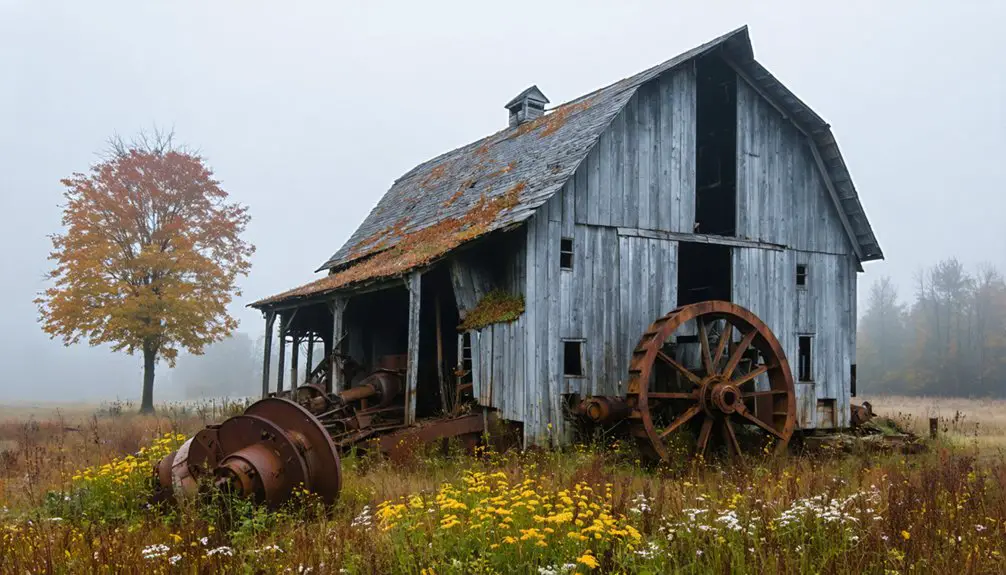
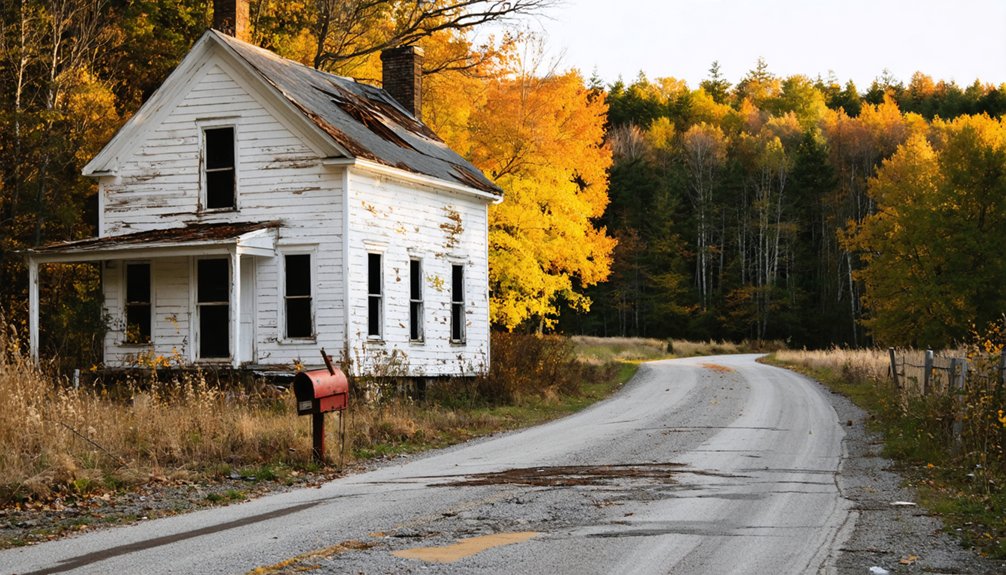
Scattered across the overgrown landscape of North Duxbury, you’ll find haunting remnants of a community that once thrived for nearly a century before the 1927 flood erased it from the map.
These abandoned structures and historical artifacts paint a vivid picture of rural Vermont life frozen in time.
Key landmarks you’ll encounter include:
- Little Wingate Cemetery – a preserved burial ground near former mill locations
- James Carney & William Clossey Farms – crumbling ruins reflecting agricultural heritage
- Upper Cemetery – final resting place for early settlers and flood victims
- Little Block Sawmill – foundations and kilns still visible near the river forks
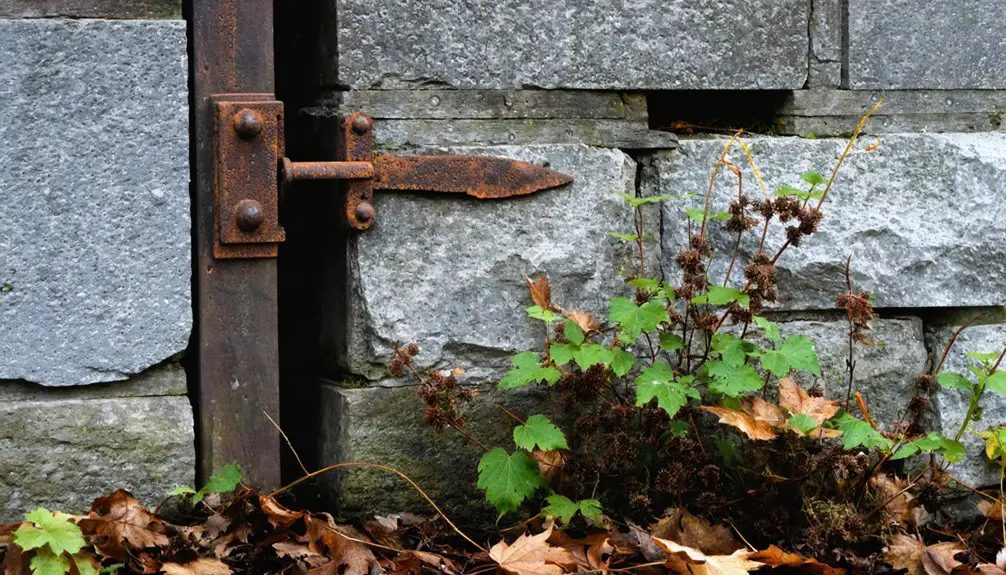
Rusty doors, weathered shutters, and moss-covered stone foundations create an atmosphere that’s equal parts eerie and historically compelling.
Paranormal Legends That Still Haunt Duxbury Road
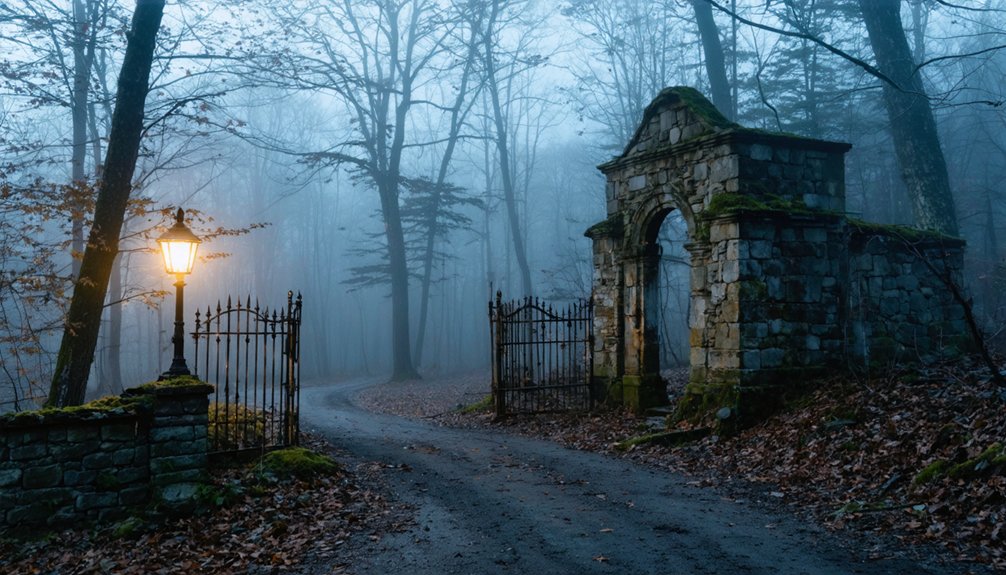
As you walk Duxbury Road, you’re stepping onto ground with a dark history — decades of reported unexplained disappearances, strange noises, and an unease that locals have warned about for generations.
Visitors near the old sawmill ruins and crumbling farms frequently report sightings of shadow figures lurking at the edges of the tree line, particularly after dusk.
Beneath it all lies an unrecognized Native American burial ground, rumored to carry a curse that has plagued farming efforts on the surrounding land for well over a century.
Duxbury Road’s Dark History
Duxbury Road has carried a dark reputation for decades, with locals whispering about unexplained disappearances, strange noises, and shadow figures that seem to materialize near the old ruins.
Duxbury legends don’t stay buried — they follow you down this stretch of road.
Among the most chilling reports you’ll encounter:
- Ghostly sightings near the old sawmill foundations after dark
- Unexplained sounds echoing from the river forks
- Brianna Maitland’s abandoned car discovered near the area after her 2004 disappearance
- A persistent sense of unease that visitors consistently describe around the farm ruins
Whether you’re a skeptic or a believer, you can’t ignore what generations of locals have documented here.
Duxbury Road doesn’t just hold history — it seems determined to remind you it’s still alive.
Shadow Figures Near Ruins
What lingers near the ruins of North Duxbury isn’t just history — it’s something visitors consistently struggle to explain. Near the old sawmill foundations and collapsed farmsteads, people report seeing shadow figures moving between the tree lines, disappearing before you can focus on them directly.
The eerie atmosphere intensifies around the Domes McCoy and Tom Herbert farm ruins, where silence falls unnaturally heavy and your instincts tell you something’s watching.
Locals don’t dismiss these accounts — they’ve heard them too many times from too many unconnected strangers.
You don’t have to believe in the paranormal to feel it here. The land carries weight. Whether that’s centuries of layered history or something less explainable, you’ll likely leave North Duxbury questioning what you actually saw between those crumbling walls.
The Cursed Burial Ground
Beneath the eerie quiet of North Duxbury lies a more unsettling layer — an unrecognized Native American burial ground where artifacts and human remains have been unearthed over the years.
Cursed legends surrounding this site suggest that disturbing ancient burial rituals has consequences. Locals point to repeated farming failures as proof the land resists human interference.
Visitors consistently report experiencing:
- Overwhelming feelings of dread near the burial site
- Shadow figures moving between the old farm ruins
- Unexplained equipment failures during archaeological surveys
- Sudden temperature drops with no meteorological explanation
Whether you believe in curses or not, you can’t ignore the pattern of strange occurrences tied directly to this ground.
Respect the site, tread carefully, and remember — some places carry weight that no historical marker can fully explain.
The Best Time of Year to Visit North Duxbury
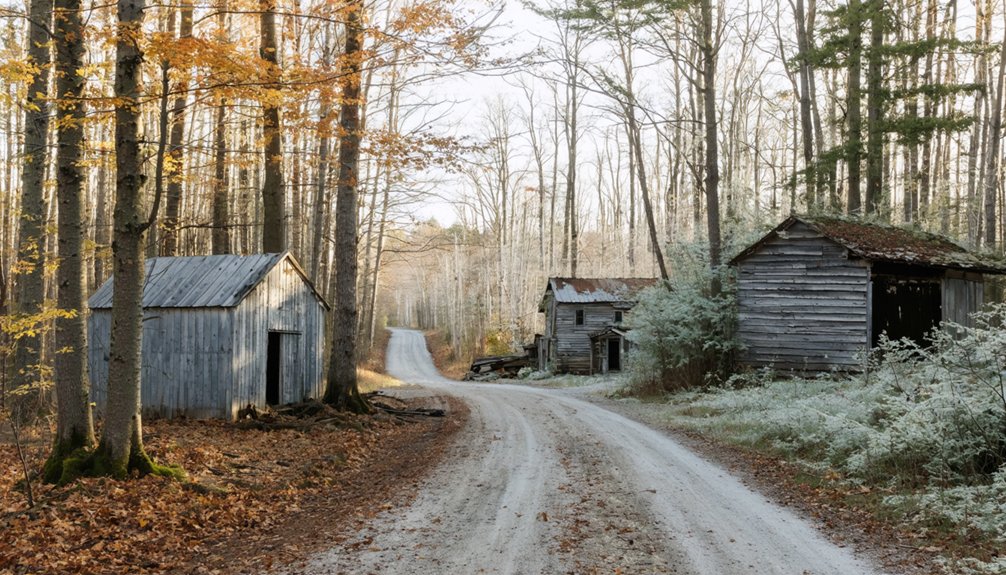
When you visit North Duxbury can make or break your experience at this remote Vermont ghost town. Seasonal changes dramatically shape what you’ll encounter on the trail, so timing matters.
Late September through mid-October delivers the most rewarding experience — autumn colors blanket the surrounding hills, creating a striking contrast against the weathered ruins and moss-covered foundations.
Autumn’s peak transforms North Duxbury’s crumbling ruins into something almost cinematic — visit late September through mid-October.
Summer offers longer daylight hours, giving you more time to explore the mill sites and cemeteries without rushing. However, humidity and insects can make the four-hour trek uncomfortable.
Avoid late November through March entirely. Snow and ice make the County Road trail treacherous, and freezing temperatures amplify the risks of Vermont’s unpredictable mountain weather.
Spring remains muddy and flood-prone — an ironic reminder of the 1927 disaster that silenced this village forever.
Getting to North Duxbury: Directions and Access Routes
Reaching North Duxbury requires a few deliberate turns, so don’t leave navigation entirely to your GPS — cell service gets spotty fast in Vermont’s mountain corridors.
Head down County Road and turn right at the river fork, following the path that parallels the water toward the settlement.
For successful ghost town exploration, come prepared:
- Download offline maps before departing
- Park at designated trail access points only
- Allow four or more hours for a complete visit
- Carry water, as no concessions exist between the cemetery and mill
Hiking safety matters here — weather shifts quickly in the mountains, so pack rain gear and dress in layers.
The Little Wingate Cemetery sits near 44.25°N, 72.15°W, giving you a reliable anchor point if you lose your bearings.
What to Pack Before You Visit North Duxbury

Packing smart makes the difference between a memorable ghost town adventure and a miserable retreat back to your car. North Duxbury’s trails demand at least four hours of your time, so bring plenty of water since there’s no sources between the cemetery and the mill.
Layer your clothing because mountain weather shifts fast and unpredictably. Wear sturdy boots for uneven, debris-covered terrain near the old farm ruins and sawmill foundations.
Mountain weather turns on a dime. Layer up and boot up before hitting those uneven trails.
Carry a camera to document what you discover, but remember ghost town etiquette means taking only photographs and leaving everything untouched. Historical preservation depends on visitors like you resisting the urge to pocket artifacts or disturb structures.
Pack a trail map, a first aid kit, and a fully charged phone. Freedom tastes best when you’re prepared for it.
What Visitors Actually Report Experiencing at North Duxbury
Most visitors arrive at North Duxbury expecting atmosphere and leave with something harder to explain.
You’ll walk past ruined farmsteads and exposed historical artifacts, but the haunted encounters reported here follow a consistent pattern that’s tough to dismiss:
- Shadow figures appearing near the old sawmill foundations at dusk
- Unexplained sounds echoing from the river fork, particularly low voices and snapping branches with no visible source
- An overwhelming feeling of being watched around the Little Wingate Cemetery
- Sudden temperature drops in specific areas regardless of weather conditions
You won’t find dramatic theatrics here. Instead, you’ll find a quiet unease that builds gradually.
The land carries real historical weight, and many visitors leave convinced that something in North Duxbury hasn’t finished its story yet.
Nearby Ghost Towns to Combine With a North Duxbury Visit
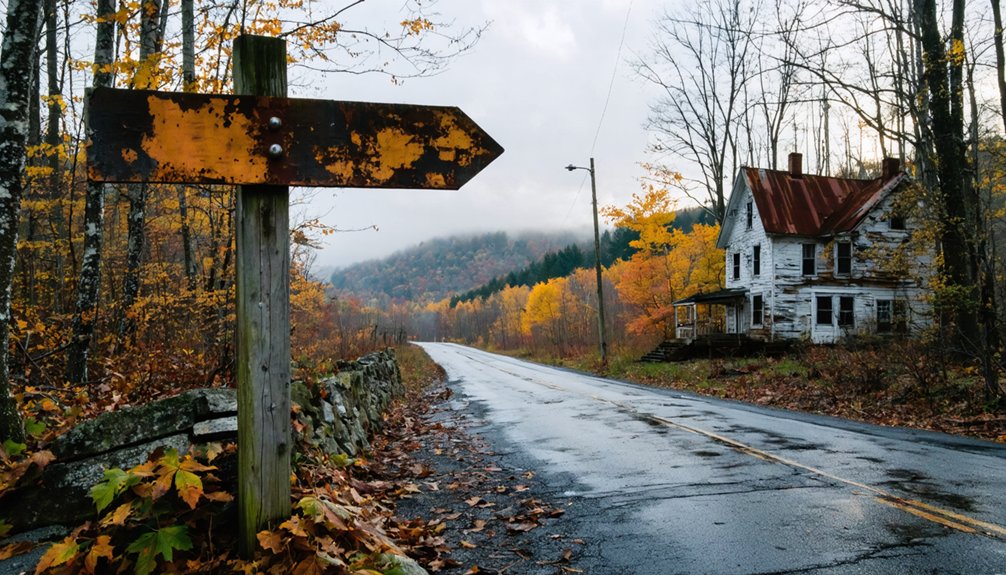
North Duxbury will leave its mark on you, and once it does, you’ll want to keep that energy going.
Fortunately, Vermont delivers more ghost town attractions within easy driving distance.
Ricker Basin in Waterbury suffered the same 1927 flood destruction as North Duxbury, making it a natural companion stop that deepens your understanding of historical preservation across the region.
Ricker Basin shares North Duxbury’s 1927 flood story, making it the perfect next stop on your ghost town journey.
The parallels between both sites are striking.
Greenbank Hollow in Danville offers a similarly eerie atmosphere with a distinctly different backstory, giving you fresh scenery without losing that haunted edge.
If you’re craving something more unconventional, the Museum of Everyday Life in Glover satisfies curiosity about Vermont’s forgotten past through preserved artifacts.
String these stops together and you’ve built a legitimate ghost town road trip worth remembering.
Frequently Asked Questions
Is There an Admission Fee to Visit North Duxbury’s Historical Park?
Like a open book of history, you won’t pay a dime to explore North Duxbury’s historical significance! The site’s a non-profit park, though visitor amenities are minimal, so you’ll need to bring your own water and supplies.
Are Pets Allowed on the Trails at North Duxbury?
The knowledge base doesn’t specify pet-friendly policies for North Duxbury’s trails. You’ll want to contact the managing non-profit directly before bringing your furry companion. Following proper trail etiquette guarantees everyone, including pets, enjoys this hauntingly historic site responsibly.
Is Photography Permitted Near the Cemetery and Protected Ruins?
You’ll find ghostly photography is generally permitted near the cemetery and protected ruins, but practice proper cemetery etiquette—stay respectful, don’t disturb artifacts, and capture the hauntingly beautiful remnants of North Duxbury’s forgotten past freely.
Are Guided Tours Available at North Duxbury for Visiting Groups?
Like Brigadoon emerging from the mist, North Duxbury awaits your independent exploration. Guided tour options aren’t formally available, so you’ll forge your own path through the historical significance of these hauntingly beautiful, flood-ravaged ruins freely.
Is Overnight Camping Allowed Anywhere Within the North Duxbury Site?
You won’t find overnight camping allowed at North Duxbury, as camping regulations protect the site’s historical significance. It’s managed as a non-profit historical park, so you’ll need to explore its haunting ruins within daylight hours only.
References
- https://obscurevermont.com/the-terrors-of-duxbury-road/
- https://www.vtcng.com/stowetoday/spotlight/visit-the-ruins-of-waterburys-little-river-settlement/article_458ccd5a-7d3e-11df-8114-001cc4c03286.html
- https://www.onlyinyourstate.com/trip-ideas/vermont/abandoned-places-road-trip-vt
- https://www.facebook.com/groups/BenningtonBlotter/posts/2084150884950089/
- https://www.vftt.org/threads/does-anyone-know-of-any-hikes-that-include-a-ghost-town.16760/
- https://www.tripadvisor.com/Attractions-g28966-Activities-c47-t14-Vermont.html
- https://obscurevermont.com/tag/ghost-town/
- https://ournewenglandlegends.com/podcast-409-the-ghost-town-of-ricker-basin/
- https://www.onlyinyourstate.com/trip-ideas/vermont/hidden-gem-road-trip-vt
- https://www.onlyinyourstate.com/trip-ideas/usa/ultimate-ghost-town-roadtrip-usa