Green Valley, Texas sits eight miles from Denton, tucked between the Elm Fork of the Trinity River and Clear Creek, where adobe ruins and abandoned structures still echo the boom-and-bust cycles that shaped frontier Texas. You’ll reach it via Farm-to-Market Road 2153, with Shepard Road as your backup route. Spring and fall offer the most rewarding conditions for exploration. Everything you need to plan the full journey is waiting just ahead.
Key Takeaways
- Green Valley, Texas, is a ghost town located eight miles from Denton, situated between the Elm Fork of the Trinity River and Clear Creek.
- Navigate via Farm-to-Market Road 2153 and mark GPS coordinates 33.31344990, -97.06417670 before departure, as cell signals fade near the site.
- Visit in spring or fall for mild temperatures; spring offers wildflowers, while fall reveals architectural details hidden by summer vegetation.
- Pack essential safety gear including sturdy boots, work gloves, a flashlight, and a first aid kit due to remote access and uneven terrain.
- Combine your visit with nearby towns like Aubrey, Krugerville, and Denton to enrich the overall historical road trip experience.
What Makes Green Valley, Texas Worth the Drive?
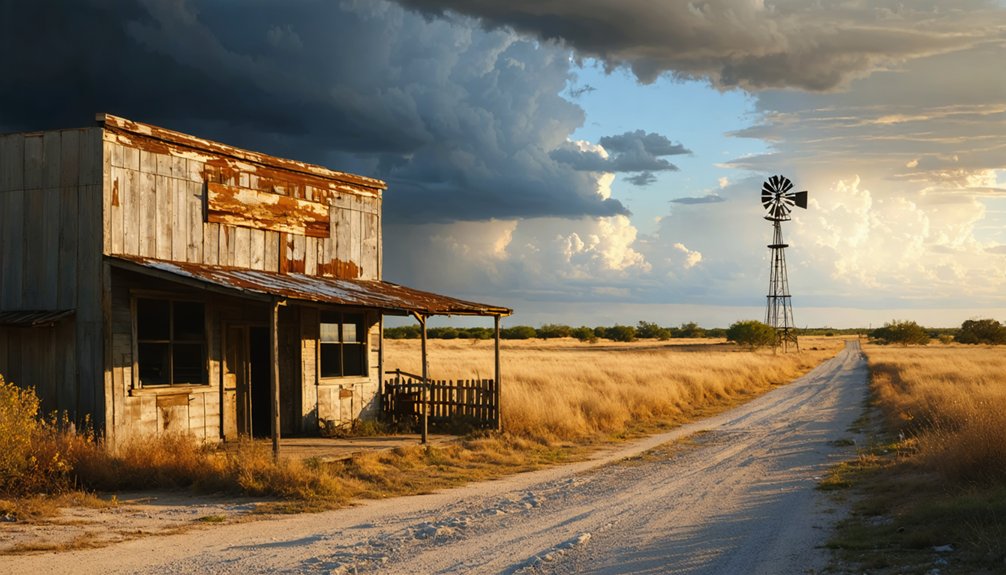
Although Green Valley, Texas sits just eight miles from Denton, it feels worlds away from the modern city’s sprawl. Tucked between the Elm Fork of the Trinity River and Clear Creek, this semi-abandoned settlement carries real ghost town legends rooted in boom-and-bust economics that once shaped the entire region.
You’ll find adobe ruins, abandoned structures, and a past tied to mining and railroad industries that built and ultimately broke countless Texas communities. The historical significance here isn’t manufactured for tourists — it’s embedded in every weathered wall and overgrown lot.
Green Valley even carried a different name once: Toll Town. That former identity alone hints at a layered story worth chasing.
If you crave authentic history untouched by commercialization, this quiet valley rewards the drive completely.
Where Is Green Valley, Texas and How Do You Get There?
You’ll find Green Valley tucked into northeastern Denton County, Texas, just eight miles from the city of Denton, cradled between the Elm Fork of the Trinity River and Clear Creek.
To reach this semi-abandoned settlement, you’ll take Farm-to-Market Road 2153 as your primary route, with Shepard Road offering a secondary approach to the townsite.
Farm Road 428 runs just north of the area, placing Green Valley within a quiet rural grid that’s remained largely unchanged since the town’s boom years faded into memory.
Green Valley’s Exact Location
Eight miles from the city of Denton, Green Valley rests quietly in the northeastern corner of Denton County, tucked between the Elm Fork of the Trinity River and Clear Creek. Its coordinates — latitude 33.31344990, longitude -97.06417670 — place it in a landscape that still carries the weight of its historical significance.
You’ll find the townsite just south of Farm Road 428, accessible via Farm-to-Market Road 2153 or Shepard Road. No major highway cuts through its center, which means you’re deliberately seeking it out — and that’s exactly the point.
The surrounding terrain quietly reinforces the local legends that drew settlers here originally, when the town still answered to its earlier name: Toll Town. That isolation you feel driving in? It’s always been part of Green Valley’s identity.
Roads Leading There
Three roads carry you into Green Valley’s quiet orbit, each one peeling away from the modern world a little more than the last.
Farm-to-Market Road 2153 serves as your primary route, threading through open Texas landscape with scenic routes that reward patient travelers. Shepard Road offers a secondary approach, narrower and more intimate with the terrain. Farm Road 428 cuts just north of the townsite, giving you a final bearing before you arrive.
Check road conditions before heading out — rural Texas infrastructure doesn’t always keep pace with weather or time.
No major highway pierces Green Valley’s center, and that’s precisely the point. The roads here don’t rush you. They ease you forward, mile by deliberate mile, into something older and quieter than the world you left behind.
What’s Still Standing at Green Valley’s Ghost Town Site?
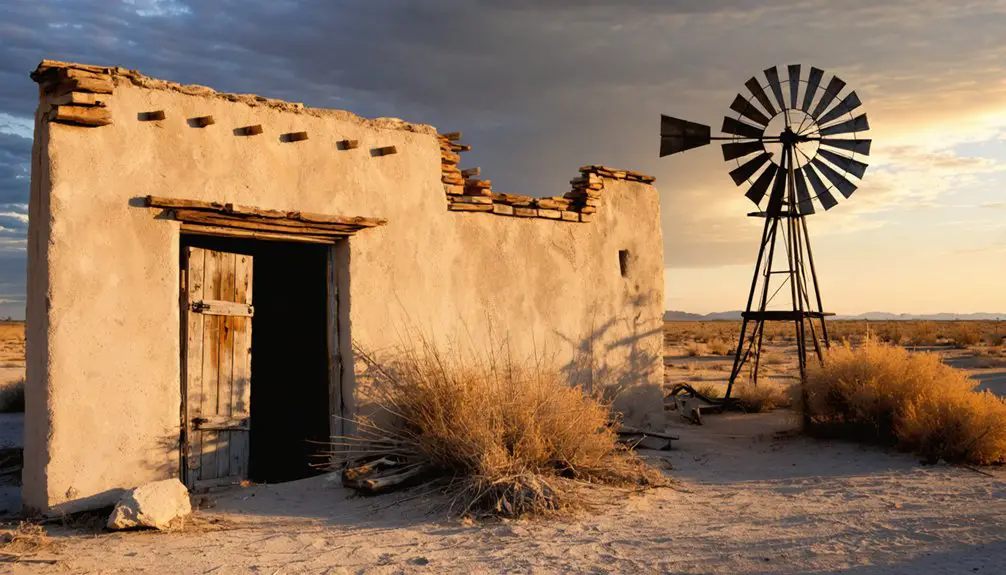
Though much of Green Valley has surrendered to time, a handful of structures and landmarks still anchor the site to its living past. You’ll find abandoned structures scattered across the townsite, their weathered walls quietly testifying to the community’s boom-and-bust story.
Adobe ruins and decaying buildings carry real historical significance, offering unfiltered glimpses into Texas frontier life tied to mining and railroad ambitions.
The crumbling adobe walls don’t romanticize the past — they simply tell it, honestly and without apology.
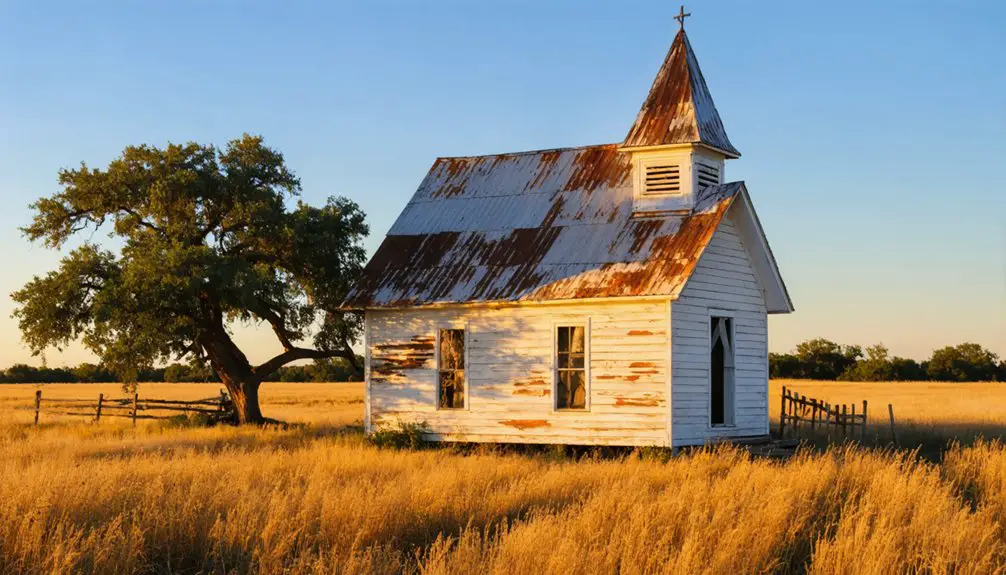
What’s remarkable is that the church, school, and cemetery haven’t been swallowed by neglect — they remain in active use, bridging past and present in a way few ghost towns can claim.
As you walk the grounds, you’re not just observing history; you’re standing inside it. Green Valley doesn’t perform its past. It simply holds it, stubbornly and honestly.
When Is the Best Time to Visit Green Valley, Texas?
Timing your visit to Green Valley rewards you with very different experiences depending on the season.
Spring and fall offer the best seasons for exploration — mild temperatures let you roam the ruins and overgrown pathways without battling brutal Texas heat. Wildflowers push through cracked foundations in spring, giving the abandoned structures an almost defiant beauty.
Fall strips the landscape bare, revealing architectural details that summer vegetation hides.
Summer visits demand early morning starts before the heat becomes punishing.
Winter brings stark, quiet clarity that suits the town’s somber history well.
Check Denton County’s local events calendar before you go.
Regional heritage festivals occasionally spotlight nearby ghost towns, offering guided tours and historical context that deepen your understanding of Green Valley’s boom-and-bust story.
Which Denton County Ghost Towns Can You Visit in One Trip?
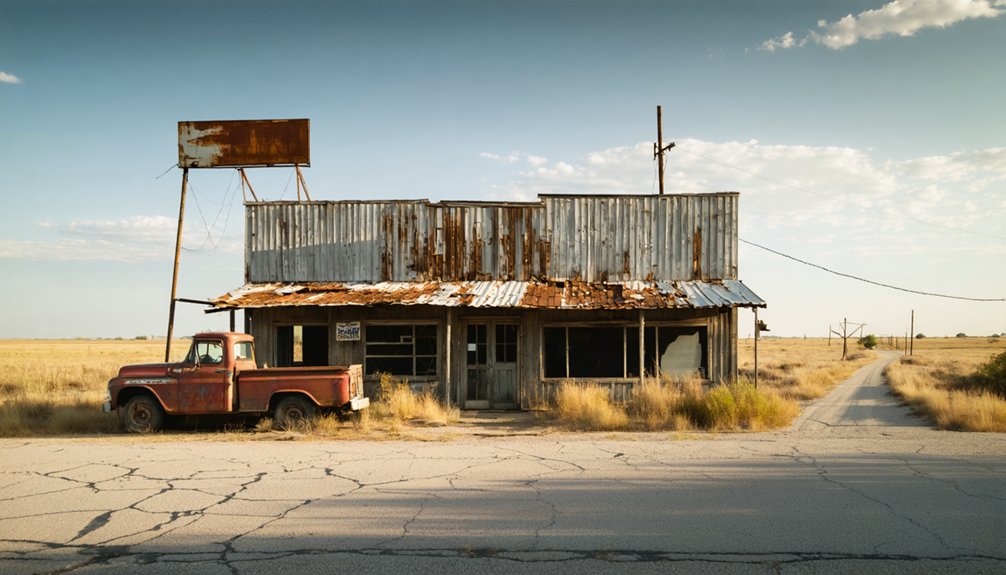
Denton County rewards ghost town hunters with several forgotten settlements close enough to string together in a single day’s drive.
Pack your curiosity and hit the back roads for raw cultural insights and mining heritage that textbooks skip.
Pack your curiosity, leave the pavement behind, and uncover the raw heritage that history books quietly forgot.
- Green Valley – Your anchor stop, layered with local legends and rural exploration.
- Krugerville – A northeastern neighbor carrying its own historical significance and quiet decay.
- Cooper Creek – A small community reflecting Denton County’s boom-and-bust agricultural past.
- Aubrey surroundings – Nearby rural corridors where ghost towns blur into working farmland.
String these stops along your road trip route using Farm-to-Market roads, and you’ll cover meaningful ground without backtracking.
Each site sharpens your understanding of how ambition, geography, and time reshape communities into silence.
What Should You Bring to Explore Green Valley Safely?
Before you set foot among Green Valley’s abandoned structures and ruins, you’ll want to pack essential safety gear — sturdy boots, a first aid kit, and a flashlight will serve you well on uneven terrain.
Since no major highway cuts through the ghost town center and access runs through Farm-to-Market Road 2153 and Shepard Road, you’ll need reliable maps or a GPS device loaded with offline data.
Don’t trust cell service alone in this semi-abandoned stretch of northeastern Denton County, where the land between the Elm Fork and Clear Creek can disorient even experienced explorers.
Essential Safety Gear
Wandering through Green Valley’s abandoned structures and ruins demands respect for the site’s age and fragility, so you’ll want to pack smart before heading out.
The right safety equipment transforms a risky visit into a confident exploration of this semi-abandoned ghost town. These travel essentials keep you protected:
- Sturdy boots — Uneven terrain and debris hide underfoot throughout the ruins.
- Work gloves — Weathered wood, rusted metal, and crumbling adobe can cut exposed hands quickly.
- Flashlight or headlamp — Dark interiors hide structural hazards inside abandoned buildings.
- First aid kit — Remote access via Farm-to-Market Road 2153 means emergency services won’t arrive fast.
Pack light, move carefully, and let Green Valley’s history reveal itself on your terms.
Navigation And Maps
Green Valley’s rural position in northeastern Denton County, tucked between the Elm Fork of the Trinity River and Clear Creek, means you’re traversing terrain that doesn’t announce itself clearly.
Cell signals fade, roads blur into unmarked paths, and Farm-to-Market Road 2153 won’t always appear on outdated map resources. Bring a downloaded offline map before you leave civilization behind.
For reliable ghost town navigation, cross-reference Google Maps with a printed county map from the Denton County road department.
Note that Shepard Road provides secondary access if your primary route becomes impassable. Mark coordinates 33.31344990, -97.06417670 into your GPS before departure.
You’re entering terrain shaped by boom-and-bust history, and the land doesn’t accommodate the unprepared. Navigate deliberately, verify your route twice, and embrace the freedom that comes with genuine self-reliance.
Which Towns Near Green Valley Are Worth Adding to the Trip?
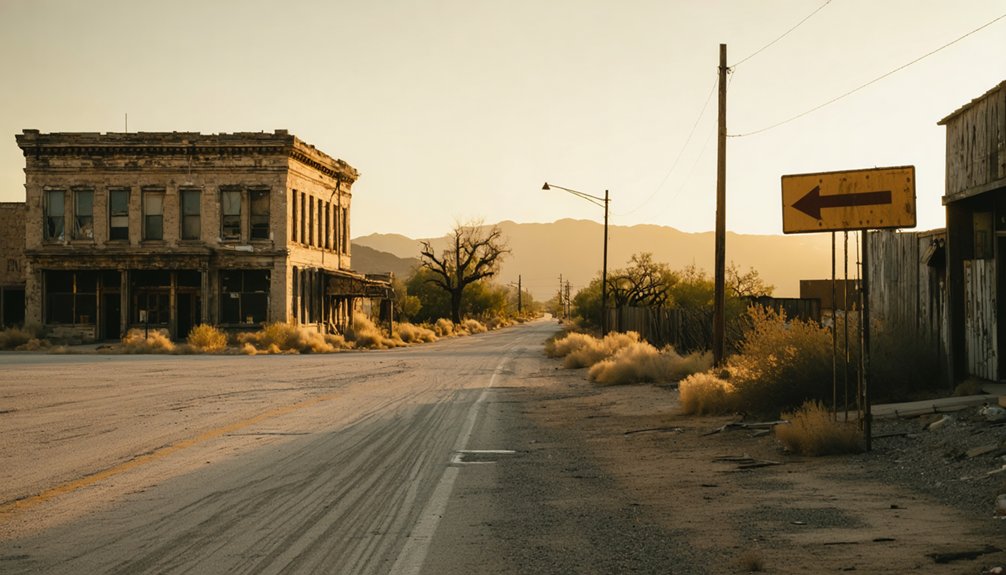
Once you’ve soaked in Green Valley’s quiet ruins, the surrounding Denton County towns are worth folding into your route. Each stop adds texture to the region’s layered past.
- Aubrey – Explore Aubrey attractions that reflect small-town Texas resilience, from local landmarks to historic storefronts worth photographing.
- Krugerville – Dig into Krugerville history, a northeast neighbor shaped by rural settlement patterns that mirror Green Valley’s own rise and fade.
- Denton – Eight miles southwest, Denton offers archives, museums, and architecture grounding the entire county’s story.
- Cooper Creek – A quiet nearby community that completes the picture of how scattered settlements once defined this landscape.
String these towns together, and you’ll build a road trip that moves freely through forgotten Texas history.
How Do You Photograph Green Valley’s Ruins Without Missing the Details?
Capturing Green Valley’s ruins well means slowing down before you ever raise your camera. Walk the site first, letting your eyes adjust to the textures—crumbling adobe edges, weathered wood grain, iron stains bleeding through stone.
Your best photography tips start with light: arrive at golden hour, when low sun carves shadows into every crack and hollow.
Practice detail focus by moving close. A rusted hinge, a collapsed doorframe, or a faded inscription tells more than a wide establishing shot ever could.
Shoot from low angles to emphasize the weight of abandoned structures against the open Texas sky.
Don’t rush changes between locations. Each ruin holds a specific story rooted in Green Valley’s mining and railroad past—your lens should honor that history deliberately.
Frequently Asked Questions
What Was Green Valley Originally Called Before Residents Renamed It?
Can you imagine? Green Valley was originally called Toll Town. You’ll find its historical significance runs deep, carrying community memories of a mining-associated past before residents renamed it to reflect the valley’s natural beauty.
How Many People Currently Live in Green Valley, Texas Today?
You’ll find only 10 to 15 souls clinging to Green Valley’s fading heartbeat. Community demographics reveal dramatic population trends — once a thriving settlement, you’re now witnessing a near-ghost existence where freedom-seekers once built their bold Texas dreams.
What Is the ZIP Code Associated With the Green Valley Area?
You’ll find Green Valley tucked under ZIP code 76262, a number carrying deep zip code significance tied to this region’s local history. It’s your gateway to exploring Texas’s untamed, forgotten past freely.
Is the Green Valley Church Still Actively Used by Local Residents?
With only 10–15 residents remaining, you’ll find the church still actively used, anchoring ghost town history amid local legends — a living reminder that’ll connect you to Green Valley’s enduring, freedom-rich spirit.
What Geographic Features Border the Green Valley Townsite on Each Side?
You’ll find Green Valley nestled between the Elm Fork of the Trinity River and Clear Creek — geological formations and natural resources that’ve shaped the land’s identity, fueling the freedom-seekers and settlers who once called this historically-grounded valley home.
References
- https://en.wikipedia.org/wiki/Green_Valley
- https://www.burningcompass.com/countries/united-states/states/texas/texas-ghost-towns-map.html
- https://en.wikipedia.org/wiki/List_of_ghost_towns_in_Texas
- https://texashistory.unt.edu/ark:/67531/metapth61101/m1/167/
- https://en.wikipedia.org/wiki/Elizabethtown
- https://www.texasescapes.com/Texas-Ghost-Towns-A-to-Z.htm
- https://www.tshaonline.org/handbook/entries/green-valley-tx-denton-county
- https://www.ghosttowns.com/states/tx/tx.html
- https://texashistory.unt.edu/ark:/67531/metapth61101/m1/171/
- https://www.conchovalleyhomepage.com/news/local-news/the-ghost-towns-of-tom-green-county/