To plan your ghost town road trip to Huot, Minnesota, head to Red Lake County in Northwest Minnesota via County Road 2. You’ll find scattered foundations and historical markers tied to the old Red River Ox Cart Trail, where traders and settlers once shaped the entire region. Visit between late spring and early fall for the best experience, and pair it with nearby ghost towns like Ashton and Betcher. There’s much more to this forgotten place than meets the eye.
Key Takeaways
- Huot is located in Red Lake County, Northwest Minnesota, accessible via County Road 2 and rural gravel roads, roughly 90 miles northwest of Fargo.
- Visit between late spring and early fall, with late May, September, and October offering ideal scenery and weather conditions.
- Explore scattered foundations and historical markers documenting Huot’s role along the historic Red River Ox Cart Trail.
- Combine your trip with nearby ghost towns like Ashton and Betcher for a more comprehensive regional exploration experience.
- Pack food, fuel, and navigation tools, and check road conditions beforehand, as amenities are scarce in this remote area.
Why Huot’s Trading Post History Makes It a Worthy Detour
When you stand at the quiet edge of where Huot once bustled, you’re stepping onto ground that traders, cart drivers, and settlers crossed for decades along the Red River Ox Cart Trail. This route connected St. Paul to the Red River Valley, making Huot a genuine crossroads of regional commerce during the mid-1800s.
That trading heritage runs deep here. You’re not visiting just another forgotten field — you’re walking through proof of how communities rose on the strength of movement and exchange.
Huot’s economic evolution mirrors a broader Minnesota story: a vibrant hub that thrived, then quietly surrendered to new transportation methods.
For freedom-seekers craving authentic history over manufactured attractions, Huot delivers something rare — unfiltered evidence of a self-reliant community that shaped Northwest Minnesota’s early identity.
Where Is Huot and How Do You Get There?
You’ll find Huot tucked away in Louisville Township, Red Lake County, in the flat glacial plains of Northwest Minnesota, sitting near the Red River at roughly 46.78°N latitude — about 90 miles northwest of Fargo.
The surrounding prairie landscape feels timeless, rolling out in quiet agricultural stretches that haven’t changed much since ox carts once carved their way through the valley.
To reach it, you’ll navigate County Road 2 and a series of gravel roads that wind through rural farmland, so pack a good map and don’t rush the drive.
Huot’s Geographic Location
Nestled near the Red River in the far northwestern corner of Minnesota, Huot sits in Louisville Township, Red Lake County, about 90 miles northwest of Fargo. Its geographic features reflect classic Prairie terrain — flat glacial plains stretching endlessly in every direction, scattered wetlands dotting the landscape, and low river valleys carving subtle breaks through the earth.
River proximity shaped everything about this place. The Red River wasn’t just a geographic boundary; it was the lifeblood that drew traders, travelers, and settlers to this remote corner of the state.
You can still feel that pull when you stand near the water today. Coordinates place Huot at approximately 46.78°N and 95.82°W, a quiet spot that once hummed with the energy of frontier commerce.
Driving Routes To Huot
Getting to Huot feels like stepping back into an older, slower Minnesota — one where gravel roads outnumber paved ones and the landscape does all the talking.
You’ll head into Red Lake County via County Road 2, cutting through flat glacial plains and open farmland that stretches endlessly toward the horizon. The scenic routes here aren’t dramatic — they’re honest, wide, and quietly beautiful in a way that rewards patient travelers.
From Thief River Falls, drive roughly 30 miles southwest, following local signage toward Louisville Township.
You won’t find flashy local attractions along the way, but roadside wetlands, old farmsteads, and river bottomlands offer their own understated pull.
Keep your eyes open — Huot doesn’t announce itself loudly, and that’s exactly the point.
What’s Actually Left to See at Huot Today?

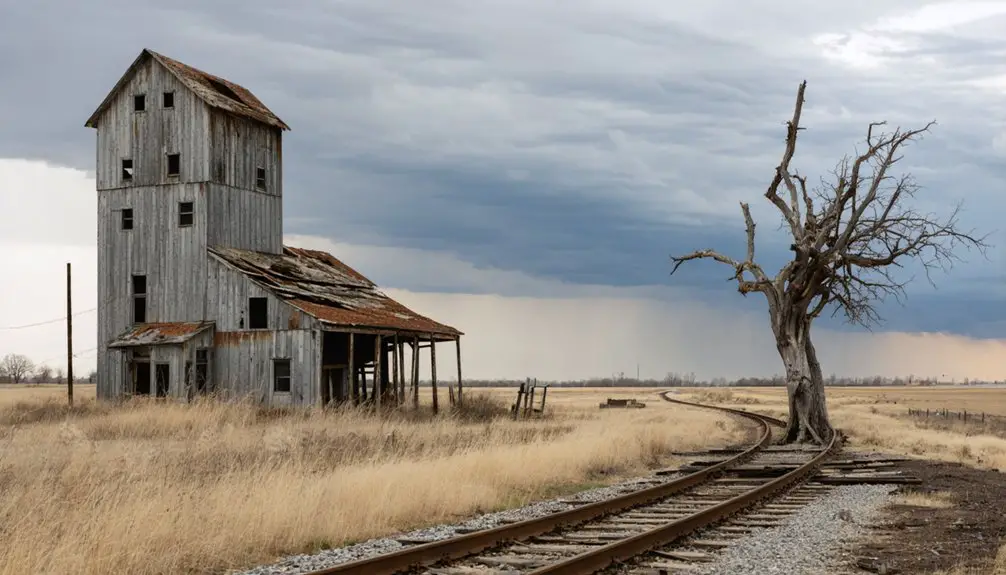
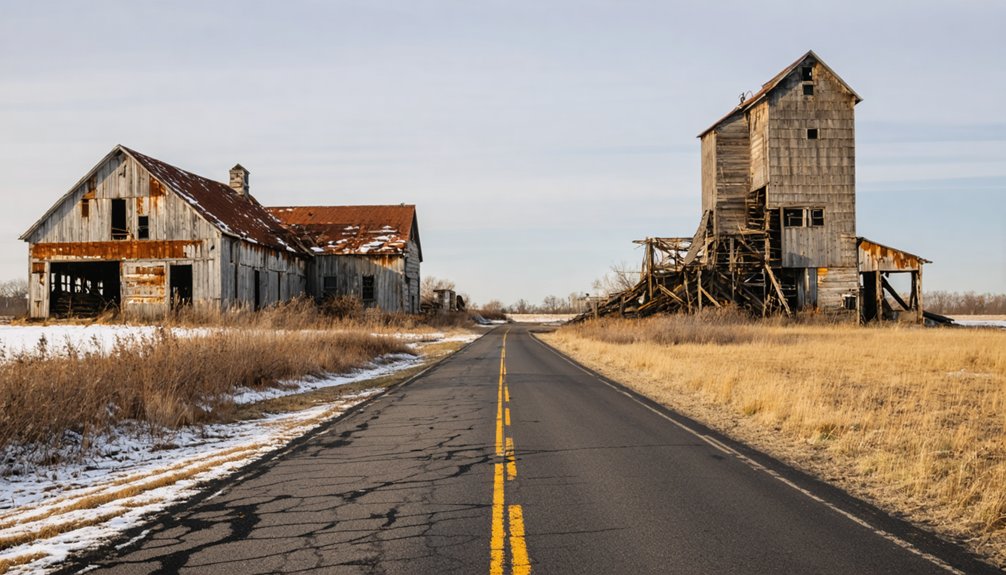
When you arrive at Huot, you’ll find only scattered foundations and small ruins quietly pressing through the earth where a once-bustling trading community stood.
Nature has steadily reclaimed most of what remained, wrapping old structures in overgrowth that blurs the line between past and present.
You can also spot historical markers nearby that piece together the story of this forgotten Red River settlement for those willing to look closely enough.
Visible Ruins and Foundations
A handful of scattered foundations and stone remnants are all that greet you when you arrive at the old Huot townsite today.
You’ll notice how natural overgrowth has quietly swallowed most of what once stood here, with grasses and brush threading through cracked limestone corners and crumbling cellar walls.
The abandoned architecture tells a subtle story if you take time to look closely.
Low foundation lines trace where homes and trade buildings once defined a working river community.
Some stone courses still hold their shape, while others have collapsed into irregular piles softened by decades of prairie weather.
You’re fundamentally reading the town’s bones.
No roof lines, no doors, no windows — just the raw geometry of a Northwest Minnesota settlement that the Red River Valley slowly reclaimed.
Historical Markers Nearby
Beyond the crumbling foundations, a few historical markers offer the clearest window into what Huot once was. These signs stand quietly along County Road 2, pointing toward a past you can almost feel underfoot.
They document Huot’s historical significance as a key stop along the Red River Ox Cart Trail, the lifeline connecting St. Paul traders to the fertile Red River Valley during the mid-1800s.
You’ll also catch whispers of local legends tied to the river crossings here — stories passed down through Red Lake County families about traders, hardships, and the rhythms of frontier life.
Don’t rush past these markers. They’re doing the heavy lifting, translating an overgrown landscape into something meaningful. Read them carefully, and Huot starts speaking for itself.
How Did Huot Go From Bustling Trade Stop to Ghost Town?
Once bustling with the creak of ox carts and the chatter of traders, Huot thrived as an essential stop along the Red River Ox Cart Trail connecting St. Paul to the Red River Valley. This trade route funneled commerce, culture, and community into this small Northwest Minnesota settlement throughout the mid-1800s.
Ox carts once rattled through Huot, carrying commerce and culture deep into Northwest Minnesota’s promising frontier.
But freedom came at a cost for Huot. When railroads expanded across the region in the late 1800s, they made the ox cart trail obsolete almost overnight.
The economic decline that followed was swift and unforgiving. Traders rerouted, settlers followed opportunity elsewhere, and Huot’s once-lively streets fell silent.
Nature quietly reclaimed what ambition had built. Today, you’ll find only foundations and echoes where an entire community once hustled and dreamed.
When Is the Best Time to Visit Huot?

When you visit Huot matters as much as why you visit. The best seasons are late spring through early fall, when gravel roads stay passable and the landscape opens up around you.
Weather considerations matter here — Minnesota winters bury these plains deep, and spring mud can strand your vehicle miles from anywhere.
Choose your window wisely and you’ll find something rare:
- Late May brings wildflowers pushing through forgotten foundations, softening the ruins with quiet color.
- September wraps the flat plains in golden prairie light, making every crumbling remnant feel cinematic.
- October’s crisp air carries a stillness that mirrors what Huot itself became — still, unhurried, and free.
Come when the land lets you in, and it’ll give you something worth remembering.
Which Ghost Towns Near Huot Are Worth Combining Into One Trip?
Timing your visit right opens the door to more than just Huot — Northwest Minnesota’s ghost town country rewards the traveler who plans a longer loop.
From Huot, you can push north toward the Ashton ruins, where empty fields swallow what was once a living community. Drive a little farther and you’ll find the Betcher foundations, quiet slabs marking where commerce and conversation once filled the air.
Empty fields swallow Ashton’s past, while Betcher’s quiet foundations mark where commerce once filled the air.
Each stop adds texture to your understanding of how Red River Valley settlements rose and fell together. You’re not just checking off locations — you’re tracing a regional story written in crumbling stone and reclaimed prairie.
Pack a lunch, load your map, and give yourself a full day to let Northwest Minnesota’s forgotten past speak for itself.
What to Know Before Visiting a Northwest Minnesota Ghost Town
Before you load the car and head out toward Huot or any of its forgotten neighbors, you’ll want to know what you’re walking into. These sites carry deep historical significance, but they don’t come with visitor centers or paved paths.
- Respect ghost town preservation by leaving every artifact, foundation stone, and weathered timber exactly where you find it.
- Roads turn muddy fast after rain, so check conditions before committing to those gravel county routes.
- Bring your own supplies because the nearest towns offering fuel or food sit miles away across open prairie.
Northwest Minnesota rewards the curious traveler who arrives prepared and leaves only footprints. The silence out here isn’t emptiness — it’s history breathing slowly, waiting for someone willing to listen.
Frequently Asked Questions
Are There Any Guided Tours Available Specifically for Huot Ghost Town Visits?
You won’t find formal guided tours at Huot, but you can explore its ghost town history independently. Embrace your freedom through self-guided exploration, discovering regional ruins, historical markers, and nature’s quiet reclamation of this once-vibrant Minnesota community.
Is There an Entrance Fee or Permit Required to Explore Huot?
You won’t face any entrance regulations or permit requirements when exploring Huot’s quiet, forgotten plains. It’s freely accessible, letting you wander those nostalgic Northwest Minnesota ruins, connecting deeply with the region’s rich, faded history on your own terms.
Can Visitors Legally Collect Artifacts or Souvenirs Found at Huot?
Those echoes of the past aren’t yours to pocket — you shouldn’t collect artifacts at Huot. Artifact preservation laws and local regulations protect these remnants, so respect the site and leave history where you’ve found it.
Are There Nearby Campgrounds or Lodging Options Close to Huot?
You won’t find camping amenities right in Huot, but nearby attractions along Red Lake County’s rural roads offer freedom-seekers rustic spots. Explore regional campgrounds near Thief River Falls, where you’ll reconnect with Northwest Minnesota’s nostalgic, wide-open prairie spirit.
Is Huot Accessible for Visitors With Mobility Limitations or Disabilities?
Huot doesn’t offer accessible pathways, so you’ll navigate uneven gravel roads and rugged terrain. Check local resources in Red Lake County before you go — they’ll help you plan a visit that honors your freedom to explore.
References
- https://thievesriver.com/blogs/articles/ghost-towns-in-minnesota
- https://en.wikipedia.org/wiki/Huot
- https://www.onlyinyourstate.com/experiences/minnesota/ghost-towns-mn
- https://urbexunderground.com/ghost-towns-in-minnesota/
- https://en.wikipedia.org/wiki/List_of_ghost_towns_in_Minnesota
- https://kids.kiddle.co/List_of_ghost_towns_in_Minnesota
- https://www.onlyinyourstate.com/trip-ideas/minnesota/spooky-small-town-mn
- https://1037theloon.com/ghost-town-in-n-minnesota-could-work-as-a-creepy-movie-location/
- https://www.youtube.com/watch?v=O5o19MoARvo
- https://www.house.mn.gov/members/profile/15527