Peyton Colony sits about seven miles east of Blanco, Texas, near the intersection of Farm to Market Roads 165 and 2325. Founded around 1865 by freed slaves, it’s not your typical ghost town — it’s a living piece of history where descendants still gather at Mount Horeb Baptist Church. You’ll find ruins, a restored lime kiln, and stories that go well beyond the history books, including some that’ll raise the hair on the back of your neck.
Key Takeaways
- Peyton Colony is located in southeastern Blanco County, approximately seven miles east of Blanco, Texas, near Farm to Market Roads 165 and 2325.
- Founded in 1865 by freed slaves, Peyton Colony represents Black self-determination, featuring a historic church, schoolhouse, and scattered ruins.
- The roadside park with a restored lime kiln serves as the ideal starting point for visiting the area.
- Paranormal investigators have documented unexplainable voices, apparitions, orbs, and electrical anomalies throughout the historic settlement.
- Most land is private property; visitors must stay on public roads and respect the living community of descendants.
What Is Peyton Colony and Why It Matters?
Tucked away in the rolling hills of southeastern Blanco County, Peyton Colony carries a story that most Texans have never heard. Around 1865, a formerly enslaved man named Peyton Roberts used preemption rights to claim public land, founding a settlement exclusively for freed slaves and Black freedmen.
That act of self-determination defines Peyton Colony’s significance — it represents what freedom looked like in practice, not just in principle.
Freedom wasn’t just declared at Peyton Colony — it was built, block by block, into something real.
Understanding its historical context means recognizing that Roberts didn’t simply survive emancipation; he built something lasting. Freedmen migrating from the South joined him, establishing homes, a church, a school, and a community that still breathes today.
When you visit, you’re walking ground that answered a question many doubted: could freedom truly take root in Texas? Here, it did.
How To Get To Peyton Colony, Texas?
Once you understand what Peyton Colony represents, finding it feels like the next natural step in honoring that history.
Head to southeastern Blanco County, Texas, roughly seven miles east of the city of Blanco. Your driving directions should point you toward the intersection of Farm to Market Roads 165 and 2325, near Boardhouse Creek. The zip code 78606 keeps your navigation accurate.
You’ll spot the roadside park along FM 165, where the restored lime kiln marks your arrival.
Park freely, walk openly, and absorb the landscape. Among local attractions, the Mount Horeb Baptist Church and original schoolhouse stand nearby, quietly anchoring the past to the present.
The Church, Schoolhouse, and Ruins You’ll Find at Peyton Colony
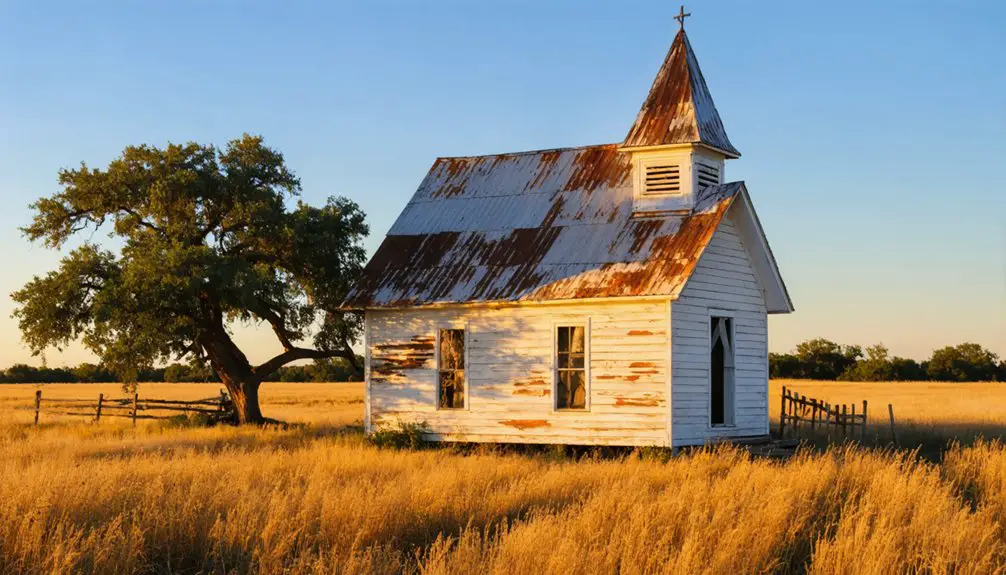
Standing at the edge of Peyton Colony, you’ll notice three structures that quietly hold the weight of its entire story: the Mount Horeb Baptist Church, the original schoolhouse, and the scattered ruins of homes and farm buildings that once filled this community with daily life.
The church remains the beating heart of community heritage, still hosting Sunday services for descendants of the original settlers.
Even now, Sunday services draw descendants back to the church that has always held them.
The schoolhouse, Blanco County’s first black school, stands closed but intact — a reflection of the architectural significance these freedmen built from almost nothing. Integration in the 1960s eventually ended its mission, yet the building endures.
Walk the surrounding grounds carefully.
You’ll spot remnants of former residences and farm structures near both sites. Most land stays privately owned, so keep your exploration to the public road.
The Hauntings and Paranormal Activity Reported at Peyton Colony
Beyond the history and heritage, Peyton Colony carries a quieter reputation — one that draws paranormal investigators alongside history enthusiasts. If haunting experiences intrigue you, this site delivers.
Investigators and residents alike have documented unexplainable voices, rhythmic drum-like sounds, and electrical anomalies — faucets switching on and off without human touch. Objects reportedly disappear and reappear in unexpected locations.
Four distinct apparitions have been identified by multiple witnesses over the years.
Paranormal investigations here have captured photographs and recordings showing orbs, mists, light streaks, and energy anomalies that remain unexplained.
You don’t have to be a believer to feel the weight of this place. The layered history alone stirs something deep — and for those open to it, Peyton Colony offers an experience that lingers long after you’ve driven away.
How To Visit Peyton Colony Without Crossing a Line?
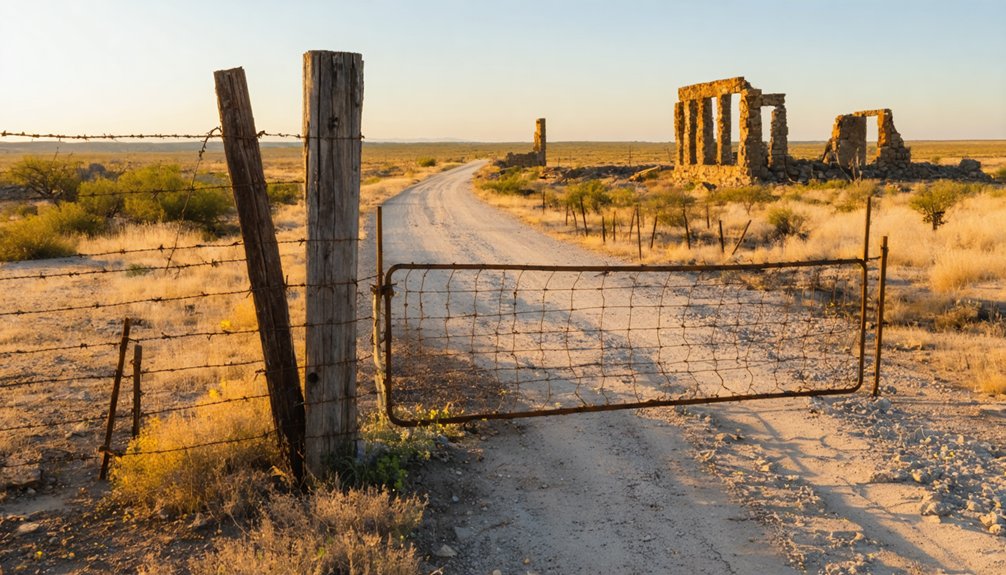
Whether you’re chasing history or something more unexplained, Peyton Colony deserves your respect before your curiosity. This living community still breathes through its descendants, its church, and its land. Community respect isn’t optional here — it’s essential visitor etiquette.
Peyton Colony isn’t a destination to consume — it’s a community to approach with humility first.
Most of the 350 acres remains private property owned by families tracing their roots back to freed slaves who built something extraordinary after the Civil War.
Don’t wander beyond public roads. View the ruins of residential structures and farm buildings from a respectful distance.
Instead, focus your visit on the roadside park along FM 165, where the restored lime kiln stands freely accessible daily.
Park there, breathe it in, and let the land tell its story without you trespassing across someone’s inheritance.
Frequently Asked Questions
What Is the Current Population of Peyton Colony as of 2000?
As dusty echoes linger, you’ll find Peyton Colony’s population trends show roughly 30 resilient souls called it home in 2000, preserving the site’s deep historical significance for freedom-seeking descendants of its original founders.
What Are the Sunday Service Times at Mount Horeb Baptist Church?
You’ll find Sunday services at Mount Horeb Baptist Church beginning at 10:30 a.m., with Sunday School following at 11:30 a.m. This welcoming church community holds full services on the first and third Sundays monthly.
When Did Preemption Laws Officially End in the United States?
Preemption laws permanently passed into the past in 1876, a pivotal point carrying profound historical significance and legal implications for you to reflect on — though land grants in Peyton Colony’s freedom-forged fields courageously continued into the 1880s.
What Is the Mailing Address for the Peyton Colony Heritage Association?
You’ll find the Peyton Colony Heritage Association’s mailing address at 593 Peyton Colony Rd, Blanco, Texas 78606, where they’re preserving rich Peyton Colony history and organizing meaningful Heritage Association events honoring those who courageously claimed their freedom.
How Many Acres Does the Peyton Colony Community Cover Today?
Peyton Colony covers roughly 350 acres, where ghost town history breathes through every corner of this remarkable community development. You’ll find most land’s still owned by original settlers’ descendants, keeping that cherished freedom alive across generations.
References
- https://www.ghosttowns.com/states/tx/peytoncolony.html
- https://reneguerrero.com/texas-urban-legend-series-peyton-colony-austin-tx/
- https://artistforlandscapes.wordpress.com/category/ghost-towns/
- https://www.youtube.com/watch?v=3qe6wYuyvas
- https://www.twtex.com/forums/threads/the-peyton-colony-aka-speaking-of-rick-peyton.40353/
- https://www.tshaonline.org/handbook/entries/peyton-tx-blanco-county
- https://www.texasescapes.com/Texas-Ghost-Towns-A-to-Z.htm
- https://www.texasescapes.com/TexasHillCountryTowns/Peyton-Colony-Texas.htm
- http://www.texasescapes.com/TexasHillCountryTowns/Peyton-Colony-Texas.htm
- https://www.burningcompass.com/countries/united-states/states/texas/texas-ghost-towns-map.html