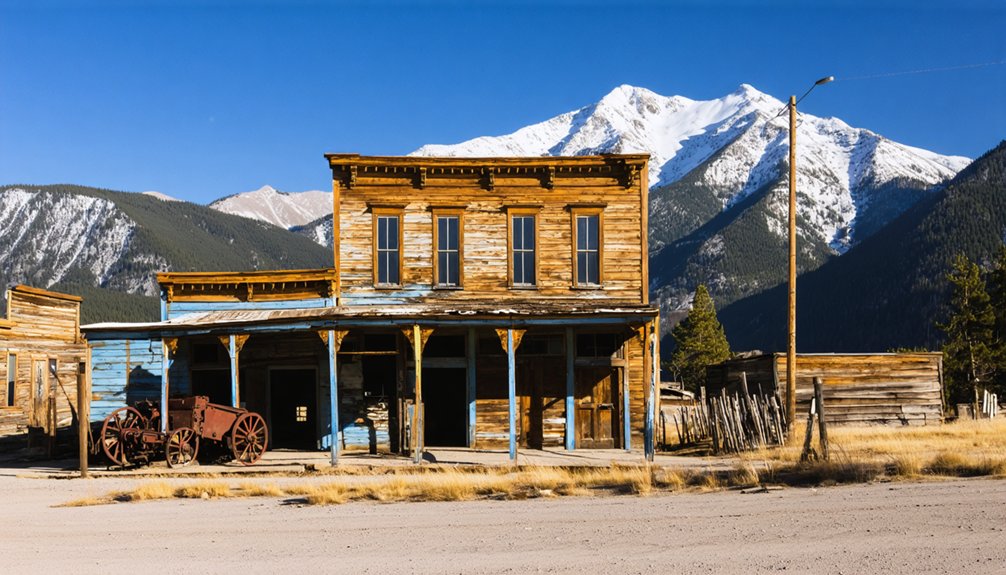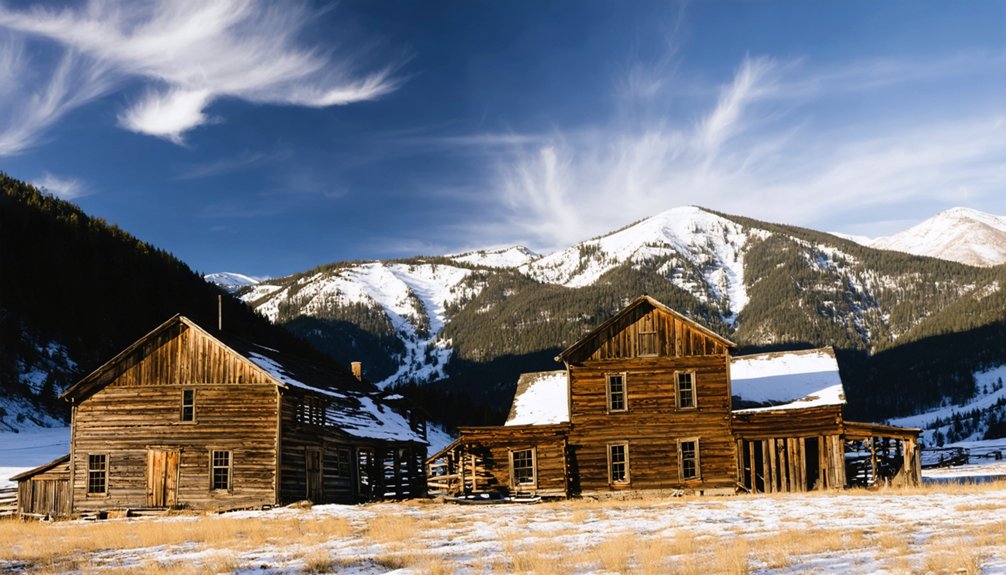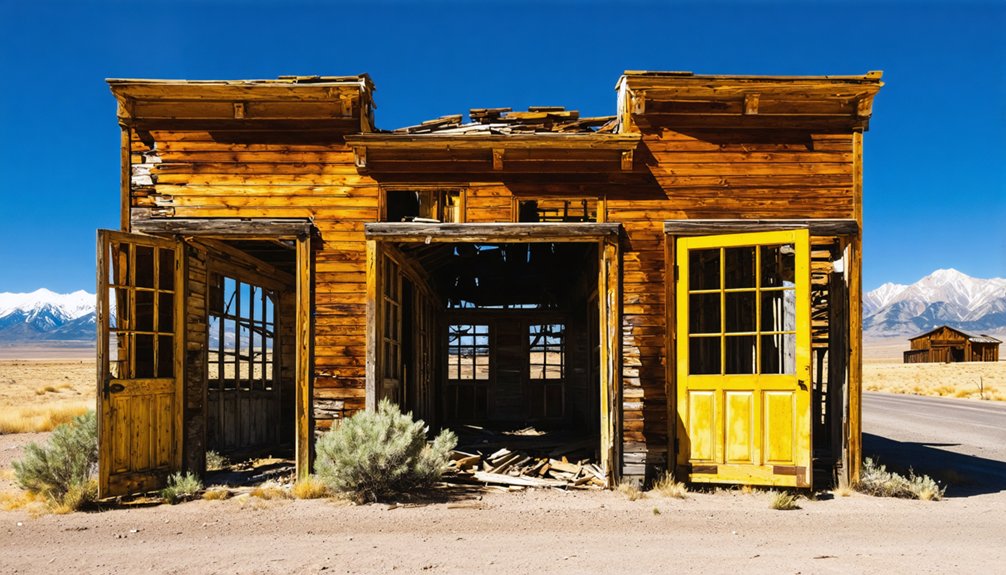
Planning a ghost town road trip to Mill Pond, Colorado means preparing for rugged terrain, high elevation, and remote wilderness. You’ll need a capable four-wheel drive vehicle to navigate Forest Road 703, followed by a challenging hike through Fancy Pass. Visit during July through early September for the safest conditions. Bring water, layered clothing, and sturdy boots. Mill Pond’s untouched relics and nearby ghost towns like Leadville make this an unforgettable journey — and there’s much more to uncover ahead.
Key Takeaways
- Access Mill Pond via Forest Road 703 off Highway 24, requiring a capable four-wheel-drive vehicle for rocky switchbacks and uneven terrain.
- Hike two miles to Fancy Pass, then an additional 1.5–2 miles of rugged trail to reach Mill Pond’s historic ghost town.
- Visit during July to early September for the safest, most stable trail conditions and reliable vehicle access.
- Pair Mill Pond with nearby ghost towns like Eureka, Leadville, and Central City to maximize Colorado’s mining history exploration.
- Prepare thoroughly with sturdy boots, trekking poles, layered clothing, water, food, and a first-aid kit for remote wilderness conditions.
What Makes Mill Pond One of Colorado’s Most Remote Ghost Towns?
When it comes to remote Colorado ghost towns, Mill Pond stands in a category of its own. Its remote accessibility isn’t just a minor inconvenience — it’s a genuine physical challenge that filters out casual visitors.
You’ll need a four-wheel drive vehicle to reach nearby Holy Cross City, then tackle a two-mile hike to Fancy Pass, followed by another 1.5 to 2 miles of rugged terrain to reach the site. Only the most intrepid explorers make it through.
That difficulty makes the reward even sweeter. Mill Pond’s historical significance shines through its well-preserved structures and artifacts, offering a rare, unfiltered glimpse into Colorado’s late 19th-century mining boom.
You’re not just visiting a ghost town — you’re earning it.
How Hard Is the Mill Pond Trek, Really?
So you know the trek is tough — but what does that actually mean for your body? After your jeep reaches Holy Cross City, you’re hiking two miles to Fancy Pass, then pushing another 1.5 to 2 miles through rugged terrain to reach Mill Pond.
The trail challenges don’t let up — nearly impossible paths mark the final approach, demanding sharp route-finding skills and steady footing throughout.
The final approach doesn’t forgive mistakes — expect near-impossible terrain that demands precise route-finding and unwavering focus.
Elevation impact hits hard here. Colorado’s mountain altitude drains energy faster than you’d expect, especially if your legs haven’t seen serious trail time recently.
Cool summer temperatures help, but thin air doesn’t negotiate. You’ll want genuine physical conditioning before attempting this route — not just casual fitness.
The reward is real, but your body needs to be ready to earn it.
When Is the Best Time to Visit Mill Pond?
Timing your visit to Mill Pond can make the difference between a challenging but rewarding adventure and a genuinely dangerous one. Summer offers the best months for this trek, when snow has cleared enough to make the trails passable and temperatures stay cool but manageable. July through early September typically gives you the widest window of opportunity.
Follow these seasonal tips to maximize your chances of success: avoid early spring, when snowmelt turns trails into icy hazards, and skip late fall, when early storms can trap unprepared hikers.
Winter fundamentally closes Mill Pond off entirely beneath heavy snowpack. You’ll want dry, stable conditions underfoot before committing to those final rugged miles beyond Fancy Pass.
Plan accordingly, and the journey rewards you enormously.
Gear and Supplies for the Mill Pond Trek
Before you set out for Mill Pond, packing the right gear can mean the difference between a memorable adventure and a dangerous ordeal.
You’ll want sturdy, broken-in hiking boots, trekking poles, and a well-fitted pack stocked with water, food, and a first-aid kit, along with a topographic map and compass since trails grow faint and cell service disappears fast.
Dress in moisture-wicking base layers topped with insulating and waterproof outer shells, because mountain weather shifts quickly and temperatures drop sharply at elevation even in summer.
Essential Hiking Gear
Given the rugged terrain and remote location of Mill Pond, you’ll want to pack smart before setting out. Your hiking essentials should include sturdy, broken-in boots with ankle support, trekking poles for traversing unstable surfaces, and moisture-wicking layers that adapt to shifting mountain temperatures.
Among the most practical trekking tips: carry more water than you think you’ll need, since high elevation accelerates dehydration.
Pack high-calorie snacks, a detailed topographic map, and a compass—cell service won’t save you up here. A basic first aid kit, emergency whistle, and lightweight rain gear round out your kit.
Three tools will make or break your navigation on the trail to Mill Pond: a detailed topographic map, a reliable compass, and a GPS device loaded with offline maps.
Cell service vanishes quickly in Eagle County’s backcountry, so don’t count on navigation apps alone to guide you through the rugged terrain beyond Fancy Pass.
Pair your navigation tools with essential safety gear, including a first aid kit, emergency whistle, and a satellite communicator like a SPOT or Garmin inReach.
These devices let you signal for help even without cellular coverage. Carry extra batteries, since cold mountain temperatures drain electronics fast.
Tell someone your planned route and expected return time before you leave. The freedom to explore remote places like Mill Pond depends on preparation, not luck.
Weather-Ready Clothing Choices
Dressing for Mill Pond means preparing for conditions that can shift from warm sunshine to cold wind and afternoon thunderstorms within a single summer outing. Mountain weather patterns move fast, and you’ll want clothing materials that respond equally fast.
Layer a moisture-wicking base against your skin, add an insulating mid-layer for warmth, and pack a waterproof shell that compresses into your bag. Avoid cotton entirely — it traps moisture and pulls heat away from your body when wet. Wool and synthetic fabrics handle sweat and sudden rain far better on exposed ridgelines.
Wear sturdy, ankle-supporting boots broken in before the hike. Bring a hat, gloves, and sun protection, because elevation intensifies UV exposure even when temperatures feel mild.
How to Reach Holy Cross City by Jeep
To reach Mill Pond, you’ll first need to get yourself to Holy Cross City, and that means having a capable four-wheel drive vehicle — standard cars simply won’t cut it on this terrain.
The rugged mountain trails leading to Holy Cross City demand serious jeep navigation skills, so you’ll want to know your vehicle’s capabilities before you commit to the route.
Once you’ve made it to Holy Cross City, you’re positioned at the gateway to Mill Pond, with the real physical challenge still ahead.
Jeep Access Requirements
Before you even think about lacing up your hiking boots, you’ll need a capable four-wheel drive vehicle to get anywhere near Mill Pond. Holy Cross City serves as your primary access point, and reaching it demands serious jeep capability — not just an AWD crossover you drove to the grocery store last Tuesday.
Before hitting the trail, review essential jeep maintenance tips: check your brakes, fluids, and tire pressure thoroughly. Stock your rig with off road essentials including a recovery strap, extra fuel, and a reliable spare tire.
The terrain doesn’t forgive unpreparedness. Rocky switchbacks and uneven mountain paths define every mile toward Holy Cross City, meaning mechanical failure here leaves you genuinely stranded.
Your vehicle’s capability directly determines whether this adventure even begins.
With your jeep prepped and ready, the route to Holy Cross City begins off Highway 24 near Minturn, Colorado, where Forest Road 703 — also called Homestake Road — cuts west into the mountains.
Follow this road deep into Holy Cross wilderness, where mountain trails grow increasingly demanding as elevation rises.
Keep these navigation essentials in mind:
- Stay on Forest Road 703 — unmarked turnoffs can send you miles in the wrong direction
- Watch for water crossings — seasonal runoff makes certain sections unpredictable
- Track your mileage — Holy Cross City sits roughly 8 miles from the highway turnoff
Arriving at Holy Cross City means you’ve conquered the easier portion of this adventure.
The real challenge begins on foot from here.
The Hike From Holy Cross City to Fancy Pass
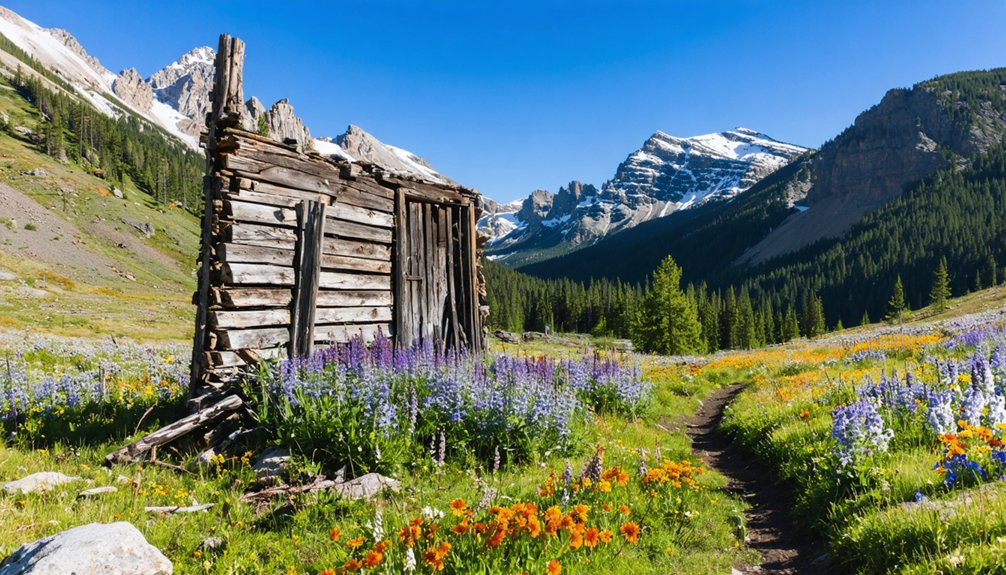
Once you’ve navigated Holy Cross City‘s rugged jeep trails, the real test begins on foot. From Holy Cross City, you’ll tackle a two-mile hike to Fancy Pass, gaining serious elevation through Colorado’s stunning mountain terrain.
Pack these essential hiking tips before you go: bring plenty of water, wear layered clothing, and start early to avoid afternoon weather shifts.
The trail rewards your effort with breathtaking scenic views of surrounding peaks and valleys that few travelers ever witness. You’re earning every step of this remote wilderness experience.
Your legs will feel the climb, but the landscape justifies every burning muscle. Once you crest Fancy Pass summit, you’ll understand exactly why only the most determined ghost town enthusiasts ever make this journey.
The Final Push: From Fancy Pass to Mill Pond
Standing atop Fancy Pass, you’ll face the final 1.5 to 2-mile stretch to Mill Pond—and it’s the most demanding segment of the entire journey. The final ascent winds through nearly impossible trails requiring sharp route-finding instincts.
Prepare yourself for:
- Rugged, uneven terrain that punishes unprepared legs and untrained ankles
- Breathtaking scenic views of Eagle County’s raw mountain landscape rewarding every grueling step
- Remote wilderness conditions where self-reliance isn’t optional—it’s survival
Despite the brutality, reaching Mill Pond delivers something rare: a genuinely untouched ghost town that most people will never see.
Despite the brutality, Mill Pond rewards you with something most adventurers will never witness—a genuinely untouched ghost town frozen in time.
You’ll earn every picturesque structure and historical artifact waiting there. This isn’t a casual stroll—it’s a hard-won freedom that only the most committed adventurers ever experience.
The Structures and Artifacts Still Standing at Mill Pond
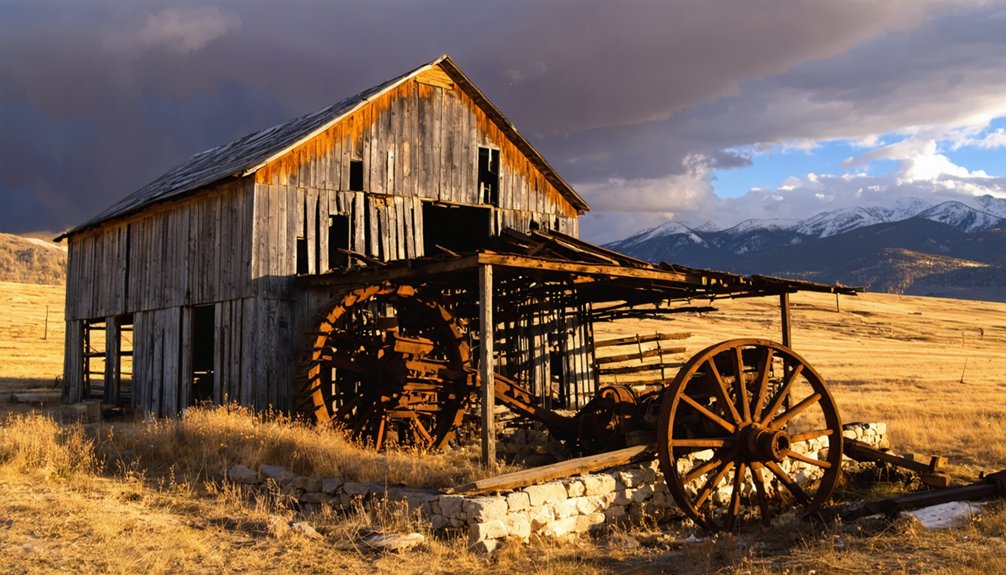
After enduring the brutal approach, Mill Pond rewards you with something genuinely rare—a ghost town that still stands with enough physical presence to make history feel tangible.
The architectural remnants scattered across the site connect you directly to Colorado’s 19th-century mining boom, when prospectors carved entire communities into unforgiving mountain terrain.
You’ll find structures that speak to the settlement’s historical significance—buildings that once housed miners chasing silver and gold dreams at brutal elevations.
The physical evidence here isn’t just rubble; it’s readable. You can trace infrastructure patterns, understand how people organized their daily lives, and appreciate why thousands flooded these mountains seeking fortune.
Mill Pond earns its reputation as one of Colorado’s most picturesque ghost towns precisely because what remains is substantial enough to demand your attention.
Nearby Ghost Towns to Pair With Your Mill Pond Trip
Mill Pond doesn’t exist in isolation—Holy Cross City sits just east and slightly south, making it the natural companion stop on any serious ghost town itinerary.
Colorado’s mining history runs deep across this region, and you’ll find ghost town legends scattered throughout the surrounding mountains. Pair your trip with these nearby destinations:
- Eureka – A striking San Juan Mountains relic packed with visible mining history
- Leadville – One of Colorado’s most celebrated historic mining centers, rich with ghost town legends
- Central City – A well-preserved window into Colorado’s 19th-century gold rush culture
Each location adds another layer to your road trip, letting you trace Colorado’s mining history across dramatically different landscapes without backtracking unnecessarily.
Plan your route intentionally and you’ll maximize every mile.
Frequently Asked Questions
Are Permits or Fees Required to Visit Mill Pond Ghost Town?
The knowledge doesn’t mention permits or fees for visiting Mill Pond’s ghost town history. You’ll focus your energy on trail accessibility instead — conquering rugged terrain, a 4WD vehicle, and a challenging multi-mile hike to reach this remote treasure.
Is Camping Allowed Overnight Near Mill Pond or Holy Cross City?
The knowledge base doesn’t specify camping regulations for the area, but you’ll want to research nearby campsites before heading out. Eagle County’s wilderness terrain likely offers dispersed camping freedom for adventurous souls exploring Mill Pond!
Does Mill Pond Have Any Legal Protections as a Historical Site?
With 640 of Colorado’s 1,500 ghost towns still standing, Mill Pond’s historical significance makes preservation efforts critical. Specific legal protections aren’t confirmed, so you’ll want to research current regulations before you explore this remarkable, remote treasure.
Are Guided Tours Available for Visiting Mill Pond Ghost Town?
No official tour guide options exist for Mill Pond, so you’ll explore this remote ghost town history entirely on your own terms—making the rugged, self-guided adventure even more rewarding for freedom-seeking explorers like you.
What Wildlife Might Visitors Encounter Along the Mill Pond Trail?
While the knowledge base doesn’t specify wildlife, you’ll likely encounter mountain animals along these rugged Colorado trails. Stay alert for wildlife sightings like elk, mule deer, and marmots, and prioritize trail safety by making noise and staying aware.
References
- https://www.ghosttowns.com/states/co/millpond.html
- https://www.youtube.com/watch?v=gwNitfYDPOE
- https://www.legendsofamerica.com/co-ghosttowns/
- https://en.wikipedia.org/wiki/List_of_ghost_towns_in_Colorado
- https://seelincolncounty.com/saugus-milepost-503-6-colorado-ghost-town/