Benton City, Texas, is a ghost town located 3 miles east of Lytle in Atascosa County, roughly 27 miles southwest of San Antonio. There are no standing structures left, just open land where settlers once built their lives along Atascosa Creek. The entire site sits on private property, so you’ll need landowner permission before visiting. If you’re planning a South Texas ghost town road trip, everything you need to know is ahead.
Key Takeaways
- Benton, Texas, is a ghost town 27 miles southwest of San Antonio, located 3 miles east of Lytle in Atascosa County.
- No original structures remain; only open land and Atascosa Creek mark the site of this once-inhabited settlement.
- The entire site is privately owned, so visitors must obtain explicit landowner permission before visiting to avoid trespassing.
- The best time to visit is October through March, when cooler temperatures and spring wildflowers make exploration more enjoyable.
- Nearby ghost towns Fruthville and Popple Creek offer additional stops, enriching your road trip through Atascosa County’s forgotten history.
What Is Benton City, Texas?
Tucked along the banks of Atascosa Creek, about 27 miles southwest of San Antonio, Benton City is a ghost town that once flickered to life before fading into the South Texas landscape.
Located just 3 miles east of Lytle, this forgotten settlement tells a story shared by many boom towns across the region.
Benton City history follows a familiar arc — rapid growth, brief prosperity, then silence. Local historians sometimes call it simply “Benton,” and it holds a place in official Atascosa County records despite leaving no standing structures behind.
Ghost town significance lies in what these places reveal about human ambition and impermanence.
You won’t find buildings here, but you’ll find something rarer — a landscape that quietly carries the memory of lives once lived.
Where Benton City Is Located in Atascosa County
Three miles east of Lytle and 27 miles southwest of San Antonio, Benton City sits along the banks of Atascosa Creek in the heart of Atascosa County.
This Benton City geography places it in a quiet stretch of South Texas where open land tells more stories than any standing structure could.
Understanding Benton City history means recognizing how this settlement once buzzed with activity before fading into silence.
The creek still flows through the region, tracing the same path it did when residents called this place home.
Today, private ownership covers every acre of the former town, so you can’t simply pull off the road and wander through it.
Still, knowing its exact position on the map makes the journey toward it feel purposeful and real.
Can You Legally Visit Benton City?
Visiting Benton City legally comes down to one hard reality: the entire site sits on privately owned land, meaning you can’t simply show up and walk the grounds.
Private land access requires you to contact the landowner directly and secure explicit permission before setting foot on the property. Ghost town etiquette demands that you respect those boundaries completely — no trespassing, no exceptions.
If you’re serious about exploring the site, do your research through Atascosa County records to identify the current landowner.
Reach out respectfully, explain your historical interest, and accept whatever answer you receive. Many landowners appreciate genuine curiosity about their property’s past.
Ignoring these boundaries doesn’t just risk legal trouble — it poisons access opportunities for every explorer who comes after you.
How Benton City Went From Boom Town to Ghost Town
Benton City’s story follows a pattern you’ll recognize across South Texas — a rapid rise fueled by regional expansion, followed by an equally swift collapse that left nothing but empty land along Atascosa Creek.
Like many boom towns of its era, it burst into existence during a period of aggressive settlement growth, only to fade within a few short years.
Today, you’ll find no buildings, no streets, and no signs of life — just the cultural memory that local historians have worked to keep alive in Atascosa County records.
Benton City’s Rapid Rise
Like many South Texas settlements of its era, Benton City blazed into existence only to vanish just as quickly, leaving behind little more than a name in county records.
During a period of rapid expansion across the region, this boom town drew settlers enthusiastic to claim their stake in the fertile lands along Atascosa Creek. Opportunity seemed endless, and the town grew with the restless energy typical of frontier settlements pushing into South Texas.
But boom towns rarely keep their promises. Benton City’s growth stalled, residents moved on, and the structures that once defined daily life eventually crumbled into nothing.
Today, you won’t find a single building standing on that land — just open terrain that holds the quiet memory of a community that burned bright and disappeared fast.
Factors Behind Its Decline
What kills a boom town rarely happens all at once. Benton City’s collapse came from several directions simultaneously.
Market fluctuations dried up economic factors that once made the town viable. Population shifts followed naturally — when opportunity vanished, people did too.
Transportation issues played a decisive role, as better routes bypassed Benton City entirely, redirecting commerce toward stronger settlements.
Social changes reshaped community priorities, pulling families toward places with more stability.
Environmental impacts along Atascosa Creek added further pressure on an already struggling settlement.
Cultural influences shifted regional identity toward growing towns like Lytle and eventually San Antonio.
Within the broader historical context of South Texas boom towns, Benton City’s fate wasn’t unique — it was inevitable.
You’re now visiting a place that freedom built and silence claimed.
Legacy Of Benton City
Few ghost towns leave behind a legacy as quietly powerful as Benton City’s. Though no buildings remain standing, its historical impact endures through county records, local historians, and the cultural memory of South Texas communities.
You’ll find that legacy preservation doesn’t always require physical structures — sometimes, a name on a map carries the weight of an entire era.
Benton City reminds you that freedom-seeking settlers once carved lives out of raw Texas land, built something real, and watched it fade. That cycle of ambition and abandonment defines the region’s character more honestly than any monument could.
When you visit the area near Lytle, you’re standing inside a living story — one where the silence speaks louder than any preserved artifact ever could.
How to Get to Benton City From San Antonio
If you’re heading to Benton City from San Antonio, you’ll travel approximately 27 miles southwest, making it an easy half-hour drive.
Take US-81 South toward Lytle, and once you reach that small town, you’re only 3 miles east of the former settlement along Atascosa Creek.
Keep in mind that the site sits on private land, so you’ll need permission before you can set foot where the old boom town once stood.
Route From San Antonio
Taking the 27-mile drive southwest from San Antonio to Benton City is straightforward, and you’ll primarily follow US-81 South toward Lytle, which sits about 3 miles west of the former townsite along Atascosa Creek.
Once you reach Lytle, you’re fundamentally at the doorstep of your ghost town exploration. Head east from town, keeping Atascosa Creek’s corridor in mind as your geographic anchor.
The landscape opens up into classic South Texas terrain — scrubby, flat, and unhurried — perfectly matching the historical significance of a place that once buzzed with settlers before fading into silence.
Keep in mind that the land is privately owned, so confirm access before venturing off the main road. Respect those boundaries, and your road trip remains both rewarding and responsible.
Distance And Travel Time
The 27-mile drive from San Antonio to Benton City clocks in at roughly 30 to 40 minutes, depending on traffic leaving the city. You’ll head southwest on US-81, cutting through the open South Texas landscape until you reach the Lytle area.
From there, Benton City sits just 3 miles to the east.
Keep a few travel considerations in mind before you go. The site sits on privately owned land, so you’ll need permission before setting foot on the property.
No public roads lead directly to the location, meaning you can’t simply pull off the highway and wander in.
Plan your ghost town exploration carefully, confirm access in advance, and you’ll avoid wasting a trip to what’s otherwise a straightforward, scenic Southwest Texas drive.
What’s Left at Benton City Today: And What Isn’t
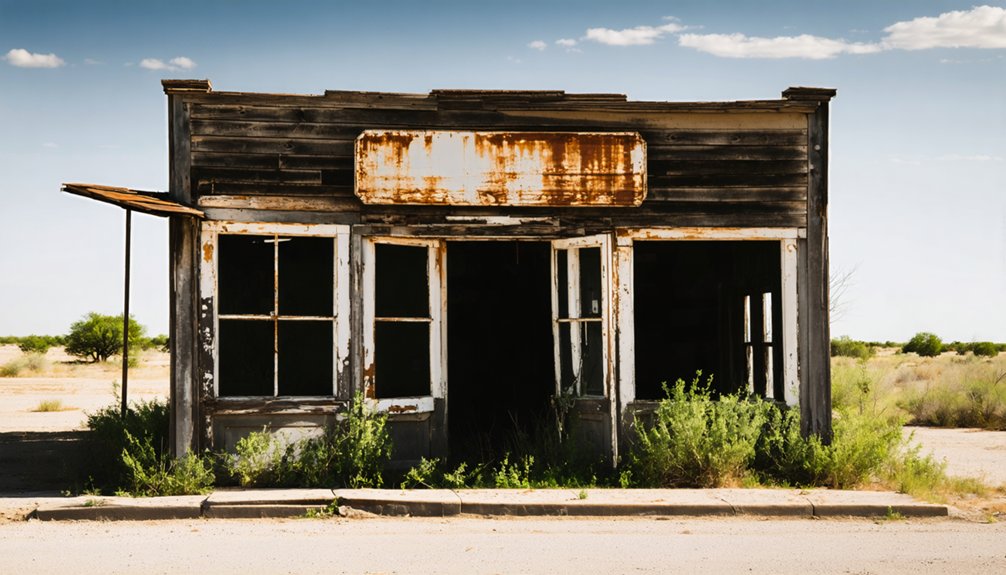
When you arrive at the site of Benton City today, there’s nothing to greet you but open land. No foundations, no walls, no street markers — just earth reclaiming what settlers once built.
The structures are gone, leaving only the stories that fuel Benton City Legends among local historians and curious travelers.
What remains is the land itself, threaded by Atascosa Creek, carrying the quiet weight of Ghost Town Mysteries that no written record fully explains.
You can’t walk the old streets or touch the original buildings because they simply don’t exist anymore.
What does exist is the freedom to imagine.
Standing on privately owned ground — if you’ve secured access — you’ll feel the absence of a town that once buzzed with life and vanished just as fast.
Nearby Ghost Towns in Atascosa County Worth the Detour
Benton City isn’t the only ghost town Atascosa County has quietly swallowed up. If you’re already out here for ghost town exploration, you’d be doing yourself a disservice by stopping at just one site.
Fruthville and Popple Creek both carry their own forgotten histories, each representing a settlement that once buzzed with activity before fading into the South Texas landscape. Like Benton City, they exist today mostly in county records and the memories of local historians committed to historical preservation.
Visiting multiple sites in a single trip gives you a fuller picture of just how dramatically this region transformed over time. String them together on your route, and you’ll leave with a much deeper appreciation for what Atascosa County has silently buried.
Best Time of Year to Visit Benton City, Texas
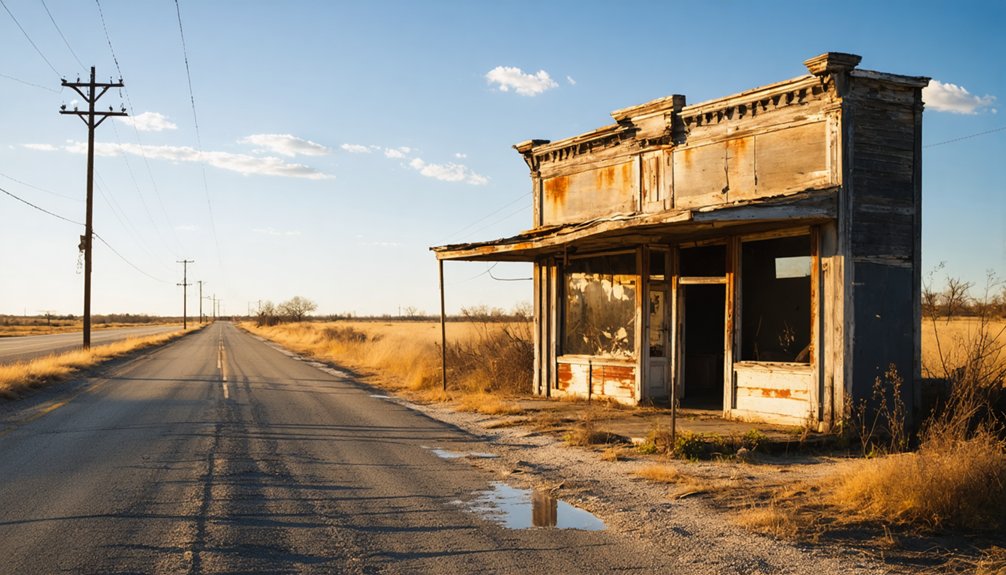
South Texas heat is no joke, so timing your visit to Benton City matters more than you’d think. For the best visiting tips, aim for late fall through early spring, roughly October through March.
Temperatures stay manageable, making it easier to explore the land around Atascosa Creek without battling brutal humidity or triple-digit heat.
Spring offers seasonal attractions like wildflowers blooming across South Texas, adding unexpected color to your ghost town road trip.
Avoid summer entirely unless you enjoy sweating through every step.
Since the site sits on private land, you’ll need permission before visiting regardless of season.
Plan ahead, confirm access, and pack water no matter when you go. Benton City rewards the prepared traveler, not the spontaneous one.
Historical Records, Maps, and Sources on Benton City
Tracking down historical records on a ghost town like Benton City takes patience, but the paper trail exists if you know where to look.
Start with Atascosa County‘s official records, where Benton City appears by name, confirming its historical significance as a real settlement rather than legend. Local historians have archived the town’s timeline, documenting its rise and rapid fade into obscurity.
You’ll also find regional maps referencing the site near Atascosa Creek, roughly 3 miles east of Lytle. These sources collectively sustain the cultural memory of a place that left no standing structures behind.
Libraries in San Antonio can supplement your research with South Texas boom town histories.
Dig into these resources before your visit, and you’ll arrive with far richer context.
Frequently Asked Questions
Are There Guided Ghost Town Tours Available Near Benton City?
No official guided tours exist, but you’ll find local historians enthusiastic to share ghost town history and local legends. While the land’s private, nearby Lytle and San Antonio offer rich regional storytelling experiences worth exploring.
What Other Ghost Towns Exist Along a San Antonio Road Trip?
You’ll discover Fruthville and Popple Creek, two ghost towns with abandoned buildings and historical significance in Atascosa County. Drive scenic routes southwest of San Antonio, uncovering local legends that’ll fuel your adventurous spirit along the way!
Is Photography Permitted on Private Land at Ghost Town Sites?
You can’t assume photography’s always welcome—private property rules apply. Always get permission before snapping shots at ghost town sites. Respecting photography etiquette means asking landowners first, ensuring you’re legally covered and honoring their boundaries.
What Should Visitors Bring When Exploring Remote Texas Ghost Towns?
When exploring remote Texas ghost towns, you’ll want essential gear like water, maps, and first aid kits. Follow key safety tips: wear sturdy boots, tell someone your plans, and you’re ready to roam freely!
Are There Accommodations Near Lytle for an Overnight Ghost Town Trip?
You’ll find lodging options in nearby Lytle and San Antonio, just 27 miles away. Explore local attractions like Atascosa Creek while you’re there, giving you the perfect base for your overnight ghost town adventure!
References
- https://allacrosstexas.com/texas-ghost-town.php?city=Benton
- https://www.youtube.com/watch?v=udY3uBRi0vM
- https://www.youtube.com/watch?v=dQxSH3XBdXY
- https://www.desertedtexas.org/category/texas-ghost-towns/
- https://ocghostsandlegends.com/benton-hot-springs/
- https://www.facebook.com/groups/730346206142092/posts/921305167046194/
- https://kids.kiddle.co/Benton_City
- https://www.texasescapes.com/SouthTexasTowns/Benton-Texas.htm
- https://wjon.com/benton-co-history-the-ghost-town-of-watab/
- https://wjon.com/benton-co-history-the-ghost-town-of-fruthville/