
To plan your ghost town road trip to Gould’s Mill Village in Smithfield, Rhode Island, take exit 8B off Route 295 North and head north on Route 7 until the pavement turns to dirt. Follow that dirt road about half a mile to reach the ruins of a once-thriving 1800s textile hub. Bring sturdy shoes, a flashlight, and an offline map since cell service is unreliable. There’s far more to this haunted corner of Rhode Island than you’d expect.
Key Takeaways
- Gould’s Mill Village is located in Smithfield, Rhode Island, near Route 7 North, accessible via exit 8B off Route 295 North.
- Follow Route 7 North until pavement turns to dirt, then travel half a mile to a clearing marking the village entrance.
- No trail signage exists, so download offline maps beforehand, as cell service is unreliable throughout the area.
- Bring sturdy shoes, a flashlight, water, and a first aid kit, as terrain is uneven and conditions can be unpredictable.
- The site offers haunted folklore, shadowy sightings, and mill ruins, making it ideal for history buffs and paranormal enthusiasts.
What Is Gould’s Mill Village and Why Do People Visit?
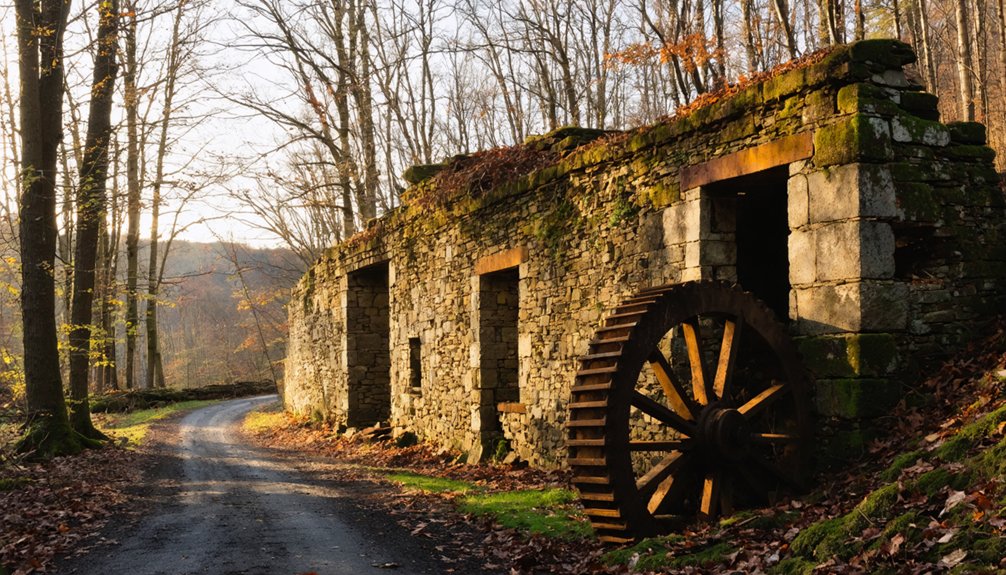
Tucked within Smithfield, Rhode Island, near Route 7 North, Gould’s Mill Village stands as one of the state’s most compelling examples of abandoned industrial heritage.
Established in the late 1600s, Gould’s Mill history traces back to its origins as a textile production hub, later defined by weathered granite walls and worker housing built during the 1800s industrial boom.
After the 1900s, the village declined, leaving stone foundations and mill ruins that still punctuate the landscape today.
Visitor experiences here aren’t passive — you’re walking through erasure, tracing the outlines of a community that once thrived and then vanished.
Whether you’re drawn by history, curiosity, or the eerie silence of forgotten places, Gould’s Mill Village delivers an unfiltered encounter with Rhode Island’s industrial past.
How to Get to Gould’s Mill Village From Route 295
To reach Gould’s Mill Village, you’ll take exit 8B off Route 295 North in Smithfield, Rhode Island.
From there, head north on Route 7, keeping an eye out for the changeover point where the road shifts from pavement to dirt near a steel commercial building.
That turn marks the start of the half-mile stretch leading toward the village clearing.
Exit 8B Route 295
Getting to Gould’s Mill Village takes just a few steps once you’re on Route 295 North. Take exit 8B, which puts you directly onto Route 7 North in Smithfield. This straightforward exit connects you to one of Rhode Island’s most overlooked corridors of Gould history and industrial heritage.
Once on Route 7 North, stay alert for the changeover point where the paved road shifts to dirt near a steel commercial building. That’s your signal you’re heading in the right direction.
Follow the winding road for roughly half a mile until you reach a sharp left turn leading to a clearing. From there, Gould’s Mill Village opens up, offering an unfiltered look at New England’s abandoned textile past without detours, tolls, or complicated navigation.
Route 7 North does most of the navigational work for you once you’ve cleared exit 8B.
Follow it straight through Smithfield’s familiar commercial stretch until the landscape shifts and the roadside quietly hints at Gould’s history — weathered stone walls and remnants of New England’s industrial past bleeding through the tree line.
Watch for a steel commercial building on your right; that’s your landmark.
The road changes from paved to dirt just past it.
Take that dirt road and stay on it for roughly half a mile.
You’ll hit a sharp left turn leading into a clearing — your entry point into Gould’s Mill Village.
Industrial artifacts and stone foundations wait beyond that clearing, so keep your eyes open from the moment the pavement disappears.
What the Trail to Gould’s Mill Village Actually Looks Like

Once you exit Route 7 North and spot the steel commercial building, the trail access point begins just beyond it, where the pavement quietly surrenders to a narrow dirt road.
You’ll follow that winding dirt path for roughly half a mile, keeping your eyes open for subtle shifts in the landscape that signal you’re heading deeper into Rhode Island’s forgotten industrial past.
At the sharp left turn ahead, you’ll reach a small clearing that marks your arrival at Gould’s Mill Village.
Trail Access Point
Finding the trailhead to Gould’s Mill Village isn’t exactly straightforward, but that’s part of the adventure. Take exit 8b from Route 295 North onto Route 7 North in Smithfield.
Watch for these trail conditions and visitor experiences to navigate successfully:
- Spot the steel commercial building — the road shifts from paved to dirt right beside it; that’s your signal you’re heading the right direction.
- Follow the winding dirt road for roughly half a mile until you reach a sharp left turn.
- Look for the clearing ahead — that’s your access point into Gould’s Mill Village.
No signage marks the trail, so download offline maps before leaving home. Cell service disappears fast once you’re out here.
Paved To Dirt Transition
The moment pavement gives way to packed dirt beside a steel commercial building, you’ll know you’re on the right track toward Gould’s Mill Village. Paved road conditions end abruptly here, so don’t second-guess yourself when the surface shifts beneath your tires.
Follow the winding dirt road for roughly half a mile, staying alert for the sharp left turn that opens into a clearing marking your access point to the village ruins.
For smart dirt trail tips, slow your speed to protect your vehicle’s underside and maintain traction on loose gravel. After heavy rain, this stretch can turn slick and unpredictable.
Four-wheel drive isn’t required, but higher clearance helps. Stay centered on the trail and watch for low-hanging branches as the tree canopy tightens around you.
Final Turn And Clearing
After you navigate the sharp left turn, a clearing opens up ahead that marks your entry point into Gould’s Mill Village. The clearing views reveal stone foundations, scattered ruins, and remnants of worker housing from Rhode Island’s industrial era.
You’ve reached the final turn of this half-mile dirt road journey.
Before stepping further, note these three essentials:
- Stay alert — unstable structures and uneven terrain demand careful footing throughout the site.
- Download offline maps — cell service disappears here, and you’ll need navigation backup.
- Leave everything untouched — removing artifacts is illegal and erases irreplaceable historical evidence.
The clearing serves as your staging ground for exploring one of Smithfield’s most compelling abandoned industrial landscapes.
Move deliberately and respect what remains.
What to Bring Before You Head to Gould’s Mill Village

Before you set out for Gould’s Mill Village near Route 7 North in Smithfield, pack smart—the site’s remote location means you’re on your own once you leave cell service behind.
These ghost town essentials aren’t optional: carry water, snacks, sun protection, and a fully charged flashlight. Wear sturdy shoes since the terrain shifts from paved road to dirt path before you reach the clearing. A basic first aid kit belongs in your pack too.
Follow these exploration tips to stay prepared: download offline maps before you leave home, and bring a friend—unstable stone foundations and dense woods aren’t ideal solo territory.
Spring and fall offer the best conditions. Don’t remove artifacts; it’s illegal and strips the site of its history.
How Gould’s Mill Village Went From Industrial Hub to Ghost Town
Once a thriving industrial hub established in the late 1600s, Gould’s Mill Village drove Rhode Island’s early textile economy before a slow, steady decline pulled it into obscurity.
Industrial decline after the 1900s triggered community erosion, leaving behind stone foundations and silence.
Here’s what dismantled this once-vital village:
- Mill Closures — Textile demand shifted, shutting down operations and eliminating livelihoods overnight.
- Worker Displacement — Families abandoned their homes, accelerating community erosion across the entire settlement.
- Infrastructure Collapse — Without maintenance, granite walls crumbled and worker housing deteriorated into ruins.
Today, you’re walking through what remains — weathered stone, overgrown paths, and fragments of a community that industrial decline erased.
It’s a raw, unfiltered look at America’s forgotten industrial past.
Is Gould’s Mill Village Haunted? Legends and Reported Encounters

Whether the ghosts of Gould’s Mill Village are real or imagined, Rhode Island’s abandoned industrial sites have a way of unsettling even skeptical visitors.
Local folklore connects the village’s decline to restless mill workers, their lives erased alongside the community itself. Ghostly sightings reported here include shadowy figures near stone foundations and unexplained sounds echoing through the ruins after dark.
You’ll find Gould’s Mill Village listed among Rhode Island’s most haunted locations, alongside Belcourt Castle in Newport and School House Road in Warren.
Paranormal enthusiasts and curious explorers alike have documented strange occurrences on the grounds. Whether you’re chasing history or something stranger, the site delivers an atmosphere that’s impossible to dismiss.
Come prepared, stay alert, and let the place speak for itself.
Abandoned Rhode Island Sites Near Gould’s Mill Worth Visiting the Same Day
Rhode Island packs several abandoned sites within easy driving distance of Gould’s Mill, making it worth planning a full-day itinerary around the region.
You’ll find ghost towns and abandoned sites that reveal the state’s forgotten industrial and colonial past without requiring major detours.
- Belcourt Castle, Newport – Explore reported paranormal activity inside this historic mansion, roughly an hour south of Smithfield.
- School House Road, Warren – Walk this short stretch where locals report unexplained sounds near an abandoned schoolhouse site.
- Colt State Park, Bristol – Wander the grounds of this sprawling coastal property tied to rumors of strange incidents involving workers and children.
Each stop adds context to Rhode Island’s layered history of decline, abandonment, and erasure.
How to Stay Safe While Exploring Gould’s Mill Village
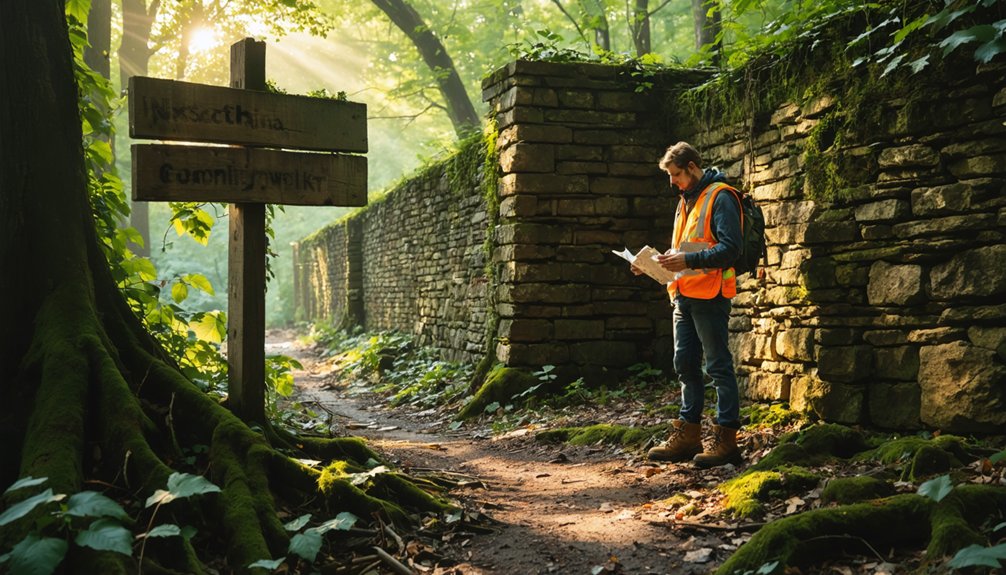
Exploring those nearby sites builds curiosity, but Gould’s Mill Village demands a sharper level of preparedness before you set foot on its trails.
Follow these safety tips before entering: pack water, snacks, sun protection, sturdy footwear, a flashlight, and a basic first aid kit. Cell service disappears once you’re deep into the site, so download offline maps beforehand.
Wildlife awareness matters here. The remote landscape shelters animals you don’t want to surprise, so make noise while walking and stay alert.
Unstable stone foundations and hidden drop-offs create real physical hazards, so never step onto crumbling structures. Visit during spring or fall for manageable conditions.
Leave every artifact exactly where you find it—removal is illegal and permanently damages Rhode Island’s fragile industrial heritage.
Frequently Asked Questions
What Is the ZIP Code for Gould’s Mill Village in Smithfield?
You’ll use ZIP code 02917 when searching Smithfield landmarks or mailing anything tied to Gould’s Mill history. It’s the official code serving the entire Smithfield area, keeping you connected to this fascinating Rhode Island destination.
Can Artifacts or Mill Equipment Be Legally Removed From Gould’s Mill Village?
You can’t legally remove artifacts or mill equipment from Gould’s Mill Village. Artifact preservation laws carry serious legal implications — only photographs are permitted. Respecting these rules guarantees Rhode Island’s industrial heritage remains intact for future explorers like you.
Which Seasons Are Best for Visiting Gould’s Mill Village Safely?
You’ll find spring and fall offer the best seasonal weather for exploring Gould’s Mill Village safely. Take safety precautions seriously—avoid summer’s brutal heat and winter’s impassable roads to fully enjoy your unrestricted adventure.
Are There Local Museums Preserving Artifacts From Gould’s Mill Village?
Like treasure hunters preserving the past, local museums actively collect Gould’s Mill Village artifacts. You’ll find stone tools and mill equipment showcasing local history and preservation efforts, connecting you to Rhode Island’s forgotten industrial heritage.
You won’t find reliable cell coverage at Gould’s Mill Village, so download offline maps before heading out. Follow these navigation tips: save your route, pack a paper map, and embrace the freedom of off-grid exploration.
References
- https://www.youtube.com/watch?v=vQo1xzIZV2w
- https://en.wikipedia.org/wiki/List_of_ghost_towns_in_Rhode_Island
- https://www.youtube.com/watch?v=kpy7zlXYrAU
- https://weird-island.simplecast.com/episodes/57-ghost-town-hanton-city-ky53imy0
- https://www.onlyinyourstate.com/rhode-island/haunting-road-trip-ri/
- https://www.onlyinyourstate.com/experiences/rhode-island/tower-hill-road-ri
- https://ghost-towns.close-to-me.com/states/rhode-island/
- https://www.onlyinyourstate.com/experiences/rhode-island/ghosts-ri
- http://freepages.rootsweb.com/~gtusa/history/usa/ri.htm
- https://web.archive.org/web/20131024122537/http:/www.quahog.org/