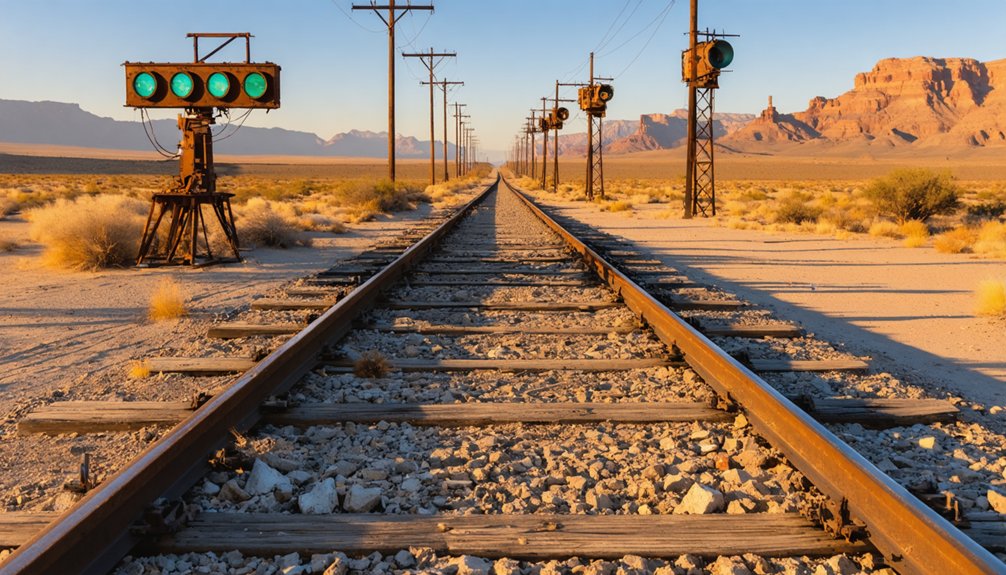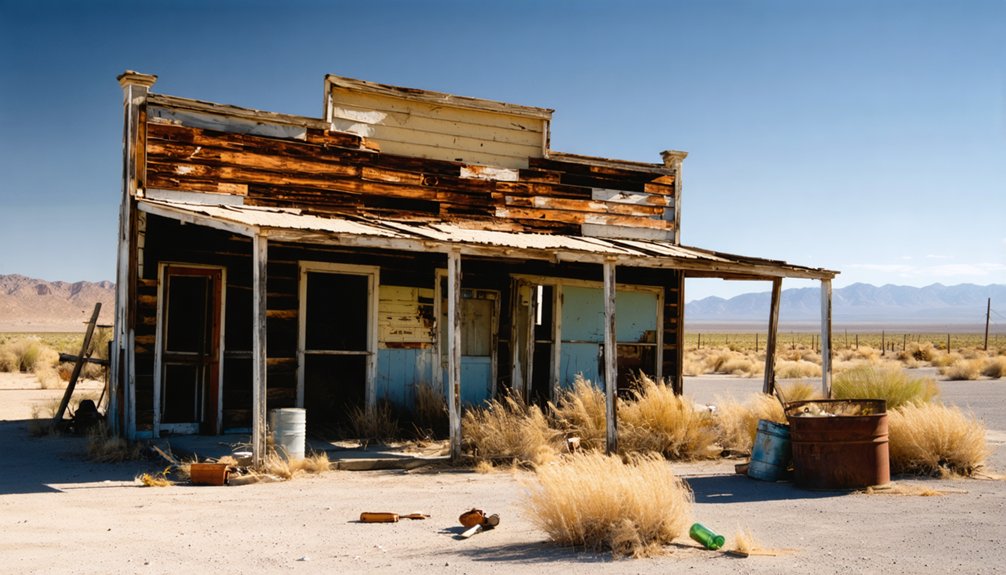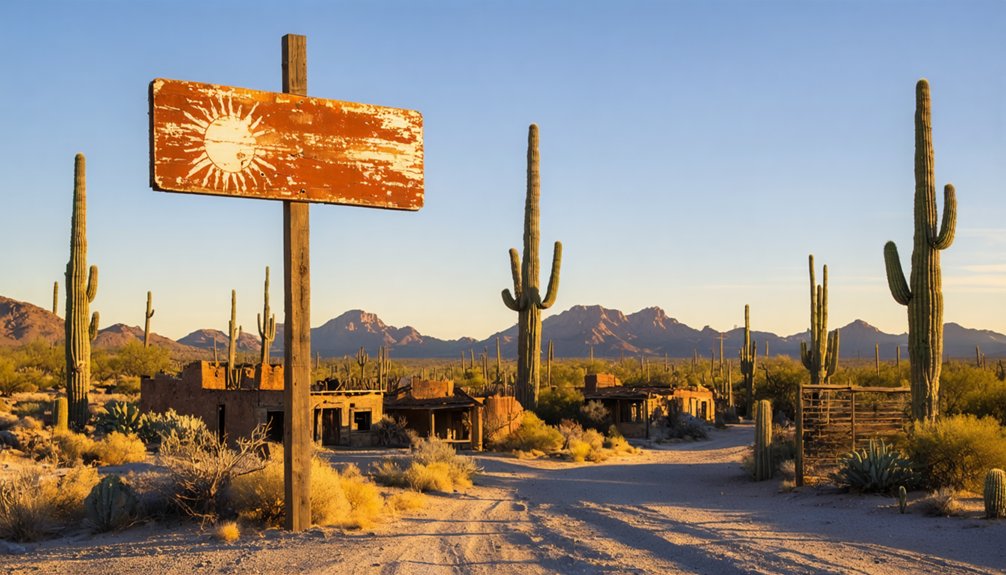
Planning a ghost town road trip to Bumble Bee, Arizona is easier than you’d think. You’re less than an hour north of Phoenix on Interstate 17, exiting at Bumble Bee Road onto a gravel path into Yavapai County’s rugged foothills. Visit between October and April for the most comfortable temperatures, bring plenty of water, sturdy boots, and offline navigation since cell service drops fast. Everything you need to make this trip unforgettable is just ahead.
Key Takeaways
- Bumble Bee is less than an hour from Phoenix via Interstate 17, exiting at Bumble Bee Road onto a gravel path.
- Visit between October and April to avoid extreme heat, with spring and fall offering the most comfortable conditions.
- Bring sturdy boots, extra water, sun protection, a first aid kit, and a tire repair kit for safety.
- Download offline navigation apps before departure, as cell service becomes unreliable once you leave Interstate 17.
- Nearby ghost towns like Crown King, Mayer, and Cordes Junction offer additional stops to enhance your road trip.
What Is Bumble Bee, Arizona?
Bumble Bee is a ghost town tucked into the foothills of Arizona’s Bradshaw Mountains, sitting off Interstate 17 in southern Yavapai County. This small piece of Arizona history started as a stage station in 1864, serving travelers along the Prescott-Phoenix road.
Originally called Snyder’s Station, it earned its distinctive name around 1879, likely from soldiers who described local Indians as “thick as bees in a bee hive” along the nearby creek.
Bumble Bee earned its name around 1879, when soldiers described local Indians as thick as bees along the creek.
You won’t find a bustling tourist destination here. Bumble Bee attractions are minimal — the structures that once drew curious visitors were dismantled in the early 2000s.
What remains is raw, unfiltered frontier history. If you’re chasing authentic ghost town experiences rather than manufactured ones, Bumble Bee delivers exactly that kind of freedom.
How Bumble Bee Got Its Unusual Name
The name “Bumble Bee” carries more mystery than you might expect from a sleepy Arizona ghost town. Its name origins blend historical significance with local folklore, leaving you to choose which story resonates most:
- Soldiers once reported Native Americans moving along the creek “as thick as bees in a bee hive.”
- Prospectors may have disturbed bumblebee nests while working the rugged terrain.
- Dense wildlife observations along the creek inspired early settlers to immortalize the moment.
Records at the Sharlot Hall Museum favor bee-related accounts, though no single version dominates.
What’s undeniable is that the shift from “Snyder’s Station” to “Bumble Bee” marked a genuine identity change for this frontier outpost.
That name stuck through relocations, road bypasses, and decades of desert silence.
The Rise and Fall of Bumble Bee, Arizona
Bumble Bee started as a humble stage stop in 1864, serving travelers along the Prescott-Phoenix road before it even had its now-famous name.
You can trace its decline to the railroad’s expansion in the early 1900s, which made stagecoach travel obsolete, and Interstate 17’s construction in the 1950s, which bypassed the town entirely.
Efforts to revive it as a tourist attraction—including a 1969 fake ghost town stunt that drew 4,000 visitors—ultimately failed, and its remaining structures were dismantled in the early 2000s.
Humble Frontier Beginnings
Before Interstate 17 carved its efficient path through central Arizona, a scrappy little settlement called Bumble Bee served as a vital lifeline along the rugged Prescott-Phoenix road. Established in 1864 as Snyder’s Station, it embodied the pioneering spirit of those chasing opportunity through untamed desert terrain.
The frontier lifestyle here wasn’t glamorous — it was survival-driven and purposeful:
- Weary stagecoach travelers found rest, water, and supplies at this remote desert outpost.
- W.W. Snyder operated the post office starting February 1879, anchoring the community’s identity.
- The settlement relocated multiple times, following shifting roads deeper into Yavapai County’s rugged landscape.
You’re fundamentally tracing the footsteps of people who built civilization one dusty mile at a time — no guarantees, just grit.
Economic Decline Factors
Once a thriving waypoint for stagecoach travelers grinding between Prescott and Phoenix, Bumble Bee’s economic identity was always fragile — built on traffic, not treasure.
The stagecoach decline hit hard when railroad expansion reshaped travel routes in the early 1900s, stripping the town of its primary purpose almost overnight.
Mining impact compounded the damage. Nearby operations like the Iconoclast, Crown King, and Golden Turkey mines never generated enough sustained wealth to keep Bumble Bee alive independently.
When Interstate 17 bypassed the area entirely in the 1950s, the town lost its last lifeline — the road itself.
You can still trace this pattern of abandonment today, reading the landscape like a timeline. Freedom came at a cost here: progress simply moved on and left Bumble Bee behind.
Failed Revival Attempts
Even as Bumble Bee faded, a handful of determined individuals refused to let it disappear quietly. Each revival strategy brought fresh energy, though none could outrun time, theft, or neglect.
Three bold attempts shaped its tourist appeal:
- 1930s: Jeff Martin constructed rustic buildings, envisioning a destination worth stopping for along the desert highway.
- 1960: Charles Penn purchased the property, dreaming of a restored museum celebrating frontier life.
- 1969: “Crazy” Ed Chilleen leased it, staged a ghost town opening, and drew 4,000 curious visitors enthusiastic for adventure.
T-shirts sold, beverages flowed, and a B-western film crew once rolled cameras here.
But bees, collapsing structures, and relentless theft dismantled every effort. By the early 2000s, the buildings were gone, leaving only stories behind.
Is Bumble Bee Worth Adding to Your Arizona Road Trip?
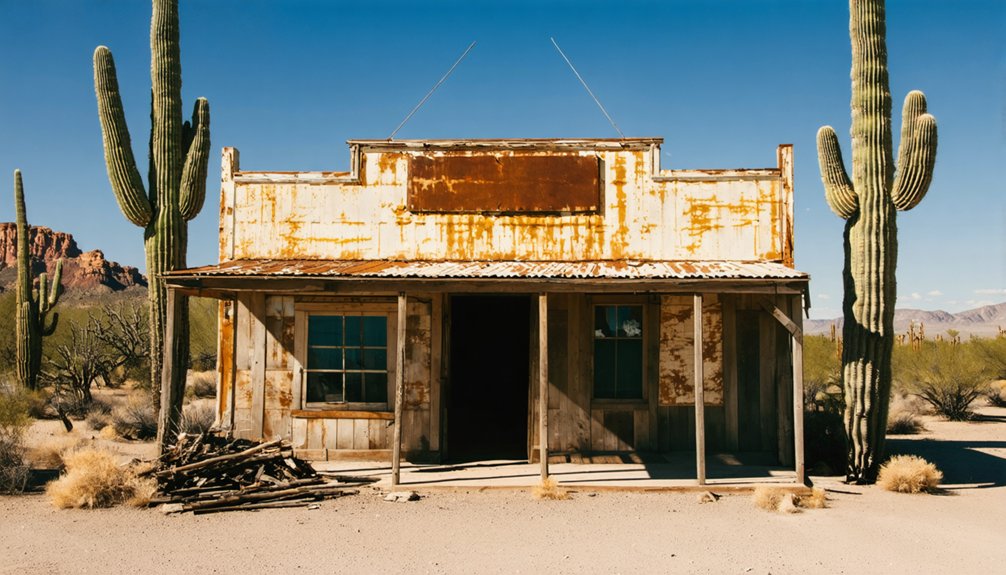
Whether you’re chasing Arizona history or just looking for an offbeat detour on your next road trip, Bumble Bee delivers a raw, unpolished glimpse into the state’s past that most tourist stops can’t replicate.
This isn’t a polished museum or a staged experience — it’s real ghost town exploration on your own terms.
You’ll find no gift shops or guided tours here, just the quiet remnants of a frontier outpost that once hustled with stagecoaches and prospectors.
Pull off Interstate 17, follow the gravel road, and let the landscape tell its story.
If you value authenticity over convenience, Bumble Bee earns its place on your Arizona road trip itinerary.
Just respect the private property boundaries and leave it as untouched as you found it.
What You’ll Actually Find There Today
So what exactly awaits you once you make that turn off Interstate 17? Honestly, it’s raw and unpolished — exactly what genuine exploration feels like.
Raw and unpolished — that’s exactly what awaits once you make that turn off Interstate 17. Genuine exploration feels like this.
You’ll find a quiet valley where local wildlife roams freely and historical artifacts peek through the landscape like stubborn survivors. The structures are gone, but the *story* isn’t.
Here’s what greets you:
- Scattered remnants of relocated town sites marking where life once buzzed along the stage road
- Local wildlife threading through brush-covered terrain surrounding the creek bed
- Historical artifacts and foundation traces hinting at the frontier outpost that shaped Arizona’s early commerce
It’s private property, so respect the boundaries.
Come expecting atmosphere over amenities, and you’ll leave with something more valuable — a genuine connection to Arizona’s untamed past.
Ghost Towns Near Bumble Bee Worth the Detour
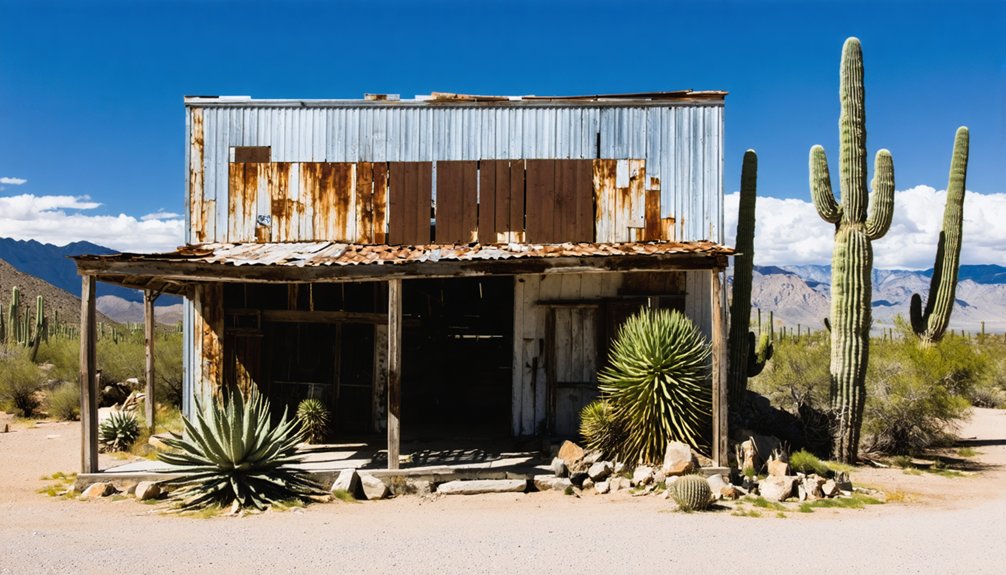
While Bumble Bee itself delivers more atmosphere than artifacts, the surrounding Bradshaw Mountains region rewards curious explorers with ghost towns that still carry visible remnants of Arizona’s boom-and-bust mining era.
Crown King sits nearby, offering genuine historical significance through its preserved structures and active community roots tied to gold and silver mining.
Nearby Mayer and Cordes Junction also anchor solid ghost town exploration routes, each telling layered stories of railroad ambition and frontier commerce.
You’ll find these detours worthwhile because they provide the tangible history Bumble Bee can only hint at.
Travel the gravel backroads confidently, as these sites reward independent travelers who prefer discovering Arizona’s raw past on their own terms rather than through curated tourist experiences.
How to Reach Bumble Bee From Phoenix or Flagstaff
Reaching Bumble Bee takes under an hour from Phoenix, making it an easy half-day escape from the city.
Head north on Interstate 17, exit at Bumble Bee Road, and follow the gravel path into southern Yavapai County’s rugged foothills.
Take I-17 north, exit at Bumble Bee Road, and follow the gravel into Yavapai County’s untamed foothills.
From Flagstaff, you’re looking at roughly two hours heading south on I-17 through open desert terrain.
As you approach, watch for:
- Bradshaw Mountain foothills rising dramatically against Arizona’s wide sky
- Desert wildlife darting across sun-baked scrubland along the roadside
- The creek crossing near where Bumble Bee’s history first took root as a frontier stage stop
There’s no GPS-friendly destination waiting, just raw landscape and the satisfaction of finding a place most travelers speed past without a second glance.
Best Time of Year to Visit Bumble Bee
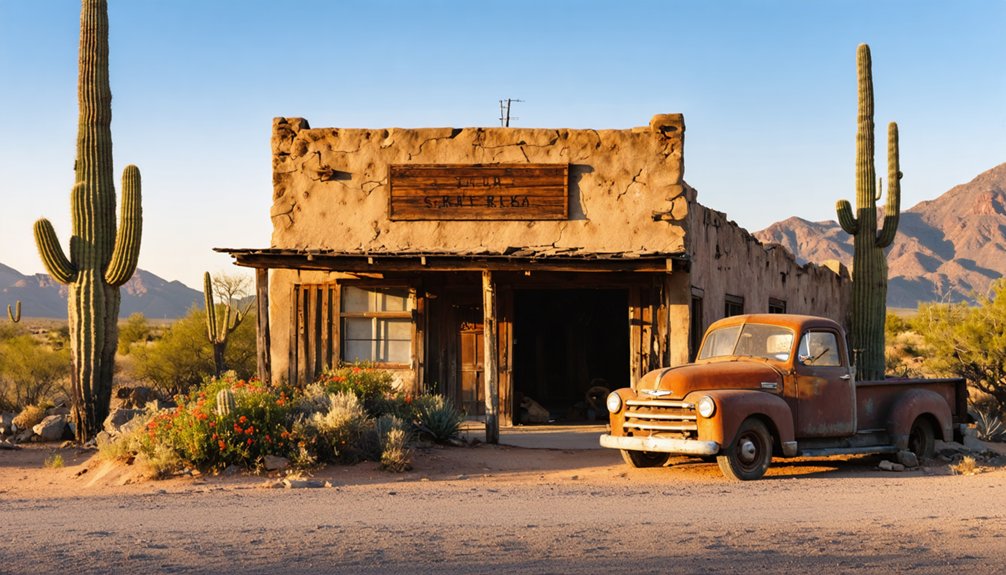
Timing your visit to Bumble Bee matters more than you’d expect for a place with so little left standing.
Spring and fall deliver ideal visiting conditions — mild temperatures, manageable dust, and golden desert light that makes the scrubland feel cinematic. October through April keeps you clear of brutal summer heat, which routinely pushes past 100°F and turns the gravel road into a punishing stretch.
Winter mornings can bite with cold, but afternoons stay comfortable for exploring the remnants and surrounding foothills.
Summer visits aren’t impossible, but they demand an early start and plenty of water.
For best seasonal activities, pair your stop with a drive toward Crown King — the route rewards you most when the air is cool and the sky stays wide open.
What to Bring for an Unmaintained Desert Site Visit
Since Bumble Bee is private, unmaintained land with no visitor services, you’ll need to pack everything yourself before heading out.
Bring sturdy boots, plenty of water, sun protection, and a basic first aid kit to handle the rugged desert terrain safely.
You’ll also want a detailed paper map or downloaded offline GPS route, since cell service along the gravel side road off Interstate 17 is unreliable.
Essential Gear and Supplies
Visiting an unmaintained desert site like Bumble Bee means you’re responsible for everything you’d normally take for granted—shade, water, and a clear way out.
The terrain rewards preparation, not improvisation.
Pack with intention before you leave the pavement:
- Water and sun protection – carry more than you think you’ll need; desert wildlife and shifting shadows will pull you further from your vehicle than planned
- Ghost town photography gear – a wide-angle lens captures the valley’s frontier scale, while a macro lens reveals weathered textures up close
- Navigation tools – a downloaded offline map and physical compass handle dead zones along the gravel road confidently
You’re trading convenience for freedom out here.
Bring what keeps you moving, and Bumble Bee delivers the rest.
Safety and Navigation Tools
Traversing an unmaintained desert site like Bumble Bee means your phone’s signal disappears the moment you turn off Interstate 17 onto the gravel road.
Download offline navigation apps like Maps.me or Gaia GPS before you leave, because you won’t get a second chance once you’re out there. Carry a physical map of Yavapai County as backup.
Among essential safety tips: pack a first-aid kit, extra water for desert heat, and a tire repair kit for that unforgiving gravel stretch. A portable GPS device with satellite capability beats relying on cellular networks.
Tell someone your planned route and expected return time. The desert doesn’t negotiate, but with the right tools, you control the adventure on your own terms.
Frequently Asked Questions
Was Bumble Bee Ever Featured in Any Films or Television Productions?
Yes, Bumble Bee history includes a brush with Hollywood! You’ll find that revival efforts transformed it into a tourist site used in a B-western movie, making Bumble Bee films a fascinating footnote in this frontier town’s story.
Who Currently Owns the Bumble Bee Property Today?
Like a locked chest without a key, Bumble Bee’s current ownership remains unclear in available records. You’ll find its Ghost town significance tied to Bumble Bee history, where private property signs greet your free-spirited exploration today.
Are There Any Annual Events or Gatherings Held at Bumble Bee?
You won’t find any official annual events at Bumble Bee, but you can explore its ghost town history and local legends independently, making your own adventure through this hauntingly quiet, private frontier landmark.
Can Visitors Legally Access or Walk Around the Bumble Bee Site?
You’d find it’s private property — coincidentally, much like ghost town history itself, access isn’t freely open. Respect boundaries, prioritize visitor safety, and admire Bumble Bee’s remnants from designated public areas without trespassing.
Has Bumble Bee Arizona Appeared in Any Books or Documentaries?
You’ll find Bumble Bee’s literary references scattered across Arizona history books and ghost town guides, celebrating its historical significance as a frontier stage stop. Documentaries exploring the American West occasionally feature its fascinating, freedom-evoking story of boom and abandonment.
References
- https://www.legendsofamerica.com/az-bumblebee/
- https://azoffroad.net/bumble-bee
- https://www.bumblebeeranch.com/history-of-bumble-bee
- http://www.echoesofthesouthwest.com/2017/09/bumble-bee-az.html
- https://johnberkovich.com/2026/03/11/the-rise-and-fall-of-bumble-bee-arizona/
- https://www.youtube.com/watch?v=UPILvSBxW4c
- https://janmackellcollins.wordpress.com/2021/04/19/the-ups-and-downs-of-bumblebee-arizona/