Starting your ghost town road trip at Comet, Montana puts you in the heart of southwest Montana’s silver-boom history. You’ll explore hillside flotation mill ruins, wander a weathered cemetery, and trace the rise and fall of a town that once held 300 souls. From Comet, you can loop through Rimini’s crumbling structures and finish at Bannack’s remarkably preserved buildings. Helena makes the perfect base, and there’s far more to uncover along the way.
Key Takeaways
- Comet Ghost Town, near Helena, Montana, is accessible within 30–45 minutes via scenic routes leading through rugged hill country toward High Ore Creek.
- Founded in 1869 after silver galena ore discovery, Comet once housed 300 residents before resource depletion caused its economic collapse.
- Summer and fall are the best visiting seasons, offering clear road access, wildflowers, and stunning foliage for photography and exploration.
- Use Helena as your base, starting at Comet, then heading west to Rimini, and finishing at historically rich Bannack for deeper context.
- Respect ghost town etiquette: avoid removing artifacts, stay on established paths, photograph freely, carry water, and download offline maps beforehand.
Where Exactly Is Comet Ghost Town in Montana?
Tucked into the rugged hills of southwest Montana, Comet Ghost Town sits near Helena, accessed via roads leading to the High Ore Creek area — a tributary of the Boulder River where silver galena ore first sparked the town’s creation back in 1869.
This ghost town geography places it among Montana landmarks worth seeking out on any serious road trip. You’ll find it nestled in wilderness that feels genuinely remote, yet it’s close enough to Helena for a manageable drive.
The surrounding hills amplify its haunting atmosphere, making the journey feel earned. Nearby Rimini sits west of Helena, giving you a natural multi-stop opportunity.
Since it’s private property, you’ll want to enter respectfully, but access remains open and welcoming for curious, freedom-seeking explorers like yourself.
The Silver Mining History Behind Comet’s Rise and Fall
When you explore Comet’s past, you’ll discover that it all started in 1869 when John W. Russell struck silver galena ore along High Ore Creek, sparking a mining rush that would twice push the town’s population to around 300 residents.
You’ll see evidence of that boom in the hillside flotation mill and mine ruins still standing today, remnants of an era when silver fueled everything from bustling operations to a thriving community.
Yet as silver resources dried up, Comet’s fortunes collapsed just as quickly as they’d risen, leaving behind a hauntingly preserved ghost town that still tells its story to every visitor who walks through it.
Silver Discovery Origins
Before Comet became a ghost town frozen in time, it was a boomtown built on silver. In 1869, prospector John W. Russell discovered silver galena ore along High Ore Creek, a tributary of the Boulder River tucked into the hills of southwest Montana.
That single discovery ignited everything. Miners flooded in, silver mining operations expanded rapidly, and a full community took shape practically overnight. At its peak, Comet supported around 300 residents fueled by ambition and ore.
You’re now walking ground where that raw frontier energy once pulsed. The hills that draw you here today once drew men chasing fortunes. Understanding where it all started makes every ruined wall and abandoned shaft feel less like decay and more like a story worth telling.
Mining Boom And Bust
Once silver galena hit the smelters, Comet’s fate was sealed—at least temporarily. Ghost town dynamics played out fast here—boom, bust, abandonment. Mining legislation shaped extraction timelines, influencing when operations expanded or collapsed entirely.
You’re walking ground where 300 residents once hustled through daily life, driven purely by silver’s promise. Then the ore thinned, profits vanished, and people scattered.
Three forces drove Comet’s cycle:
- Silver abundance fueled rapid settlement and mill construction on the hillside.
- Resource depletion stripped economic viability, forcing residents to relocate elsewhere.
- Legislative shifts in mining policy altered operational feasibility during critical production periods.
What remains isn’t failure—it’s evidence. The ruins, cemetery, and mill foundations tell you exactly how quickly fortune-chasing communities rise and disappear when the earth stops giving.
Comet’s Lasting Legacy
Comet’s ruins aren’t just the remnants of a busted economy—they’re the physical record of Montana’s silver era written in rotting timber and crumbling stone.
Comet’s impact stretches beyond its two population peaks of 300 residents. It represents the historical significance of a community that extracted wealth from High Ore Creek‘s silver galena deposits and built an entire hillside flotation mill to do it efficiently.
Those mining innovations shaped how operations ran across the region. Community resilience shows in what’s left standing—abandoned buildings, a weathered cemetery, and mine ruins that refuse to disappear quietly.
Preservation efforts are actively pushing toward museum status. When you walk this private land respectfully, you’re not just sightseeing—you’re connecting with the raw, unfiltered story of Montana’s silver-driven past.
What Made 300 People Move to a Montana Hillside?
Three hundred people didn’t stumble onto a Montana hillside by accident — silver pulled them there. John W. Russell’s 1869 discovery on High Ore Creek triggered a rush that transformed wilderness into a working silver mining community almost overnight.
Community dynamics shaped everything — who stayed, who thrived, and who disappeared when the ore ran thin.
Here’s what drew people to Comet’s rugged hillside:
- Rich silver galena deposits promising real wealth for determined workers
- Established infrastructure including a hillside flotation mill processing ore efficiently
- Community support systems offering settlers belonging, trade, and shared purpose
When you walk Comet’s ruins today, you’re standing where ambition once roared.
That hunger for freedom and fortune built something remarkable — then left it beautifully frozen in time.
Best Times of Year to Visit Comet Ghost Town
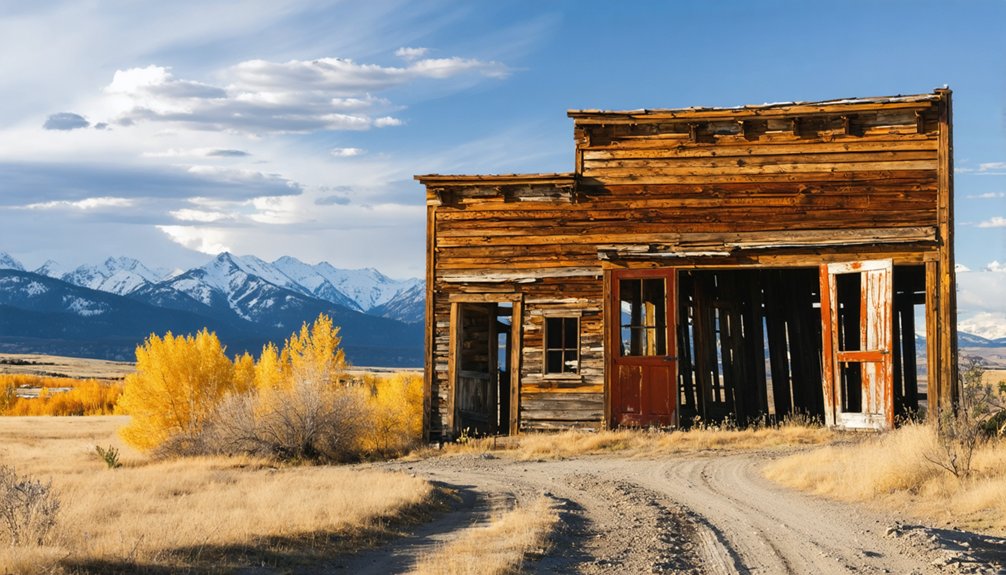
Timing your visit to Comet Ghost Town can mean the difference between a memorable exploration and a frustrating one.
Summer offers the clearest access roads and ideal photography opportunities, with long daylight hours letting you capture every weathered beam and crumbling structure in perfect light.
Spring brings wildflowers framing the ruins dramatically, though muddy roads can challenge your route.
Fall delivers stunning foliage contrast against the aging buildings, making it a prime season for photography opportunities and quieter seasonal activities like cemetery walks and mine exploration.
Avoid winter entirely — snow buries access roads and makes traversing the hillside genuinely dangerous.
Whatever season you choose, arrive early, move at your own pace, and respect the private land that keeps this haunting site open to curious explorers like you.
How to Get to Comet Ghost Town From Helena
Reaching Comet Ghost Town from Helena takes roughly 30 to 45 minutes, guiding you southwest through Montana’s rugged hill country toward High Ore Creek.
You’ll travel scenic routes that reveal the wilderness character making this area one of Montana’s hidden treasures.
Follow these directions for a smooth trip:
- Head southwest from Helena on roads leading into the Boulder River corridor, watching for signs toward High Ore Creek.
- Navigate toward the creek valley, where the terrain shifts into dramatic hill country signaling you’re close.
- Respect private property boundaries upon arrival, entering responsibly since the site welcomes visitors who treat it carefully.
Pack a camera, wear sturdy boots, and embrace the freedom of exploring Montana’s mining past on your own terms.
Abandoned Buildings, Mine Ruins, and a Hillside Flotation Mill
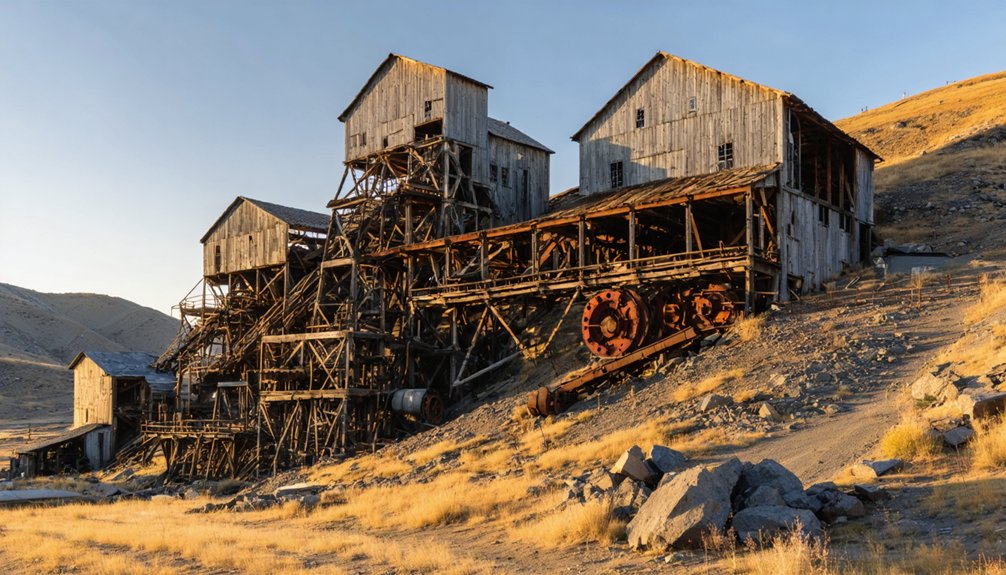
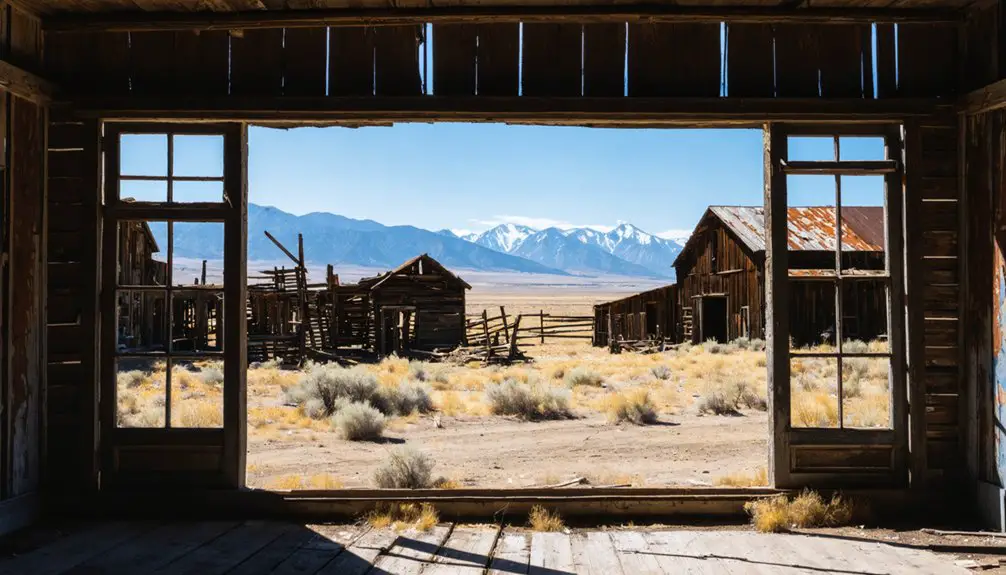
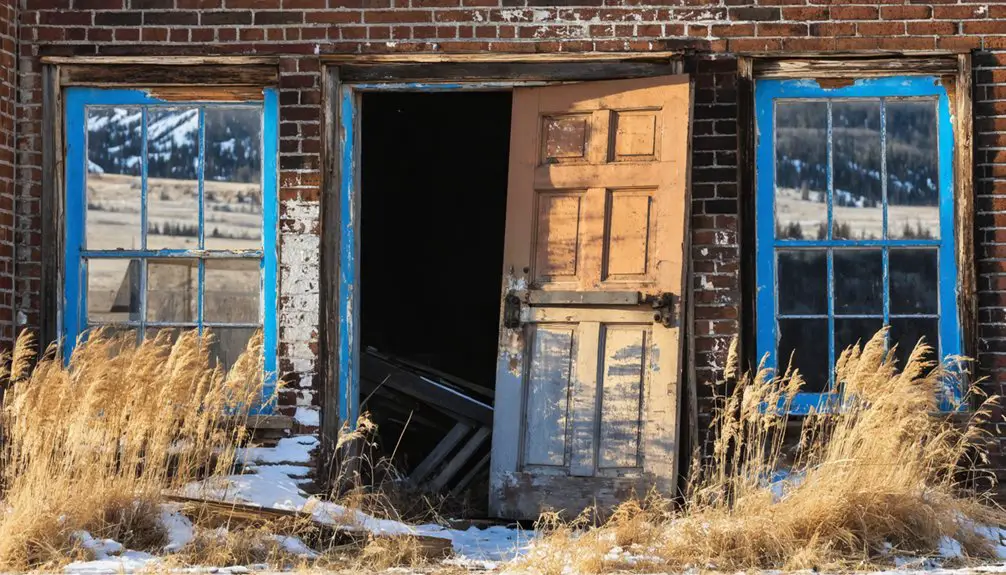
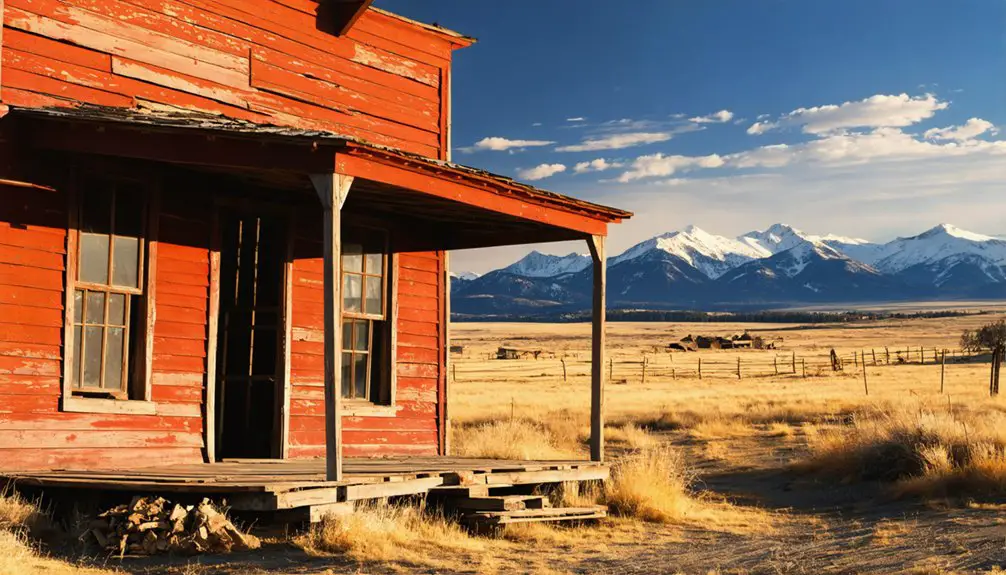
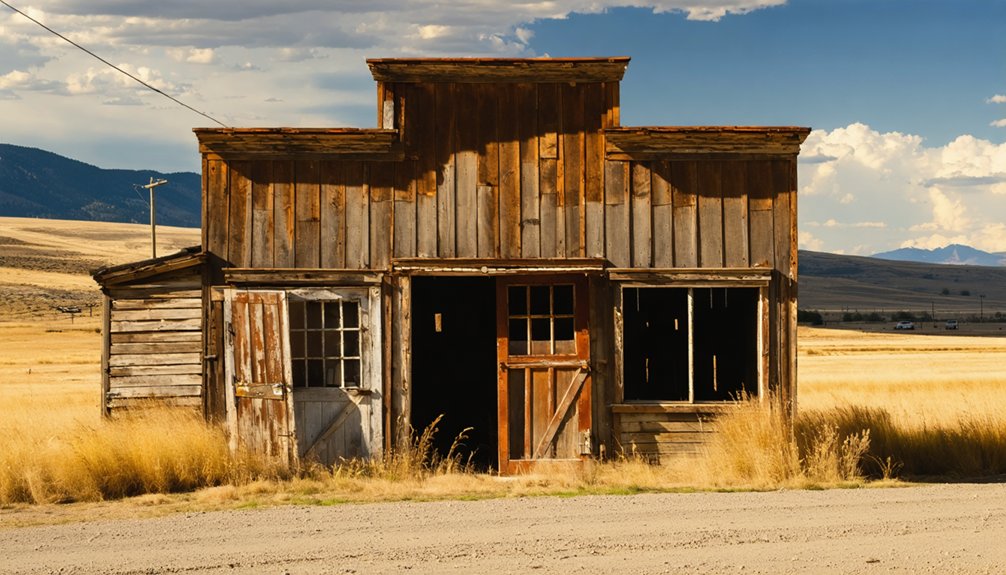
Once you’ve arrived at Comet Ghost Town, the real reward unfolds across the hillside — abandoned buildings, crumbling mine ruins, and the striking remains of a flotation mill that once processed silver ore from the surrounding peaks.
The abandoned architecture tells a raw, unfiltered story of boomtown ambition and eventual silence. You’ll wander through structures that once buzzed with miners, merchants, and machinery, now frozen in time against Montana’s wilderness backdrop.
The mining technology embedded in these ruins reflects genuine 19th-century ingenuity — the hillside flotation mill especially stands as a monument to how aggressively silver was extracted during peak operations.
Walk at your own pace, photograph freely, and let the cemetery nearby round out your understanding of the 300 souls who once called Comet home.
What Comet’s Historic Cemetery Reveals About the Town’s Past
Tucked into the hillside near Comet’s crumbling structures, the historic cemetery offers something the mine ruins can’t — a deeply personal record of the people who built and lost everything here.
Cemetery symbolism runs deep in places like this, where weathered headstones speak louder than any written history. You’ll find historical insights etched into the stone, revealing who Comet really was.
Walk through and notice:
- Names and dates marking boom-era arrivals who never left
- Epitaphs and symbols reflecting cultural backgrounds of miners and families
- Clustering patterns suggesting community bonds formed under harsh conditions
Each grave represents a choice someone made to chase silver in Montana’s wilderness. That freedom — and its cost — is permanently recorded here.
How to Visit Comet Ghost Town Without Causing Damage
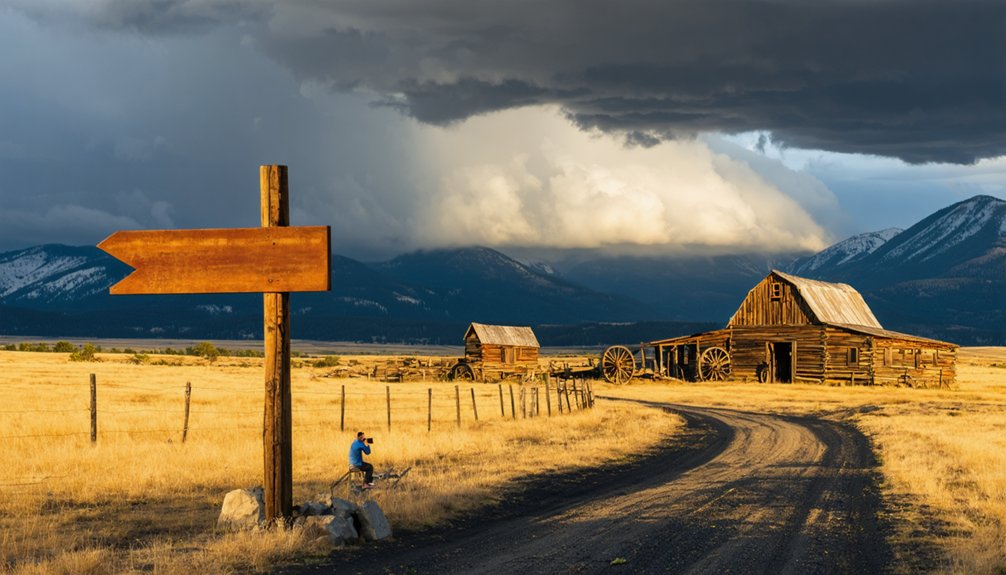
Comet’s survival as a preserved ghost town depends entirely on how you treat it when you’re there. You’re stepping onto private land, so ghost town etiquette isn’t optional — it’s your entry fee.
Don’t touch or remove anything from the buildings, mines, or cemetery. These structures are fragile, and one careless moment can undo decades of preservation practices that keep this place standing.
Walk carefully around unstable ruins rather than climbing them. Photograph everything but take nothing. Respect the cemetery by staying on established paths and avoiding grave markers. Leave gates, fences, and debris exactly as you find them.
Comet’s owners welcome curious visitors, but that welcome disappears the moment someone causes damage. Treat this place right, and it’ll remain open for every explorer who follows you.
Rimini, Bannack, and Other Ghost Towns Near Comet
Montana’s ghost town circuit doesn’t stop at Comet. Extend your adventure by hitting nearby stops that each carry their own rugged stories and abandoned charm.
- Rimini – West of Helena, Rimini history stretches back to its own mining boom, offering crumbling structures and mountain scenery perfect for exploration.
- Bannack – Montana’s first territorial capital rewards serious Bannack exploration with remarkably preserved buildings, a state park, and outlaw legends tied to Sheriff Henry Plummer.
- Elkhorn – This silver camp near Boulder features two surviving fraternal hall buildings standing against the Montana sky.
String these stops together into one liberating loop from Helena, and you’ll experience Montana’s wildest, most untamed history firsthand.
Each town adds another unforgettable layer to your road trip.
Planning a Southwest Montana Ghost Town Loop Starting at Comet
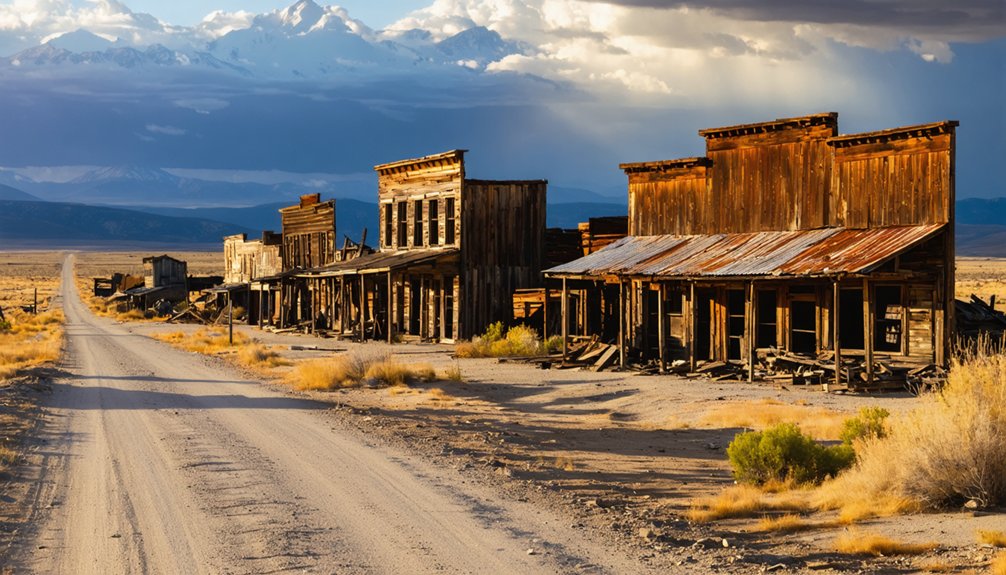
If you’re starting your Southwest Montana ghost town loop, Helena makes the perfect base, putting you within easy reach of Comet and its silver mining ruins.
From there, you can swing through nearby towns like Rimini to the west or push farther south toward Bannack, stringing together a rich itinerary of abandoned history.
To make the most of your trip, plan your stops in advance, respect private property boundaries, and bring a camera for the haunting landscapes you’ll encounter along the way.
Starting Your Helena Loop
Helena makes the perfect launching pad for a southwest Montana ghost town loop, putting you within striking distance of some of the region’s most atmospheric ruins. From Helena, you’re already positioned to chase mining heritage across the hills without burning half your day driving.
Here’s how to structure your departure:
- Fill your tank in Helena — fuel stations thin out fast once you head southwest.
- Pack your camera gear — ghost town photography rewards those who arrive prepared for dramatic lighting and textured decay.
- Download offline maps — cell service disappears quickly in the backcountry.
Once you roll out of Helena, the landscape shifts fast, trading city streets for gravel roads that wind toward forgotten camps where silver once drove entire communities to life.
Nearby Ghost Towns Worth Visiting
Once you’ve worked through Comet’s ruins and silver mining remnants, the surrounding hills hold more stops worth building into your loop.
Rimini sits west of Helena along scenic routes that reward drivers with rugged terrain and frontier atmosphere. Further southwest, Bannack offers one of Montana’s most intact ghost town experiences, where you’ll walk streets that once buzzed with gold rush energy.
These hidden attractions rarely draw crowds, giving you the freedom to explore at your own pace without the pressure of tourist schedules.
Each town adds a distinct chapter to the region’s mining history, and stringing them together creates a compelling Southwest Montana loop.
Plan your driving order around daylight hours, and you’ll cover serious ground without rushing through anything worth seeing.
Road Trip Itinerary Tips
Planning your Southwest Montana ghost town loop around Comet gives you a natural anchor point, since it sits close enough to Helena to serve as either a morning launch or a late-afternoon wind-down stop.
Layer your route intentionally to chase both ghost town myths and mining legends without backtracking unnecessarily.
- Start at Comet – Explore the flotation mill ruins and cemetery before crowds arrive.
- Head west to Rimini – A quick detour rewards you with another layer of silver-era mining legends tucked into the hills.
- Finish at Bannack – Montana’s most storied ghost town caps your loop with deeper historical context.
Respect private property at each stop, carry water, and keep your schedule flexible—discovery rarely follows a rigid timeline.
Frequently Asked Questions
Is Comet Ghost Town Considered One of Montana’s Best-Preserved Sites?
Yes, you’ll find Comet’s ghost town history makes it one of Montana’s best-preserved sites! Despite preservation challenges, its enchanting ruins, abandoned buildings, and historic cemetery let you explore silver mining’s raw, untamed legacy freely.
Who Originally Discovered Silver Ore at the Comet Ghost Town Site?
You’ll discover that John W. Russell originally made the silver discovery in 1869 on High Ore Creek, a moment of historical significance that sparked Comet’s thrilling mining boom and transformed Montana’s rugged wilderness forever.
Are There Any Entrance Fees Required to Visit Comet Ghost Town?
Ready to roam freely? You won’t pay any entrance fees to visit this remarkable ghost town! Since it’s private land, you’re welcome to explore the ruins, cemetery, and mines — just respect the site during your visit.
What Type of Ore Was Mined During Comet Ghost Town’s Peak Years?
You’ll discover that silver galena ore drove Comet’s mining techniques during its peak years, giving the town its historical significance. Miners extracted this prized ore from High Ore Creek’s rich deposits, fueling two remarkable population booms of 300 residents.
Are There Ongoing Efforts to Turn Comet Ghost Town Into a Museum?
Yes, you’ll find active restoration initiatives underway to transform Comet Ghost Town into a historical museum. These efforts aim to enhance visitor experiences, letting you explore preserved mining ruins, abandoned buildings, and the haunting cemetery with even greater depth.
References
- https://www.youtube.com/watch?v=YU0y9_5Ylbg
- https://historynet.com/ghost-towns-comet-montana/
- https://www.youtube.com/watch?v=1HbfHqJQNG8
- https://www.mountain-home.com/blog/vacation-planning/guide-montana’s-ghost-towns
- https://southwestmt.com/blog/ghost-towns/
- https://en.wikipedia.org/wiki/List_of_ghost_towns_in_Montana
- https://www.distinctlymontana.com/curious-afterlife-montanas-ghost-towns
- https://fwp.mt.gov/stateparks/granite-ghost-town