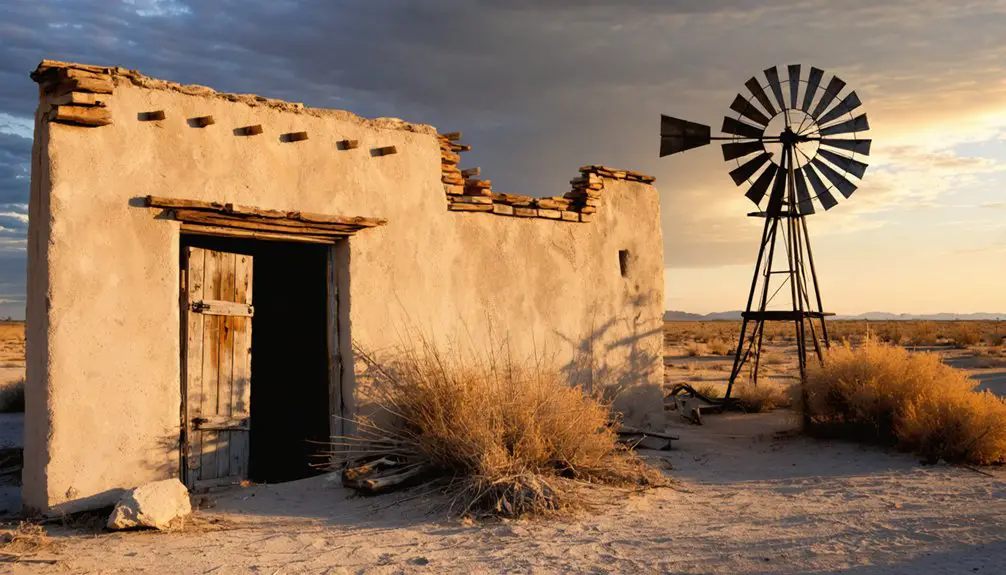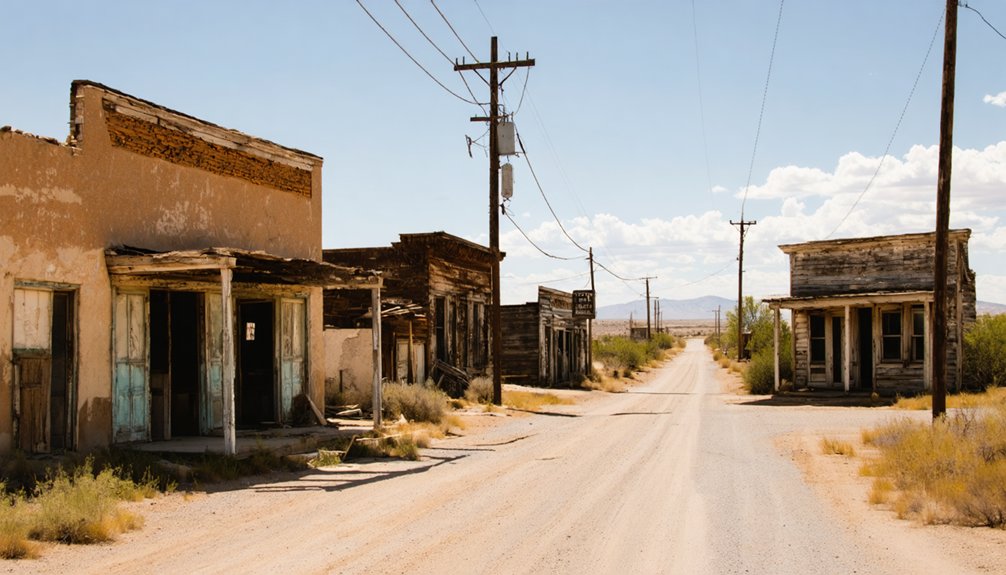
Planning a ghost town road trip to Casa Blanca, Texas means heading to Jim Wells County, roughly twenty miles northeast of Alice or two miles southwest of Sandia. You’ll find caliche foundations, a Texas Historical Marker, and no facilities — so pack water, sturdy boots, and printed maps. Visit in fall or spring to beat the brutal heat. Connect nearby ghost towns using Highway 281 and Farm Road 70. There’s far more layered history waiting ahead if you keep going.
Key Takeaways
- Casa Blanca is located in Jim Wells County, Texas, accessible from Alice (20 miles southwest) or Sandia (2 miles northeast).
- The site features foundations, caliche blocks, and a Texas Historical Marker, but has no facilities, signs, or guided access.
- Visit during fall (October-November) or spring (March-April) to avoid summer temperatures exceeding 100°F.
- Use U.S. Highway 281 and Farm Road 70 to connect Casa Blanca with nearby ghost towns like Sandia.
- Bring water, sturdy boots, sun protection, and printed maps, as cell service is unreliable in the area.
What Is Casa Blanca, Texas?
Casa Blanca, Texas, is a ghost town tucked into the far northeastern corner of Jim Wells County, sitting two miles southwest of Sandia and roughly twenty miles northeast of Alice.
Its historical significance stretches back to 1754, when Captain Tomas Sanches de la Barrera y Gallardo founded a fortified settlement along the lower Nueces River. He constructed a square structure from caliche blocks, centering the architectural style around a defensive courtyard typical of Spanish frontier design.
Locals called it Casa Blanca, meaning “White House.” Once a functioning colonial and ranching hub, it faded into ruin by the mid-20th century.
Casa Blanca — the White House — once thrived as a colonial and ranching hub before fading into ruin.
Today, only foundations and scattered remnants survive on privately owned land, making it a compelling destination if you’re drawn to raw, unfiltered history.
Who Built Casa Blanca and Why?
Built in 1754 by Captain Tomas Sanches de la Barrera y Gallardo, Casa Blanca wasn’t just a home — it was a calculated act of Spanish colonial expansion. As Laredo’s captain, Sanches understood that holding frontier territory meant planting roots deep and building them strong.
He chose the lower Nueces River deliberately, constructing a fortified residence from caliche blocks arranged in a defensive square around a central courtyard. That design wasn’t accidental — it reflected the realities of survival on a contested frontier.
The historical significance of Casa Blanca extends beyond its walls. It represents Spain’s ambition to anchor its presence in what’s now South Texas.
When you visit this ghost town, you’re standing inside a chapter of Spanish colonization that shaped an entire region’s identity.
Where Is Casa Blanca Located in Jim Wells County?
Knowing who built Casa Blanca sets the stage, but knowing where to find it’s what turns history into an actual road trip.
Casa Blanca sits in extreme northeastern Jim Wells County, Texas, roughly two miles southwest of Sandia and twenty miles northeast of Alice.
You’ll want to lock in the GPS Coordinates at longitude -97.90388860 before you hit the road, because this site offers no signage, facilities, or guided access.
The land is privately owned and largely uninhabited, so plan accordingly.
What draws road trippers here isn’t comfort — it’s Historical Significance.
You’re standing near the lower Nueces River where Spanish frontier life once unfolded in the 1750s.
That invisible weight of place is exactly what makes the detour worth every mile.
How Do You Get to Casa Blanca From Alice or Sandia?
Whether you’re driving from Alice or rolling in from Sandia, the approach to Casa Blanca is straightforward but unforgiving if you’re unprepared.
From Alice, head northeast roughly twenty miles along rural roads that cut through South Texas brush country. From Sandia, you’re only two miles to the southwest, making it the closer jumping-off point.
For directions tips, download offline maps before leaving town since cell service gets unreliable fast.
Travel safety means telling someone your plans, carrying extra water, and watching for unmarked property boundaries. The land is privately owned, so respect any posted signs you encounter.
The roads leading out here are quiet, the terrain flat, and the sky wide open. That freedom feels earned once you’ve navigated your way to this forgotten colonial outpost.
What Can You Still See at the Casa Blanca Site?
Few places in South Texas make you work as hard for as little reward as Casa Blanca, and yet what remains here still carries real historical weight.
You won’t find standing walls or restored rooms. What you’ll encounter instead are foundations, scattered caliche blocks, and ground-level traces of a square fortified structure that Tomas Sanches built in 1754.
These architectural remnants connect you directly to Spanish colonial frontier life along the lower Nueces River. The historical significance of this site runs deeper than its visible remains suggest.
A Texas Historical Marker dedicated in December 1973 anchors the location and gives context to what you’re seeing.
If you approach this site with curiosity rather than expectation, you’ll leave understanding exactly how raw early Texas settlement truly was.
What Does the 1973 Texas Historical Marker Say?
The Texas Historical Marker dedicated on December 2, 1973 gives the scattered foundations you’re standing among an official voice. It marks the spot where Captain Tomas Sanches de la Barrera y Gallardo built his fortified caliche residence around 1754, anchoring Spanish colonial ambition along the lower Nueces River.
The marker connects you directly to Texas History that most travelers never encounter. It acknowledges Casa Blanca’s role as both a colonial stronghold and ranching center before it faded from active life in the mid-19th century.
Most travelers pass through Texas without touching history this old, this documented, this quietly waiting to be read.
Among Ghost Towns, few carry this kind of documented weight. The 1973 dedication means someone fought to preserve this story before the last traces disappeared entirely.
When you stand beside that marker, you’re reading the land’s only remaining public voice.
Is Casa Blanca on Private Property?
Yes, Casa Blanca sits on privately owned land, which means you can’t simply pull off the road and walk the ruins without permission.
Property ownership here is private, so your freedom to roam ends at the fence line. Before you plan your visit, research who holds the land and reach out respectfully for private access.
That said, the Texas Historical Marker stands accessible along the roadside, giving you a legitimate stopping point to absorb the history without crossing onto restricted ground.
You can read the marker, photograph the surrounding landscape, and feel the weight of 1754 pressing against the present.
Treat this ghost town with the same respect you’d want shown to your own land, and your road trip remains both legal and meaningful.
When Is the Best Time to Visit Casa Blanca?
South Texas heat can turn a history excursion into an endurance test, so timing your visit to Casa Blanca smartly makes the difference between a rewarding experience and a sweaty, miserable one.
Weather considerations matter deeply here since summer temperatures regularly push past 100°F, leaving you drained before you’ve explored anything meaningful.
The best seasons to visit are fall and spring, particularly October through November and March through April, when temperatures stay comfortable and the scrubland landscape feels alive rather than scorched.
Winter visits also work well, offering cool, clear days ideal for walking uneven terrain and photographing remnants.
Avoid July and August entirely unless you thrive in brutal heat.
You’ll move freely, think clearly, and actually absorb the history when the weather cooperates.
Which Nearby Ghost Towns Are Worth Adding to the Drive?
While you’re out exploring Casa Blanca, you’d be smart to extend the drive and hit a few other ghost towns scattered across South Texas, since the region is rich with forgotten settlements that reward the curious traveler.
Sandia, sitting just two miles northeast, makes an easy first stop, and from there you can trace old ranch roads southwest toward Alice to catch additional historical markers and abandoned communities along the route.
Keep your map handy, because the connections between these sites aren’t always obvious, but stringing them together turns a single stop into a full day of discovery through Texas colonial history.
Nearby Ghost Towns Overview
Once you’ve tracked down Casa Blanca’s caliche ruins, the surrounding stretch of South Texas brush country rewards curious road-trippers with several other ghost towns worth folding into the drive.
Each stop deepens your understanding of ghost town culture and the region’s layered historical significance.
Consider adding these nearby sites:
- Sandia – Just two miles northeast, it’s the closest community and a natural anchor for your route.
- Realitos – A faded ranching settlement with crumbling storefronts that whisper of cattle-drive prosperity.
- Premont – Once a bustling oil and agriculture hub, now quietly surrendering to time.
- Falfurrias – Offers historical context for South Texas’s ranching heritage and colonial-era land grants.
String these stops together and you’ll cover serious ground across one of Texas’s most overlooked historical corridors.
Routes Connecting Ghost Towns
Linking these ghost towns into a cohesive route takes minimal planning but pays off in atmosphere and historical depth.
Start at Casa Blanca, then push northeast toward Sandia before looping through surrounding brushland communities. U.S. Highway 281 and Farm Road 70 connect most of these ghost town routes efficiently, keeping backtracking minimal.
You’ll pass historical landmarks that mark former ranching settlements, Spanish colonial outposts, and cattle trail crossings that once defined South Texas life.
Keep a paper map handy since cell service thins out fast along these stretches. Early morning departures work best, giving you cooler temperatures and better light for photography.
Each stop adds another layer to the story, turning a simple drive into a genuinely immersive journey through forgotten Texas history.
Notable Stops Along The Way
Beyond Casa Blanca, the surrounding brushland hides several ghost towns worth folding into your route. South Texas rewards curious travelers who dig into ghost town history and architectural significance found across forgotten settlements.
Consider adding these stops:
- Sandia – Just two miles northeast, it anchors your starting point and offers local context.
- Realitos – A faded ranching community carrying deep Tejano roots worth exploring.
- Premont – Nearby and historically layered, connecting rail-era commerce to modern silence.
- San Diego, Texas – A regional hub where courthouse architecture contrasts crumbling outskirts.
Each stop deepens your understanding of how Spanish colonial ambition gradually surrendered to time and harsh terrain.
You’re not just driving roads—you’re tracing the collapse and resilience of an entire frontier culture.
What Should You Bring Before Heading to Casa Blanca?
Before you head out to Casa Blanca, packing smart can make the difference between a rewarding visit and a frustrating one. The site sits on private land with no facilities, so you’re entirely on your own once you arrive.
Bring plenty of water, sturdy boots, and sun protection — the South Texas brush country is unforgiving. A printed map helps since cell service can be unreliable near Sandia. Carry a camera to document the caliche remnants and foundations that quietly speak to the site’s historical significance.
For deeper exploration tips, download records from the Portal to Texas History beforehand and review the Texas Historical Marker details from 1973. A notebook lets you sketch layouts or jot observations.
Come prepared, and Casa Blanca rewards your curiosity generously.
Frequently Asked Questions
Was Casa Blanca Ever Used as a Military Fort or Outpost?
Yes, Casa Blanca served military significance as a fortified frontier outpost. In its historical context, you’ll discover Captain Tomas Sanches built defensive walls and a central courtyard, embodying Spanish colonial strength and your ancestors’ fierce pursuit of freedom.
Are There Any Guided Tours or Organized Historical Visits Available?
You won’t find guided ghost tours or historical reenactments at Casa Blanca — it’s privately owned with no public access. You’re free to seek local historians who actively explore this hauntingly rich, caliche-walled frontier treasure independently.
What Other Settlements Did Tomas Sanches Establish in Texas?
beyond Casa Blanca, the knowledge available doesn’t confirm other Texas settlements Tomas Sanches established. You’ll want to dig deeper into colonial archives to uncover his full pioneering legacy.
Has Casa Blanca Ever Been Featured in Books or Documentaries?
You’ll find Casa Blanca’s literary significance lives within Ghost Towns of Texas, archived at the Portal to Texas History. Its cultural impact quietly echoes through regional historical records, markers, and university archives preserving its forgotten frontier story.
Are Archaeological Excavations Permitted or Planned at Casa Blanca?
No confirmed excavations are planned, but Casa Blanca’s archaeological significance sparks curiosity. You’d need to navigate excavation regulations carefully, as private ownership likely restricts access — yet the site’s buried secrets await those who pursue proper permissions.
References
- https://discovertexasoutdoors.com/places/casa-blanca-texas-the-caliche-fortress-that-once-anchored-the-south-texas-frontier/
- https://www.texasalmanac.com/places/casa-blanca
- https://tpwd.texas.gov/state-parks/lake-casa-blanca/history
- https://www.tshaonline.org/handbook/entries/garza-montemayor-juan-jose-de-la
- https://medium.com/picturethis/the-ruins-of-casa-blanca-33fd4be47962
- https://historic.one/tx/wilson-county/historical-marker/casa-blanca
- https://academic.oup.com/whq/article-abstract/19/1/91/1918178
- https://archivesspace.tamucc.edu/repositories/4/archival_objects/31536
- https://atlas.thc.texas.gov/Details/5355000743
- https://www.txgenwebcounties.fgs-project.com/starr/history/cominfo.htm