Planning a ghost town road trip to Catarina, Texas means heading into Dimmit County’s brush country to explore what was once a town of nearly 2,500 people. You’ll wander weathered ruins, visit an authentic frontier cemetery, and experience raw, untouched history with no admission fees. Pack plenty of water, fill your gas tank, and download offline maps before you go. Visit between October and March to beat the brutal heat. There’s far more to discover ahead.
Key Takeaways
- Catarina, Texas, a ghost town in Dimmit County, once housed nearly 2,500 residents and offers authentic historical exploration without tourist traps.
- Travel from Carrizo Springs via gravel county roads, ensuring a full gas tank, packed supplies, and offline maps due to limited cell coverage.
- Explore the Boot Hill cemetery, weathered storefronts, and residential ruins showcasing early 20th-century construction and frontier history.
- Visit between October and March for cooler temperatures, pack water, snacks, sunscreen, a first aid kit, and respect private property boundaries.
- Combine Catarina with nearby Big Bend landscapes and Dimmit County ghost towns for a comprehensive, history-rich road trip experience.
What Makes Catarina, Texas Worth the Drive?
Catarina, Texas doesn’t announce itself with roadside billboards or tourist traps — it simply waits, quietly crumbling under the West Texas sun, for those curious enough to seek it out.
Once home to nearly 2,500 residents, this Dimmit County settlement carries genuine historical significance — a real community built, lived in, and ultimately abandoned.
You’ll walk streets where a functioning bank, bakery, and lumber company once served thriving families. No reenactors, no gift shops, just honest ruins reclaimed by desert silence.
That cultural heritage speaks louder than any curated museum exhibit. If you crave authentic exploration over manufactured experience, Catarina delivers something increasingly rare — a place where history hasn’t been packaged and sold, but simply left behind for you to discover on your own terms.
How to Get to Catarina Ghost Town From Carrizo Springs
Getting to Catarina from Carrizo Springs is straightforward, though the final miles will test your patience with gravel and dirt county roads typical of rural Dimmit County.
Head southwest from Carrizo Springs, following local routes into the heart of Dimmit County’s remote landscape. The drive itself becomes part of the experience, offering sweeping West Texas scenery that sets the mood for exploring Catarina history.
Pack essential travel tips before departing: fill your gas tank completely, stock water and supplies, and download offline maps since cell coverage disappears quickly once you leave town.
Before you leave Carrizo Springs, top off your tank, load up on water, and download offline maps.
There’s no one coming to help you if something goes wrong out here. Embrace that reality. This isolation is exactly what makes Catarina authentic rather than a sanitized tourist attraction — you’re earning the experience mile by mile.
The Cemetery, Ruins, and Buildings Still Standing in Catarina
Once you arrive in Catarina, you’ll find a Boot Hill cemetery that echoes the authentic burial grounds scattered across other Texas ghost towns, offering a sobering glimpse into the lives and losses of early settlers.
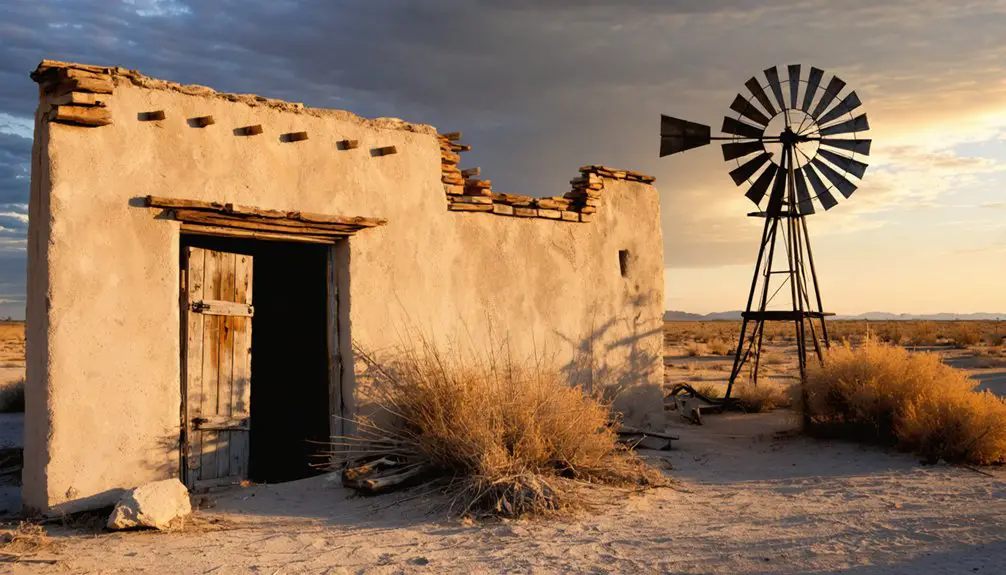
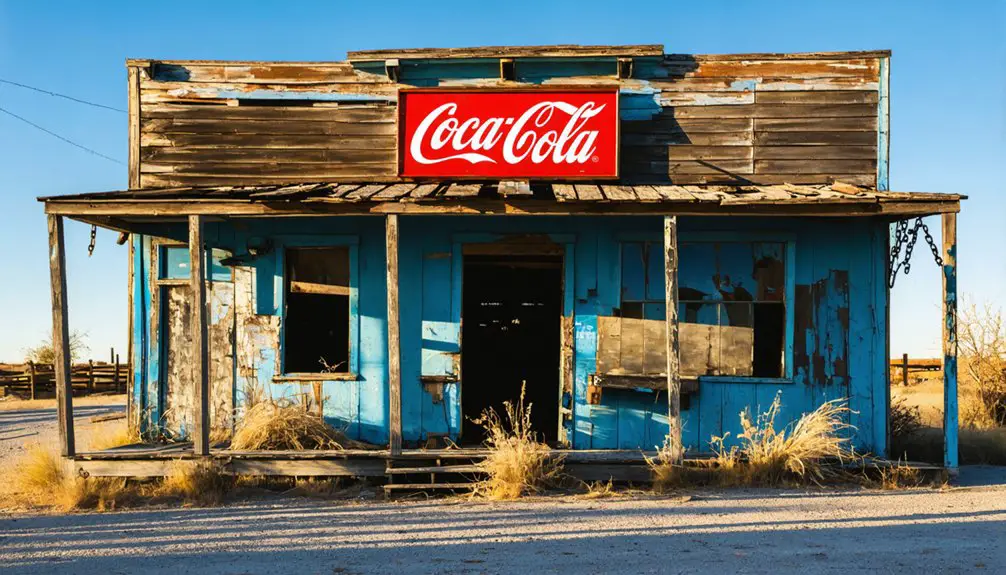
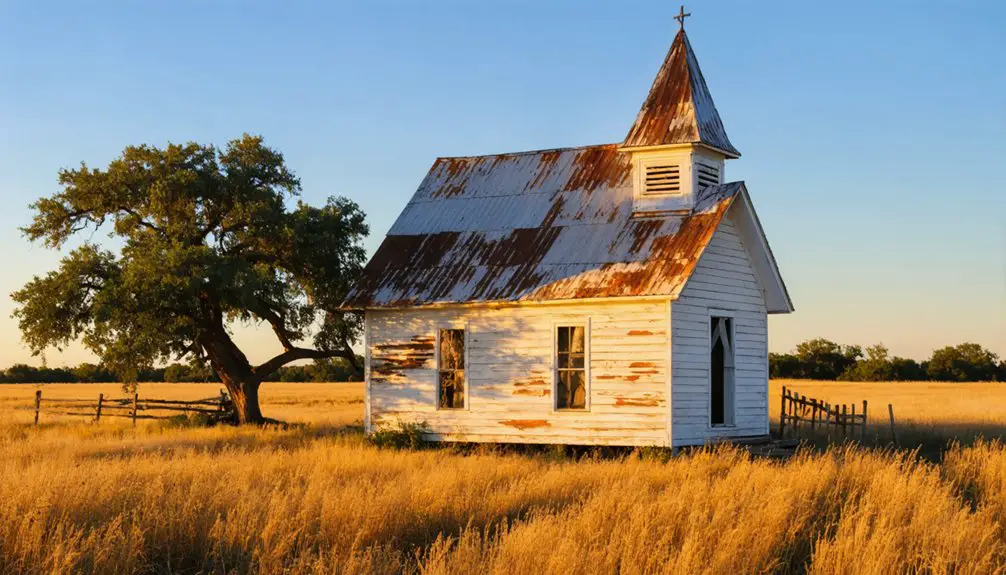
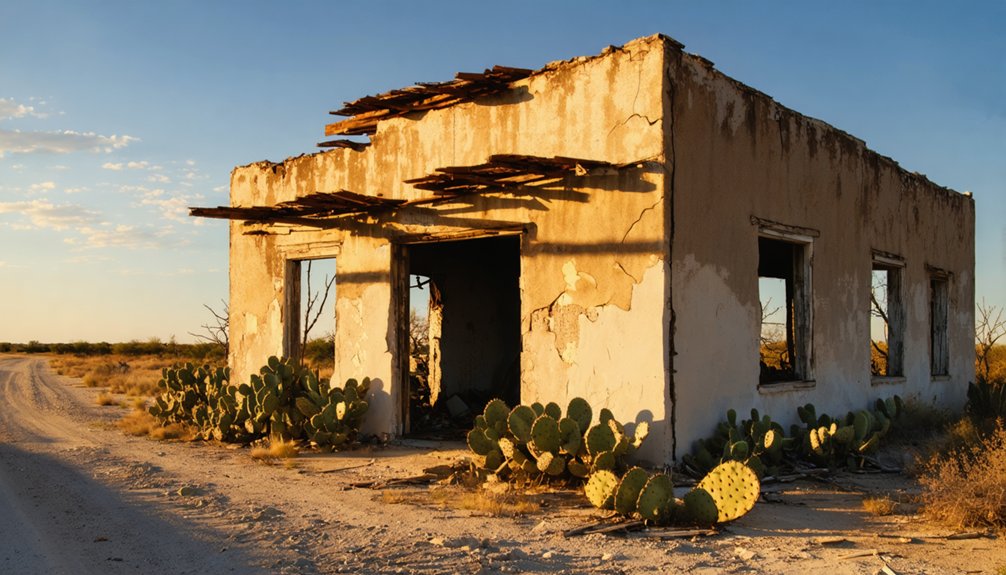
You can wander through the remaining structures and ruins, where crumbling walls and weathered foundations of former commercial buildings and homes still tell the story of a once-thriving community of up to 2,500 residents.
The contrast between what these structures once were and what they’ve become makes Catarina one of West Texas’s most compelling and unfiltered ghost town experiences.
Boot Hill Cemetery Exploration
Wandering through Catarina, you’ll find the remnants of a town that once bustled with over a thousand residents now quietly surrendering to the Chihuahuan Desert.
The Boot Hill Cemetery stands as one of the most compelling stops, connecting you directly to the cemetery history of this faded West Texas settlement. Boot Hill cemeteries earned their name from those who “died with their boots on,” and Catarina’s burial ground honors that frontier tradition.
Walking among the weathered markers, you’ll glimpse burial traditions that reflect the hardships early settlers endured. Each grave tells a story of lives shaped by drought, economic struggle, and isolation.
Bring water, wear sturdy boots, and let the silence speak. This cemetery isn’t preserved for tourists — it’s preserved by time itself.
Standing Structures And Ruins
Beyond the cemetery’s weathered markers, 3 distinct types of remnants define Catarina’s architectural landscape: crumbling commercial storefronts, collapsed residential structures, and skeletal infrastructure that once supported a thriving community of over a thousand residents.
You’ll wander through spaces where a functioning bank, grocery stores, and lumber company once drove daily commerce. Each deteriorating wall carries architectural significance, revealing construction techniques and materials authentic to early 20th-century Texas settlement.
Unlike restored tourist destinations, Catarina’s raw, unfiltered decay demands your imagination fill the gaps.
Historic preservation here isn’t institutional—it’s natural stillness protecting what remains. You’re free to photograph cracked facades, trace foundations with your footsteps, and experience genuine frontier history without guided tours or admission fees interrupting your exploration.
This abandoned landscape belongs entirely to your curiosity.
Is Catarina Open to Visitors and What’s Off-Limits?
How open is Catarina to curious travelers? You’re free to explore this forgotten West Texas settlement through self-guided walking tours, wandering among ruins at your own pace.
There’s no admission fee, no ticket booth, and no tour guide controlling your experience.
No gates. No fees. No guides telling you where to look or how long to linger.
That said, follow basic visitor guidelines to protect both yourself and the site. Safety precautions matter here — deteriorating structures are genuinely unstable, so avoid entering buildings that look compromised.
Respect any posted private property boundaries, since some surrounding land belongs to ranchers.
Don’t remove artifacts or disturb the cemetery grounds. Leave everything exactly as you found it so future explorers enjoy the same authentic experience.
Catarina rewards respectful visitors with genuine solitude and unfiltered history — treat it accordingly.
When to Visit Catarina and What to Bring
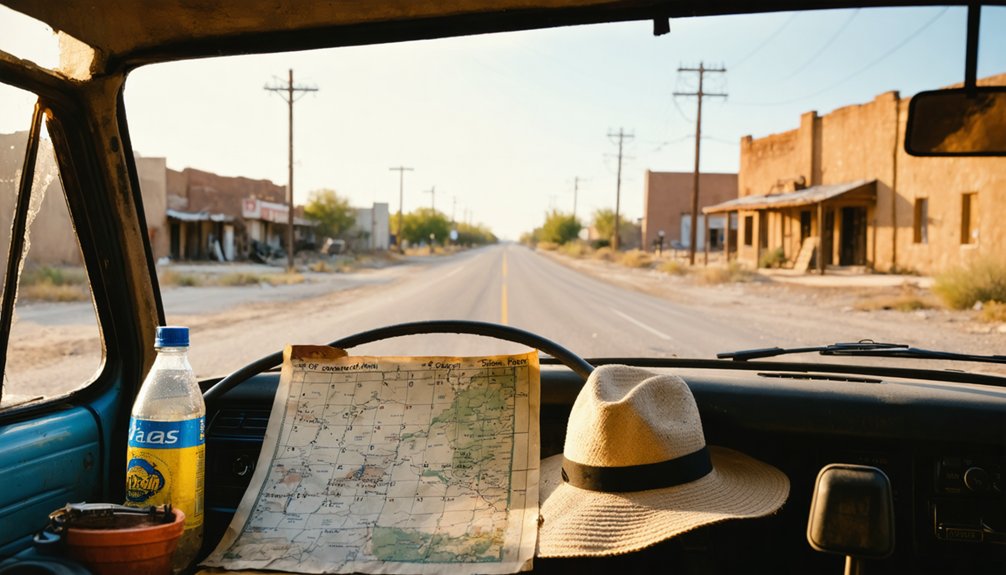
You’ll want to plan your trip to Catarina during the cooler fall and winter months, since West Texas summers in the Chihuahua Desert can be brutally hot and unforgiving.
Pack plenty of water, snacks, sunscreen, and a first aid kit, as you won’t find any commercial services or conveniences once you’re out there.
Cell coverage is spotty at best, so download offline maps, charge your devices, and make sure your tank is full before you leave Carrizo Springs.
Best Months To Visit
When should you plan your trip to Catarina? The best season to visit falls between October and March, when temperatures drop to comfortable levels across the Chihuahua Desert.
You’ll want ideal weather for walking through ruins and photographing abandoned structures, and West Texas summers simply won’t cooperate—heat regularly pushes past 100°F, making outdoor exploration genuinely miserable.
November through February offers the sweet spot, delivering crisp mornings and mild afternoons perfect for unhurried exploration.
Spring can work if you’re visiting early in the season, though temperatures climb quickly by April.
Avoid summer completely unless you’re experienced with extreme desert conditions.
Planning around cooler months means you’ll spend more time exploring Catarina’s haunting landscape and less time retreating to your vehicle for air conditioning.
Essential Packing List
Packing smart for Catarina means addressing three non-negotiable realities: extreme isolation, unpredictable desert conditions, and zero commercial support once you arrive. Your packing essentials determine whether this adventure stays liberating or turns dangerous.
Before leaving civilization behind, confirm you’ve loaded:
- Water — carry more than you think you’ll need, at least one gallon per person daily
- Navigation tools — download offline maps since cell coverage disappears quickly in this remote terrain
- Emergency supplies — first aid kit, jumper cables, and extra fuel for those unforgiving dirt county roads
These safety tips aren’t optional suggestions — they’re your lifeline. Catarina rewards prepared travelers with genuine solitude and raw historical discovery, but she doesn’t forgive carelessness.
Pack accordingly and enjoy every abandoned corner freely.
What Else to Explore Near Catarina on the Same Trip
Since Catarina sits within striking distance of some of West Texas’s most compelling destinations, it makes sense to bundle your visit into a broader regional road trip.
The Big Bend region offers dramatic desert landscapes just a few hours south, while Carrizo Springs provides a convenient resupply stop before you push deeper into the backcountry.
Big Bend’s dramatic desert landscapes reward those willing to push a few hours south into true backcountry territory.
You’ll also find other ghost town attractions scattered throughout Dimmit County, each carrying its own forgotten story worth uncovering.
Nearby historical sites connected to early Texas settlement reveal how communities once thrived, then quietly disappeared across this rugged terrain.
Linking these stops together transforms a single afternoon detour into a genuinely immersive journey through West Texas history, giving you maximum freedom to explore on your own terms and timeline.
Frequently Asked Questions
What Caused Catarina’s Population to Drop so Dramatically After 1929?
You’ll find that water shortages, marketing failures, and the Great Depression drove Catarina’s economic decline, triggering massive population migration — watching the town shrink from 2,500 thriving residents to just 592 desperate souls by 1931.
How Did Catarina, Texas Get Its Unusual Name?
Catarina’s name origin ties to a fascinating piece of town history — you’ll find it’s possibly named after a Mexican woman killed by Indians in the area, dating back to at least 1778.
Were There Any Mining Operations Connected to Catarina’s Economic History?
You won’t find direct mining operations tied to Catarina’s story, but mining’s significance elsewhere in West Texas created economic impact that rippled through the region, worsening Catarina’s vulnerability when those industries collapsed during the Great Depression.
How Many People Still Lived in Catarina as Recently as 1990?
By 1990, you’ll find Catarina’s demographics had dwindled to just 45 residents — a stark indication of its historical significance. This dramatic population collapse confirms the theory that economic hardship truly hollowed out this once-thriving frontier community.
Did Catarina Ever Have a Bank or Established Financial Institution?
Yes, you’ll discover Catarina’s impressive bank history firsthand! By 1929, this thriving town boasted an established bank, leaving a remarkable financial legacy alongside grocery stores, a lumber company, and a bakery serving thousands of residents.
References
- https://www.youtube.com/watch?v=BoQlQniHRNU
- https://www.youtube.com/watch?v=xfkTFb3Izpk
- https://middlejourney.com/road-trip-terlingua-the-texas-ghost-town-by-big-bend/
- https://www.traveltexas.com/articles/post/spooky-roadtrip/
- https://www.texasescapes.com/MikeCoxTexasTales/259-Catarina-Texas-Ghost-Town-and-Ghost-Hotel.htm
- https://forum.expeditionportal.com/threads/north-texas-ghost-town-tour-daycation.172505/
- https://texashighways.com/travel/the-quest-to-resurrect-a-ghost-town/