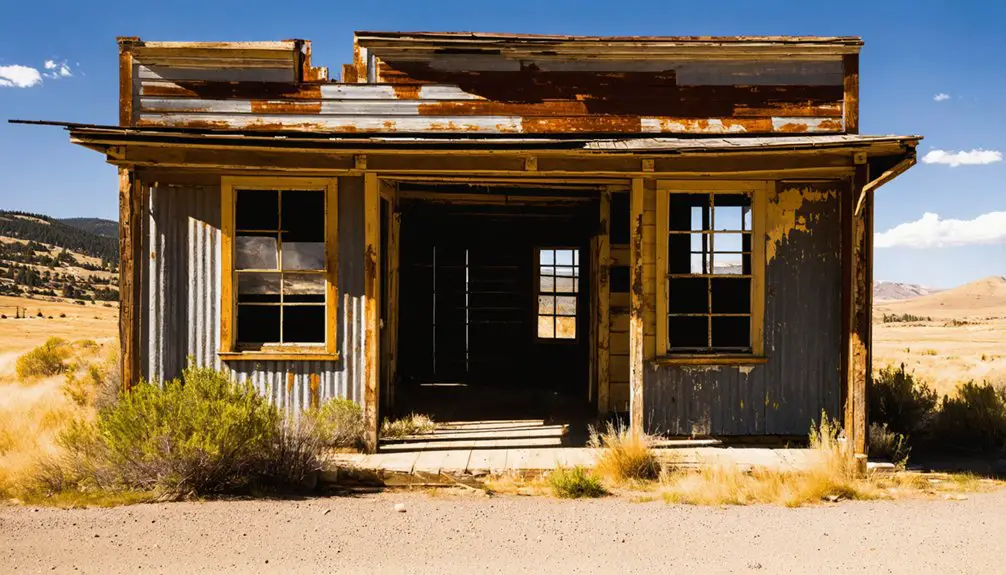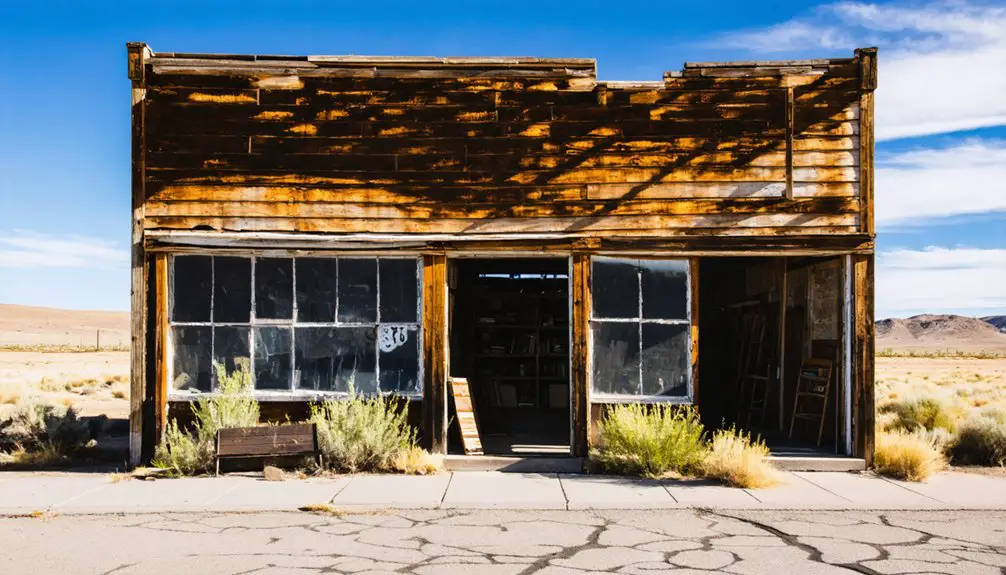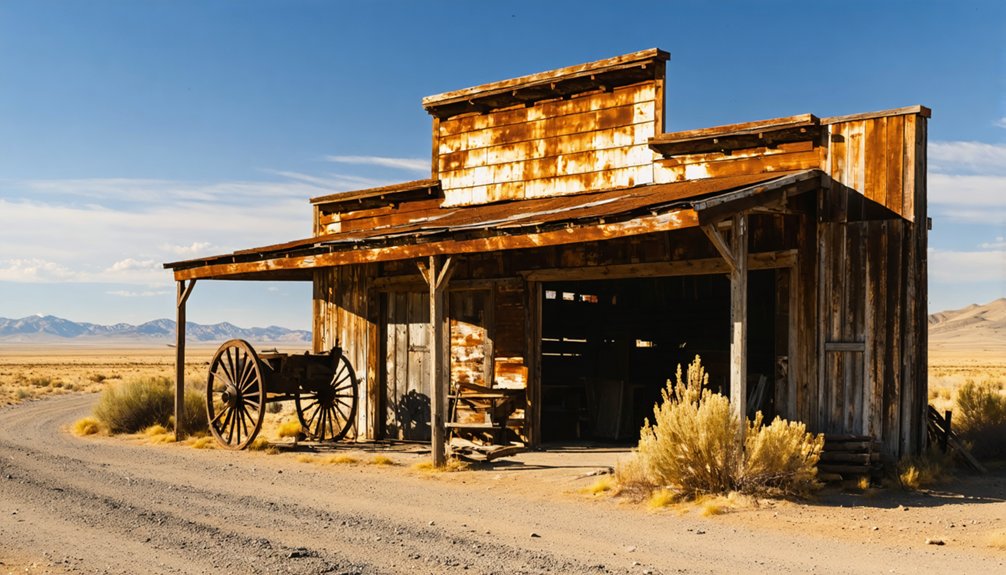
Planning a ghost town road trip to Horse Heaven, Oregon, means heading roughly 46 miles east of Madras into Jefferson County’s high desert, climbing to 3,150 feet. This forgotten settlement once buzzed with mercury miners and nearly 100 residents before a 1944 fire and mine closure left it silent. You’ll need a capable vehicle, since unpaved roads get rough. The full story of how this wild, contaminated outpost rose and fell is worth discovering.
Key Takeaways
- Horse Heaven is a ghost town in Jefferson County, Oregon, located approximately 46 miles east of Madras at 3,150 feet elevation.
- The town declined after a 1944 fire destroyed the mercury mine’s furnace and power plant, with the post office closing in 1946.
- Access requires permission from the private landowner; trespassing carries legal penalties and unauthorized entry is strictly prohibited.
- The site is a Superfund location with mercury and arsenic contamination; mine viewing is only permitted through the fence.
- Reach Horse Heaven via Highway 97 through Queen, Oregon; unpaved roads can become impassable after rainfall, so prepare accordingly.
What Is Horse Heaven, Oregon?
Horse Heaven is a ghost town tucked into the high desert landscape of Jefferson County, Oregon, sitting at 3,150 feet elevation roughly 46 miles east of Madras.
Once home to nearly 100 residents, this remote settlement earned its evocative name from wild horses that roamed freely, grazing on native grasses and drinking from unfenced springs.
Wild horses once roamed free here, grazing open grasslands and drinking from unfenced springs — giving this forgotten place its name.
Ghost town exploration here means stepping into a layered past — homesteaders carved out lives, a post office operated from 1938 to 1946, and a mercury mine ran at full tilt before a devastating 1944 fire changed everything.
The historical significance runs deep: Horse Heaven was once Oregon’s second-largest mercury producer.
Today, it’s quiet, rugged, and largely forgotten — exactly the kind of place that rewards those willing to venture off the beaten path.
The Mercury Mining History Behind the Ghost Town
Beneath the quiet stillness that defines Horse Heaven today, a surprisingly industrial past pulses just under the surface.
In 1933, Art Champion and Grover Keeton discovered cinnabar ore deposits here, sparking mercury production that began in 1934. Over two years, miners extracted 2,200 flasks using mining techniques refined under Sun Oil Company’s Horse Heaven Mines subsidiary, which took over operations in 1936.
At its peak, the site ranked as Oregon’s second-largest mercury producer, yielding 15,097 total flasks before a devastating 1944 fire destroyed the furnace and power plant.
Historical artifacts from that era still linger nearby, though DEQ and BLM have fenced off the 40-acre site due to mercury and arsenic contamination. You can view the area through the fence, but entry remains strictly prohibited.
What Happened to Horse Heaven Mid-Century?
By the mid-twentieth century, a devastating fire swept through Horse Heaven, erasing most of the buildings and structures that once defined the settlement. The 1944 blaze destroyed the ore-processing furnace, the power plant, and nearly everything tied to the mining legacy that had sustained the community for over a decade.
Cleanup crews salvaged 74 additional flasks of mercury in 1945, but the operation never recovered.
The mid-century decline accelerated quickly after that. When the post office closed in 1946, it signaled the final chapter — most homesteaders had already moved on, and Horse Heaven became the quiet ghost town you can explore today.
What remains are scattered historic structures, fenced mine portals, and a landscape still carrying the weight of its mercury-mining past.
How Horse Heaven Got Its Name
You might wonder how a place ends up with a name like Horse Heaven, and the answer is as vivid as the landscape itself.
Long ago, wild horses roamed freely across the area, grazing on lush native grasses and drinking from unfenced natural springs that made the terrain ideal for thriving herds.
Frank E. Lewis, who served as postmaster in 1946, documented this origin in a letter, confirming that the settlement took its name directly from those horses that once claimed the land as their own.
Wild Horses Roamed Freely
Long before homesteaders ever broke ground here, wild horses roamed this high desert terrain freely, grazing on lush native grasses and drinking from unfenced natural springs.
This wild horse history shaped the land’s identity long before anyone thought to name it.
The horses found everything they needed here — open range, clean water, and space without boundaries.
That spirit of free range grazing defined Horse Heaven perfectly.
When postmaster Frank E. Lewis documented the settlement’s naming origin in 1946, he confirmed what anyone familiar with the area already understood: the land itself earned the name.
Horse Heaven Mountain and Horse Heaven Creek both carry that legacy forward today.
Standing here, you can almost feel the echo of hooves across the high desert plateau.
Postmaster Documents Naming Origin
When Frank E. Lewis, the 1946 postmaster, committed his naming documentation to paper, he preserved something invaluable. His postmaster insights confirmed what locals already knew: this land belonged to horses first.
Lewis documented four key facts explaining the name:
- Wild horses thrived on abundant native grasses
- Unfenced natural springs provided unrestricted water access
- Herds roamed freely across open, unbroken terrain
- The conditions created a genuine paradise for horse populations
That single letter connected the settlement’s identity to its untamed past. Horse Heaven Mountain and Horse Heaven Creek carry that legacy forward today.
You’re not just visiting a ghost town — you’re standing where freedom once had four legs, a mane, and an entire landscape built for roaming.
What Remains at Horse Heaven: Structures, Fences, and the Mine
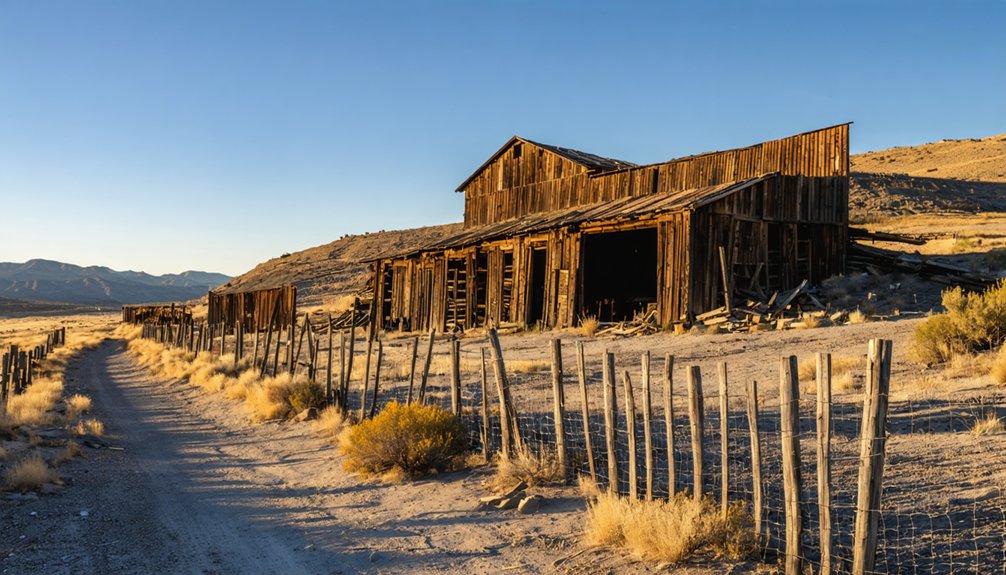
Scattered across roughly 40 acres, what’s left of Horse Heaven tells a fragmented story of boom, fire, and slow decay.
Your structures overview reveals a seasonal residential cabin, weathered outbuildings, and remnants tied to the mining era — though most processing equipment has long since been hauled away.
Fencing details matter here: the entire mine area is fenced off, with viewing permitted only through the fence line. DEQ and BLM have sealed every mine entrance, blocking access to unstable ground and dangerous glory holes beneath your feet.
The entire mine area is fenced off — viewing through the fence line only, every entrance sealed.
Mercury and arsenic contaminate the mine wastes, earning the site a Superfund designation in 2005.
Respect the boundaries — not just because the land is privately owned, but because the hazards here are real, invisible, and unforgiving.
Can You Visit Horse Heaven?
If you’re hoping to visit Horse Heaven, you’ll need to secure express permission from the landowner before setting foot on the property—fences signal private land whether it’s posted or not.
Even with permission, you’d be wise to keep your distance from the old mine site, where mercury and arsenic contamination, unstable ground, and blocked mine portals create serious safety hazards.
The DEQ and BLM have fenced off the mine workings entirely, so your best view of this eerily quiet corner of Oregon history is through the fence itself.
Private Property Access Rules
Horse Heaven sits on privately owned land, so you’ll need express permission from the landowner before setting foot on the property. Respect these property permissions to keep future access possible for everyone:
- Contact the landowner directly before planning your visit — no permission means no entry, regardless of your intentions.
- Recognize unmarked fences as private property boundaries, whether posted signs exist or not.
- Understand trespassing consequences — this isn’t just a courtesy rule; unauthorized entry carries legal penalties.
- Stay outside fenced mine areas — DEQ and BLM have blocked mine entrances, permitting viewing through the fence only.
Honoring these boundaries protects both your freedom and the site’s integrity, ensuring this remarkable slice of Oregon history remains accessible to respectful visitors.
Environmental Safety Hazards
Even if you’ve secured landowner permission, visiting Horse Heaven comes with serious environmental and physical risks you can’t afford to ignore.
The Oregon DEQ designated this abandoned mercury mine a Superfund site after identifying mercury and arsenic in the contaminated soil throughout the roughly 40-acre property. These aren’t abstract dangers — they’re invisible threats lurking beneath your feet.
Beyond toxic ground, the site presents real mining hazards. Glory holes and unstable terrain make trespassing genuinely life-threatening.
The DEQ and BLM have blocked all mine entrances and fenced the perimeter for good reason. You can peer through the fence, but stepping beyond it means risking both your safety and legal consequences.
Respect those boundaries — the freedom to explore starts with making it home alive.
Viewing From The Fence
Technically, yes — you can visit Horse Heaven, but the experience looks nothing like a typical ghost town exploration.
DEQ and BLM have blocked mine entrances and fenced the property, limiting your access to whatever you can observe from the perimeter.
Despite that restriction, the site still carries genuine historical significance worth witnessing.
Here’s what you can realistically do:
- View remaining structures — a seasonal cabin and historic outbuildings are visible from the fence line
- Photograph the landscape — the high desert terrain tells its own story
- Read the land — the 40-acre abandoned mine site reveals its industrial past visually
- Respect boundaries — trespassing carries real legal and physical consequences here
How to Reach Horse Heaven From Madras or Ashwood
Whether you’re starting from Madras or the smaller town of Ashwood, reaching Horse Heaven requires traveling roughly 46 miles east of Madras or about 18 miles from Ashwood, with Highway 97 serving as your primary artery before you shift onto secondary roads.
From there, you’ll head eight miles east of Queen, Oregon, climbing to an elevation of 3,150 feet. The scenic route rewards you with wide-open high desert landscapes that hint at the isolation that once defined this remote settlement.
Keep your expectations realistic, though — roads deteriorating off Highway 97 can get rough. Among Oregon’s ghost town attractions, Horse Heaven demands genuine preparation.
Watch for fences marking private property, and remember you’ll need express landowner permission before you set foot beyond the road.
What Are the Road Conditions Like Driving to Horse Heaven?
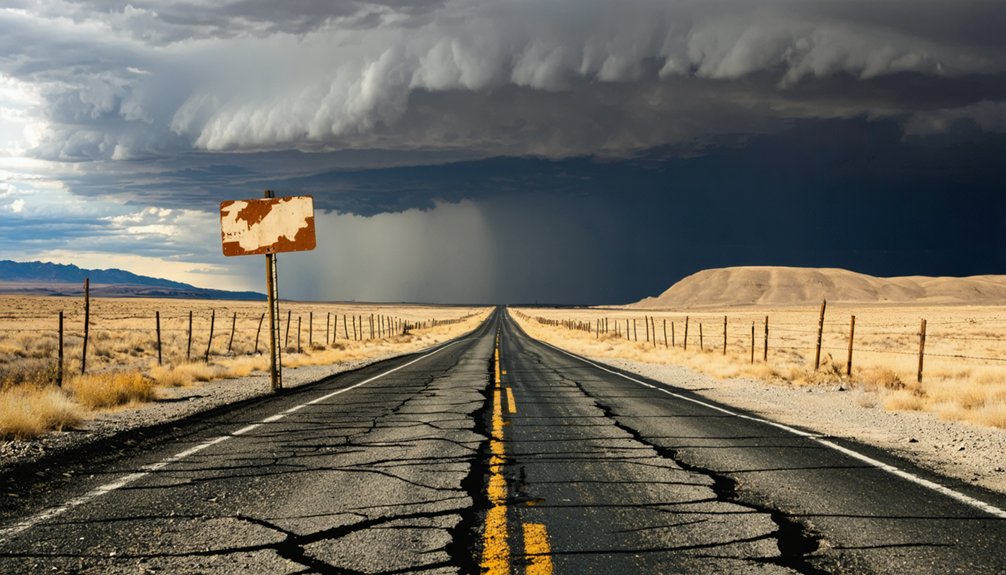
Once you leave Highway 97 behind, road conditions can shift quickly from manageable to genuinely rough. Your road trip into Oregon’s high desert demands preparation before you chase those scenic views.
The moment Highway 97 disappears in your rearview mirror, Oregon’s high desert plays by its own rules.
Watch for these conditions on secondary roads leading to Horse Heaven:
- Unpaved stretches that turn muddy or rutted after rainfall, reducing traction considerably.
- Loose gravel sections that challenge low-clearance vehicles and demand slower speeds.
- Unmarked private property boundaries indicated by fencing, whether posted or not.
- Seasonal deterioration that makes certain routes impassable without a high-clearance or four-wheel-drive vehicle.
Plan accordingly, check weather forecasts before departing, and carry essentials like water, a spare tire, and a physical map.
Cell service won’t save you out here.
Is the Horse Heaven Mine Site Safe to Visit?
Rough roads aren’t the only hazard waiting for you at Horse Heaven — the mine site itself carries serious risks that go well beyond a blown tire or a muddy rut.
Mercury and arsenic contaminate the mine wastes left behind, and unstable ground hides beneath your feet. Glory holes and open mine portals create real collapse dangers for anyone who wanders too close.
The DEQ and BLM have blocked mine entrances and fenced the entire area precisely because trespassing here isn’t just illegal — it’s genuinely dangerous.
Visitor guidelines are straightforward: stay outside the fence and view the site from a safe distance. Following basic safety precautions protects both your health and your freedom to explore Oregon’s forgotten corners without a hazmat incident ruining the adventure.
What to Know Before Visiting Horse Heaven
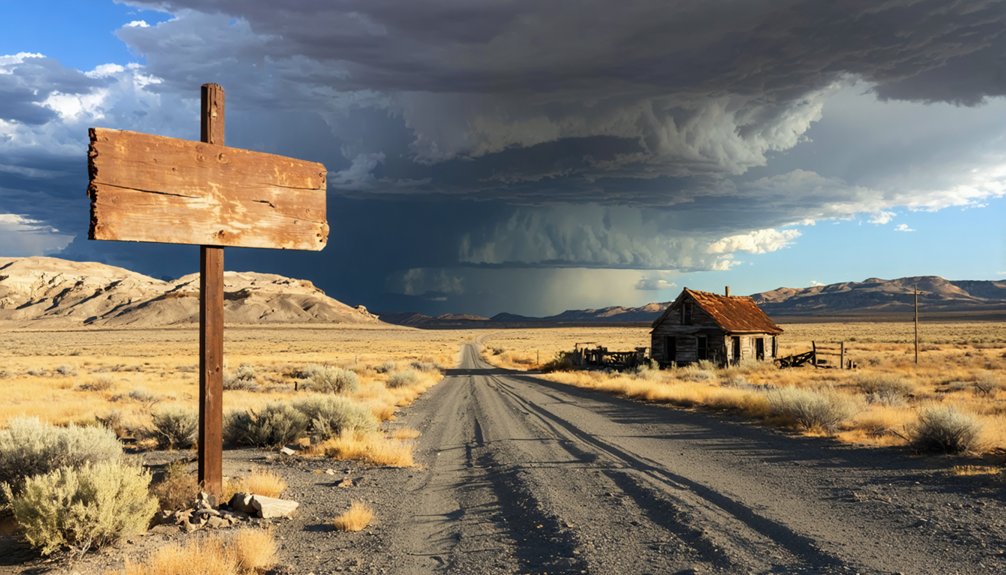
If you’re planning a trip to Horse Heaven, you’ll want to take Highway 97 before shifting to secondary roads that can turn questionable depending on conditions.
The ghost town sits on private property, so you’ll need express permission from the landowner before setting foot there — fences mark those boundaries whether the land is posted or not.
Keep in mind that the abandoned mercury mine is fenced off entirely, with DEQ and BLM having blocked all mine entrances, so viewing through the fence is your only option on that front.
Getting There Safely
Planning a visit to Horse Heaven requires some groundwork before you ever leave home. This ghost town road trip demands respect for both the land and its owners, so come prepared.
- Contact the landowner for express permission before arrival — trespassing isn’t the freedom you’re looking for.
- Research road conditions off Highway 97; secondary roads can deteriorate quickly, especially after weather.
- Know your coordinates: 44°42′56″N 120°30′26″W, elevation 3,150 feet, approximately 46 miles east of Madras.
- Respect all fencing — whether posted or not, fenced land signals private property.
The mine site itself is DEQ-regulated and physically dangerous. Glory holes and unstable ground make trespassing genuinely life-threatening.
View the remnants through the fence and let the landscape tell its story.
Rules And Restrictions
Visiting Horse Heaven means playing by a strict set of rules — and for good reason. The property is privately owned, so you’ll need express permission from the landowner before setting foot on the land.
Don’t assume silence means consent — fences signal private property whether posted or not.
The abandoned mercury mine presents serious access challenges beyond legal ones. DEQ and BLM have blocked mine entrances and fenced the area entirely, permitting viewing only through the fence.
Mercury and arsenic contamination, unstable ground, and dangerous glory holes make trespassing genuinely life-threatening — not just illegal.
Practice smart visitor etiquette: respect every boundary, stay on permitted paths, and never enter blocked structures.
Freedom to explore starts with honoring the rules that keep wild places accessible for everyone.
Frequently Asked Questions
Who Were the Original Homesteaders That First Settled in Horse Heaven?
The records don’t name the original homesteaders individually, but you’ll uncover compelling homesteader stories of resilient settlers who faced brutal settlement challenges in this remote Oregon wilderness, only to abandon their dreams by 1946.
What Type of Mercury Products Were Made From Horse Heaven’s Cinnabar Ore?
The records don’t specify what mercury products came from Horse Heaven’s cinnabar extraction. You’ll find that mercury production yielded 15,097 flasks total, but the specific product types refined from that raw ore aren’t documented in available historical records.
Are There Any Guided Tours Available for Visiting Horse Heaven Ghost Town?
No guided ghost tours exist for Horse Heaven’s historical significance. You’ll need the landowner’s express permission to visit this private property, where DEQ and BLM have blocked mine entrances, allowing only fence-line viewing.
What Wildlife Currently Inhabits the Horse Heaven Ghost Town Area Today?
Imagine spotting a wild deer grazing freely where miners once worked. The knowledge base doesn’t detail specific wildlife sightings or habitat diversity at Horse Heaven today, but you’d likely encounter species thriving in Oregon’s high desert ecosystem.
How Does Horse Heaven Compare to Other Oregon Ghost Towns in Size?
Horse Heaven’s historical significance shines despite its modest size — you’ll find it once held around 100 souls. Population trends show it’s smaller than many Oregon ghost towns, yet its mercury mining legacy makes it remarkably compelling.
References
- https://en.wikipedia.org/wiki/Horse_Heaven
- https://kids.kiddle.co/Horse_Heaven
- https://www.bendsource.com/outside/ghost-towns-2425336/
- https://www.youtube.com/watch?v=ts2WErDv5wk
- https://maps.roadtrippers.com/us/or/points-of-interest/horse-heaven-or
- https://traveloregon.com/things-to-do/culture-history/ghost-towns/horse-heaven/
- https://caspercollege.cvlcollections.org/items/show/9744
- https://projects.itrcweb.org/miningwaste-guidance/cs11_horse_heaven.htm
- https://onda.org/regions/john-day-river-basin/hhcr/