Planning a ghost town road trip to Clarion, Utah means venturing into open desert to uncover a remarkable story of Jewish immigrants who once farmed this harsh land. You’ll want to visit in spring or fall, pack essential survival gear, and budget around $500–$1,000 for a 5–7 day loop. Standard GPS won’t always guide you here, so bring physical maps and accurate coordinates. Stick around — there’s much more to uncover before you hit the road.
Key Takeaways
- Visit in spring (March–May) or fall (September–November) to avoid extreme desert heat exceeding 100°F during summer months.
- Budget $500–$1,000 per person for a 5–7 day road trip covering gas, lodging, and food.
- Bring physical maps, a compass, and accurate GPS coordinates, as standard navigation apps may lead astray on unmarked roads.
- Pack essential survival gear including extra water, a first-aid kit, flashlight, and portable phone charger before departing.
- Combine Clarion with nearby ghost towns like Grafton, Frisco, and Thistle to maximize your road trip experience.
Why Clarion, Utah Is Unlike Any Ghost Town in the West?
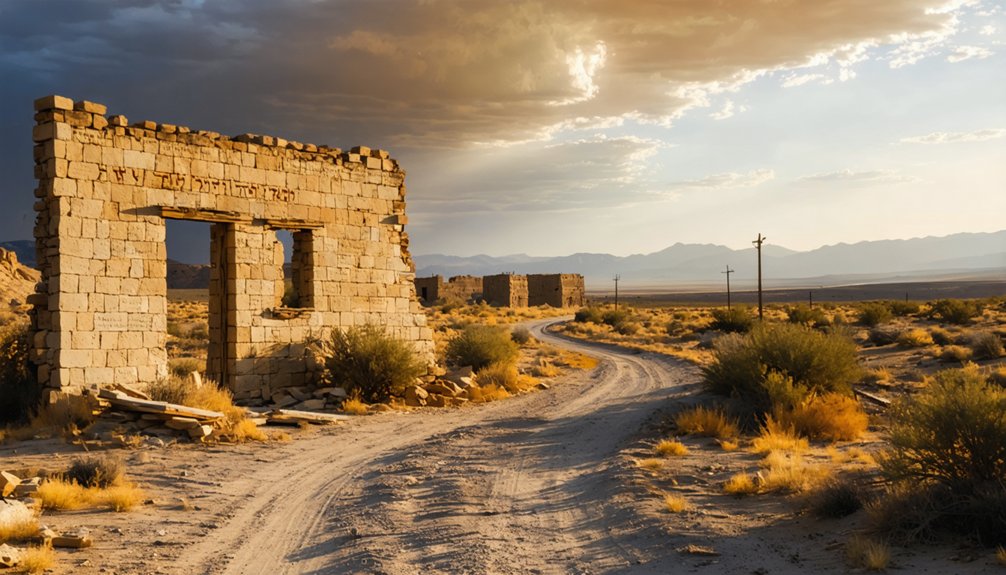
What sets Clarion apart from every other ghost town in the American West isn’t crumbling saloons or abandoned mineshafts — it’s the story behind its silence. In the early 1900s, Jewish immigrants carved a settlement into Utah’s unforgiving desert, chasing agricultural dreams against impossible odds. That’s Clarion’s Significance — not gold rushes or outlaws, but resilience meeting harsh reality.
You won’t find dramatic ruins here. No structures survived. What remains is invisible yet powerful: a Unique History embedded in the cracked earth and scattered historical records.
When you stand on that flat, windswept terrain, you’re standing where a community dared to build something entirely their own. That kind of story doesn’t need a monument. It speaks through the silence itself — and that’s exactly what makes Clarion extraordinary.
When Should You Visit Clarion, Utah?
Clarion’s silence hits differently depending on when you show up. Time your visit wrong, and the desert becomes your enemy. The best seasons are spring (March–May) and fall (September–November), when temperatures stay manageable and the landscape actually rewards exploration.
Weather considerations matter more here than at most destinations. Summer heat regularly surpasses 100°F, turning a simple hike into a survival situation. Winter nights drop below freezing, creating a different kind of harsh. Neither extreme leaves room for error when you’re miles from help.
The desert doesn’t negotiate — one bad forecast can turn adventure into emergency.
Spring offers mild days and occasional wildflowers breaking through the sandy terrain. Fall delivers cooler air and stunning light for photography.
You’re chasing freedom out here, so plan smart — the desert doesn’t forgive poor timing.
How Do You Actually Find and Reach the Clarion Ghost Town Site?
Getting to Clarion means traversing unmarked rural desert roads where standard GPS apps will often lead you astray.
You’ll want to load accurate coordinates before you leave cell range, since no official signage marks the route and off-road paths replace conventional roads near the site.
Mark your waypoints carefully on a reliable map or GPS device, and always cross-reference with a physical compass to stay oriented in the flat, featureless terrain.
Navigating Rural Desert Roads
Reaching Clarion isn’t as simple as punching an address into your GPS—you’ll need to prepare well before you leave pavement behind.
Desert navigation demands more than a charged phone; it demands a physical map, a compass, and sharp situational awareness. Rural routes out here shift with the wind, and dust storms can erase landmarks within minutes.
Your last reliable stretch of pavement ends at West Desert Road. From there, you’re threading through flat, sandy terrain dotted with rock formations and zero signage.
Mark your GPS coordinates before you leave civilization, but don’t trust them blindly—accuracy drops fast in remote desert terrain.
Drive a high-clearance vehicle, keep your fuel tank full, and tell someone your exact itinerary. The desert rewards prepared travelers and punishes careless ones.
GPS And Coordinate Prep
Finding Clarion takes 3 critical steps before you ever leave home: research the coordinates through Utah state archives or ghost town databases, cross-reference them against satellite imagery, and load everything onto an offline-capable GPS app like Gaia or OnX.
GPS accuracy matters enormously here because standard navigation tools often misplace unmarked desert sites. You’ll want to verify coordinate systems—confirm whether your source uses decimal degrees or degrees-minutes-seconds, then convert consistently across every device you’re carrying.
Save multiple waypoints, not just the destination: trailheads, road forks, and emergency exit routes all deserve their own pins. Cell service disappears fast in this region, so downloaded offline maps aren’t optional—they’re essential.
Double-check everything the night before departure, because once you’re in the open desert, correction opportunities are few.
What Gear Do You Need for a Safe Desert Ghost Town Visit?
Before you head out to Clarion, you’ll need to pack essential survival gear, including a portable phone charger, flashlight, compass, and a detailed map, since GPS coordinates for the site can be unreliable.
You must carry all your own water and food, as no permanent water sources exist anywhere near the site and summer temperatures regularly top 100°F.
Solid navigation tools aren’t optional out here — they’re what stand between you and a dangerous situation in an unmarked, remote desert.
Essential Survival Gear
Surviving a desert ghost town visit like Clarion demands the right gear—there’s no margin for error when you’re miles from the nearest town with no services in sight.
Your survival kits should cover every core desert essentials category: hydration, navigation, and emergency signaling.
Carry at least one gallon of water per person daily—more during summer months when temperatures blast past 100°F.
Pack a compass and physical map since GPS coordinates around Clarion often run inaccurate. A portable phone charger keeps your devices alive when cell signals finally appear.
Your flashlight, emergency whistle, and first-aid kit aren’t optional accessories—they’re non-negotiables.
Dust storms hit without warning, so protective eyewear and a face covering belong in your bag too.
Pack smart, move free.
Navigation Tools Needed
Getting your survival gear sorted is only half the battle—knowing exactly where you’re going in a featureless desert is the other half. Clarion sits unmarked, unsigned, and stubbornly invisible to standard GPS accuracy, so don’t rely solely on your phone’s map app.
Download offline maps before you leave cell range. Carry a physical topographic map alongside a reliable compass—technology fails, paper doesn’t.
Pre-load your GPS device with verified coordinates from trusted historical sources, then cross-reference them against your route mapping plan before departing.
Mark waypoints at every key turn, especially where paved roads shift to off-road paths. The flat, sandy terrain offers zero landmarks, making it dangerously easy to drift off course.
Control your navigation, control your freedom.
Water And Food Supplies
With no permanent water sources anywhere near Clarion, you’re entirely responsible for every drop you’ll drink, cook with, and use for emergencies. Carry at least one gallon per person per day — more during summer when temperatures exceed 100°F.
Store water in sealed, durable containers that won’t crack under desert heat.
Smart food storage matters just as much. Pack non-perishables like nuts, jerky, and energy bars in airtight containers that resist heat and dust.
Avoid foods requiring refrigeration; there’s no power and no relief from the sun out here.
Use a hard-sided cooler with ice packs for perishables if you’re traveling short-term.
Label everything clearly, keep supplies organized, and never assume a nearby town will have what you need.
Self-sufficiency isn’t optional — it’s survival.
How to Plan Your 5–7 Day Clarion, Utah Road Trip
Planning a 5–7 day road trip to Clarion, Utah takes some upfront work, but it’s worth every mile. Start by mapping your loop through nearby ghost towns like Grafton, Frisco, and Thistle, spacing each leg at roughly 3–4 hours of driving.
Budget $500–$1,000 per person for gas, lodging, and food.
Travel tips: target spring or fall travel to dodge brutal desert heat. Book accommodations early since rural options are limited. Among your packing essentials, prioritize extra water, a compass, paper maps, a flashlight, and a portable phone charger — GPS signals aren’t reliable out here.
Secure landowner permission before visiting Clarion itself. Pre-load GPS coordinates for each stop.
With solid prep, you’ll move freely through Utah’s desert history without hitting unnecessary snags.
Which Ghost Towns Near Clarion Are Worth the Detour?
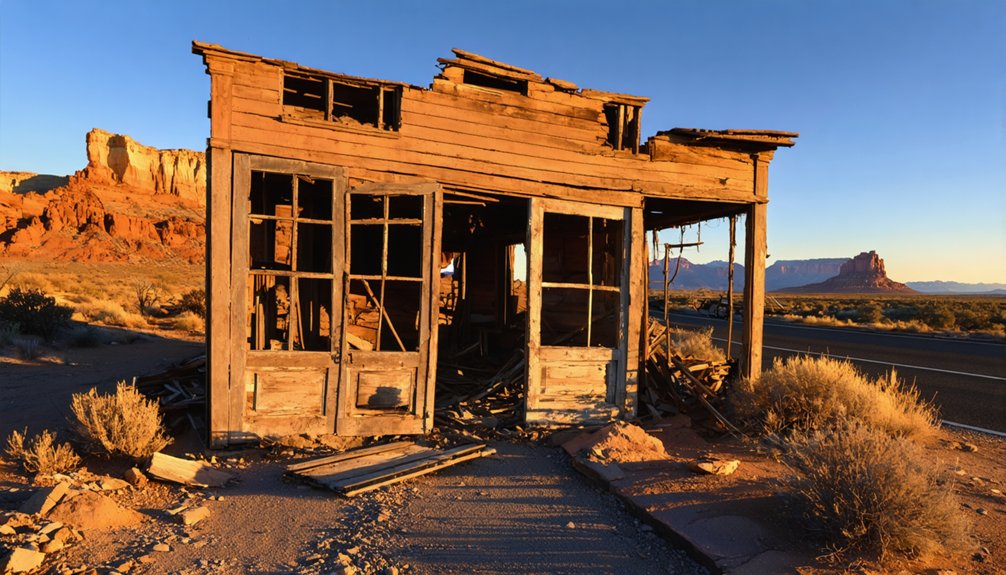
Once your itinerary’s locked in, the ghost towns surrounding Clarion deserve just as much attention as the destination itself. Each nearby historical site adds a distinct layer to your road trip experience.
Grafton, just 40 miles northeast, is one of Utah’s best-preserved ghost town attractions, offering standing structures and cinematic desert scenery.
Head 60 miles northwest to Frisco for raw, unfiltered mining history scattered across an open landscape. If you’re drawn to unusual stories, Thistle — 70 miles east — sits partially submerged, a flooded railroad town frozen in time.
Silver Reef, 110 miles southeast, rounds out your journey with 19th-century character and accessible trails.
Each detour rewards curiosity without demanding excessive backtracking, keeping your freedom-focused itinerary tight, purposeful, and genuinely unforgettable.
How Much Does a Clarion, Utah Road Trip Cost?
Budgeting for a Clarion road trip isn’t complicated, but it does require honest planning across every expense category. Your travel budget should account for gas, lodging, food, and gear. Expect a full cost breakdown to fall between $500 and $1,000 per person for a 5–7 day trip covering 600–800 miles.
Gas will consume the largest share, especially across rural desert stretches. Budget for two to three tanks depending on your vehicle’s efficiency.
Lodging in nearby towns like Cedar City or Milford runs $80–$150 per night. Food costs stay manageable if you pack meals for remote days.
Don’t overlook gear expenses — extra water, a compass, and a portable charger are non-negotiable. Plan smart, spend intentionally, and you’ll move freely through Utah’s open desert without financial stress.
Frequently Asked Questions
Is Clarion, Utah Currently Listed on Any Official Historical Preservation Registers?
Like sand slipping through fingers, Clarion’s historical significance hasn’t been captured on official preservation registers. You won’t find active preservation efforts protecting this forgotten settlement, so you’ll need local archives to uncover its fragmented story.
Were Any Artifacts From the Original Clarion Settlement Preserved in Museums?
You won’t find many preserved artifacts from Clarion’s original settlement in museums, as its historical significance remains largely undocumented. Artifact discovery at this site is rare, but local Utah archives hold brief, fascinating historical records.
Can Visitors Camp Overnight Near the Clarion Ghost Town Site Legally?
You’ll need to research local camping regulations carefully before pitching a tent near Clarion, as it’s private property. Secure overnight permits and landowner permission first, or you’re risking trespassing charges that’ll derail your adventure.
Are Guided Tours of Clarion, Utah Available Through Any Local Organizations?
You’ll search a million miles before finding official guided tours of Clarion! No local organizations currently offer guided exploration, so you’ll need to uncover its local history independently, armed with research and an adventurous spirit.
What Languages Did the Original Jewish Settlers of Clarion Primarily Speak?
The records don’t confirm the exact languages, but you’d likely encounter deep Yiddish influence among Clarion’s settlers. Their rich cultural heritage suggests they spoke Yiddish, Hebrew, and Eastern European languages, reflecting their immigrant roots.
References
- https://www.islands.com/1925370/abandoned-colony-clarion-utah-desert-plains-built-plows-promise-perserverance/
- https://www.visitutah.com/things-to-do/history-culture/ghost-towns
- https://www.youtube.com/watch?v=P_Ep1sMRsE0
- https://www.tripadvisor.com/Attractions-g28965-Activities-c47-t14-Utah.html
- https://www.onlyinyourstate.com/trip-ideas/utah/road-trip-ut-ghost-towns
- https://www.onlyinyourstate.com/trip-ideas/utah/abandoned-places-road-trip-ut
- https://x.com/i/grok/share/ABEvnMY8NC4da16h0ndNJqylY
- https://expeditionutah.com/ghosttowns/
- https://www.youtube.com/watch?v=05MpUor2KC8
- https://en.wikipedia.org/wiki/List_of_ghost_towns_in_Utah