Planning a ghost town road trip to Copper Falls Mine means trading paved comfort for birch-shadowed foundations and century-old silence. You’ll trace U.S. 41 through the Keweenaw Peninsula, where copper once fueled entire communities that nature has since reclaimed. Bring sturdy boots, respect posted warnings, and pair the stop with Central Mine, Delaware Mine, and Quincy Mine nearby. The ruins reward curiosity — and there’s far more to this forgotten landscape than first appears.
Key Takeaways
- Copper Falls Mine sits along U.S. 41 on the Keweenaw Peninsula, where foundations consumed by birch trees reward curious explorers willing to venture off the beaten path.
- Hidden shafts, unstable ground, and deteriorating structures pose serious safety risks, so always observe posted signs and avoid restricted or private property areas.
- Fall visits offer stunning color-draped ruins, though each season provides a uniquely compelling perspective on the site’s weathered industrial remnants.
- Pair your visit with nearby stops like Central Mine, Delaware Mine, and Quincy Mine to fully trace copper country’s dramatic boom-and-bust history.
- Leave artifacts untouched and foundations undisturbed, as preserving the site’s historical context honors its legacy and supports ongoing ecosystem restoration.
Copper Falls Mine: Ghost Town or Roadside Ruin?
What qualifies a place as a true ghost town versus a forgotten roadside ruin? At Copper Falls Mine, that line blurs deliberately. You won’t find a preserved main street or interpretive signage around every corner.
Instead, you’ll encounter foundations swallowed by birch trees, weathered remnants half-reclaimed by the Upper Peninsula’s relentless forest, and a silence that carries real weight.
That’s precisely where the ghost town allure lives — in what’s missing as much as what remains. Copper Falls isn’t curated. It’s raw, and that rawness rewards the curious traveler willing to slow down and look carefully.
The site’s mining legacy connects you to Michigan’s first great copper boom, a story written in stone foundations and collapsed structures that no museum quite replicates.
Michigan’s first copper boom left its mark here — not in museum glass, but in stone and silence.
This is freedom’s kind of history.
Why Keweenaw’s Copper Boom Left So Many Ghost Towns Behind
Before the forest crept back in, the Keweenaw Peninsula hummed with ambition. Copper mining didn’t just pull ore from the ground — it built entire worlds. Settlement patterns spread fast, driven by boom-era money and industrial optimism.
Then the ore thinned, prices dropped, and economic decline hit hard.
Community abandonment followed swiftly:
- Company towns lost their purpose when mines shuttered
- Workers and families moved on, leaving foundations behind
- Infrastructure crumbled without maintenance or investment
- Nature quietly reclaimed streets, yards, and mill sites
What’s left carries real historical significance. You’re not looking at random ruins — you’re reading industrial heritage written in stone, slag, and silence.
The Keweenaw’s ghost towns exist because ambition once burned hot here, and nothing sustains a town once that fire goes out.
What You’ll Actually See at Copper Falls Mine
When you pull off the road at Copper Falls Mine, you’re not stepping into a tidy preserved village — you’re stepping into quiet, weathered remnants that time has half-swallowed.
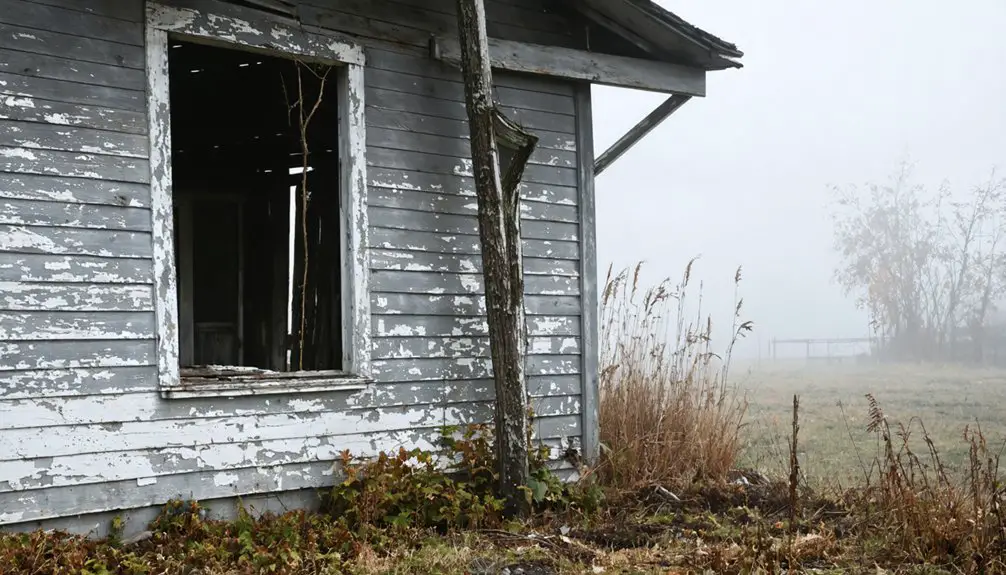
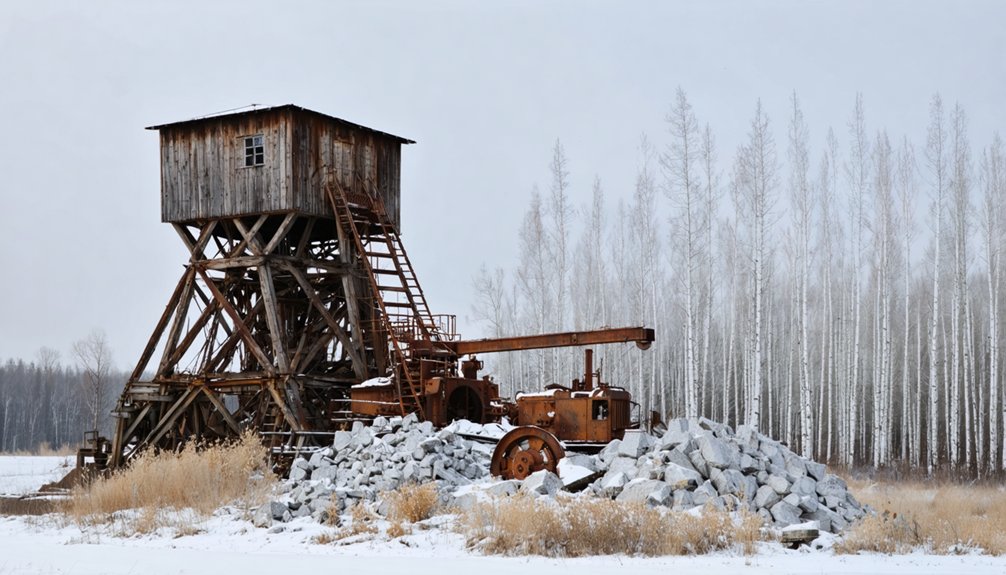
Foundations push up through leaf litter, and crumbling structural fragments hint at the buildings that once housed miners and their work.
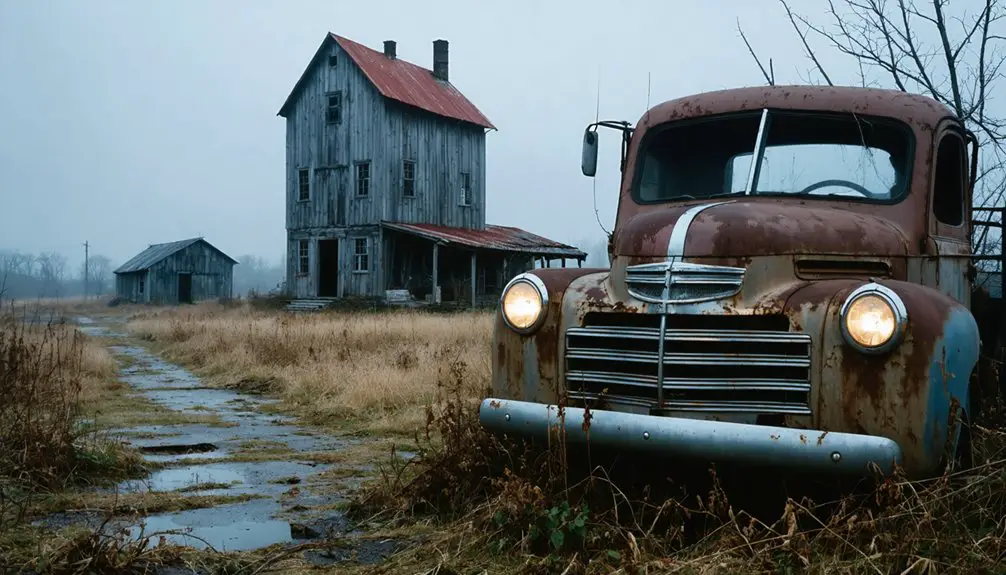
The forest has been doing its slow, patient work here, pulling the site back into the tree line with each passing decade.
Ruins And Standing Remnants
Few ghost towns in Michigan’s Upper Peninsula deliver a sense of industrial melancholy quite like Copper Falls Mine.
Your ruins exploration here uncovers layers of historical significance hiding beneath decades of forest regrowth. What remains tells the story quietly but powerfully.
You’ll likely encounter:
- Stone foundations half-swallowed by moss and birch roots
- Collapsed timber structures weathered gray by harsh Keweenaw winters
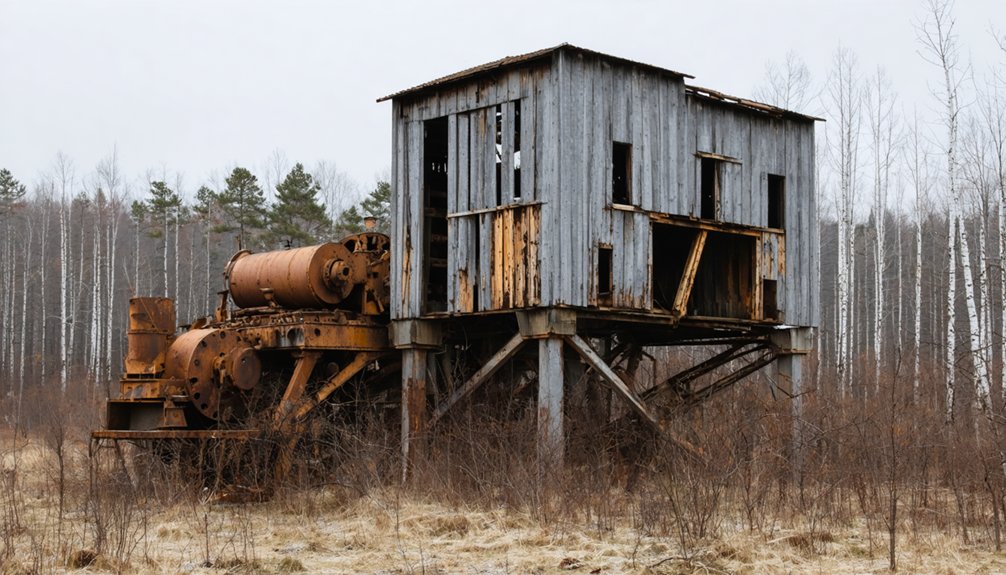
- Scattered industrial debris hinting at the machinery that once drove production
- Overgrown clearings where entire neighborhoods once stood
Nothing is manicured or interpreted here.
You’re reading the landscape directly, piecing together a vanished world from crumbling evidence. That rawness is exactly what makes Copper Falls worth stopping for — it rewards the curious traveler willing to look closely.
Forest Reclaiming The Site
Decades of forest growth have quietly erased what copper money built here, and you’ll feel that erasure the moment you step off the road.
Birch and pine press close against crumbling stone, their roots splitting foundations that once anchored real lives. Moss blankets old timbers. Saplings push through collapsed floors. Nature isn’t preserving this place — it’s consuming it, slowly and without apology.
That tension is exactly what makes the visit worthwhile. You’re reading a landscape that tells its own story without a single interpretive sign.
Site preservation here means watching what survives against the odds — a chimney stack, a cellar depression, a rusted bolt still fixed in rock. The forest doesn’t care about history, but you will.
Hidden Shafts, Posted Signs, and What Not to Touch
The ground beneath your feet at Copper Falls Mine isn’t always what it looks like — old shafts and collapsed tunnels hide just below the surface, masked by decades of leaf litter, root growth, and soft soil that can give way without warning.
When you spot a posted “Keep Out” or “Private Property” sign, it’s not a suggestion; it marks terrain that’s genuinely dangerous and land where your presence isn’t welcome.
Resist the pull to pocket a loose brick, pry at a rusted hinge, or disturb a weathered timber, because what looks like harmless debris is often the last physical thread connecting this place to its past.
Recognizing Hidden Mine Hazards
Wandering through the overgrown remnants of Copper Falls Mine feels thrilling until you remember what’s buried beneath your boots. Mine safety isn’t optional here — it’s survival awareness.
Hazard awareness keeps your ghost-town adventure from turning into something darker.
Watch for these hidden dangers:
- Unmarked mineshafts concealed by decades of leaf litter and overgrowth
- Unstable ground that can collapse without warning near old excavation zones
- Deteriorating structures with compromised walls, floors, and rooflines
- Posted signs marking private property and restricted access — respect every one
Don’t touch loose timbers, rusted equipment, or anything structural.
The forest reclaims these places slowly, disguising real danger beneath beautiful decay. Your freedom to explore depends entirely on your willingness to read the landscape honestly and move through it carefully.
Respecting Posted Warning Signs
Rust-streaked signs nailed to fence posts and tree trunks aren’t decoration — they’re the last honest voice of a place that’s stopped warning people gently.
When you spot “Keep Out” or “Private Property” markers at Copper Falls Mine, treat them as hard stops, not suggestions. Property boundaries exist because the land beyond them hasn’t been assessed for your safety.
Safety guidelines posted at ghost-town sites reflect real consequences — collapsed shafts, unstable ground, and structures that look solid until they aren’t. You came here chasing history, not a rescue call.
Stay where the path allows, read every posted marker, and let the ruins speak from a respectful distance. The story’s still powerful when you’re standing on the right side of the fence.
What To Leave Untouched
Keeping your feet on the right side of a fence is only part of the equation — what you do with your hands matters just as much.
Untouched artifacts tell stories that disappear the moment someone pockets them. Fragile ecosystems reclaiming old mine terrain are quietly healing what industry left behind.
Leave these alone:
- Rusted equipment and ore samples — they belong to the site’s history, not your shelf
- Old foundations and stonework — shifting one piece can destabilize entire structures
- Native vegetation growing over ruins — it’s actively restoring fragile ecosystems
- Bottles, ceramic fragments, and hardware — untouched artifacts hold archaeological value
True freedom on the road means leaving places as wild and whole as you found them.
How to Build Your Keweenaw Ghost Town Road Trip
The Keweenaw Peninsula is tailor-made for a ghost-town road trip, and U.S. 41 is your spine. Follow the Copper Country Scenic Byway and you’ll discover itinerary suggestions that string together Central Mine, Delaware Mine, Quincy Mine, Laurium, Lake Linden, and Hubbell into one rolling journey through American industrial history.
Each stop delivers historical insights, local legends, and scenic views worth slowing down for. Bring a camera because the decay here is photogenic in a way that feels earned. Photography tips almost write themselves when crumbling engine houses catch golden-hour light.
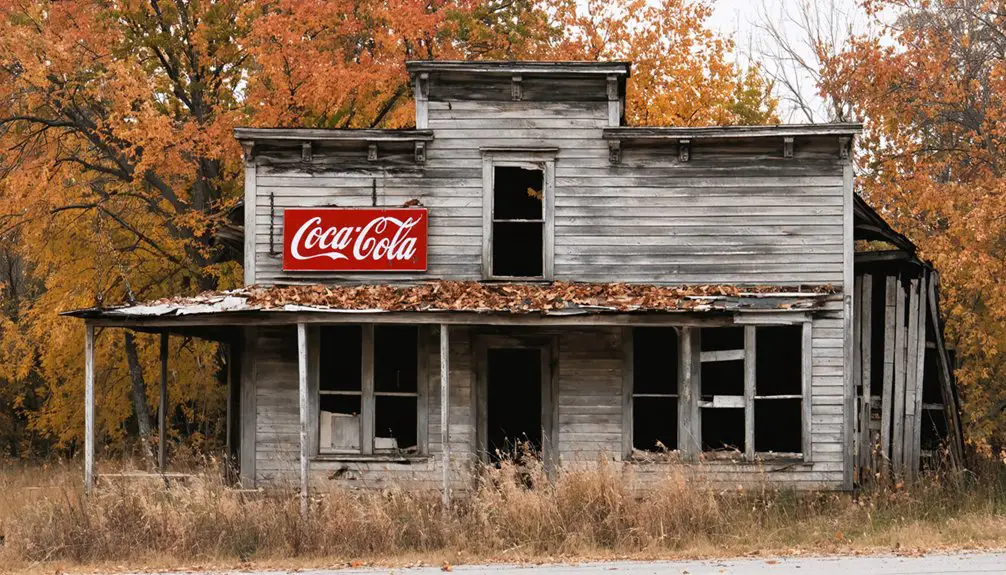
Seasonal visits in fall reward you with color-draped ruins. Families will find the interpreted sites accessible and genuinely engaging. Just keep travel safety front of mind wherever posted signs warn you to stop.
Keweenaw Ghost Towns Worth Combining Into One Drive
Once you’ve mapped out your route along U.S. 41, the real reward is how naturally these ghost towns cluster together into a single, unhurried drive.
The historic connections between these sites tell a unified story of boom, bust, and beautiful decay against stunning scenic views.
Roll through these stops and feel the region’s pulse:
- Central Mine – a remarkably preserved company village frozen in the 1890s
- Delaware Mine – offers underground tours through original copper workings
- Quincy Mine – massive surface infrastructure still crowning the hillside
- Laurium and Lake Linden – neighboring towns where miners actually lived
Each stop adds texture to the last.
You’re not just collecting ghost towns — you’re tracing the full arc of copper country’s extraordinary, restless history.
Frequently Asked Questions
Is Copper Falls Mine Part of a National or State Historic Park?
Like a forgotten whisper in the wilderness, Copper Falls Mine isn’t part of a national or state historic park, but its historical significance and raw mining techniques let you roam freely through Michigan’s untamed copper country past.
What Is the Best Time of Year to Visit Copper Falls Mine?
Summer’s your best bet for visiting Copper Falls Mine — you’ll enjoy clear roads and lush seasonal attractions. Keep weather considerations in mind, though; autumn’s golden canopy offers a nostalgic, hauntingly beautiful backdrop for exploring these forgotten copper-era ruins freely.
Are There Restrooms or Visitor Facilities Available at Copper Falls Mine?
Don’t expect restroom accessibility or formal visitor experience amenities here — Copper Falls Mine’s raw, untamed spirit means you’re stepping into history’s forgotten silence, so plan ahead and pack your own supplies before hitting the open road.
Can You Find Copper Artifacts or Relics While Exploring the Mine Site?
Sure, channel your inner treasure hunter—but copper mining history reminds you nature and laws claimed those relics first. For relic hunting tips, you’ll respect posted boundaries, leave artifacts untouched, and carry only unforgettable memories of this hauntingly nostalgic landscape.
How Long Does a Typical Visit to Copper Falls Mine Usually Take?
You’ll typically spend 20–30 minutes here. Guidance tips from visitor experiences suggest savoring every crumbling foundation and echoing silence, letting nostalgia pull you deeper into copper country’s forgotten, freedom-filled past before reluctantly moving on.
References
- https://www.onlyinyourstate.com/trip-ideas/michigan/ghost-town-road-trip-mi
- https://www.facebook.com/groups/688404128396373/posts/1890715218165252/
- https://www.visitkeweenaw.com/things-to-do/museums-history/ghost-towns/
- https://www.michiganrvandcampgrounds.org/upper-peninsula-driving-tour-copper-country-scenic-byway/
- https://www.facebook.com/NotMJG/photos/michigans-upper-peninsula-ghost-towns-road-trip-takes-you-through-11-historic-mi/1420125286146711/
- https://myfamilytravels.com/hidden-mining-towns-in-michigan-waiting-to-be-explored/
- https://www.youtube.com/watch?v=7-vjuqiGWJU
- https://www.michigan.org/article/road-trip/stops-historic-road-trip-through-keweenaw-peninsula
- https://www.visitkeweenaw.com/listing/copper-falls-the-ghost-town/513/
- https://copperharbor.org/portfolio/ghost-towns/