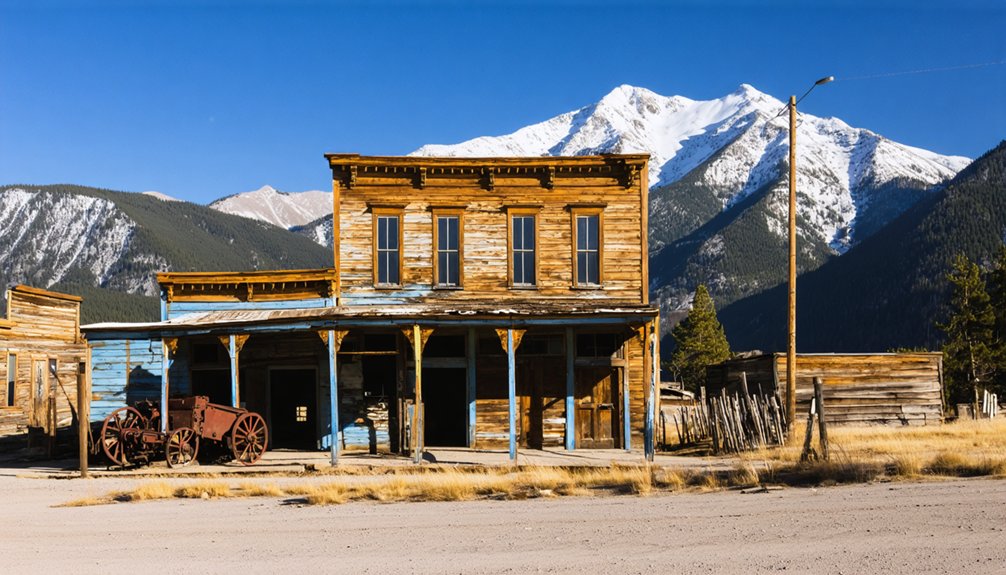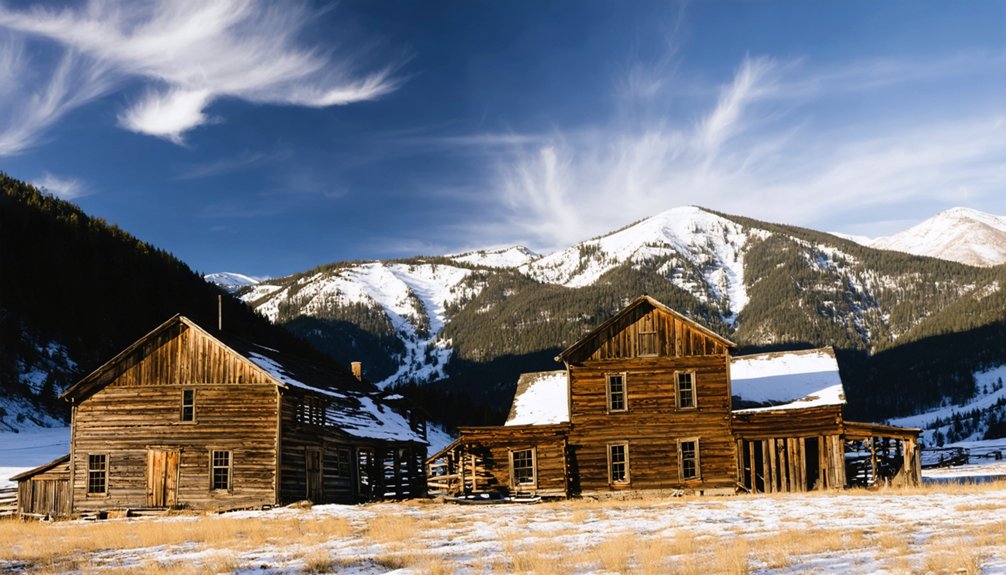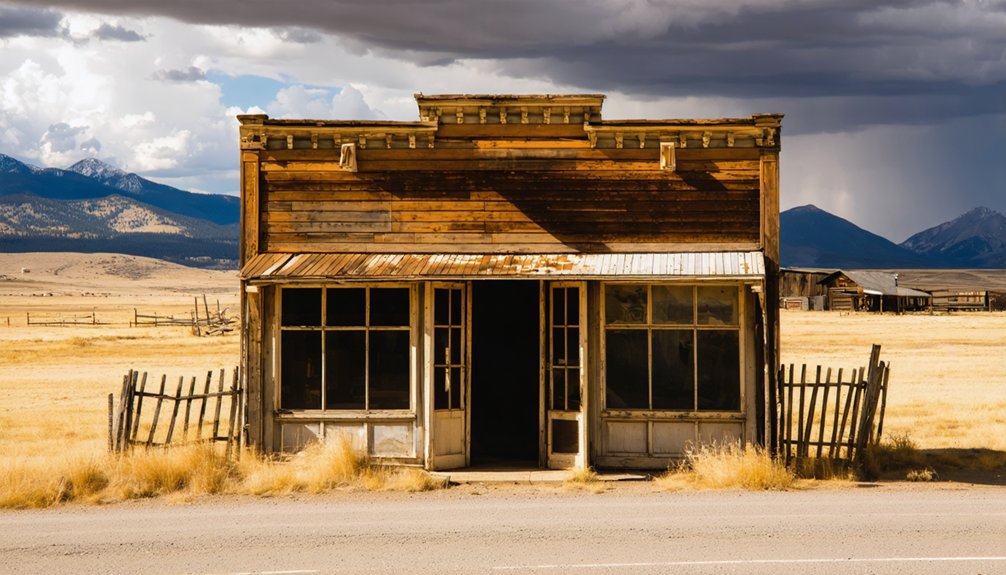
Planning a road trip to Dallas Ghost Town puts you on the trail of Colorado’s 1880s silver rush, deep in Park County’s rugged backcountry. You’ll navigate gravel roads best suited for high-clearance vehicles, arriving at wooden cabin ruins, mill foundations, and an old cemetery frozen in time. Denver sits about 120 miles away, Colorado Springs roughly 80. Visit in late spring through fall for the best conditions. Stick around, and everything you need to explore this forgotten boomtown awaits.
Key Takeaways
- Dallas Ghost Town in Park County, Colorado, is accessible from Colorado Springs via US-24 west and County Road 53 north, requiring a high-clearance vehicle.
- Denver visitors travel approximately 120 miles southwest via US-285, while Colorado Springs travelers drive roughly 80 miles west via US-24.
- Visit between May and October for the best road conditions, wildlife sightings, fall foliage, and photography opportunities at Dallas Ghost Town.
- Extend your road trip by visiting nearby ghost towns St. Elmo, Tincup, and Independence for a comprehensive Colorado mining history experience.
- Camp at Fourmile Creek or San Isabel National Forest for free, flexible, self-sufficient stays near Dallas Ghost Town.
What Is Dallas Ghost Town in Colorado?
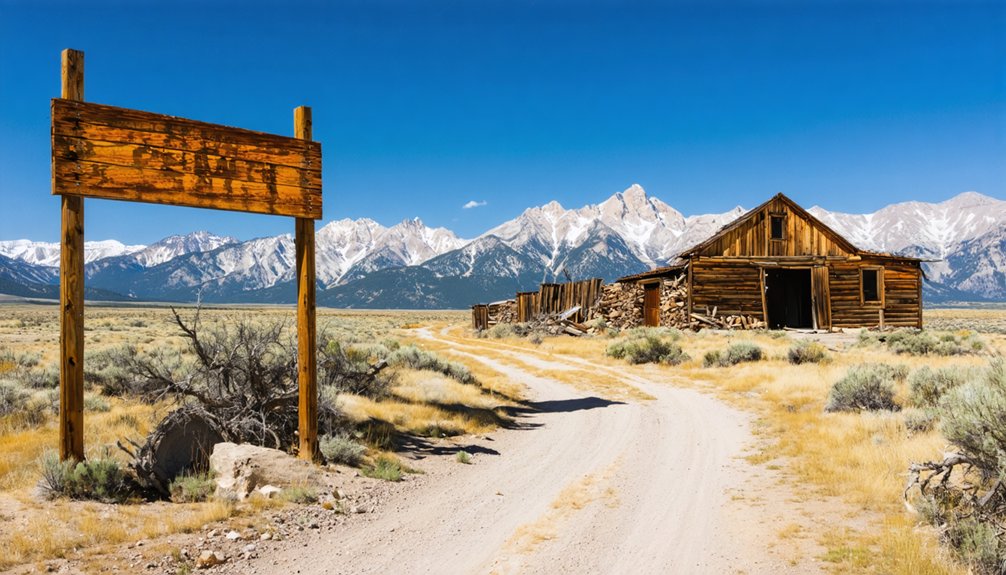
Deep in Park County, Colorado, the ghost town of Dallas stands as a weathered memorial to the silver boom of the 1880s. Named after geologist Andrew Dallas, this once-thriving settlement grew rapidly, reaching a peak population of 700 residents drawn by rich silver, lead, and zinc deposits.
Dallas history traces a familiar arc: boom, prosperity, then silence. By the 1920s, mine closures had emptied the streets entirely, leaving behind a mining legacy you can still read in the landscape today.
Wooden cabin ruins, assay office remnants, mill foundations, and a quiet cemetery remain scattered across the townsite.
For those craving open roads and authentic history, Dallas delivers an unfiltered glimpse into Colorado’s raw frontier past — no crowds, no gift shops, just the land and its stories.
How Do You Get to Dallas Ghost Town From Colorado’s Front Range?
Getting to Dallas Ghost Town from Colorado’s Front Range is straightforward once you know the route. Head west from Colorado Springs on US-24, crossing Ute Pass before reaching Hartsel.
From there, take County Road 53 north approximately 20 miles to the townsite. Your GPS coordinates are 38.95°N, 106.05°W, and USGS maps mark the location clearly.
The access routes stay manageable year-round, except during heavy snowfall. You’ll want a high-clearance vehicle since gravel roads get rough after rain, though you won’t need 4WD.
That accessibility makes Dallas uniquely welcoming compared to other Colorado ghost towns.
The historical significance of this journey adds depth beyond scenery — you’re tracing paths that silver miners traveled during the 1880s boom, connecting directly with Colorado’s raw mining heritage.
How Far Is Dallas Ghost Town From Major Colorado Cities?
Once you’ve mapped out the route from Colorado Springs, it helps to know how Dallas Ghost Town sits relative to other major cities across the state.
Understanding the Dallas distance from key Colorado cities helps you plan smarter, whether you’re combining stops or hitting the road solo.
Here’s how far you’re traveling from major Colorado cities:
- Denver: Roughly 120 miles southwest, about 2.5 hours via US-285
- Colorado Springs: Approximately 80 miles west, around 1.5 hours via US-24
- Pueblo: Nearly 100 miles northwest, roughly 2 hours via US-50
These Colorado cities all offer convenient launching points with fuel, lodging, and supplies before you head into Park County’s remote terrain.
Choose your starting point, load your GPS coordinates, and go.
What’s Still Standing at the Dallas Ghost Town Ruins?
Stepping into Dallas Ghost Town, you’ll find a haunting but tangible glimpse of its silver-boom past still scattered across the landscape.
Preserved structures tell the story of nearly 700 residents who once carved a community from these mountains. Wooden cabins lean against time, their weathered frames still defining the old townsite.
You’ll spot assay office remnants where miners once had their ore evaluated, plus mill foundations that anchored Dallas’s industrial heart. Mine tailings fan across the hillsides, raw evidence of the silver-lead-zinc extraction that built this place.
The cemetery sits quietly nearby, offering a deeply personal connection to the people behind the mining history.
Bring your camera — every crumbling wall and rusted artifact rewards those willing to explore.
When Is the Best Time to Visit Dallas Ghost Town?
When you visit Dallas Ghost Town matters as much as how you get there. Weather considerations shape your entire experience, making seasonal activities dramatically different depending on your timing.
Late spring through fall offers the clearest roads, best visibility, and most rewarding exploration.
Here’s what each prime window offers:
- Late Spring (May-June): Wildflowers bloom alongside ruins, snow-cleared roads open access, wildlife emerges actively.
- Summer (July-August): Elk and deer roam nearby forests, aspen trails are fully hikeable, golden photography light abounds.
- Fall (September-October): Aspens turn brilliant gold, cooler temperatures sharpen the air, crowds thin considerably.
Avoid winter entirely — County Road 53 becomes treacherous, and deep snow cuts off the townsite completely.
Which Nearby Ghost Towns Are Worth Adding to Your Route?
Once you’ve explored Dallas, several remarkable ghost towns sit within easy striking distance, making it simple to string together a multi-stop adventure through Colorado’s mining history.
St. Elmo to the south, Tincup to the west, and the semi-living communities of Pitkin and Ohio City along Route 76 all reward a detour with preserved structures, rugged scenery, and vivid glimpses of the silver-boom era.
You can connect most of these towns using a loop that combines County Road 53, Taylor Pass, and Highway 50, letting you maximize your exploration without backtracking unnecessarily.
Top Ghost Towns Nearby
Exploring Dallas on its own makes for a rewarding trip, but the surrounding region packs in enough ghost towns to justify a multi-day loop.
Each stop adds a distinct layer of ghost town history and mining legacy to your journey.
Three standouts deserve a spot on your itinerary:
- St. Elmo – Well-preserved structures near Buena Vista make this one of Colorado’s most photogenic stops.
- Tincup – Rugged Taylor Pass access rewards adventurous drivers with authentic, uncrowded ruins.
- Independence – A short hike from the pullout reveals striking preserved cabins along Independence Pass.
Together, these towns form a compelling circuit through Colorado’s silver-era past.
You’ll cover serious ground, but every mile connects you to a region shaped by ambition, hardship, and raw mountain country.
Routes Connecting Multiple Towns
Three ghost towns slot naturally into a Dallas circuit without forcing detours that drain your schedule. Head south on County Road 53 to reach St. Elmo, where staged structures preserve ghost town history better than almost anywhere in Colorado.
From there, swing west toward Tincup via Taylor Pass—rugged, rewarding, and worth every rutted mile. Complete your loop through Pitkin along Route 76, where restored buildings line a Main Street that’s still breathing.
These scenic routes connect through mountain valleys and aspen corridors, giving you dramatic landscape shifts between each stop. You’re not just ticking boxes here—you’re threading together a living timeline of Colorado’s mining era.
Plan two days minimum to move between towns without rushing the experience.
What to Bring to Dallas Ghost Town: No Facilities, No Water On-Site
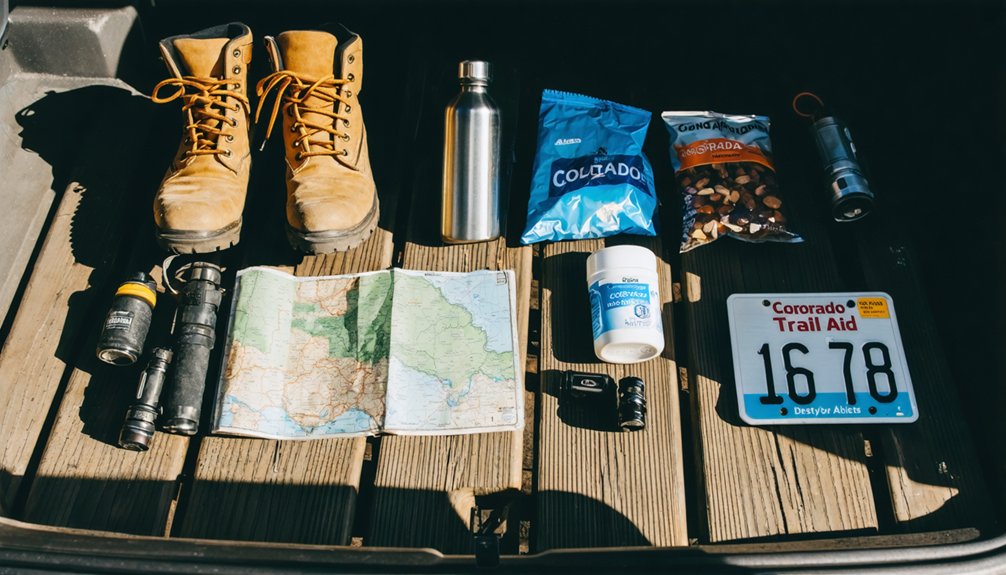
Since Dallas Ghost Town has zero facilities—no restrooms, no potable water, no visitor center—you’ll need to pack everything before leaving the trailhead.
Smart packing essentials make the difference between an adventure and a miserable retreat.
Pack smart or pay the price—your preparation determines whether you leave with stories or regrets.
Follow these hydration tips and supply basics:
- Water: Carry at least two liters per person—gravel roads and high-altitude hiking drain you faster than expected.
- Snacks and sun protection: Pack energy-dense food, sunscreen, and a hat; shade is scarce among the ruins.
- Navigation tools: Download offline maps or bring USGS paper maps since cell service disappears quickly.
Toss a first-aid kit and sturdy boots into your pack as well.
You’re exploring raw, untamed terrain on your own terms—come prepared and stay free.
How to Photograph the Ruins, Mill, and Surrounding Aspen Forest
You’ll capture the most dramatic shots of Dallas’s weathered cabins and mill remnants during the golden hours just after sunrise and before sunset, when low-angle light carves deep shadows into aged timber and crumbling stone.
Frame your ruin shots with intentional foreground elements — a collapsed doorway, rusted equipment, or scattered tailings — to give the scene depth and historical context.
If you’re visiting in late September or early October, the surrounding aspen forest ignites in brilliant gold, creating a vivid contrast against the gray ruins that transforms an ordinary composition into a genuinely striking image.
Best Lighting Times
When you arrive at Dallas Ghost Town matters as much as where you point your camera. Light transforms these ruins, revealing the historical significance of every weathered plank and gold mining-era foundation.
Plan your visit around these prime windows:
- Golden hour after sunrise bathes the wooden cabins and mill remnants in warm amber tones, minimizing harsh shadows across the mine tailings.
- Late afternoon light strikes the San Isabel National Forest backdrop dramatically, making aspen groves glow against darkening hillsides.
- Overcast days eliminate contrast problems entirely, delivering even, diffused light perfect for close-up detail shots of aged timber and assay office stonework.
Midday sun creates flat, blown-out images you’ll delete immediately. Arrive early, stay late, and let Dallas Ghost Town’s atmosphere do the heavy lifting for you.
Composing Ruin Shots
Composing a ruin shot at Dallas Ghost Town means resisting the urge to capture everything at once. Instead, isolate one weathered cabin corner, one collapsed doorframe, one rusted hinge catching afternoon light. Strong ruin composition rewards patience and selectivity.
Explore artistic angles by crouching low to frame timber beams against the sky, or positioning yourself inside a roofless structure to shoot outward through broken walls. The surrounding aspen forest becomes a natural framing device—let white trunks border your edges, drawing the eye inward toward the ruins.
At the Paris Mill, look for converging lines in the foundation stonework. Let leading lines guide viewers deeper into the frame. You’re not documenting decay; you’re revealing character.
Move deliberately, change your position often, and trust what you find in the edges.
Capturing Aspen Color
Aspen color transforms Dallas Ghost Town into something almost theatrical—golden canopies ignite against weathered timber, and the contrast practically composes itself.
Peak seasonal colors typically arrive mid-September through early October, giving your aspen photography a narrow but spectacular window.
Work these techniques to maximize your shots:
- Shoot during golden hour — warm light intensifies yellow and orange tones against dark cabin wood
- Use overcast skies — diffused light eliminates harsh shadows inside dense aspen stands
- Frame ruins through foliage — position deteriorating structures mid-ground with aspen canopy overhead for natural depth
Wind moves aspen leaves constantly, so bump your shutter speed to freeze motion.
The San Isabel National Forest backdrop extends your compositions beyond the townsite, rewarding explorers who venture the surrounding trails.
What Wildlife and Hiking Can You Find Around the Dallas Townsite?
Surrounding the Dallas townsite, trails wind through dense aspen forests that burst into gold each fall, offering hikers a stunning backdrop against the weathered ruins.
You’ll share these hiking trails with resident wildlife, as elk and deer frequently roam the meadows bordering San Isabel National Forest during summer months. Keep your eyes open during early morning hikes when wildlife sightings are most common — a bull elk emerging through morning mist makes the drive worthwhile alone.
The terrain stays manageable without requiring technical gear, so you’re free to explore at your own pace. Bring sturdy footwear for uneven ground around the mine tailings, carry plenty of water, and plan your hike before afternoon thunderstorms roll in, which are common during Colorado’s summer season.
Where Can You Camp Near Dallas Ghost Town?
After a long day on the trails, you’ll want a solid base camp close to the action, and you’re in luck — the Dallas area offers solid dispersed camping options that keep you right in the heart of the landscape you came to explore.
Your best camping options include:
- Fourmile Creek – A favorite dispersed site with creek access and tree cover
- San Isabel National Forest dispersed sites – Flexible, free camping with minimal restrictions
- Nearby developed campgrounds – If you prefer basic campsite amenities like fire rings and vault toilets
There are no hookups or showers out here, so come self-sufficient.
Pack enough water, food, and gear to stay comfortable. That trade-off buys you solitude, starry skies, and total freedom.
Frequently Asked Questions
Is Dallas Ghost Town on Private Land or Public Property?
Like Brigadoon emerging from the mist, Dallas ghost town legends await you on public land within San Isabel National Forest. You’ll freely explore Dallas history’s silver-era ruins without permission, embracing true adventure and open access.
Can You Drive From Dallas, Texas to Dallas, Colorado?
Yes, you can drive from Dallas, Texas to Dallas, Colorado! It’s roughly 850 miles, taking 13-15 hours. Pack your travel essentials, follow these road trip tips, and embrace the freedom of this epic adventure!
Are There Any Guided Tours Available at Dallas Ghost Town?
No official guided tours exist at Dallas Ghost Town, but you’ll love exploring it independently! Embrace the freedom of guided exploration at your own pace, uncovering the site’s rich historical significance through preserved ruins and mine remnants.
What Is the Elevation of Dallas Ghost Town in Park County?
Towering peaks meet forgotten ruins — you’ll find Dallas Ghost Town sitting at roughly 10,000 feet, where elevation changes amplify its historical significance, making every breath thin yet thrilling as you explore this silver-boom relic.
Is It Legal to Collect Artifacts or Souvenirs at Dallas Ghost Town?
You shouldn’t collect artifacts at Dallas Ghost Town. Respect its artifact preservation and historical significance by leaving everything untouched. You’re free to explore, photograph, and soak in the atmosphere, but taking souvenirs violates Colorado’s historic site protection laws.
References
- https://tranquiltrekker.com/central-colorado-ghost-towns-independence-pass/
- https://www.coloradooutbackadventures.com/blog/dallas-to-durango-road-trip-itinerary/
- https://newcountry991.com/the-ultimate-ghost-town-road-trip-through-colorado/
- https://www.sixt.com/magazine/road-trips/dallas-to-colorado/
- https://usghostadventures.com/americas-most-haunted-trending/ghost-towns-to-visit-on-your-summer-road-trip-along-route-66/
- https://twoworldstreasures.com/dallas-to-buena-vista-colorado/