To plan your ghost town road trip to Emma, Texas, drive about 25 miles east of Lubbock on State Highway 207 and watch for the Texas historical marker near County Road 188. Emma was once Crosby County’s thriving county seat, but it vanished almost overnight after losing a railroad and a pivotal 1910 election. Visit in spring or fall for the best weather, pack water and sun protection, and keep exploring to uncover everything this forgotten West Texas town still has to offer.
Key Takeaways
- Emma, Texas, founded in 1891, was once Crosby County’s seat but was abandoned by 1910 after losing a railroad and county seat election.
- The site sits 25 miles east of Lubbock along State Highway 207, marked by a Texas historical marker west of the highway.
- Visit in spring or fall for mild temperatures, wildflowers, and clear skies ideal for photography and exploration.
- Pack water, sun protection, offline GPS, sturdy shoes, and a first aid kit, as services along Highway 207 are scarce.
- Respect private agricultural land, avoid disturbing the Emma Cemetery, and stay on public road easements during your visit.
The Rise and Fall of Emma, Texas
Emma, Texas had all the makings of a thriving frontier town—born from ambition, shaped by determination, and ultimately undone by the relentless march of progress. Founded in 1891, Emma quickly became Crosby County’s beating heart, winning the county seat election by just six votes.
Emma’s economy flourished, reaching 800 residents by 1910, complete with a bank, newspaper, and bustling businesses. Then the railroad arrived—five miles away. That single decision shattered everything.
At its peak, Emma thrived—800 souls, a bank, a newspaper. Then the railroad missed by five miles, and everything unraveled.
Emma lost the county seat election to Crosbyton in September 1910, and by October, residents were literally hauling their buildings away using four steam engines and twenty-two mules.
The community legacy endures through an old cemetery and a historical marker on State Highway 207, reminding you that progress spares no town.
Where Exactly Is Emma, Texas?
If you’re planning a ghost town road trip to Emma, Texas, you’ll find the site on the west side of State Highway 207, just north of County Road 188, in Crosby County.
A Texas historical marker sits along SH 207 about 3.8 miles south of the SH 207 and US 82/114 intersection, giving you a clear landmark to navigate toward.
From Lubbock, you’re looking at roughly a 25-mile drive east, making Emma an easy half-day excursion.
General Geographic Location
Tucked away in the flat, wind-swept expanse of Crosby County on the Texas South Plains, Emma sits roughly 25 miles east of Lubbock along State Highway 207.
You’ll find it west of Highway 207, north of County Road 188, about 3.8 miles south of where SH 207 intersects US 82/114.
Don’t expect a bustling town — Emma’s abandoned structures and historical significance exist mostly as memory now.
The Texas Historical Marker standing along State Highway 207 serves as your primary landmark, pointing you toward what was once a thriving county seat.
The surrounding land remains agricultural, wide open, and largely unchanged — exactly the kind of raw, unfiltered landscape that rewards curious travelers willing to chase history off the beaten path.
Nearby Landmarks And Roads
Finding your way to Emma requires knowing a handful of key reference points scattered across this flat stretch of the Texas South Plains. Your clearest landmark is the Texas historical marker sitting along State Highway 207, roughly 25 miles east of Lubbock.
From there, head west off the highway and north of County Road 188 to reach the site itself.
The marker sits 3.8 miles south of where SH 207 meets US 82/114, making that intersection your ideal starting point.
State Highway 207 serves as one of the region’s most scenic routes, cutting through wide-open agricultural land that hasn’t changed much since Emma’s residents packed up and left.
Beyond the ghost town itself, the surrounding South Plains countryside offers local attractions worth exploring on your drive out.
Driving Distance From Lubbock
Just 25 miles east of Lubbock, Emma sits quietly beneath the wide South Plains sky, close enough for a half-day trip but far enough to feel like you’ve crossed into another era.
You’ll head out on State Highway 207, watching the flatlands stretch endlessly around you. The Texas historical marker stands as your anchor point, planted 3.8 miles south of the SH 207 and US 82/114 intersection.
From there, you’ll find the actual site west of Highway 207, north of County Road 188. The drive itself sets the mood perfectly — open road, uncluttered horizon, and the quiet anticipation of discovering ghost town history firsthand.
Few Texas landmarks reward the curious traveler quite like Emma does, where the landscape holds more memory than most maps reveal.
How to Get to Emma From Lubbock
Reaching Emma takes only a short drive from Lubbock—head east on State Highway 207 for about 25 miles, and you’ll find the Texas historical marker standing west of the highway, just north of County Road 188.
Look for the marker sitting 3.8 miles south of the SH 207 and US 82/114 intersection.
Once you arrive, you’re standing on ground that holds deep Emma history—a place that rose, thrived, and vanished within two decades.
Like many ghost towns, Emma didn’t disappear overnight; it walked away on its own terms, carried building by building to a new location.
The Emma Cemetery remains nearby, offering a quiet, tangible connection to the people who once called this windswept stretch of Crosby County home.
Come ready to explore.
What’s Left at the Emma Site Today
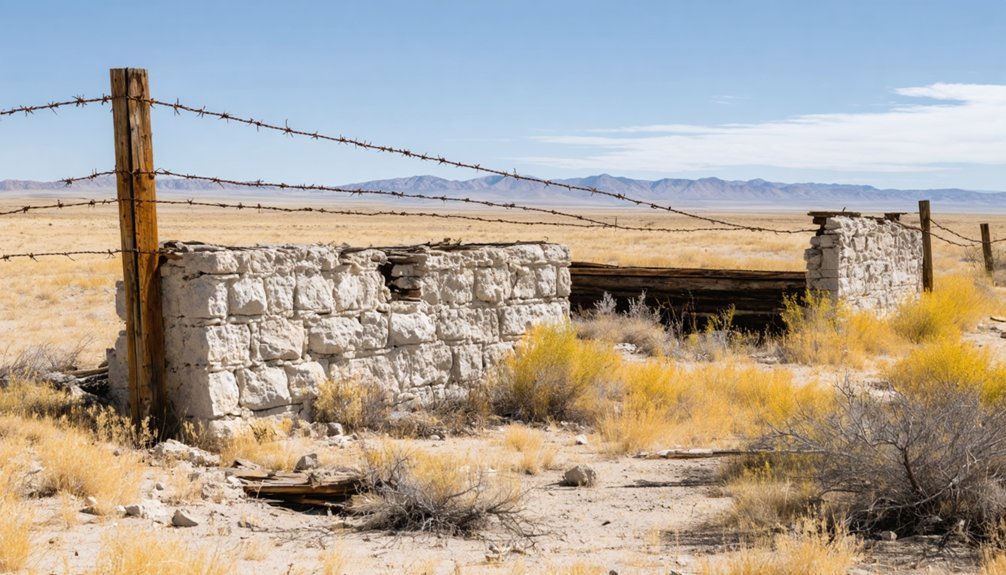
Once you’ve parked and stepped away from the marker, the landscape tells you everything—there isn’t much left. Wind-swept farmland stretches in every direction, offering little proof that 800 people once called this place home.
Your remnants exploration won’t uncover buildings or streets, but the historical significance here runs deep beneath the soil.
The Emma Cemetery stands as the sole surviving connection to the community stories of those early settlers. It’s a quiet, sobering stop that grounds you in local legends of a town that literally packed up and moved overnight.
Agricultural fields now cover what was once a thriving county seat. You’re standing on ground where a courthouse, bank, and newspaper once operated—and that knowledge alone makes the silence feel remarkably loud.
The Emma Cemetery: The Town’s Last Living Link
The Emma Cemetery sits a short distance from the historical marker, and it’s the only thing that hasn’t moved, been dismantled, or hauled away by steam engine and mule.
It’s the last physical connection to Emma history, standing quietly in the agricultural flatlands while everything else vanished decades ago.
When you visit, you’re walking among the remains of settlers who built something real here — a town that won a county seat election by six votes and nearly secured its future.
The cemetery carries the weight of ghost town stories that no historical marker can fully capture.
Local legends suggest the cemetery holds descendants of both Estacado and Emma families, making its cemetery significance deeper than most realize.
It’s your most honest encounter with the people who once called Emma home.
The Best Time of Year to Visit Emma
Spring and fall offer you the best conditions for exploring Emma’s quiet, windswept plains, with mild temperatures making the walk to the cemetery and historical marker far more comfortable than the brutal West Texas summers.
If you visit between June and August, you’ll battle triple-digit heat, relentless sun, and minimal shade across the flat, exposed terrain.
Winter trips are possible but unpredictable, since Crosby County roads can turn treacherous after ice storms or heavy rains soak the caliche soil.
Ideal Visiting Seasons
When planning your visit to Emma, Texas, the season you choose can make or break the experience. Spring and fall offer the most ideal weather for exploring this windswept ghost town, with mild temperatures that make walking the open terrain comfortable and enjoyable.
Spring brings wildflowers across the surrounding agricultural landscape, adding color to your exploration.
Fall delivers crisp, clear skies perfect for photography of the historical marker and cemetery grounds.
Avoid summer if possible — West Texas heat turns the exposed plains brutal by midday.
Winter visits can work, but unpredictable norther storms sweep through quickly.
Seasonal activities are limited here by design — this is raw, open country.
Pack water, wear sturdy shoes, and embrace the solitude that makes Emma’s ghost town experience genuinely unforgettable.
Weather And Road Conditions
Knowing which season suits your visit best is only half the battle — understanding what West Texas weather and road conditions actually throw at you completes the picture.
Weather patterns here are unpredictable and unforgiving. Summer brings scorching heat exceeding 100°F, while winter delivers sudden ice storms that make rural roads treacherous.
Spring thunderstorms roll across the plains fast, turning dirt county roads into impassable mud traps within minutes.
Road safety demands preparation regardless of season. The marker sits along unpaved County Road 188, which becomes dangerously slick after rain.
Always check forecasts before heading out, carry extra water, and guarantee your vehicle handles rough terrain.
Cell service is spotty at best. Emma’s isolation made it vulnerable to railroad economics — don’t let poor planning make you equally vulnerable on your drive out.
What to Pack for an Emma Ghost Town Trip
Packing smart for a trip to Emma’s remote Crosby County location means bringing a few essentials that’ll keep you comfortable and prepared. Load your vehicle with plenty of water, snacks, and a spare tire since services are scarce along State Highway 207.
Sun protection is non-negotiable on the open Texas plains.
For photography tips, pack a wide-angle lens to capture the expansive landscape surrounding the Emma Cemetery and historical marker. Golden hour lighting rewards early arrivals with stunning shots of the flat, agricultural terrain.
Bring extra batteries since you won’t find charging stations nearby.
Your packing essentials should also include a detailed map or downloaded offline GPS, sturdy walking shoes for exploring uneven ground, and a first aid kit.
Freedom tastes better when you’re genuinely prepared.
Where to Eat and Stay Near Emma, Texas
After you’ve loaded up the car and checked off your packing list, you’ll want to sort out where you’re sleeping and eating before you hit State Highway 207.
Emma sits 25 miles east of Lubbock, making the city your best base camp. Lubbock delivers solid accommodation options ranging from budget motels to full-service hotels near the highway, so you’re never scrambling for a bed after a long day exploring the plains.
For local dining, Lubbock’s restaurant scene covers everything from Texas barbecue joints to casual diners serving chicken-fried steak.
Stock up on road snacks before you head out, because once you leave the city limits, the landscape turns agricultural and options thin out fast.
Plan ahead and you’ll travel freely without logistical headaches slowing you down.
Nearby West Texas Ghost Towns Worth Adding to Your Drive
Emma isn’t the only ghost town scattered across the West Texas plains, and while you’re already making the drive out on State Highway 207, it makes sense to string a few more stops together.
Estacado, Emma’s longtime rival and original county seat, sits nearby and carries its own historical significance as one of the region’s earliest settlements.
Cedric, where workers hauled Emma’s dismantled courthouse, offers another quiet chapter worth tracking down.
Ghost town exploration out here rewards the curious traveler willing to leave the main road and follow county routes into open country.
Each settlement tells a connected story about railroads, elections, and communities that simply picked up and moved.
Together, these stops turn a single afternoon drive into a layered portrait of early West Texas life.
How to Visit Emma Respectfully and Safely
Visiting a place like Emma means stepping into land that still belongs to someone, so before you head out, confirm you’re staying on public road easements and not crossing onto private agricultural property.
Ghost town etiquette here is straightforward: leave everything exactly as you find it. Emma’s historical preservation depends on visitors resisting the urge to disturb the cemetery grounds or remove anything.
The Emma Cemetery remains the only physical connection to the people who built and lost this town, so treat it with genuine respect. Photograph freely, read the Texas historical marker on State Highway 207, and soak in the silence.
Bring water, watch for uneven terrain, and tell someone your route before driving out into this remote stretch of West Texas.
Frequently Asked Questions
Who Was the Woman That Emma, Texas Was Actually Named After?
The knowledge doesn’t reveal Emma’s namesake’s actual name — you’ll only find that she’s the woman one founding partner later married, a detail that adds to the town’s historical significance and mysterious charm!
Why Did the Railroad Bypass Emma by Exactly Five Miles?
Like a river carving its own path, the records don’t reveal why railroad history bypassed Emma’s significance by exactly five miles—you’ll find that detail remains lost to time.
Where Did the Courthouse End up After Being Hauled to Cedric?
The knowledge doesn’t tell you what happened to the courthouse after its Cedric history began. You’ll discover that the courthouse relocation ends there — the records simply show it was dismantled and hauled to Cedric, leaving its final fate unknown.
Did Any Residents Choose to Stay in Emma After 1910?
Like a ship abandoned at sea, Emma emptied fast—you won’t find records of residents staying after 1910. The ghost stories and local legends suggest the town dissolved completely, leaving only whispers and an old cemetery behind.
What Happened to Emma’s Bank Records After the Town Relocated?
The knowledge doesn’t tell you what happened to Emma’s bank record preservation after relocation. You’d need to dig deeper into local archives to uncover their historical significance and trace where those essential documents ultimately landed.
References
- https://www.southplainslive.com/news/county/2024-09-18/demise-emma-texas
- https://www.texasescapes.com/TexasPanhandleTowns/Emma-Texas.htm
- https://www.tshaonline.org/handbook/entries/emma-tx
- https://www.historictexas.net/city/emma-texas
- https://www.tshaonline.org/texas-day-by-day/entry/951
- https://www.hmdb.org/m.asp?m=106206
- https://atlas.thc.texas.gov/Details/5107012942