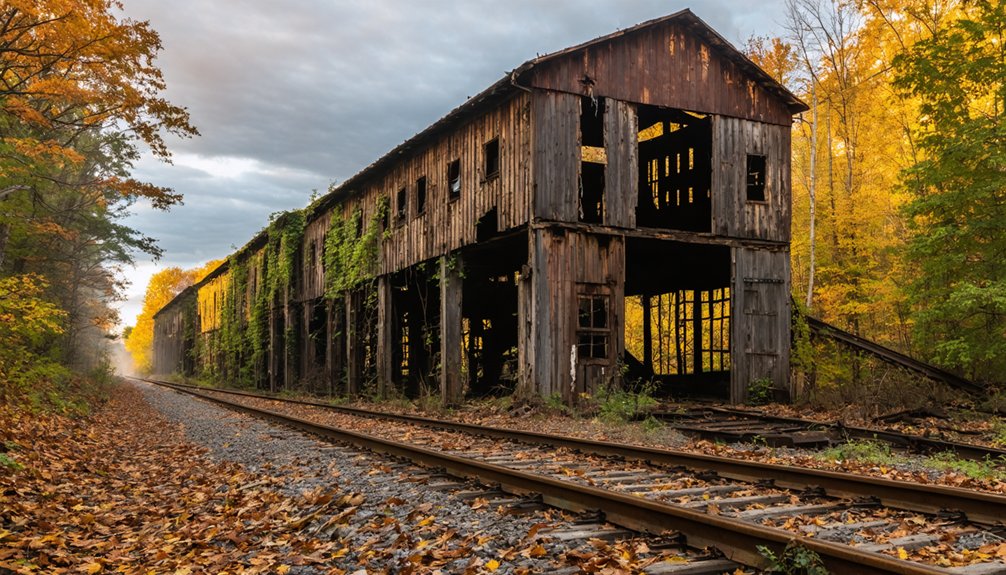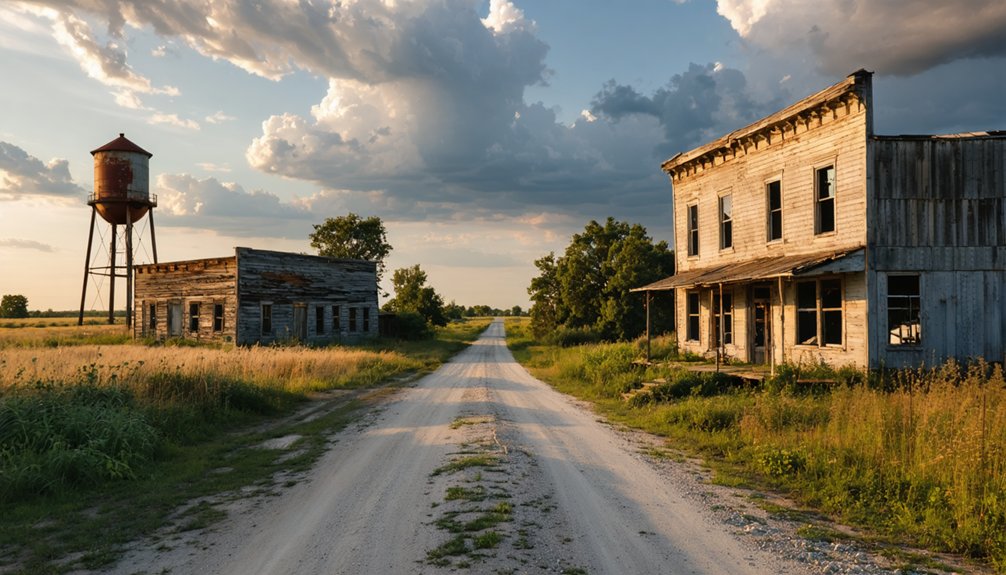
Planning a ghost town road trip to Conrad, Indiana starts with timing your visit for late spring or early fall, when mild temperatures make exploration comfortable. You’ll want sturdy boots, offline maps, and a printed town plan to locate Conrad’s scattered foundations and firebrick remnants. Founded in 1908 by the iron-willed Jennie Conrad, this Newton County settlement rose fast and fell hard. Stick around to uncover the full story behind its dramatic rise, fiery collapse, and eerie remains.
Key Takeaways
- Conrad, Indiana, was founded in 1908 by Jennie Conrad and abandoned by 1940 after fire and leadership loss devastated the community.
- Visit in late spring or early fall for mild temperatures, manageable undergrowth, and optimal exploration conditions.
- Bring sturdy boots, offline maps, a compass, first aid kit, and a printed town plan map for safe navigation.
- Remaining remnants include building foundations, scattered firebricks, and the Conrad Bridge located about half a mile from the main site.
- Respect the site by leaving artifacts undisturbed, staying on trails, and sharing your route with someone before exploring.
The History Behind Conrad, Indiana’s Ghost Town
When Jennie Conrad founded the town of Conrad in December 1908, she built more than just a settlement — she built an empire shaped entirely by her iron will.
At its peak, 200 residents called this Newton County town home, enjoying a blacksmith, hotel, dancehall, saloon, school, and railroad depot.
She even named the streets after her own family — a dynasty carved into Indiana’s landscape.
When Jennie died in 1930, her son Platt inherited control, but the town’s spirit died with her.
A devastating fire sealed Conrad’s fate, and by the early 1940s, it was abandoned entirely.
Local legends still swirl around its collapse, and today, scattered preservation efforts keep its story alive for adventurous explorers willing to seek out what remains.
Why Conrad Station Rose and Collapsed Within 30 Years
When Jennie Conrad founded the town in December 1908, she built it with fierce determination, establishing a post office, railroad depot, saloon, dancehall, and concrete block factory that drew 200 residents to Newton County.
After her death in 1930, the town lost its driving force, and a devastating fire pushed the already-struggling community past the point of recovery.
Jennie Conrad’s Founding Vision
In December 1908, Jennie Conrad staked her claim in Newton County, Indiana, and built a thriving community almost entirely through sheer force of will. She named the streets after her family, directed the town’s economy, and shaped every corner of Conrad Station until her death in 1930.
At its peak, the town supported 200 residents, a blacksmith, a hotel, a dancehall, a school, a saloon, and a concrete block factory. Local legends still circulate about Jennie’s iron grip on daily life here.
When she died, the town lost its driving force, and Conrad Station quickly unraveled. Today, what were once bustling streets are wildlife habitats, swallowed by woods and silence.
Her vision was extraordinary — but it was also deeply personal, and it didn’t survive her.
Fire Sealed Conrad’s Fate
Jennie Conrad’s death in 1930 wasn’t the final blow — fire was. After she passed, her son Platt inherited control, but the town’s spirit had already dimmed.
Then flames tore through Conrad Station, destroying the historical architecture that once defined this thriving community — the dancehall, the saloon, the depot — gone.
Local legends still whisper about that fire, though no one recorded the exact date. What’s certain is the damage proved fatal.
By the early 1940s, residents had scattered, leaving only concrete foundations swallowed by Indiana woodland.
You’re visiting a place that rose and collapsed within 30 years — a full community cycle compressed into a single lifetime. That rapid rise and ruin is precisely what makes Conrad Station worth the detour.
Abandonment By 1940
How does a town of 200 people vanish in under three decades? Conrad Station’s collapse tells that story through urban decay, fire, and lost leadership.
After Jennie Conrad died in 1930, momentum died with her. Platt Conrad inherited the town but couldn’t sustain what his mother built. By 1940, Conrad Station was officially abandoned.
What killed it so quickly?
- Jennie’s death removed the driving force behind every business decision
- A devastating fire damaged structures the community couldn’t rebuild
- Without economic recovery, residents simply left
Today, historical preservation efforts keep Conrad’s memory alive through documented town plans and foundation remnants you can still walk among. You’re not visiting ruins — you’re reading a timeline written in concrete and firebrick.
Conrad rose fast, burned hard, and disappeared quietly before World War II ended.
What Survives at the Conrad Ghost Town Site Today
When you walk the site today, you’ll find stone and concrete foundations embedded in the ground, silent reminders of the town that thrived here decades ago.
Scattered firebricks from the old concrete block factory still litter the earth, giving you a tangible connection to Conrad’s industrial past.
If you venture a half mile from the main settlement, you’ll discover Conrad Bridge, the one standing structure that survived both the fire and the town’s eventual abandonment.
Foundations Still Visible
Although little remains of Conrad’s once-bustling community, what’s still there tells a quiet but compelling story. As you explore the site, you’ll find historical artifacts scattered across the forest floor, rewarding anyone willing to make the trek.
Look for these remnants as you walk the grounds:
- Stone and concrete foundations embedded in the earth, marking where buildings once stood
- Firebricks from the original concrete block factory, still visible among the undergrowth
- The original town plan map helps you identify exact structure locations as you navigate the site
Preservation efforts remain minimal here, meaning nature is slowly reclaiming Conrad on its own terms. That rawness is exactly what makes this ghost town worth visiting — you’re experiencing history completely unfiltered.
Firebricks On Ground
Among the most tangible pieces of Conrad’s industrial past, firebricks from the town’s concrete block factory still lie scattered across the forest floor. These industrial remnants connect you directly to a working community that once hummed with economic ambition. Pick one up, and you’re holding a physical link to historical architecture that Jennie Conrad built from scratch in 1908.
As you walk the trail, keep your eyes low. The bricks don’t announce themselves — they hide beneath leaf litter and moss, rewarding only the observant explorer. They’re irregular, weathered, and surprisingly numerous once you start noticing them. Each one tells a quiet story of labor, commerce, and eventual collapse.
Conrad’s factory is long gone, but its raw materials refuse to completely disappear.
Conrad Bridge Survives
While nearly everything Jennie Conrad built has crumbled into foundations and scattered brick, Conrad Bridge still stands — a rare survivor from the town’s earliest years. It’s a tangible piece of historical architecture you can actually see and touch, unlike the ghost town’s buried remnants.
When you visit, expect to find:
- A structure built during Conrad’s active years, connecting you directly to the town’s operational past
- Local legends tied to the bridge, adding layers of mystery to your exploration
- A striking contrast between this standing landmark and the overgrown foundations surrounding it
The bridge reminds you that Conrad wasn’t always silence and weeds — it was once a living, breathing community.
Let it anchor your imagination as you piece together what this forgotten Indiana town once was.
Conrad Bridge and the Other Structures That Outlasted the Town
When most of the town crumbled into memory, Conrad Bridge survived. Standing roughly half a mile from the main settlement, it’s a rare, tangible connection to Conrad’s active years.
Historic preservation efforts haven’t formally touched this ghost town, yet the bridge endures on its own terms — a quiet defiance against time.
Beyond the bridge, scattered firebricks from the concrete block factory still poke through the soil.
Firebricks from a forgotten factory still surface through the earth, small monuments to industry that once defined this place.
Stone and concrete foundations outline where the hotel, saloon, dancehall, and depot once stood.
Urban legends likely swirl among locals about what really finished Conrad off — the fire, the founder’s death, or simply abandonment.
You can walk the trail, read the landscape like a map, and piece together a town that once housed 200 lives.
The evidence is still there if you look.
How to Get to Conrad Station in Newton County
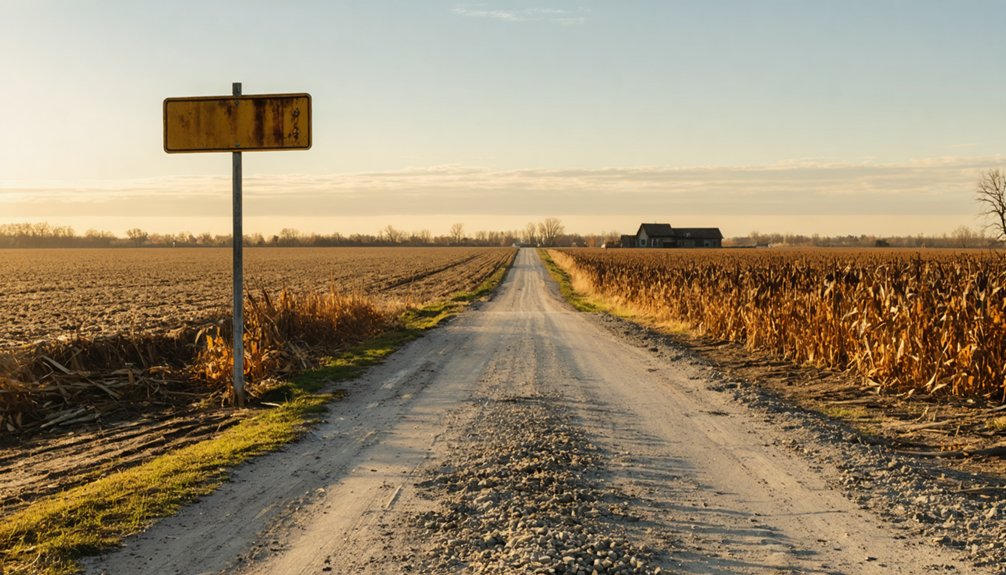
Getting to Conrad Station takes you through the quiet flatlands of Newton County, where US 41 serves as your main landmark. Head east on West County Road 725N, just south of Lake Village, about 2.2 miles from town. The open road feels liberating before the tree line swallows you whole.
- Navigate: Look for the abandoned railroad tracks east of US 41—they mark your arrival point.
- Photography tips: Morning light cuts beautifully through the woods, illuminating foundations and scattered firebricks.
- Local dining: Fuel up in Lake Village before heading out, since Conrad offers nothing but history.
Pack comfortable shoes for the trail leading into the woods. You’re 35 miles south of Gary, so the drive itself becomes part of the adventure.
The Best Time of Year to Explore Conrad’s Ghost Town
Late spring and early fall hit the sweet spot for exploring Conrad’s ghost town, since Indiana’s brutal summers turn the overgrown trail into a sweaty, bug-infested slog. May and September offer mild temperatures, manageable vegetation, and enough daylight to properly hunt for historical artifacts like firebricks and stone foundations scattered across the forest floor.
You’ll move freely without fighting thick summer undergrowth that swallows the site whole.
Winter strips the trees bare, which actually exposes foundation lines you’d otherwise miss, making it surprisingly worthwhile for sharp-eyed explorers.
Avoid muddy March and April conditions that make the trail genuinely miserable.
Whatever season you choose, come prepared with sturdy boots and curiosity about local legends surrounding Jennie Conrad’s rise, the mysterious fire, and the town’s quiet disappearance into Newton County’s landscape.
What to Bring for a Conrad Ghost Town Visit

Before you head out to explore Conrad’s overgrown foundations and scattered firebricks, pack sturdy boots, water, and snacks to keep you moving through the trail into the woods.
You’ll want a fully charged phone with a downloaded offline map, since the site sits in a remote stretch of Newton County with spotty cell service.
A first aid kit and a backup compass round out your safety essentials, ensuring you’re prepared for whatever the abandoned landscape throws your way.
Essential Gear and Supplies
Since Conrad’s ghost town sits in a natural, wooded area with no standing structures, you’ll want to pack smart before hitting the trail. The terrain rewards prepared explorers who respect both the historical artifacts scattered across the grounds and the local legends tied to Jennie Conrad’s remarkable dynasty.
Bring these essentials to make the most of your visit:
- Sturdy footwear and weather-appropriate clothing — the wooded trail near the abandoned railroad tracks demands solid footing
- A camera or sketchbook — document firebricks and stone foundations before nature reclaims them completely
- A printed copy of the original town plan map — use it to pinpoint where the depot, saloon, and dancehall once stood
Travel light, stay curious, and let the landscape tell its story.
Once you’ve packed your gear, steering the wooded trail near Conrad’s abandoned railroad tracks requires tools that keep you oriented and safe. Download offline maps before leaving, since cell service near West County Road 725N can drop unexpectedly. A compass remains invaluable when tree cover obscures landmarks.
Carry a fully charged GPS device to pinpoint foundations and firebrick clusters tied to Conrad’s cultural significance — locating these remnants precisely helps you appreciate what once stood here.
Preservation challenges mean fragile stone foundations can shift or become hidden beneath overgrowth, creating uneven terrain. Wear sturdy boots and bring a whistle in case you need to signal others.
Share your planned route with someone before entering the woods. These tools transform a remote exploration into a confident, responsible adventure through Indiana’s forgotten history.
How to Stay Safe When Exploring Abandoned Indiana Sites
Exploring abandoned sites like Conrad Station rewards curiosity, but you’ll want to take a few precautions before you wander into the woods. The foundations and firebricks scattered across the site are historical artifacts worth protecting — and worth watching your step around.
- Wear sturdy boots to navigate uneven ground, hidden foundations, and overgrown terrain along the abandoned railroad corridor.
- Research local legends before visiting — knowing Conrad’s history helps you stay alert to structurally compromised areas near the old factory and depot sites.
- Go with a buddy and share your location, since cell coverage near West County Road 725N can be unreliable.
Respecting the site keeps it accessible for future explorers. Leave the firebricks where you find them, and stick to established trails into the woods.
Other Newton County Ghost Towns Worth Visiting
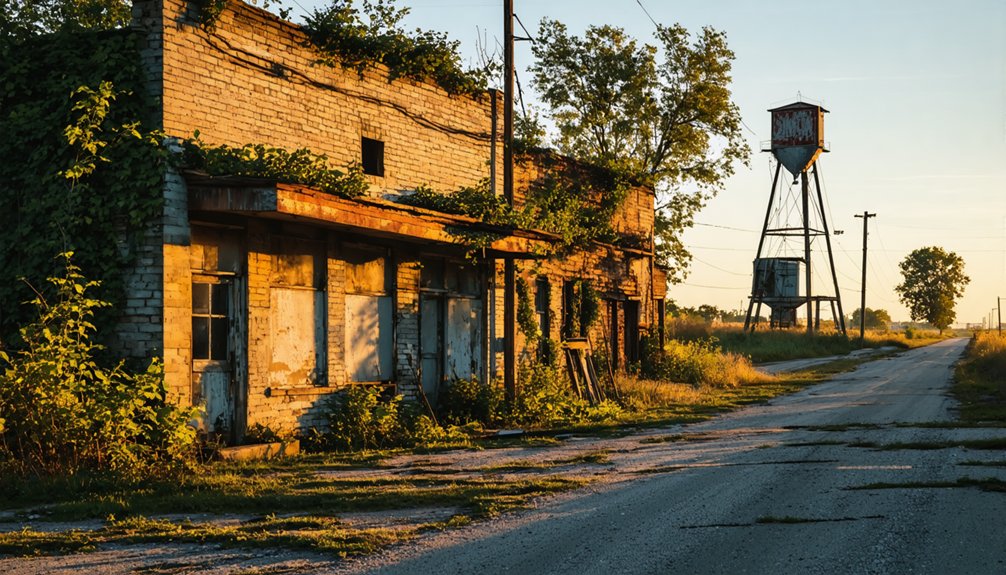
Conrad Station is just the beginning — Newton County has more abandoned history waiting to be tracked down if you’re willing to explore beyond the treeline. The county’s rural backroads hide scattered remnants of communities that once thrived along forgotten rail corridors.
Follow the railroad remnants threading through the flatlands, and you’ll stumble onto foundation lines, collapsed structures, and overgrown lots that once housed active settlements. Some sites still display historical architecture in crumbling form — brick facades, stone work, and structural bones that tell stories without a single plaque.
Bring a map, wear sturdy boots, and treat every discovery as a piece of a larger puzzle. Newton County rewards the curious traveler who moves slow, looks close, and isn’t afraid to get off the marked path.
Where to Base Yourself for a Conrad Ghost Town Trip
Since Conrad Station sits roughly 35 miles south of Gary and just east of US 41, you’ve got a solid range of base options depending on how far you want to push your budget and comfort level.
Gary offers urban amenities, while smaller towns keep you closer to the action and local wildlife corridors surrounding Newton County.
Consider these staging points:
- Gary, Indiana – Budget hotels and highway access make it a practical northern hub
- Rensselaer, Indiana – A quieter county seat with lodging that puts you within striking distance of preserved artifacts and foundations
- Lake Village area – Just 2.2 miles north of Conrad, ideal for explorers wanting maximum proximity to the site
Pick your base, load your map, and hit US 41 heading south.
Frequently Asked Questions
Is There an Entrance Fee to Visit the Conrad Ghost Town Site?
You don’t need to pay an entrance fee to explore Conrad’s ghost town! It’s a free, open natural area where you’ll discover historical preservation firsthand, with visitor amenities like a scenic trail awaiting your adventurous spirit.
Are Pets Allowed on the Trail Leading to Conrad Station?
The knowledge doesn’t specify pet policies, so you’ll want to verify before heading out. Still, if you bring your furry companion, prioritize pet safety and prep for trail difficulty through Conrad’s wild, adventurous wooded terrain!
Can You Legally Take Firebricks or Artifacts Home From Conrad Station?
You shouldn’t take firebricks or artifacts home — artifact regulations protect Conrad Station’s history. Firebrick collection might feel tempting on your adventure, but leaving everything in place guarantees future explorers can experience the same thrilling discovery you did!
Is the Conrad Ghost Town Site on Public or Private Property?
The knowledge doesn’t confirm whether Conrad Station’s land is public or private. Before you venture in, you’ll want to research ownership carefully — historical preservation and visitor safety both depend on you respecting whatever boundaries protect this fascinating ghost town.
Are There Guided Tours Available at the Conrad Ghost Town Site?
You’re on your own here — no guided exploration options exist at Conrad. Blaze your own trail through historical preservation remnants like stone foundations and firebricks, crafting your own adventurous discovery of this forgotten Indiana ghost town.
References
- https://www.reddit.com/r/abandoned/comments/r9va2z/conrad_indiana_town_abandoned_in_the_early_1940s/
- https://www.youtube.com/watch?v=rtkCzhJhyEo
- https://rensselaeradventures.blogspot.com/2009/12/newton-county-ghost-town.html
- https://en.wikipedia.org/wiki/List_of_ghost_towns_in_Indiana
- https://www.youtube.com/watch?v=U_X8U9ah6KM
- http://freepages.rootsweb.com/~gtusa/history/usa/in.htm
- https://www.youtube.com/watch?v=iWoZ22wahio