Starting your ghost town road trip in Hoover, South Dakota means heading to Butte County via Highway 79, where a nearly vanished settlement and the state’s oldest operating general store await. You’ll want to pack water, check your fuel, and keep a detailed regional map handy for rural roads. Pair Hoover with nearby ghost towns like Minnesela and Fruitdale to build a full loop through the northern Black Hills—and there’s plenty more to uncover along the way.
Key Takeaways
- Hoover, South Dakota, is accessible via Highway 79 in Butte County, northwest South Dakota, making it an easy stop on a regional road trip.
- The historic general store, reportedly South Dakota’s oldest operational, serves as Hoover’s sole surviving landmark and primary visitor attraction.
- Combine Hoover with nearby ghost towns like Minnesela, Fruitdale, and Owl Creek for a historically rich Butte County loop.
- Pack water, fuel up, and carry a detailed regional map, as rural roads and limited infrastructure require careful preparation.
- Start in Belle Fourche, travel south along Highway 79, and build a flexible schedule prioritizing sites with strong historical and visual appeal.
What Makes Hoover a South Dakota Ghost Town Worth Visiting?
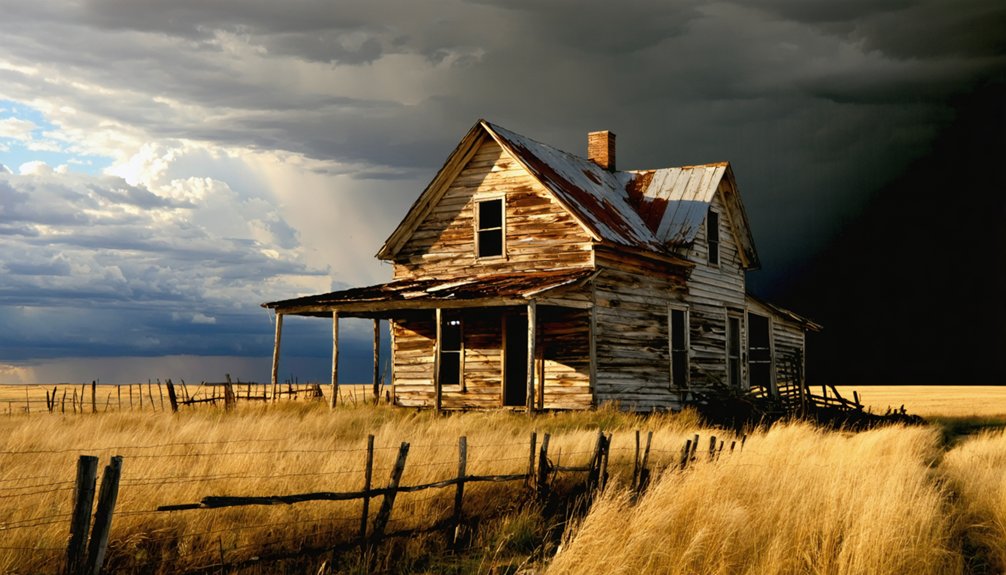
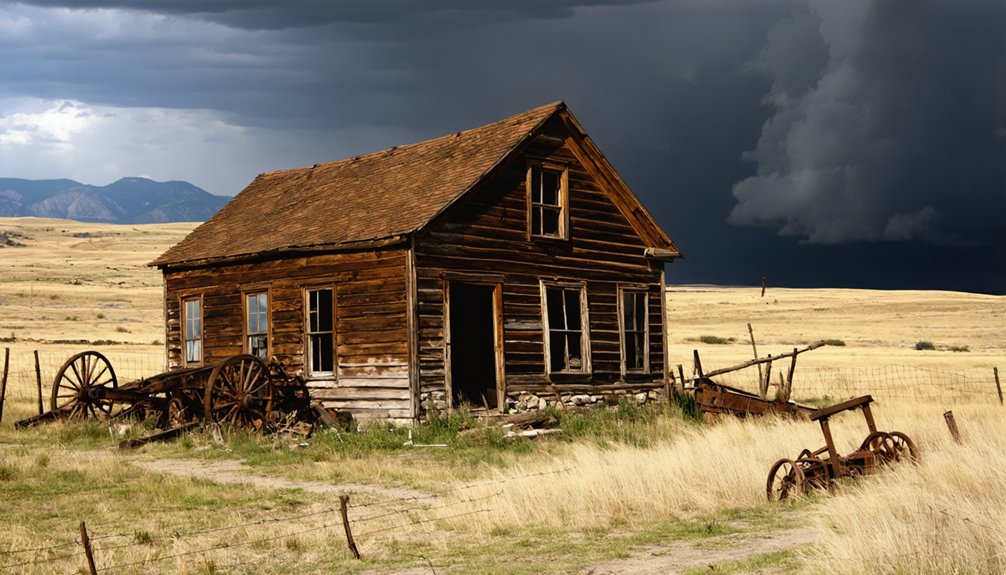
Although Hoover, South Dakota won’t greet you with crumbling saloons or a Hollywood-style ghost town aesthetic, that’s exactly what makes it worth the detour. What you’ll find instead is something rarer: a place that survived economic decline without erasing its identity.
Hoover won’t dazzle you — but that’s the point. This is survival without the spectacle.
Hoover represents cultural preservation in its most honest form. Named after cattle rancher John Hoover and established in 1905, this Butte County community once had a post office and active commerce.
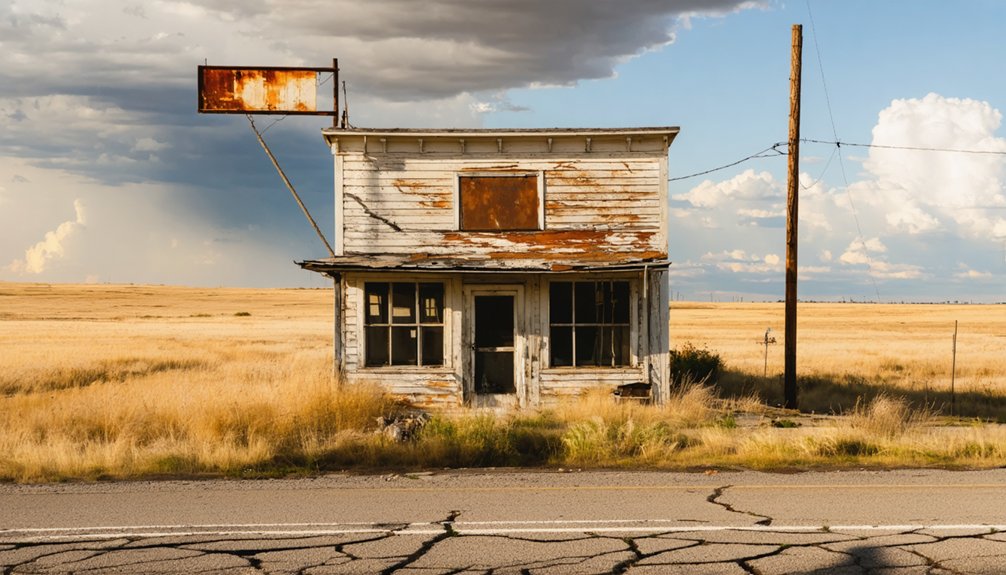
Today, a single general store — reportedly the oldest in South Dakota — still operates, anchoring a nearly vanished settlement.
You’re not visiting a museum. You’re standing inside a living relic of frontier survival. For travelers who value authenticity over spectacle, Hoover delivers exactly that kind of unfiltered, road-trip freedom.
How Hoover Went From Ranch Town to Ghost Town
Before Hoover ever appeared on an official map, a general store was already drawing ranchers and settlers to the area as early as 1902. By 1905, the community had a name, a formal layout, and a working post office.
John Hoover, the cattle rancher behind that name, helped anchor a place built on open land and frontier ambition.
Over the following decades, Hoover quietly contracted. The post office that once signaled civic life closed in 1973, and most residents drifted away.
What remained wasn’t rubble — it was a stripped-down community with one surviving business holding the line.
For rural tourism and historical preservation enthusiasts, that arc tells a compelling story. You’re not visiting a ruin. You’re visiting a place that refused to vanish completely.
Where Hoover Is and How to Get There
You’ll find Hoover tucked into Butte County in northwest South Dakota, sitting at roughly 45.11°N, 103.27°W in the sparsely populated rangeland west of the Black Hills.
South Dakota Highway 79 serves as your primary corridor for reaching the community, making it a natural stop on a broader western South Dakota road trip.
If you’re building a ghost-town loop through the Black Hills region, Hoover fits cleanly into a route that connects several historically reduced frontier communities across Butte County.
Hoover’s Exact Location
Where exactly do you find a ghost town that never fully disappeared? Head to Butte County in northwestern South Dakota, and you’ll locate Hoover sitting at approximately 45.11250°N, 103.26722°W. The South Dakota Highway 79 corridor puts you in the right territory, cutting through open rangeland shaped by agricultural decline and stubborn community resilience.
Hoover occupies the northern Black Hills travel region, making it a natural stop on any western South Dakota ghost-town loop. The landscape is rural and sparsely developed, exactly what you’d expect from a frontier community that shrank without vanishing entirely.
You won’t find crowds or commercial sprawl here. Instead, you’ll find wide skies, quiet roads, and a small settlement that held its ground long after most people expected it to disappear.
Nearby Highway Access
Getting to Hoover means committing to South Dakota Highway 79, the main artery threading through this stretch of Butte County rangeland. This rural corridor puts you close to historical architecture and local legends that most travelers never discover.
Plan your approach using these four access points:
- Highway 79 north from Belle Fourche offers the most direct route with minimal detours.
- Butte County roads branching west connect surrounding ranch communities to Hoover’s core.
- Fuel up before leaving any larger town — services disappear fast once you’re deep in rangeland.
- GPS coordinates 45.1125°N, 103.2672°W lock your target precisely when road signage thins out.
You’re driving into open country here, so pack water, check your tank, and embrace the isolation.
Regional Road Trip Context
Hoover sits in the northwest corner of South Dakota, tucked inside Butte County’s wide-open rangeland roughly between Belle Fourche and the Montana border. That location makes it a natural waypoint on any western South Dakota ghost-town loop.
You can roll through on South Dakota Highway 79, combining the stop with other faded communities scattered across the high plains. The freedom of this route is real — sparse traffic, big skies, and room to think.
Local legends about frontier ranchers and early settlers add texture to every mile. Preservation efforts here are modest but meaningful, centered on that one surviving general store.
Plan your visit as part of a longer corridor drive rather than a standalone destination, and you’ll leave with a fuller picture of how this corner of the West actually lived.
The Oldest General Store in South Dakota Is Still Open
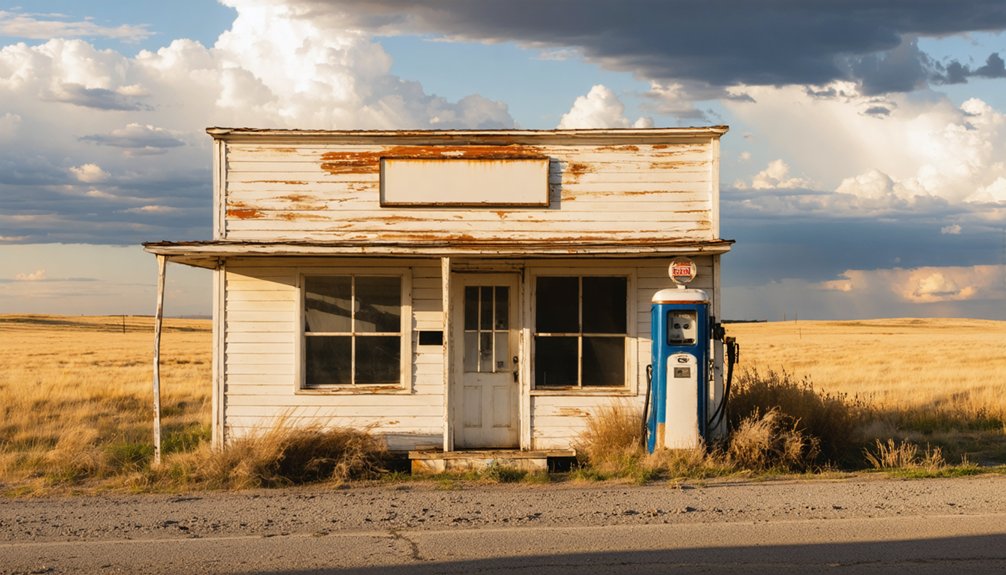
When you pull up to Hoover, the general store isn’t just the most interesting thing to see — it’s nearly the only thing to see, and that’s exactly what makes it extraordinary.
Locals consider it the oldest general store in South Dakota, a title it’s earned by surviving well over a century of rural boom-and-bust cycles that erased dozens of similar communities from the map.
You can still walk through the door today, making this working landmark one of the rare ghost-town stops where history is something you experience rather than just photograph.
Store’s Remarkable Survival Story
Though much of Hoover has faded into the quiet of the northern plains, one building has refused to follow suit — the general store, widely recognized as the oldest operating general store in South Dakota. Its survival cuts against the grain of community development patterns that typically end in full abandonment.
Economic decline claimed nearly everything else, yet this store kept its doors open. Here’s what makes its story worth knowing:
- It predates Hoover’s official 1905 founding, operating as early as 1902
- It outlasted the post office, which closed in 1973
- It still serves as a genuine gathering place for rural residents
- It represents over a century of continuous frontier-era commerce
When you stop here, you’re stepping into a living piece of South Dakota history.
Still Serving The Community
What you’ll find at the heart of Hoover isn’t a ruin or a historical marker — it’s an open door. The general store still operates today, serving the ranchers and rural residents who depend on it. That’s community resilience in its most honest form — not preserved behind glass, but lived in daily.
You’re not walking through a museum when you visit. You’re stepping into a working piece of historical preservation that never stopped functioning. Locals still gather here, still trade stories, still rely on the place the way people did generations ago.
For road-trippers chasing authentic frontier history, that matters. Hoover doesn’t perform its past — it simply continues it, quietly and without ceremony, out on the western South Dakota plains.
Visiting This Historic Landmark
That open door is your invitation to step inside a piece of South Dakota history that’s still very much alive. The cultural significance of this general store runs deep — it’s carried a frontier community through more than a century of change.
Make your visit count by focusing on these four highlights:
- Explore the original structure — notice the architectural details that preservation efforts have kept intact
- Talk to locals — they’ll share stories no guidebook contains
- Buy something — keeping this store active is how preservation efforts actually work
- Photograph the exterior — the building itself tells Hoover’s story visually
You’re not just stopping at a curiosity. You’re standing inside a living landmark that refused to disappear alongside the town around it.
What You’ll Actually Find When You Arrive in Hoover
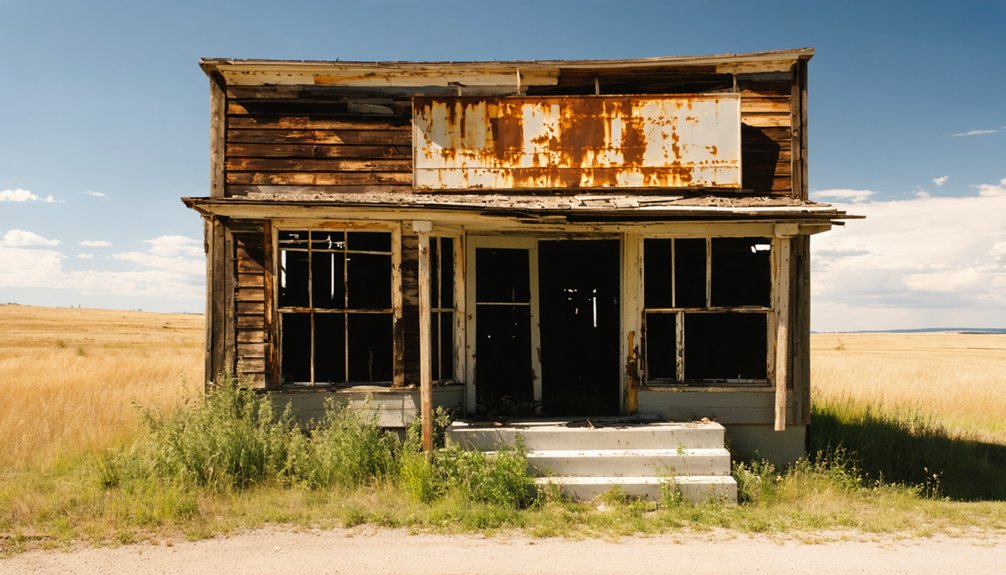
When you pull off the road and into Hoover, don’t expect a sprawling ghost town frozen in time—you’ll find a quiet, minimal settlement that’s more blink-and-you’ll-miss-it than open-air museum. The landscape is open and rural, with little infrastructure to signal that a real community once thrived here.
What anchors the stop is the general store, widely recognized as the oldest operating general store in South Dakota. It’s a living piece of local legends, still serving nearby ranchers and curious travelers alike.
Preservation efforts haven’t turned Hoover into a polished attraction—and that’s exactly the point. The rawness is what makes it worth stopping for. Bring a camera, go inside if it’s open, and appreciate a place that survived without becoming a spectacle.
The Best Ghost Towns to Pair With Hoover in Butte County
Hoover makes a strong anchor for a longer Butte County ghost-town loop, and the surrounding region gives you plenty of historically reduced communities worth tracking down.
Pair your stop with these nearby finds:
- Minnesela – A former county seat with historical architecture that hints at earlier ambitions along the Belle Fourche River.
- Fruitdale – A quiet, declined settlement where local legends about frontier-era settlers still circulate among longtime residents.
- Belle Fourche surroundings – Several roadside communities nearby reflect classic boom-and-bust patterns worth exploring off the main corridor.
- Owl Creek area – Remote and photogenic, this stretch rewards travelers willing to navigate rural roads for authentic ghost-town character.
Together, these stops build a compelling western South Dakota loop rooted in real frontier history.
How to Build a Black Hills Ghost Town Road Trip Loop
Building a Black Hills ghost-town loop around Hoover means you’re already starting with one of western South Dakota’s most quietly compelling stops. From here, push south along the Highway 79 corridor, weaving through Butte County communities where historic architecture still marks former frontier ambitions.
Each town adds another layer of local folklore, from ranching legends to railroad-era stories that explain why settlements rose and faded across this landscape.
Keep your loop flexible. Hoover demands only a short stop, so you’ll have time to hit multiple sites in a single day. Carry a detailed regional map, since rural road conditions vary.
Prioritize stops that offer visual payoff alongside historical depth, and you’ll return home with a full picture of how western South Dakota’s ghost towns quietly endure.
Before You Go: Safety at Abandoned Sites
Ghost town structures have stood without maintenance for decades. Floors, stairs and roof timbers fail without warning, and a building that looks solid from outside may not hold your weight. Stay out of standing structures unless the site is actively maintained and open to visitors.
Mine workings are the more serious hazard. Vertical shafts can be hundreds of feet deep, are often unfenced, and may be hidden by brush or capped with rotted boards. Never enter an adit, tunnel or shaft: abandoned workings can hold oxygen-poor or toxic air that gives no warning before you lose consciousness.
Enclosed spaces with rodent droppings carry a risk of hantavirus, which is contracted by breathing contaminated dust. Do not sweep or stir up dust inside old cabins and outbuildings.
Cell coverage at these sites is usually poor or absent. Tell someone your route and expected return time, and carry more water than you think you need.
Frequently Asked Questions
Is There an Admission Fee to Visit Hoover, South Dakota?
The best things in life are free! You’ll pay no admission fee to explore Hoover’s historical significance. Simply drive up, soak in the local legends, and let this open, unincorporated community speak to your free-spirited soul.
What Is the Best Time of Year to Visit Hoover?
You’ll want to visit Hoover during late spring or early summer. The mild weather lets you explore its historical preservation and soak in local folklore while enjoying open roads and that liberating ghost-town freedom.
Are There Any Accommodations or Camping Near Hoover, South Dakota?
You won’t find accommodations directly in Hoover, but nearby towns offer lodging and camping. Base yourself there, explore local dining options, chase scenic photo spots, and enjoy the freedom of wide-open western South Dakota roads.
Is Hoover, South Dakota Accessible for Visitors With Mobility Limitations?
Hoover’s rural, unpaved setting may challenge mobility assistance needs, as accessible pathways aren’t guaranteed. You’ll want to call ahead, confirm conditions, and embrace the rugged freedom of this frontier community on your own terms.
Can Visitors Purchase Souvenirs at the Hoover General Store?
The knowledge doesn’t confirm souvenir shopping or a gift shop at Hoover’s general store, but you’ll likely find everyday goods that make meaningful mementos from your frontier adventure at this remarkable, enduring community landmark.
References
- https://en.wikipedia.org/wiki/Hoover
- https://kids.kiddle.co/Hoover
- https://www.sdpb.org/rural-life-and-history/2023-08-21/some-black-hills-ghost-towns-and-their-origins
- https://www.everythingsouthdakota.com/the-oldest-general-store-in-south-dakota-has-a-fascinating-history/
- https://npgallery.nps.gov/GetAsset/389b939d-a945-4546-83f8-0591b3067c4d
- https://kids.kiddle.co/List_of_ghost_towns_in_South_Dakota