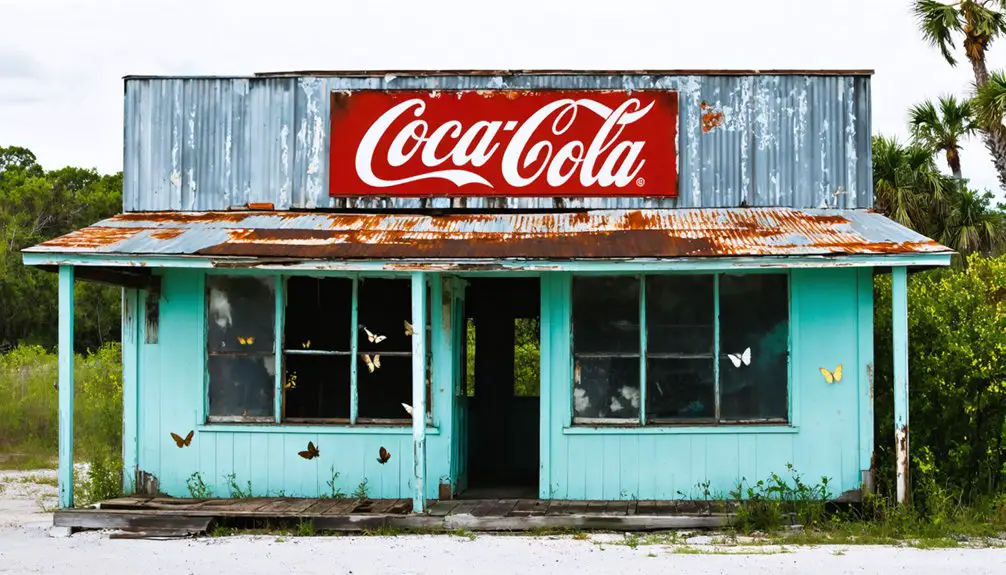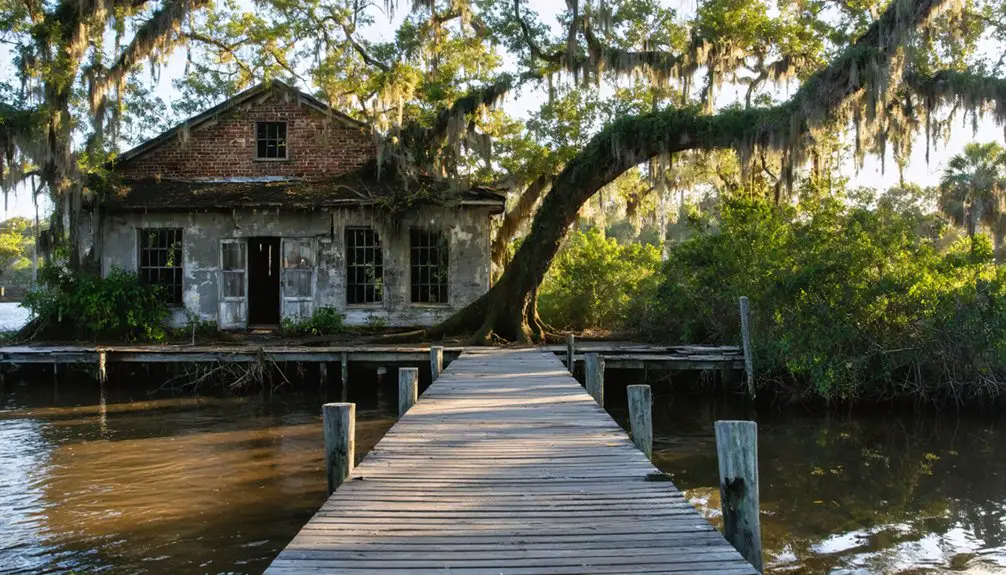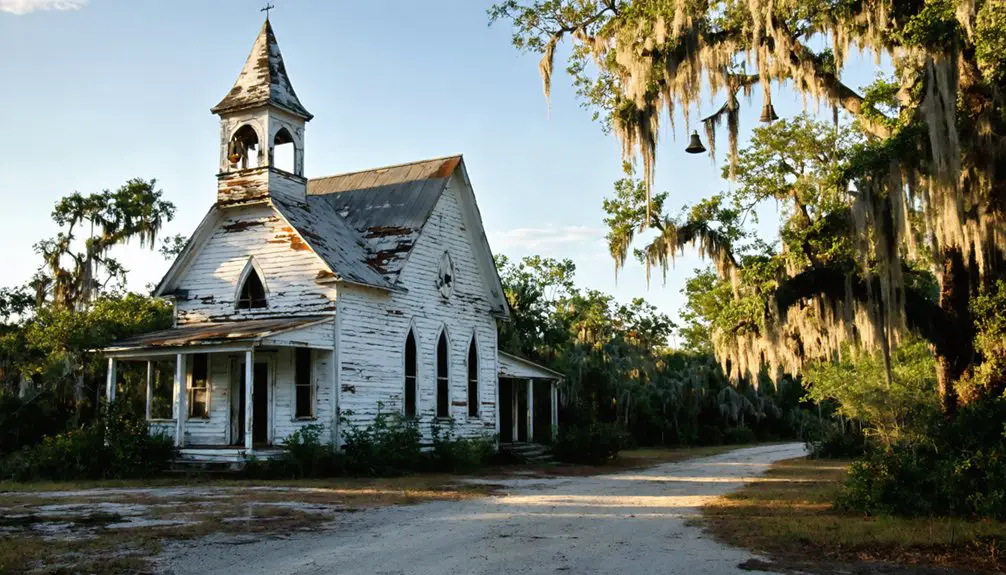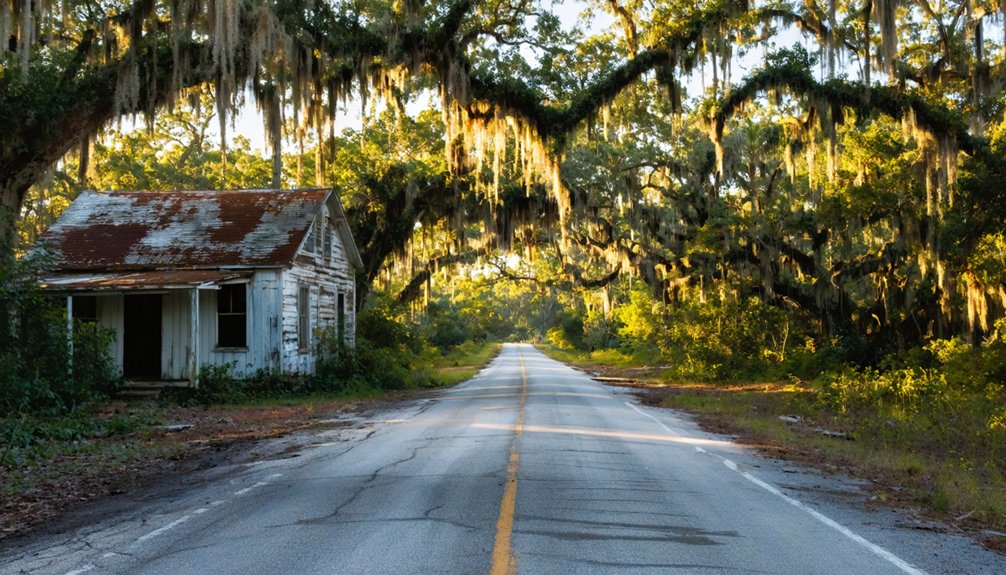
Planning a ghost town road trip to Juliette, Florida, means heading 2 miles north of Dunnellon along U.S. 41 into Marion County, where a once-thriving 1880s frontier community now rests beneath Rainbow Springs State Park. You won’t find crumbling buildings or artifacts — nature has fully reclaimed this land. Visit between October and April for the best weather, pack sunscreen and sturdy shoes, and stay in nearby Dunnellon. There’s far more to this forgotten town’s rise and fall than you’d expect.
Key Takeaways
- Juliette, Florida, is located approximately 2 miles north of Dunnellon off U.S. 41, within Rainbow Springs State Park in Marion County.
- Founded in the 1850s by Captain Samuel Agnew, Juliette declined after phosphate mining drew residents away, leaving no remaining structures.
- The ghost town site now sits within Rainbow Springs State Park, offering kayaking, snorkeling, nature trails, and wildlife viewing.
- Visit between October and April to enjoy mild weather, avoiding Florida’s intense summer heat and frequent thunderstorms.
- Pack comfortable shoes, printed maps, sunscreen, insect repellent, a camera, and a journal for documenting your exploration.
What Was Juliette, Florida?
Once a thriving frontier community in Marion County, Juliette, Florida, now exists only in historical records as a ghost town swallowed by time. Officially incorporated in 1883, this small but active settlement sat roughly 2 miles north of Dunnellon near the springs now known as Rainbow Springs.
You’d have found three general stores, a hotel, a sawmill, a railroad depot, and a post office here. Captain Samuel Agnew first broke ground in the 1850s, clearing hundreds of acres to cultivate sea cotton.
Local legends credit him as Juliette’s true founder.
But phosphate mining eventually pulled farmers away, scattering the community and silencing the town’s activity. Today, no historical artifacts or standing structures remain — just the story itself, waiting for curious travelers like you to discover it.
Where Is the Juliette Ghost Town Located Today?
You’ll find the ghost town of Juliette in Marion County, Florida, sitting roughly 2 miles north of Dunnellon — a quick, easy reference point for planning your route.
Today, the site falls within the Rainbow Springs State Park area, where the former Blue Springs once attracted settlers and travelers alike.
Though no structures remain, you can still visit the park to connect with the landscape that once supported a thriving frontier community.
Juliette’s Marion County Position
Nestled in Marion County, Florida, Juliette sits roughly 2 miles north of Dunnellon and about 2 miles south of Romeo — another ghost town worth adding to your road trip list.
Today, it’s part of the Rainbow Springs area, where native flora thrives along crystal-clear waters. Though no historical architecture remains standing, the land itself tells a powerful story.
Here’s what defines Juliette’s position today:
- Located near Rainbow Springs State Park
- Sits along the original Blue Springs corridor
- Surrounded by lush native flora unique to Central Florida
- Accessible through nearby Dunnellon for supplies and lodging
- Positioned between two ghost towns for a double-destination adventure
You’re not chasing ruins here — you’re chasing history written into the landscape itself.
Proximity To Dunnellon
Dunnellon sits just 2 miles south of where Juliette once stood, making it your best launching point for this ghost town adventure. You’ll find modern amenities here, including restaurants, fuel, and lodging, before heading north toward the vanished settlement.
The short drive connects you to Rainbow Springs State Park, where Juliette’s story quietly lives on beneath the landscape.
While no historical artifacts remain at the original site, Dunnellon‘s local community preserves regional memory through storytelling and educational resources. Ask around, and you’ll encounter local legends about phosphate miners who abandoned farms overnight, leaving entire lives behind.
That proximity between thriving Dunnellon and forgotten Juliette tells a powerful story about economic forces that shaped Florida’s frontier. Your road trip starts here, just two miles from history.
Rainbow Springs Park Today
Where Juliette once bustled with general stores, a hotel, and a railroad depot, Rainbow Springs State Park now draws visitors with crystal-clear water and native Florida landscape. You won’t find historical architecture or physical ruins, but the land itself tells the story.
Local legends about Captain Agnew’s sea cotton fields and the phosphate boom still circulate among history enthusiasts exploring the area.
Here’s what you can experience at the park today:
- Snorkeling and kayaking through spring-fed waters
- Walking trails through restored Florida wilderness
- Wildlife viewing along the Withlacoochee River
- Guided programs covering frontier settlement history
- Picnic areas near the original spring site
It’s a place where natural beauty meets forgotten history, making your ghost town road trip genuinely worthwhile.
Captain Samuel Agnew and the Founding of Juliette
When you explore Juliette’s origins, you’ll quickly encounter the name Captain Samuel Agnew, the man credited with founding the community in the 1850s. He cleared hundreds of acres near the springs to cultivate sea cotton, establishing the agricultural backbone that shaped the settlement’s early identity.
Agnew’s pioneering work transformed raw Florida frontier land into a productive farming community that would eventually grow into an incorporated town by 1883.
Agnew’s Pioneering Settlement Role
Before Juliette ever appeared on a map, Captain Samuel Agnew was already reshaping the land around Blue Springs, clearing hundreds of acres to cultivate sea cotton in the 1850s. His work with historical land grants fueled pioneer community development that transformed untamed Florida frontier into something remarkable.
Here’s what defined Agnew’s pioneering settlement role:
- He served as the region’s first permanent settler
- He cleared hundreds of acres near Blue Springs personally
- He cultivated sea cotton as the foundation crop
- He established the agricultural framework others built upon
- Local records credit him as Juliette’s true founder
When you visit today, you’re standing where one determined man bet everything on raw land. Agnew’s vision created the community that eventually became Juliette, Florida.
Sea Cotton Agricultural Legacy
Captain Samuel Agnew didn’t just settle the land around Blue Springs — he transformed it, converting hundreds of raw Florida acres into productive sea cotton fields that gave Juliette its earliest economic identity. His agricultural vision shaped the region long before urban development reshaped Florida’s frontier communities into something unrecognizable.
When you explore Juliette’s history, you’ll appreciate how sea cotton cultivation created a self-sustaining economy that attracted neighbors, businesses, and eventually an entire incorporated town.
Agnew’s cleared fields weren’t simply farmland — they were the foundation of a cultural identity worth preserving.
Today, cultural preservation efforts keep this legacy alive through historical records and educational resources at nearby Rainbow Springs State Park.
You can connect directly with that agrarian past simply by visiting and understanding what once thrived here.
Why Juliette Boomed, Then Vanished Almost Overnight
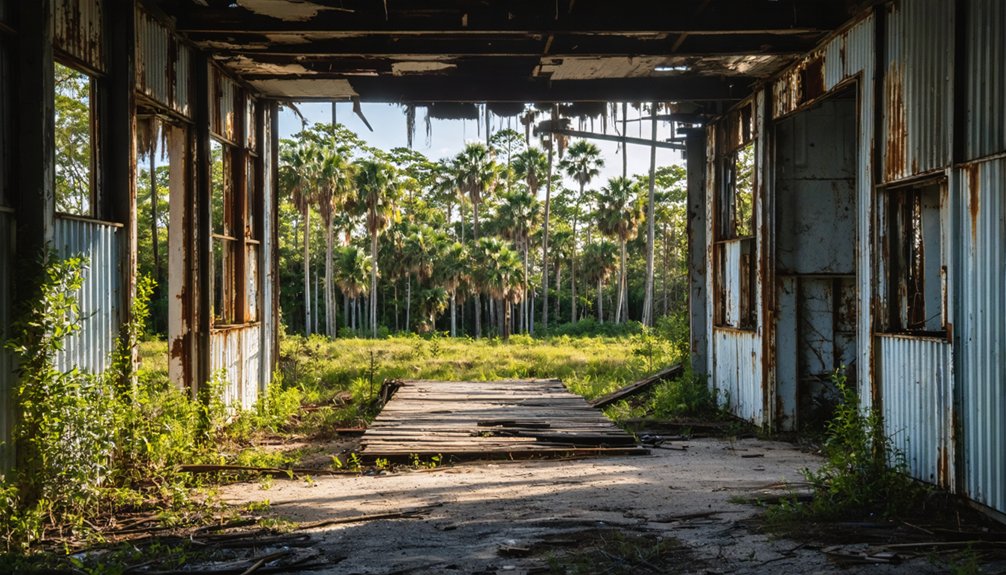
Juliette’s rise followed a familiar frontier formula: fertile land, accessible water, and one determined pioneer. Captain Samuel Agnew cleared hundreds of acres, planted sea cotton, and built something real. Then phosphate transformed everything.
Here’s what fueled the boom and sealed the end:
- Fertile soil and Blue Springs attracted early settlers hungry for opportunity
- Three general stores, a sawmill, and a hotel created genuine community infrastructure
- Local legends describe thriving farms suddenly emptied as mining wages beckoned
- Historical artifacts from this era confirm phosphate’s devastating pull on agricultural towns
- Railroad access initially helped Juliette grow, then accelerated its population drain
You won’t find ruins waiting for you today. Juliette simply dissolved, leaving only stories behind. That invisibility makes exploring its legacy through Rainbow Springs State Park even more compelling.
Juliette’s Stores, Hotel, Railroad, and Sawmill at Its Peak
At its peak, this small Florida community punched well above its weight. Juliette supported three general stores where locals traded goods and stocked up on essentials. A hotel stood at the head of the springs, welcoming travelers who’d journey through frontier Florida seeking opportunity or adventure.
A railroad depot kept commerce moving, connecting residents to wider markets and giving independent-minded settlers real economic freedom. A sawmill processed timber, fueling construction and trade throughout the region.
Imagine the energy here — something like today’s local cuisine scene or cultural festivals that draw crowds and build community identity. Juliette had that same magnetic pull.
Every business fed off the others, creating a self-sustaining hub. It wasn’t just surviving; it was thriving, until the phosphate boom rewrote everyone’s plans entirely.
What Replaced Juliette: Rainbow Springs State Park Today
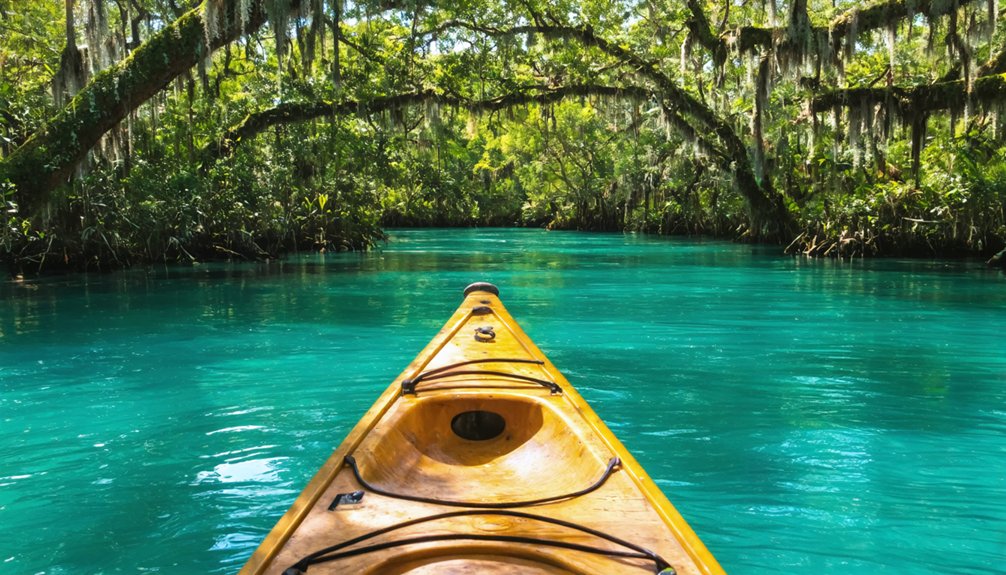
Where Juliette once buzzed with traders, travelers, and timber workers, Rainbow Springs State Park now draws visitors with crystal-clear waters, nature trails, and kayaking along the Rainbow River. You won’t find historical artifacts or crumbling foundations, but the land itself carries local legends of a thriving frontier community. Here’s what today’s park offers:
- First-magnitude springs pumping 400 million gallons daily
- Kayak and canoe rentals along the Rainbow River
- Snorkeling in waters with 30-foot visibility
- Native botanical gardens surrounding the headspring
- Campgrounds for overnight wilderness stays
You’re fundamentally paddling through what was once Juliette’s backyard. The park preserves the natural beauty that originally attracted settlers like Captain Samuel Agnew, giving you a genuine connection to Florida’s raw, untamed frontier past.
How Do You Get to the Juliette Ghost Town Site?
Since no physical structures survive at the original site, your destination is fundamentally the Rainbow Springs area, about 2 miles north of Dunnellon, Florida, off U.S. 41. Head into Marion County, where the ghost town once thrived near the historic Blue Springs location.
From Dunnellon, drive north and follow signs toward Rainbow Springs State Park, which now occupies the former Juliette territory. Park staff can point you toward areas rich in local legends about Captain Agnew’s cotton fields and the phosphate boom that scattered the community.
Don’t expect historical artifacts lying around — they’ve long since disappeared. Instead, bring curiosity and research notes. The landscape itself tells the story, and nearby Dunnellon offers restaurants and lodging to support your exploration of this forgotten Florida frontier settlement.
When to Visit, Where to Stay, and What to Bring
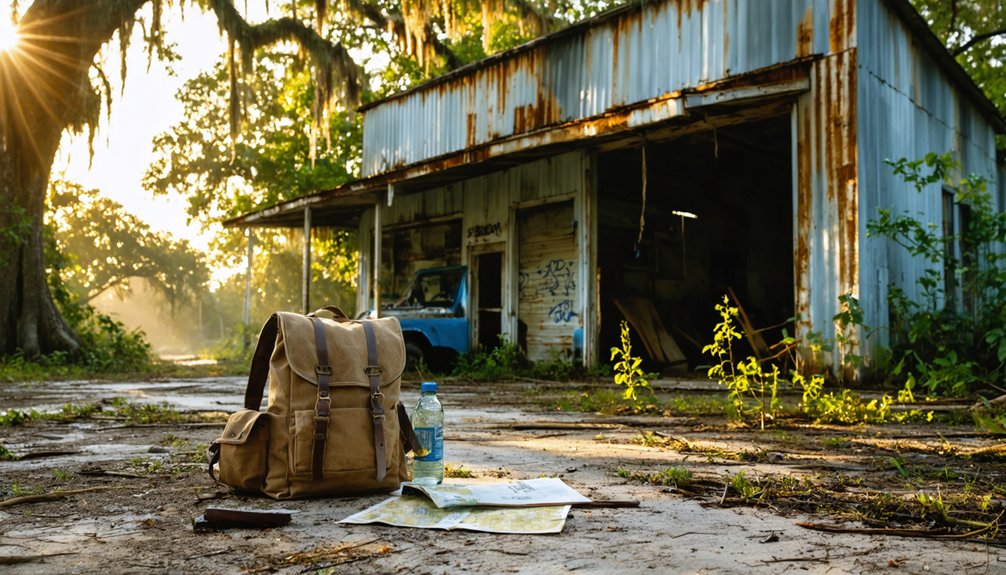
Florida’s mild winters make October through April the ideal window for exploring the Rainbow Springs area, so you’ll want to plan your Juliette ghost town visit during those months to dodge the brutal summer heat and afternoon thunderstorms.
Plan your Juliette ghost town visit between October and April to avoid Florida’s brutal summer heat and storms.
Nearby Dunnellon provides solid base camp options for your adventure into historical preservation and early Florida frontier life.
Pack smart and stay ready with these essentials:
- Comfortable walking shoes for uneven terrain
- A printed map highlighting regional tourist attractions
- Sunscreen and insect repellent year-round
- A journal to document your ghost town discoveries
- A camera to capture Rainbow Springs State Park’s natural beauty
Book accommodations in Dunnellon early, especially during peak winter months when travelers flock to the region’s outdoor destinations.
Frequently Asked Questions
Are There Guided Ghost Town Tours Specifically Focused on Juliette’s History?
Don’t hold your breath—no guided tours specifically focus on Juliette’s history. You’ll navigate ghost town preservation independently, following historic site regulations at Rainbow Springs State Park, where you’ll uncover Juliette’s fascinating frontier past yourself.
Can Visitors Legally Collect Artifacts or Souvenirs From the Juliette Site?
You can’t collect artifacts or take souvenirs from Juliette’s site, as it falls within Rainbow Springs State Park. Strict artifact collection and souvenir rules protect the area’s history, preserving your freedom to explore it responsibly.
Is the Juliette Ghost Town Site Accessible to Visitors With Mobility Limitations?
You’ll find that mobility accessibility at Juliette’s site varies, as it’s within Rainbow Springs State Park, which offers some wheelchair friendliness through paved paths, letting you freely explore this hauntingly beautiful piece of Florida’s forgotten frontier history.
Are There Any Annual Events Commemorating Juliette’s Founding or Abandonment?
You won’t find official annual events commemorating Juliette’s founding or abandonment, but Rainbow Springs State Park actively supports historical preservation efforts year-round. Explore nearby Dunnellon, where local legends keep this fascinating ghost town’s spirit alive for freedom-seeking adventurers.
Does Rainbow Springs State Park Offer Any Educational Programs About Juliette?
You’ll find Rainbow Springs State Park doesn’t offer specific educational programs about Juliette, yet its historical preservation efforts and environmental impact initiatives let you explore the vibrant frontier past thriving beneath today’s stunning natural freedom.
References
- https://www.youtube.com/watch?v=8oxNalj9NE0
- https://travelmadepersonal.com/juliette-ghost-town-florida/
- https://www.youtube.com/watch?v=oiS5w2an3sI
- https://www.youtube.com/watch?v=AxFvQa1_els
- https://www.ghosttowns.com/states/fl/juliette.html
- https://www.youtube.com/watch?v=DHpp5BcRxkU
- https://ghosttownadventures.wordpress.com/
- https://apps.apple.com/fr/app/ghosttownmap/id6761741652
- https://urbexunderground.com/ghost-towns-in-florida/
- https://www.floridarambler.com/historic-florida-getaways/old-florida-towns/