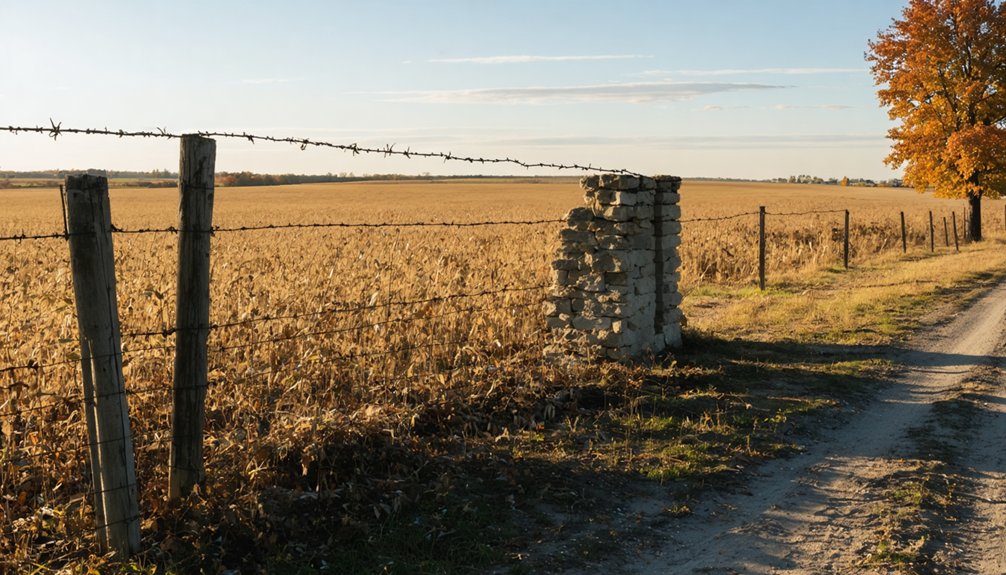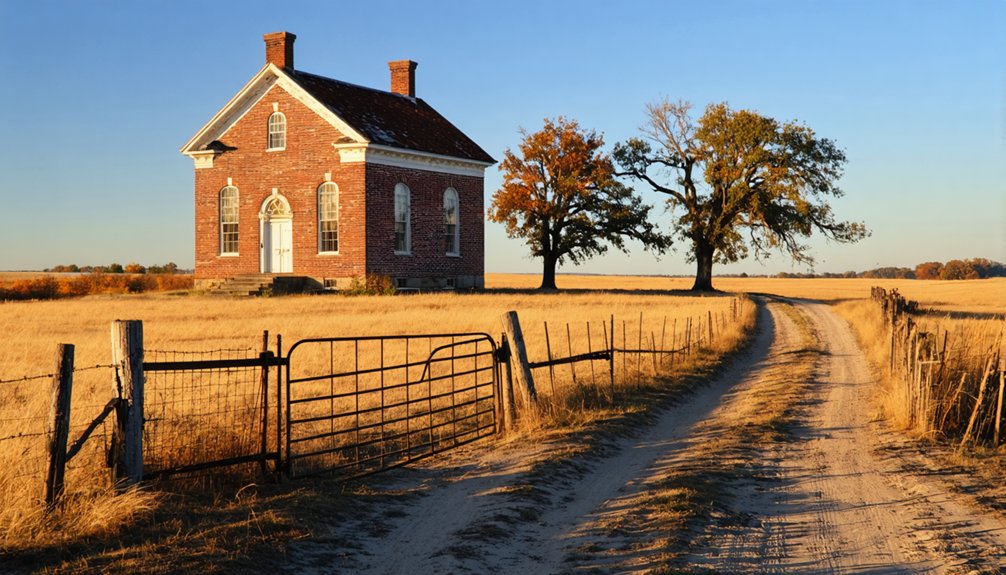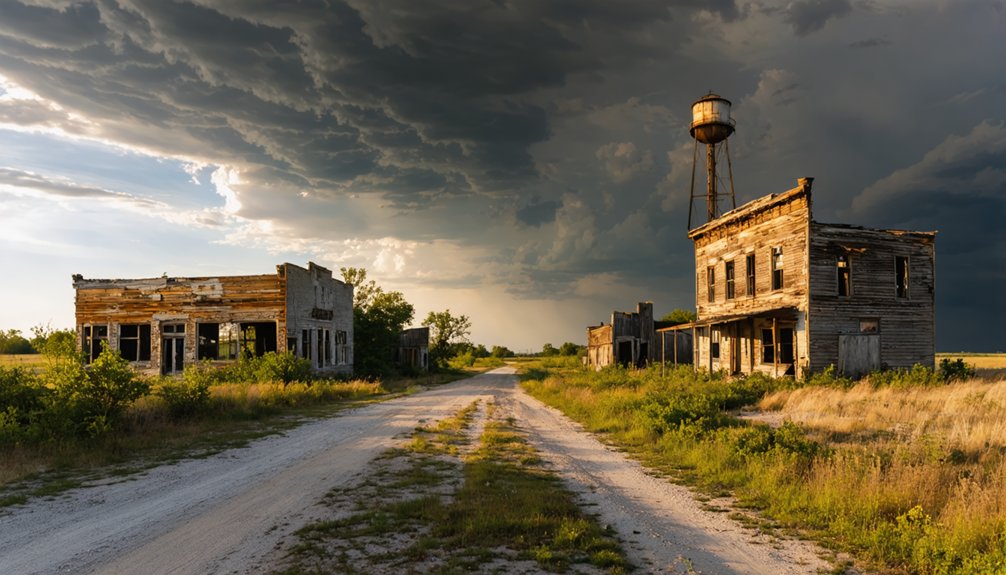
To plan your ghost town road trip to Ledford, Illinois, head south from Harrisburg on US Highway 45 toward Carrier Mills—it’s only about three miles. Once there, you’ll find scattered homes, a historic Baptist church, and a Hungarian cemetery marking what’s left of a coal town that once housed 1,400 residents. Wear sturdy shoes and bring a map to explore the original town site on foot. Ledford’s full story is far richer than it first appears.
Key Takeaways
- Ledford, Illinois, is located 3 miles south of Harrisburg on US Highway 45, making it a quick, accessible ghost town day trip.
- Key landmarks include the Hungarian Cemetery, Ledford Baptist Church, and mining relics near the Ogara mine corridor along Highway 45.
- The original town site sits ¼ mile west of Highway 45 and requires on-foot exploration through overgrown, reclaimed terrain.
- Bring a detailed map, wear sturdy footwear, and respect private property boundaries, as the town’s original limits are unmarked.
- Ledford’s history features coal mining, Hungarian immigrant communities, gangster Charlie Birger, and the devastating 1937 Saline mine explosion.
What Makes Ledford, Illinois a True Ghost Town?
Once a thriving coal town of over 1,000 residents, Ledford, Illinois now holds fewer than 100 people — and that sharp decline tells you everything about what makes it a genuine ghost town.
You won’t find bustling streets or active mines here. Instead, you’ll discover scattered homes along Highway 45, a preserved Baptist church, and a haunting Hungarian Cemetery steeped in local folklore.
The architectural remnants that remain stand quietly against a landscape where nature has reclaimed everything else. Mining shafts are gone, immigrant neighborhoods have emptied, and the infrastructure that once supported thousands has vanished entirely.
Ledford isn’t just economically abandoned — it’s atmospherically hollow. That combination of documented history, visible decay, and eerie stillness is exactly what defines a true ghost town.
How to Get to Ledford From Harrisburg
Start your trip in downtown Harrisburg, then head south on US Highway 45 toward Carrier Mills. Ledford is only about 3 miles away.
You’ll know you’re getting close when scattered homes begin appearing along the highway, remnants of a community that once outgrew the county seat itself.
Keep your eyes open for the historic Ledford Baptist Church and the Hungarian Cemetery, two landmarks that still anchor this quietly haunting stretch of road.
Starting Point In Harrisburg
Harrisburg, the Saline County seat, makes for a natural jumping-off point before heading south toward Ledford. Before you hit the road, fuel up on local cuisine at one of Harrisburg‘s diners along Poplar Street — you’ll want a solid meal before exploring abandoned landscapes.
If you’ve got extra time, the surrounding Shawnee National Forest offers outdoor activities like hiking and trail riding that pair perfectly with a ghost town excursion.
Once you’re ready, find US Highway 45 heading south out of Harrisburg. The drive takes roughly five minutes, covering about three miles.
Watch for subtle landmarks along the roadside — Ledford doesn’t announce itself loudly. Keep your eyes open and your speed down, because this forgotten community rewards those who pay close attention.
Highway 45 South Route
Heading south on US Highway 45 out of Harrisburg, you’ll cover roughly three miles before the scattered remnants of Ledford begin appearing along the roadside. Watch for the handful of homes still standing near the highway — they mark what was once a thriving coal town bursting with over 1,000 residents.
The original town site actually sits a quarter mile west of today’s visible houses, hidden where nature has quietly reclaimed the land. Local folklore surrounds every overgrown field and forgotten path along this stretch, whispering stories of Hungarian immigrants and notorious figures like Charlie Birger.
Keep your eyes sharp for any mining relics still visible near the old Ogara mine corridor. This short drive packs a surprising amount of history into just a few miles.
Spotting Ledford’s Landmarks
Once you’ve made your way down Highway 45, two landmarks help confirm you’ve reached Ledford’s historic core: the Ledford Baptist Church and the Hungarian Cemetery. The church stands as a preserved reminder of the community that once thrived here.
The cemetery carries the weight of immigrant stories, local legends, and unspoken ghost stories whispered among those who’ve wandered its rows. Pull over and walk the grounds — you’ll find Hungarian surnames etched into weathered stones, marking families who traveled far to mine coal and build new lives.
The original town site sits roughly a quarter mile west of the current houses along the highway. Nature has reclaimed most of the infrastructure, but these two landmarks anchor Ledford’s history and make the stop genuinely worth your time.
How Coal Mining Built Ledford Into a Town of 1,400
Coal mining didn’t just support Ledford — it built the town from the ground up. Rich coal seams, specifically No. 5 and No. 6, attracted workers, families, and opportunity. At its peak, Ledford swelled to between 1,100 and 1,400 residents, actually surpassing Harrisburg in population during the early 1900s.
The Southern Illinois Electric Railroad connected Ledford’s mines to broader markets, fueling explosive growth. Hungarian immigrants flooded in, establishing their own tight-knit neighborhood called “Hunky Row.”
Then industrial decline hit hard:
- Thirteen major shaft mines shut down in the early 1900s
- The Great Depression forced the Ogara mine to close in the 1930s
- A devastating 1937 Saline mine explosion accelerated population decline
What coal built, its absence completely dismantled.
The Hungarian Immigrant Community Behind “Hunky Row”
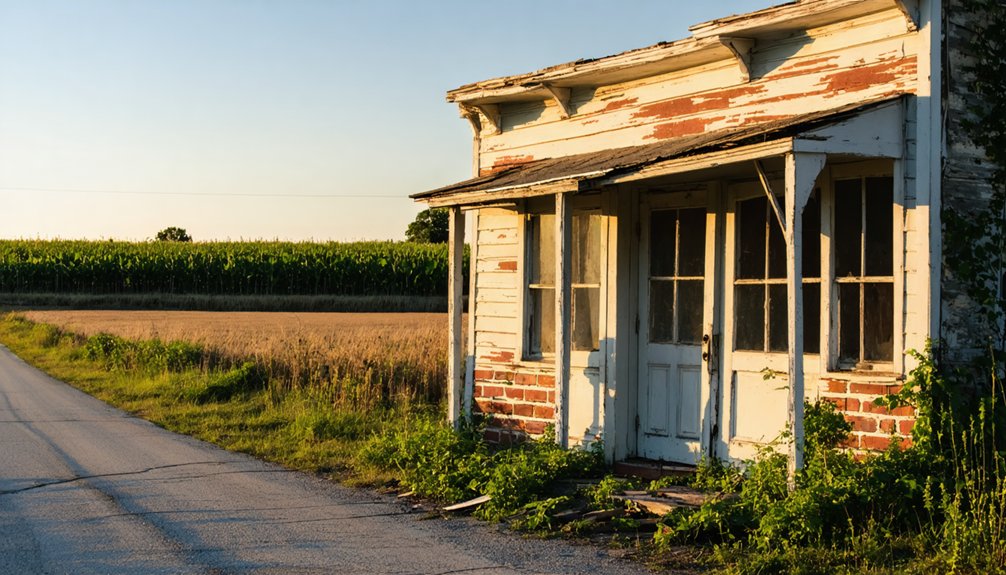
Behind Ledford’s coal boom stood a wave of Hungarian immigrants who transformed a mining camp into a living, breathing community. These workers crossed an ocean chasing opportunity, settling along the railroad tracks where coal seams ran deep. Their neighborhood earned the nickname “Hunky Row,” a tight-knit enclave where immigrant stories shaped daily life around shared language, culture, and hard labor underground.
When you walk this ground today, you’re standing where over 1,000 people once built something real from nothing. Mining history here isn’t just about shafts and coal cars — it’s about families who carved out lives in Southern Illinois.
Once the mines closed, “Hunky Row” emptied fast. The Hungarian Cemetery remains your most powerful connection to the community that once thrived and ultimately vanished here.
Charlie Birger’s Dark History in Ledford
Ledford’s history carries a darkness that goes beyond shuttered mines and empty streets — this quiet Illinois community was once home to Charlie Birger, one of the most notorious gangsters in Southern Illinois history.
Local legends trace his earliest crimes right here, where he ran his first bootlegging joint amid the historic architecture of a booming coal town.
Key facts you should know before visiting:
- Birger shot Chris Yates in Ledford on December 4, 1917 — his first recorded murder
- He operated Ledford’s original bootlegging operation during Prohibition’s rise
- He became the last person legally hanged in Illinois, executed at Franklin County Courthouse
Walking these streets, you’re treading ground where real criminal history unfolded — long before Birger’s name became legend across Southern Illinois.
The Mine Disasters That Emptied Ledford for Good
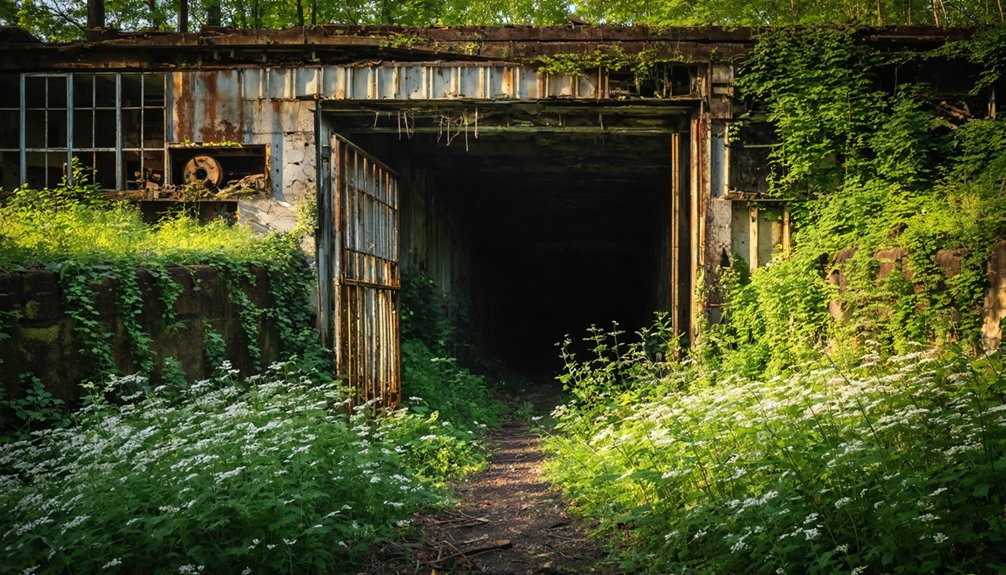
What truly emptied Ledford wasn’t just economic decline — it was a brutal sequence of disasters that stripped the town of its reason to exist. Thirteen major shaft mines ceased operations in the early 1900s, gutting the workforce overnight.
The Great Depression delivered another blow, forcing the Ogara mine to shutter in the 1930s. Then in 1937, an explosion ripped through the Saline mine, serving as the final death knell for the community.
When you visit today, you’ll find no mining memorials marking these tragedies — equipment was dismantled, houses torn down or burned, and nature swallowed the rest.
Local folklore keeps these stories alive, passed down through the few remaining families. The land itself carries the silence of what was lost.
What’s Left to See at Ledford’s Original Town Site?
After all that destruction, you might wonder if there’s anything left worth seeing — and the answer is yes, though you’ll need to know where to look. The original town site sits ¼ mile west of the current houses along US 45, where abandoned structures and open land hold decades of local folklore.
Here’s what you can explore:
- Ledford Baptist Church — a preserved landmark standing quietly against the town’s turbulent past
- The Hungarian Cemetery — where immigrant headstones tell stories that official records often don’t
- The original town site — accessible just off US 45, where foundations and overgrown lots hint at a once-thriving community
Nature has reclaimed most of Ledford, but these remnants reward curious travelers willing to venture slightly off the main road.
Ledford’s Hungarian Cemetery and Baptist Church Today
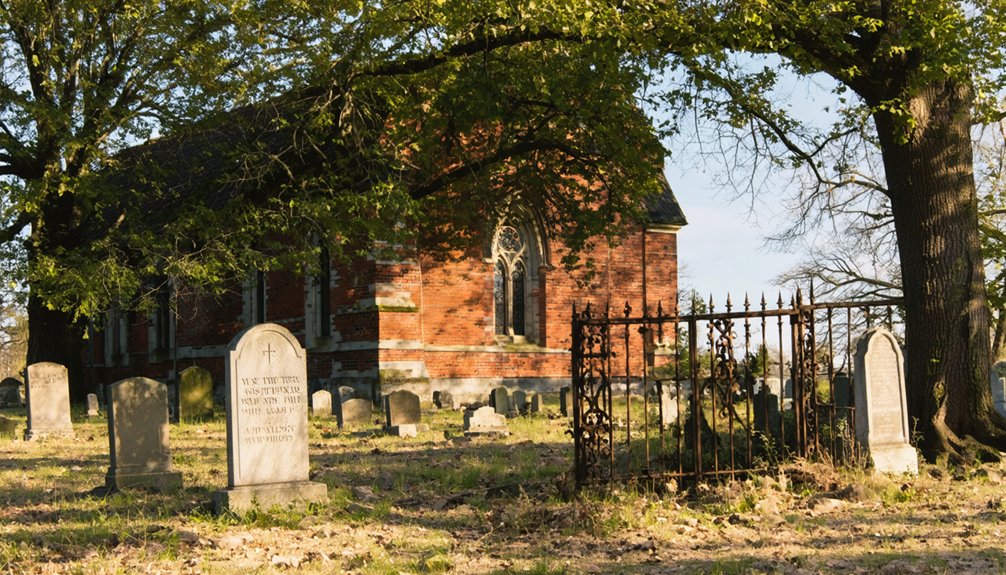
Among Ledford’s few surviving landmarks, the Hungarian Cemetery and Ledford Baptist Church stand as the most tangible connections to the town’s immigrant past. The cemetery preserves the stories of Hungarian miners who built their lives around coal seams only to watch everything collapse. Weathered headstones mark families who once crowded “Hunky Row” before mining jobs vanished and the neighborhood emptied completely.
Local legends and ghost stories swirl around both sites, drawing curious visitors who want something more than ordinary history. The Baptist Church still stands quietly along Highway 45, offering you a rare glimpse into Ledford’s community life beyond the mines.
Together, these two landmarks give you an authentic, unhurried connection to a vanished world that no museum exhibit could replicate.
What to Know Before You Visit Ledford’s Original Town Site
Visiting the original town site takes a bit more preparation than simply pulling off Highway 45 to photograph the church and cemetery. The actual site sits ¼ mile west of the current homes, meaning you’ll need to leave your vehicle and explore on foot.
Urban legends and folklore stories about Charlie Birger’s violent past still circulate among locals, adding an eerie layer to your experience.
Before heading out, keep these essentials in mind:
- Wear sturdy footwear since nature has fully reclaimed the infrastructure
- Bring a detailed map because no signage marks the original town boundaries
- Respect private property as scattered homes along Highway 45 belong to actual residents
You’re venturing into Illinois history here, so come prepared and stay curious.
Frequently Asked Questions
Is Ledford, Illinois Officially Recognized as a Neighborhood of Harrisburg Today?
Yes, Ledford’s one of Harrisburg’s ten official neighborhoods today! You’ll discover this historic ghost town and abandoned mining town has transformed from a booming coal community into a quiet, officially recognized urban neighborhood.
What Coal Seam Numbers Were Mined in Ledford During Its Peak Years?
Like veins of black gold beneath your feet, Ledford’s coal mining history centered on Illinois coal seams No. 5 and No. 6, which fueled the town’s explosive boom and drew thousands of hardworking souls to its depths.
Did the Southern Illinois Electric Railroad Still Operate After Ledford’s Mines Closed?
The knowledge doesn’t confirm if the electric railroad survived Ledford’s mine closure. You’ll find that the Southern Illinois Electric Railroad supported the mining economy, but once those mines shut down, the railroad’s fate likely followed suit.
How Many Official Neighborhoods Does the City of Harrisburg Currently Have?
Ironically, Harrisburg’s got ten official neighborhoods — one being Ledford, an abandoned mining town turned historic ghost town. You’d never guess this quiet relic of coal-era collapse now officially belongs to a thriving city’s modern neighborhood roster!
Where Exactly Were Charlie Birger’s Gallows Located When He Was Hanged?
You’ll find the historical crime’s Hangman’s location at the Franklin County Courthouse gallows, where Charlie Birger made history as Illinois’ last legally hanged person — a chilling, freedom-ending moment forever tied to Ledford’s notorious past.
References
- https://www.youtube.com/watch?v=PbwpVveIRoU
- https://en.wikipedia.org/wiki/Ledford
- http://www.sipscameraclub.com/attachments/064_GhostTownList2012.pdf
- https://drloihjournal.blogspot.com/2022/09/lost-towns-of-illinois-ledford-illinois.html
- https://www.facebook.com/groups/223545127671759/posts/6357190917640452/
- https://www.youtube.com/watch?v=93k0qtvzkn4&vl=en-US