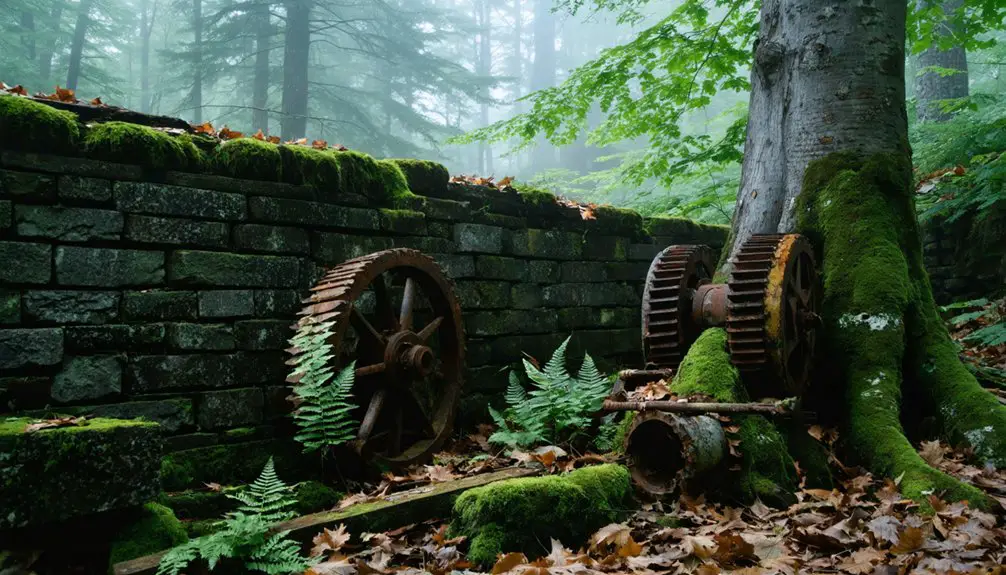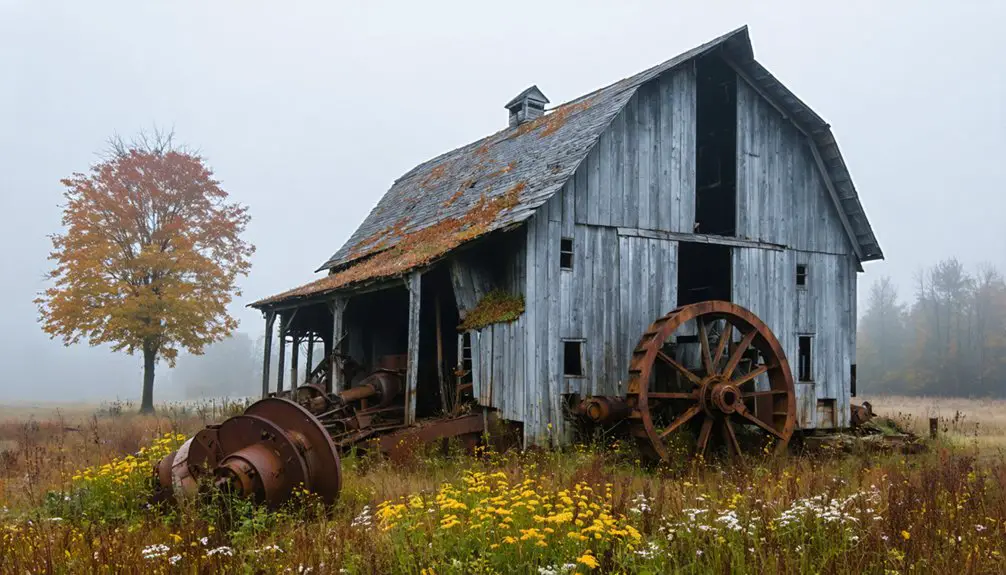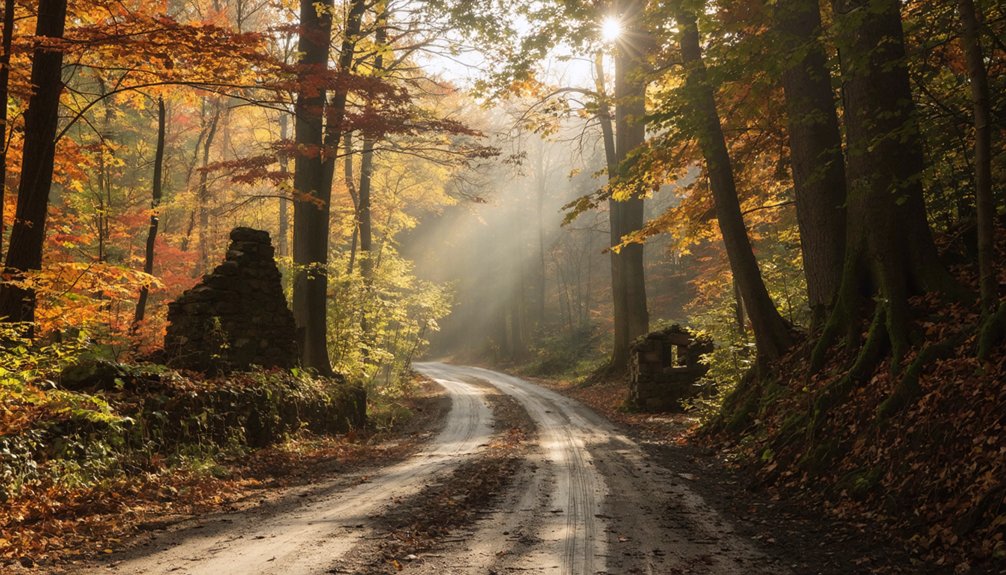
Maples, Vermont isn’t a real ghost town — it’s more of a feeling, a myth conjured by winding roads and autumn fog. But Vermont’s actual abandoned settlements are even better. You can visit eerie sites like Glastenbury, Somerset, Ricker Basin, Greenbank’s Hollow, and Dorset’s marble quarry, each with its own haunted history and terrain. Whether you’ve got a few hours or a full weekend, there’s a route waiting — and the details ahead will make sure you’re ready for it.
Key Takeaways
- Maples, Vermont is not a confirmed ghost town; it may represent a myth or feeling rather than a documented, abandoned historical settlement.
- Start your road trip at Somerset, accessible via logging roads, ensuring you cover the terrain before nightfall on day one.
- Day two should head north to Greenbank’s Hollow in Danville, then west to Ricker Basin near Waterbury for hill farming history.
- Match your gear to each site: waterproof boots and trekking poles for remote sites, lighter trail shoes for accessible ones like Dorset Quarry.
- This is a self-guided trip; read the landscape independently, respect remote sites like Glastenbury, and plan all travel around daylight hours.
Is Maples, Vermont a Real Ghost Town?
While the name “Maples, Vermont” conjures images of winding dirt roads and sugar shacks draped in autumn fog, it’s not actually a documented ghost town. No historical preservation records confirm its existence as an abandoned settlement.
Maples, Vermont stirs the imagination — but no historical record confirms it ever existed as an abandoned settlement.
You’ve likely encountered a blend of Vermont’s famous maple syrup region and real ghost towns like Glastenbury or Somerset.
That mix-up is understandable. Vermont’s maple country villages carry a ghostly quality of their own — tourist impact has quietly hollowed out their authentic character. Long-time residents feel like strangers as gift shops replace family farms and festival crowds flood once-peaceful roads.
These living towns feel half-abandoned in spirit, even if they’re technically thriving. So while Maples isn’t real, the feeling behind the search absolutely is.
Vermont’s Most Rewarding Ghost Towns, Ranked by Accessibility
Whether you’ve got an afternoon or a full day to spare, Vermont’s ghost towns meet you where you’re — some require nothing more than a short walk down a dirt road, while others reward the extra effort with a deeper sense of solitude and history.
If you’re easing in, Greenbank’s Hollow and the Dorset Marble Quarry offer quick, accessible entry points into Vermont’s abandoned past.
But if you’re ready to lace up your boots, Glastenbury and Ricker Basin will pull you further into the wilderness, where the silence feels like it’s been waiting for you.
Easiest Ghost Towns First
Not every Vermont ghost town asks the same price of admission, and that’s actually great news if you’re just getting started with abandoned-place road trips. Begin with Greenbank’s Hollow, an 1800s mill village in Danville that you’ll reach via a short dirt road walk. It’s ideal for photography tips like shooting in soft morning light, when shadows add depth to weathered structures.
Dorset’s marble quarry, America’s oldest commercial marble site dating to 1785, offers equally easy access and stunning turquoise water that photographs beautifully. Both sites reward you without demanding serious hiking gear.
Historical preservation efforts have kept these places accessible yet authentic, letting you absorb genuine Vermont history on your own terms. Start easy, build confidence, then tackle the harder sites deeper in the mountains.
Hike-Required Remote Sites
Once you’ve warmed up on the easy sites, Vermont’s remoter ghost towns start calling your name, and they’re absolutely worth answering. These hike-required destinations reward your effort with genuine historical preservation and stories locals still whisper about.
- Glastenbury – A day hike into the Bennington Triangle drops you into Vermont’s most legendary abandoned logging town, surrounded by unsolved local legends of five vanishings between 1945 and 1950.
- Somerset – Reach this 1790 trading settlement via logging roads and trails, where the Green Mountains feel completely untouched.
- Ricker Basin – A moderate 3-mile hike through Waterbury reveals an 1816 hill farming community that time genuinely forgot.
Pack good boots, tell someone your plans, and embrace the freedom of exploring where few venture.
Glastenbury, the Bennington Triangle, and Five Unsolved Disappearances
Glastenbury isn’t just a ghost town — it’s the eerie heart of the Bennington Triangle, a stretch of Vermont’s Green Mountains where five people vanished without explanation between 1945 and 1950, and not one of those cases has ever been solved. You’re walking ground that swallowed people whole and never offered answers.
Established in 1834 as a logging settlement, Glastenbury’s historical preservation remains intact precisely because tourism impact never reached it — no paved roads, no gift shops, no festival crowds. You earn this place through a full day’s hike.
That remoteness is exactly what kept it real. Standing among the ruins, you’ll feel the weight of those unsolved disappearances differently than any roadside marker could ever communicate. This one demands respect.
What Each Vermont Ghost Town Actually Takes to Reach
Getting to these ghost towns isn’t as simple as pulling off a paved road and snapping a photo — each site demands something different from you.
Glastenbury and Ricker Basin require real hiking legs, with Ricker Basin clocking a moderate 3-mile trek through old hill farming terrain.
Somerset sends you bumping down logging roads, while Greenbank’s Hollow and the Dorset Marble Quarry let you ease in on a dirt road or short walk.
Trail Lengths And Difficulty
Whether you’re chasing ghost stories or just love a good adventure, each of Vermont’s abandoned sites demands a different level of grit to reach.
Historical preservation efforts have kept these places raw and real, but tourist impact means some trails see more foot traffic than others.
- Glastenbury – A full day hike through the Green Mountains; bring solid boots and navigation skills.
- Ricker Basin – A moderate 3-mile hike through Waterbury’s old hill farming terrain; expect uneven ground.
- Greenbank’s Hollow – A dirt road drive plus a short walk; the most accessible option for a quick explore.
Somerset sits somewhere in between, requiring logging roads and trail navigation.
Know your fitness level before you go.
Road Types And Access
Every Vermont ghost town comes with its own access story, and knowing the road type before you leave home saves you from a surprise dead-end or a blown-out tire.
Glastenbury demands a full day hike since no paved roads reach it.
Somerset sits behind logging roads and trails that’ll test your clearance.
Greenbank’s Hollow greets you with a dirt road, then a short walk to the old mill village.
Ricker Basin requires a moderate three-mile hike through hill country.
Dorset’s marble quarry offers a free, short walk from a standard parking area.
Tourist impact has shaped access management at several sites, with historical preservation efforts limiting vehicle entry to protect fragile remnants.
Check road conditions before you go, especially after mud season.
Urbex and Hiking Gear Matched to Vermont’s Abandoned Sites
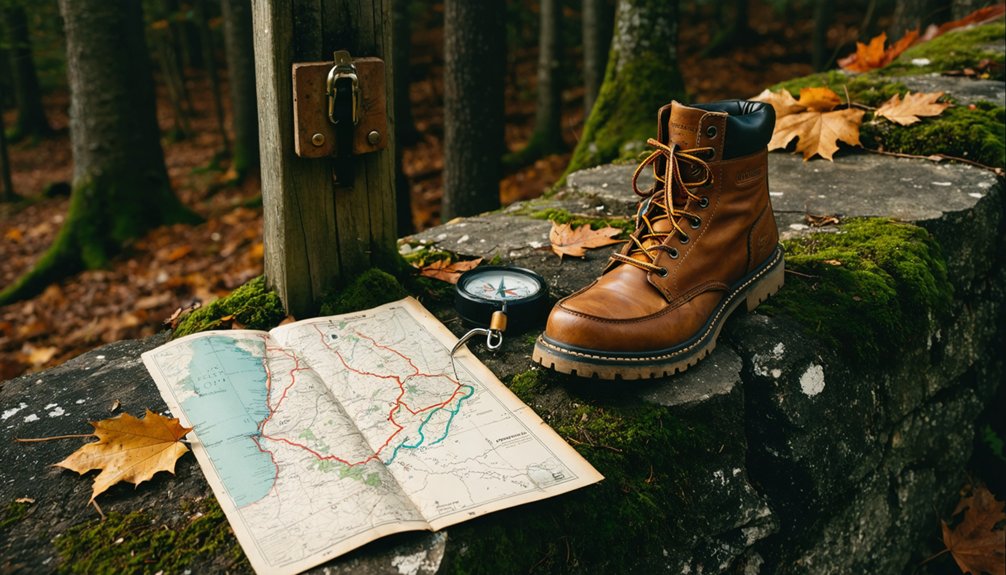
Each of Vermont’s abandoned sites demands a slightly different kit, so matching your gear to the terrain saves you from being underprepared on a muddy logging road or an exposed mountain trail.
Each Vermont ruin has its own terrain—gear up accordingly, or the mountain will remind you that you didn’t.
Your urban exploration and hiking essentials break down simply:
- Glastenbury and Ricker Basin — pack sturdy waterproof boots, trekking poles, and a headlamp since both require serious trail time through uneven backcountry.
- Somerset Ghost Town — bring a printed map and all-terrain footwear because logging roads swallow cell signals whole.
- Greenbank’s Hollow and Dorset Quarry — lighter trail shoes work fine, but you’ll still want gloves for poking around old stonework.
Layer up regardless of season; Vermont’s mountain air turns cold fast, and you’ll want freedom to explore without cutting your visit short.
Your Two-Day Vermont Ghost Town Road Trip, Mapped
Planning two days across Vermont’s abandoned corners means threading the southern Green Mountains together with the quieter hill country to the north, and the route practically maps itself once you know where each site sits. Start in Bennington, hike into Glastenbury, and feel how historical preservation battles tourism impact in real time.
Somerset sits nearby via logging roads, so you’ll cover both before dark. Day two pushes north toward Greenbank’s Hollow in Danville, then swings west to Ricker Basin outside Waterbury for that moderate three-mile climb through old hill farming terrain.
Cap everything at Dorset’s marble quarry on your way out. You’re not following a guided tour here; you’re reading the landscape on your own terms, which is exactly the point.
Frequently Asked Questions
Can I Visit Vermont Ghost Towns During Winter Months Safely?
You can visit Vermont’s ghost towns in winter, but you’ll need proper winter safety gear. Pack clothing essentials like insulated layers and waterproof boots — trails to Glastenbury and Ricker Basin become beautifully treacherous yet wonderfully freeing.
Are Permits Required to Explore Vermont’s Abandoned Ghost Town Sites?
Most sites don’t require permits, but you’ll want to check local legal restrictions before exploring. Glastenbury and Ricker Basin sit on public land, so you’re free to roam those wonderfully forgotten places without permit requirements.
Which Vermont Ghost Towns Allow Overnight Camping Near Their Ruins?
Like whispers from the past, ghost town history calls you! You can camp near Glastenbury and Ricker Basin’s abandoned structures, where Vermont’s wild freedom surrounds you. Always check Green Mountains land-use rules before pitching your tent there.
Do Vermont Ghost Towns Have Cell Service for Emergency Contact?
Don’t count on cell service at Vermont’s ghost towns — you’re venturing deep into the wilderness. Always carry a satellite communicator for emergency contact, because those ancient Green Mountain hollows swallow signals like they’ve swallowed whole communities.
Are Vermont Ghost Town Sites Protected Under Any Historical Preservation Laws?
Yes, many sites have historical preservation legal protections. Take Glastenbury — you can’t just haul off artifacts. Vermont’s preservation laws protect these forgotten places, so you’re free to explore, but leave everything exactly as you found it.
References
- https://bostonuncovered.com/st-albans-vermont/
- https://myfamilytravels.com/vermont-maple-country-villages-that-lost-their-soul-to-visitors/
- https://urbex-maps.com/en/blog/abandoned-places-vermont-6-iconic-urbex-spots