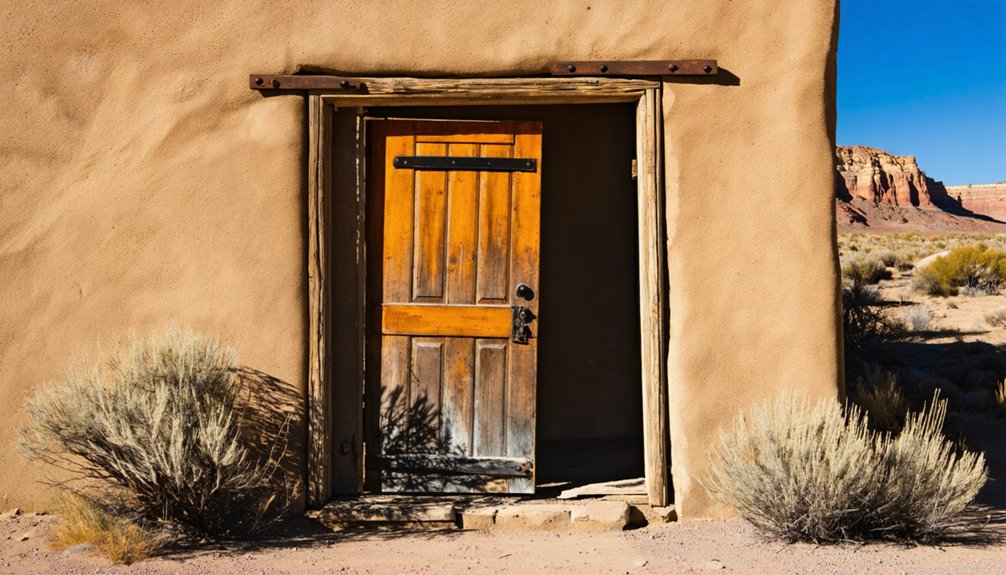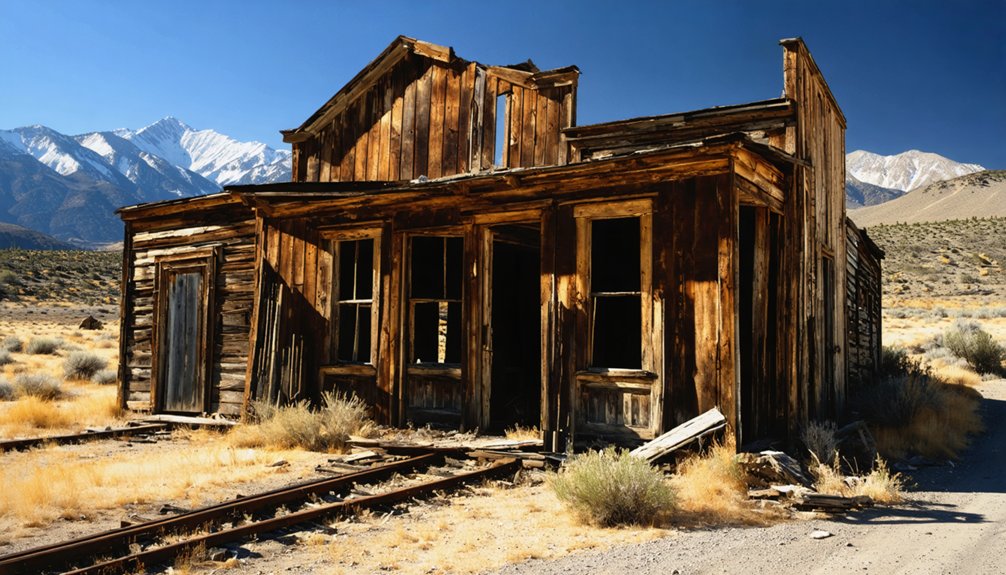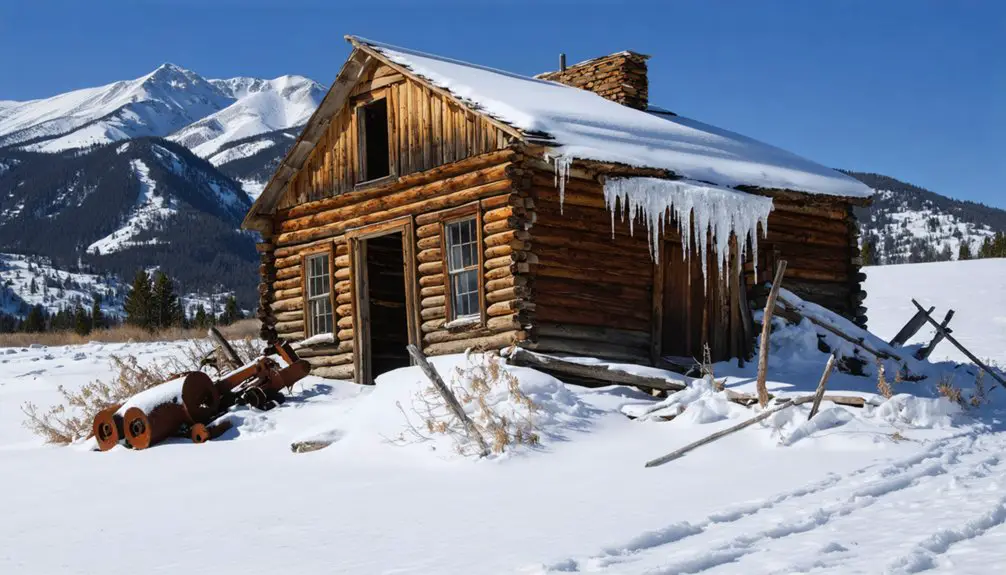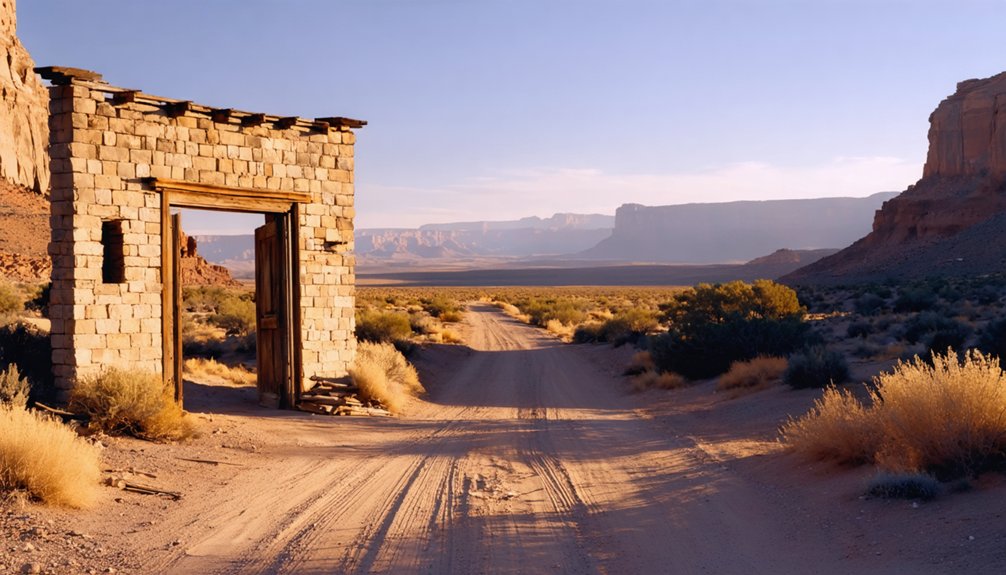
Planning a ghost town road trip to Mountain Dell, Utah means heading just a few miles east of Salt Lake City off Interstate 80, Exit 134. You’ll discover a once-thriving agricultural settlement that Salt Lake City purchased in 1916, flooding the original structures to create Little Dell Reservoir. Today, you can hike, fish, and spot partially submerged ruins against stunning canyon scenery. Stick around — there’s much more to uncover about this sunken slice of Utah history.
Key Takeaways
- Mountain Dell, once a thriving agricultural settlement, became a ghost town after Salt Lake City purchased the land in 1916 for a reservoir.
- Take Exit 134 off I-80, a few miles east of Salt Lake City, using GPS coordinates 40°07′38″N 111°57′24″W for precise navigation.
- Visit on weekdays in May or September for solitude, avoiding winter when snow may limit access to the area.
- Explore abandoned buildings partially submerged near Little Dell Reservoir, with opportunities for hiking, fishing, and wildlife watching nearby.
- Pack sturdy boots, water, snacks, a first aid kit, and an offline GPS app, as no services are available near the ruins.
Why Mountain Dell, Utah Was Abandoned
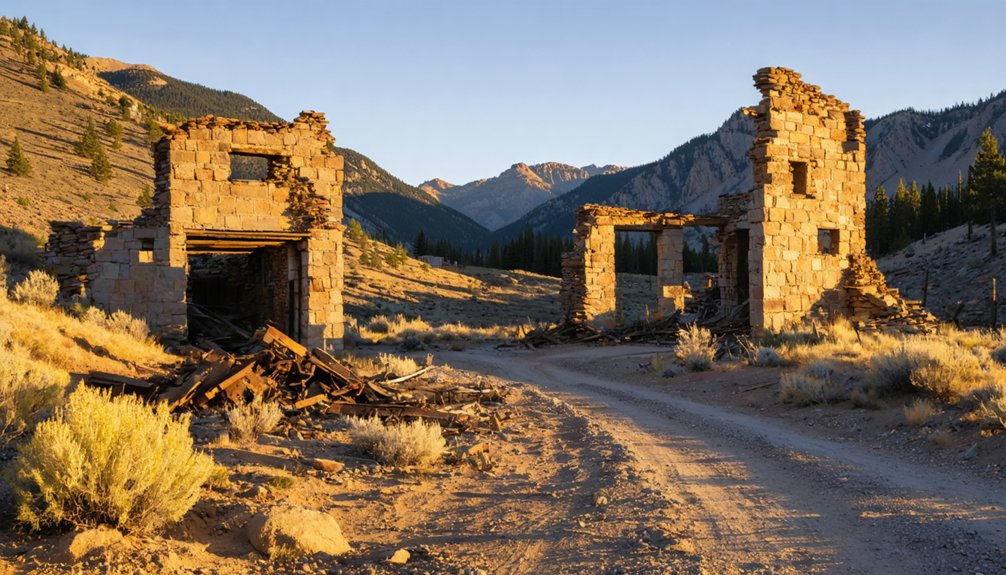
Once a thriving agricultural settlement, Mountain Dell didn’t fade overnight — it unraveled gradually as the forces of progress worked against it.
Transportation improvements triggered economic decline, making the community’s crops and local industry less competitive. As outside markets became more accessible, residents had fewer reasons to stay.
Community changes followed naturally. By 1901, the population of roughly 100 people had dwindled enough that the local LDS Branch dissolved, with members merging into the Virgin Ward.
By 1901, Mountain Dell’s dwindling population forced its LDS Branch to dissolve, its members absorbed into the Virgin Ward.
That religious dissolution signaled the settlement’s social collapse.
Salt Lake City delivered the final blow in 1916, purchasing the land to build a dam and reservoir.
Original structures vanished beneath water and time, converting what was once a living community into a ghost town frozen in history.
What’s Left to See at Mountain Dell Ghost Town?
When you visit Mountain Dell today, you’ll find abandoned buildings partially submerged near Little Dell Reservoir, offering an eerie glimpse into the town’s past.
Salt Lake City purchased the land in 1916, transforming the former settlement into a water storage and recreation area that now draws hikers, picnickers, and history enthusiasts.
You can explore the surrounding landscape while spotting remnants of the original structures that once housed a thriving community of nearly 100 residents.
Abandoned Structures Still Standing
Though much of Mountain Dell’s original fabric now lies beneath the waters of Little Dell Reservoir, a handful of abandoned structures still peek above the surface, rewarding curious visitors who make the drive out to explore.
You’ll spot remnants carrying real historical significance, silent witnesses to the community Joel H. Johnson built back in 1861. The abandoned architecture here isn’t polished or restored — it’s raw, weathered, and honest.
Stone foundations, crumbling walls, and skeletal outbuildings stand where families once farmed grapes, fruits, and cereals. When water levels drop seasonally, even more surfaces.
You’re fundamentally walking through an outdoor archaeological site, one where Salt Lake City’s 1916 land purchase froze everything in time.
Bring a camera, wear sturdy boots, and respect what remains.
Reservoir And Recreation Area
Beyond those weathered ruins, the broader landscape tells the rest of Mountain Dell’s story. Salt Lake City purchased this land in 1916, transforming the old settlement into a water storage and recreation hub.
That reservoir history runs deep — what was once farmland and family homesteads became the foundation for Little Dell Reservoir, which still serves the region today.
You’ll find the area surprisingly accessible for outdoor enthusiasts. Recreation activities here include hiking, fishing, and wildlife watching, giving you genuine freedom to explore on your own terms.
The canyon road, originally opened as the Golden Pass on July 4, 1850, still carries travelers through this historic corridor. You’re not just visiting a ghost town — you’re moving through layers of living Utah history.
How to Get to Mountain Dell, Utah
Getting to Mountain Dell is straightforward, as it sits just a few miles east of Salt Lake City along Interstate 80 through Parleys Canyon.
Take Exit 134 off I-80, and you’ll find yourself dropping into a surprisingly peaceful valley that feels worlds away from the city bustle you just left behind.
Your access routes include the main canyon road, which winds alongside the creek and opens up stunning scenic views of rugged canyon walls and forested ridgelines.
You’ll spot Little Dell Reservoir as a landmark confirming you’ve arrived. The GPS coordinates 40°07′38″N 111°57′24″W will pinpoint the site precisely if you’re steering digitally.
The drive itself sets the tone perfectly, easing you from modern highways into a landscape that still carries echoes of Mountain Dell’s pioneer past.
Best Time to Visit Mountain Dell
Once you’ve made the drive out to Mountain Dell, timing your visit right makes all the difference between a rewarding experience and a frustrating one.
The best seasons to explore are late spring through early fall, when Parleys Canyon roads stay clear and the landscape comes alive with color. Summer brings peak visitation, so if you prefer solitude among the ruins and reservoir, aim for weekday mornings in May or September.
Winter closes off certain access points and obscures historical remnants beneath heavy snow. Fall offers a sweet spot — cooler temperatures, thinning crowds, and striking foliage framing the old settlement grounds.
Whatever season you choose, check current road and recreation area conditions beforehand so nothing cuts your ghost town adventure short.
What to Bring When Exploring Mountain Dell’s Ruins?
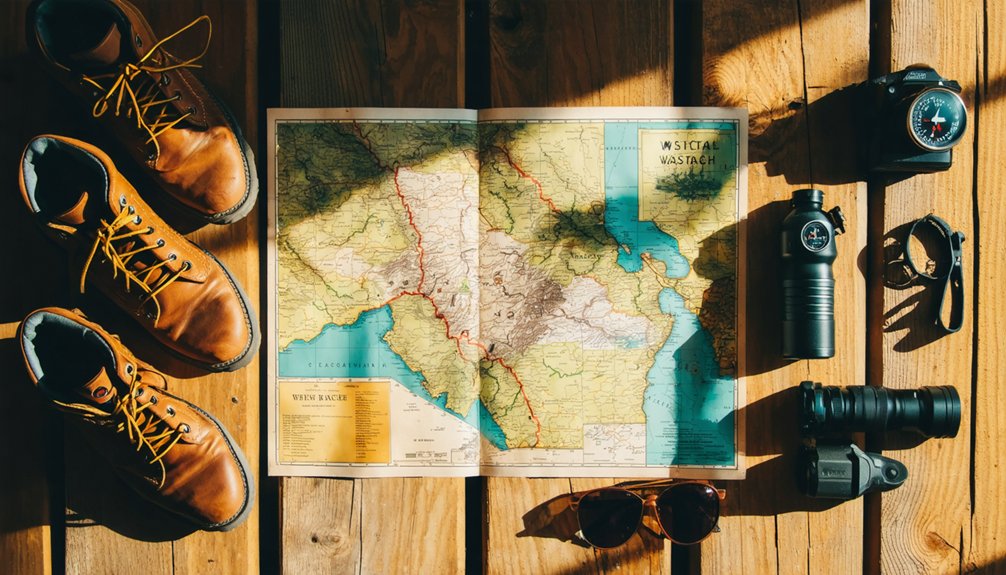
When you head out to explore Mountain Dell’s ruins, you’ll want to pack essential gear like sturdy boots, gloves, and a flashlight to safely navigate the crumbling structures and uneven terrain.
Bring a detailed map or download an offline GPS app, since cell service can be unreliable near the 40°07′38″N, 111°57′24″W coordinates.
You should also carry a first aid kit and plenty of water, because the remote location means you’re entirely on your own if something goes wrong.
Essential Exploration Gear
Packing the right gear before heading out to Mountain Dell’s ruins can make or break your experience.
You’re venturing into rugged, open terrain, so your exploration essentials need to cover safety and discovery. Ghost town gear isn’t just practical — it’s your ticket to fully experiencing this forgotten settlement.
- Sturdy hiking boots — uneven ground and rocky creek beds demand solid ankle support
- Water and snacks — no services exist anywhere near the ruins
- Detailed trail map or GPS — cell signals aren’t reliable at 40°07′38″N coordinates
- Camera or binoculars — capture remnants around Little Dell Reservoir up close
- First aid kit — remote locations require self-sufficiency
Load up smart, move freely, and let Mountain Dell reveal its secrets on your terms.
Safety And Navigation Tools
Gear gets you ready, but knowing how to use it — and stay safe while doing it — takes things a step further.
Download offline navigation apps like OnX or AllTrails before you leave cell range, because Mountain Dell’s canyon terrain drops signal fast. Carry a paper map as backup — technology fails, but paper doesn’t.
Essential safety tips include telling someone your exact route and expected return time. Pack a first aid kit, a whistle, and a charged power bank.
Watch your footing near Little Dell Reservoir‘s abandoned structures — unstable ground hides beneath overgrown brush. Avoid exploring alone, especially inside deteriorating ruins.
Daylight is your ally, so plan your arrival early and leave before dusk swallows the canyon.
Nearby Ghost Towns Worth Adding to Your Route
While you’re plotting your ghost town adventure through Mountain Dell, consider adding the old railroad town of Delle to your route. Established in 1880, Delle offers rich ghost town history and stands as one of Utah’s most compelling nearby attractions.
Here’s what makes Delle worth the detour:
- Western Pacific Railroad workers once called this remote town home.
- A functioning water tower and reservoir supported railroad operations.
- The 1950 census recorded 174 residents before its decline.
- A gas station and motel were built during the 1950s, adding layers to its story.
- The town’s abandonment mirrors Mountain Dell’s own transformation into preserved history.
Combining both stops gives you a fuller picture of Utah’s forgotten communities and maximizes your open-road experience.
Frequently Asked Questions
Who Originally Founded Mountain Dell and When Was It Established?
Joel H. Johnson founded Mountain Dell in 1861, and you’ll love its rich founding history! He built a saw mill along the creek, kickstarting this fascinating settlement that’d grow into a thriving ghost town community.
What Religious Organization Played a Role in Mountain Dell’s Community?
Like a compass guiding settlers, Mormon influence shaped Mountain Dell’s community dynamics. You’ll find the Church of Jesus Christ of Latter-day Saints formed a Branch in 1863, anchoring spiritual and social life until its dissolution around 1901.
Who Were the Presiding Elders of the Mountain Dell LDS Branch?
You’ll find that Mountain Dell’s LDS leadership shaped its Branch history through three presiding elders: Joel H. Johnson (1863–1869), Owen Isom (1869–1874), and Jorgen C. Petersen (1874–1883), each guiding this tight-knit pioneer community.
What Agricultural Products Did Mountain Dell Settlers Primarily Grow?
You’d think they grew everything, but Mountain Dell settlers primarily focused their farming techniques on grapes, fruits, and cereals as their main crops grown, alongside stock raising that fueled their tight-knit community’s survival and freedom.
What Is the Population History of the Nearby Ghost Town Delle?
You’ll find Delle’s ghost town legends fascinating! It’s population peaked at 174 in the 1950 census. Today, you can explore its abandoned buildings, remnants of a once-thriving railroad town established in 1880.
References
- https://usgenwebsites.org/UTWashington/towns/millvill.html
- https://jacobbarlow.com/2018/08/16/delle-utah/
- https://www.youtube.com/watch?v=AuIj2U_st1k
- https://en.wikipedia.org/wiki/List_of_ghost_towns_in_Utah
- https://onlineutah.us/mountaindell_history.shtml
- https://utahstories.com/2024/11/mountain-dells-legacy-how-utahs-pioneers-shaped-our-water-future/
- https://www.facebook.com/groups/864060180303556/posts/6989029447806568/
- https://wchsutah.org/towns/mountain-dell.php
- http://utahspresenthistory.blogspot.com/2011/04/ghost-town-in-utah-county-you-probably.html
- https://www.youtube.com/watch?v=_Q_MurSaRyM