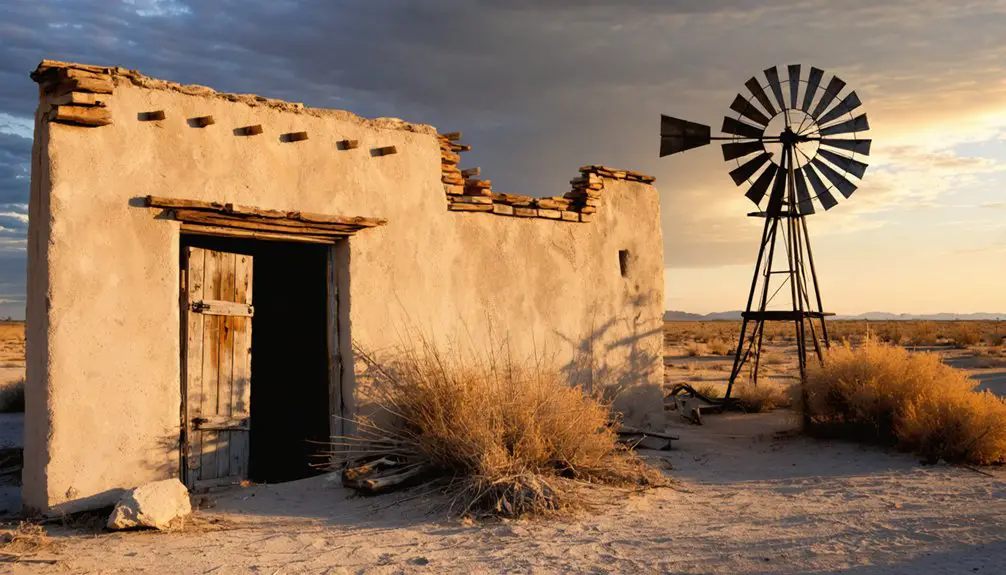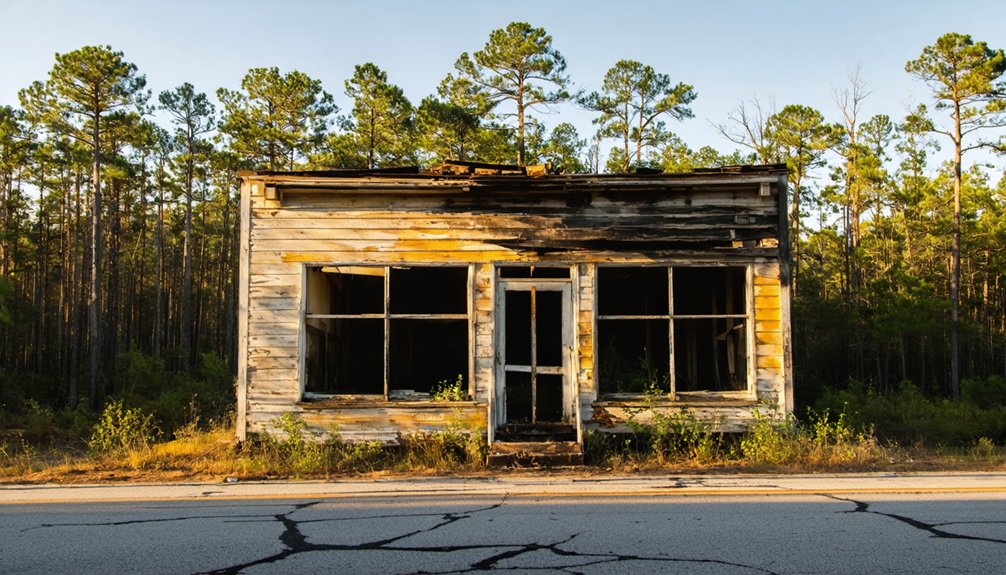
Planning a ghost town road trip to Orient, Texas starts with understanding what shaped this quiet West Texas stop. You’ll want to base yourself in San Angelo, then follow the historic Mexico and Orient Railway corridor into Tom Green County. The townsite offers scattered structures and remnants of a community that once had a post office, school, and general store. Pack water, paper maps, and curiosity — there’s more to this forgotten railroad town than first meets the eye.
Key Takeaways
- Orient, Texas, located in Tom Green County, is best accessed using San Angelo as your starting point along the historic Mexico and Orient Railway corridor.
- Pack water, snacks, paper maps, and charged batteries, as amenities are extremely limited throughout this remote West Texas ghost town area.
- Look for scattered structures, abandoned depot remnants, and railroad traces, as these serve as the primary historical markers throughout the townsite.
- Extend your route to include nearby rail ghost towns like Carlsbad, Tennyson, and Mereta for a fuller West Texas ghost town experience.
- Respect private property boundaries during exploration, as some parcels near Orient remain active despite the town recording zero residents in 2020.
What Is Orient, Texas?
Tucked away in Tom Green County, Orient is a Texas ghost town that traces its roots to the Mexico and Orient Railway — the railroad that gave the community its name. Once home to a general store, a post office, and Skinner School, Orient operated as a small but functional railroad community throughout the early 20th century.
By 1930, only 10 people called it home. By 2020, the U.S. Census recorded zero residents.
When you explore ghost town legends across West Texas, Orient stands out as a clear example of how rail-driven towns rise and fall. Without the railroad’s economic pull, the community faded.
Today, it’s one of those historic landmarks worth adding to your road trip — a quiet, honest snapshot of Texas history.
How the Mexico and Orient Railway Created This Town
Before Orient had a name, it had a railroad. The Mexico and Orient Railway pushed through West Texas, and wherever it stopped, communities followed. Orient took its name directly from that rail line, making railroad infrastructure the town’s founding identity.
The railroad didn’t follow Orient — Orient followed the railroad.
Here’s what that railway connection meant for early settlers:
- A reliable stop created demand for services, bringing a general store by 1909.
- Mail delivery became possible, supporting a post office that ran until 1964.
- A school formed, giving families reason to stay rooted near the tracks.
When rail traffic declined, agricultural decline compounded the problem. The transportation advantage that built Orient gradually disappeared, taking economic stability with it. You’re now looking at a town whose entire rise and fall traces back to one railway line.
When Orient Had a Post Office, a School, and a General Store
The railroad gave Orient its name, but daily life gave it structure. By 1909, the town had a general store and a functioning post office, two anchors that kept small communities alive across West Texas. That post office ran until 1964, meaning generations of residents sent and received mail right here.
Skinner School added another layer, operating with two teachers by 1930 to serve a population of just ten people. You can almost picture the rhythm of those days before the abandoned structures and local legends replaced the sounds of students and shopkeepers.
Orient wasn’t thriving by big-city standards, but it was real, self-sufficient, and connected. When you visit today, you’re standing inside that quiet history.
What Happened to Orient’s Population After the Railroad Faded?
When the Mexico and Orient Railway’s influence faded, Orient’s reason for existing faded with it. You can trace the town’s slow decline through census numbers alone — from 10 residents in 1930 to 40 in 2000, and then to zero by the 2020 U.S. Census.
That final count is what earns Orient its ghost town label today, making it a compelling stop on any West Texas road trip.
Railroad Decline, Population Drop
Once the Mexico and Orient Railway lost its grip on the region, Orient’s reason for existing quietly slipped away with it. The community demographics shifted dramatically as residents sought opportunities elsewhere. Economic impacts hit hard and fast, leaving behind only traces of what once was. Here’s how the decline unfolded:
- By 1930, only 10 people called Orient home, signaling early population erosion.
- The post office closed in 1964, stripping away a crucial community anchor.
- The 2020 U.S. Census recorded zero residents, confirming Orient’s ghost town status.
You’re looking at a textbook example of what happens when a West Texas rail town loses its purpose. The railroad built Orient, and when it faded, the people followed the opportunities somewhere else.
From 40 To Zero
By 2000, Orient still held 40 residents — a fragile but real number suggesting the town hadn’t fully surrendered. Then the 2020 U.S. Census recorded zero. That’s not a slow fade — that’s a full stop.
What you’re witnessing when you visit isn’t just abandonment. It’s the end of cultural preservation through sheer numbers. When people leave, local legends lose their living voices. The stories about the Mexico and Orient Railway, the general store, Skinner School — they survive only in documents and determined road-trippers like you.
Nearby businesses still operate under San Angelo addresses, quietly erasing Orient’s identity one ZIP code at a time. But the town’s bones remain. You just have to show up before the last traces disappear entirely.
Ghost Town Status Today
The Mexico and Orient Railway didn’t just name this town — it kept it alive. Once that rail purpose faded, Orient’s population followed. Today, the 2020 Census lists zero residents, cementing its ghost town status. Yet its historical preservation and cultural significance still make it worth your detour.
Here’s what defines Orient today:
- No census residents — the 2020 count confirmed complete depopulation
- Nearby businesses operate under San Angelo addresses, not Orient’s name
- Railroad remnants and scattered structures anchor its identity as a historic stop
You’re not visiting a living town — you’re reading a landscape. Orient tells a clean, honest story about how West Texas rail communities rose, served their purpose, and quietly disappeared.
What You’ll Actually Find at the Orient Townsite Today
Arriving at the Orient townsite today, you won’t find much in the way of a traditional town — no bustling main street, no local diner, and certainly no welcome sign boasting a proud population count.
What you’ll find is open West Texas landscape, scattered remnants of a railroad community, and the quiet that tends to fuel urban legends and folklore tales about forgotten places.
Nearby businesses like Waller’s RV Sales and Service and Everything About Cars operate under San Angelo addresses, not Orient’s.
The old railroad stop area remains the site’s strongest anchor.
You’re fundamentally standing where the Mexico and Orient Railway once shaped daily life.
It’s a raw, unpolished stop — exactly the kind of freedom-loving travelers seek when chasing authentic Texas history.
Other Rail Ghost Towns Near Orient, Texas

Orient wasn’t the only West Texas town shaped and eventually abandoned by the Mexico and Orient Railway. You can extend your road trip by tracking down other rail ghost towns scattered across Tom Green County and the surrounding region.
Each of these towns carries a similar story of growth, decline, and near-disappearance. Mapping your route around the old rail corridor gives your trip a unifying thread and turns a single stop into a fuller picture of how the railroad built and then quietly erased entire communities.
Nearby Rail Towns
Because Orient wasn’t the only West Texas railroad town that time left behind, pairing it with nearby rail ghost towns makes for a richer road trip through Tom Green County. The Mexico and Orient Railway shaped entire communities, and several vanished alongside Orient as rail traffic faded.
Add these stops to your route:
- Carlsbad, Texas – A small Tom Green County community with its own local legends tied to early settlement and rail access.
- Tennyson, Texas – A quiet stop where urban legends about abandoned structures still circulate among road-trippers.
- Mereta, Texas – Another diminished rail-era community worth a quick detour for history-minded travelers.
Each town gives you another angle on how West Texas railroad culture rose, then quietly disappeared.
The Mexico and Orient Railway didn’t just shape Orient — it left its mark across a string of small West Texas communities that followed the same pattern: a station appears, a town grows around it, rail traffic fades, and the population quietly disappears.
When you explore these stops, you’re practicing industrial archaeology without a textbook. Each abandoned depot foundation and crumbling platform tells a story the census numbers confirm but can’t fully capture.
Local legends cling to these places too — stories of boom years, colorful rail workers, and towns that almost thrived. Connecting Orient to its neighboring rail ghost towns gives your road trip genuine depth.
You’re not just visiting ruins; you’re tracing the economic spine of a region that the railway built and then quietly abandoned.
Planning Your Route
When you map out a rail ghost-town route through West Texas, Orient works best as one anchor point in a longer drive rather than a standalone destination. Tom Green County sits within reach of several similar rail communities, each carrying its own local legends and historic landmarks worth chasing down.
Build your route around these three stops:
- Orient, Texas – Start here for the Mexico and Orient Railway history and the post office story spanning 1909 to 1964.
- Barnhart, Texas – Another rail-linked community with a quiet, faded downtown worth photographing.
- Mertzon, Texas – A small county seat nearby offering context for how some towns survived while others didn’t.
Connecting these stops turns a single detour into a full West Texas ghost-town circuit.
How to Get to Orient, Texas

Orient, Texas sits in Tom Green County, making San Angelo your natural jumping-off point for the trip. From San Angelo, you’ll head out along routes that once served the Mexico and Orient Railway corridor, the very railroad that put this ghost town on the map.
The drive offers open West Texas landscape, giving you room to breathe and move at your own pace. As you approach, don’t expect signage or crowds. Instead, watch for scattered structures hinting at historic architecture and listen for local legends tied to the rail era.
Nearby businesses like Waller’s RV Sales and Service use San Angelo addresses, so your GPS may not confirm Orient directly. Trust your route, keep your eyes open, and you’ll find it.
What to Bring and Watch for on Arrival
Arriving at a ghost town means arriving prepared, because Orient won’t offer convenience stores, restrooms, or cell service you can count on. Pack water, snacks, a paper map, and a fully charged battery bank before leaving San Angelo.
Watch for these essentials once you arrive:
- Remnants of the rail era — scan for any structural traces tied to the Mexico and Orient Railway stop that shaped this community.
- Local legends and ghost stories — talk to anyone passing through; longtime Tom Green County locals sometimes carry oral histories worth hearing.
- Property boundaries — respect private land, since nearby parcels remain active despite Orient’s zero 2020 census count.
Stay curious, stay respectful, and let the silence do the storytelling.
How to Build a Tom Green County Ghost Town Route
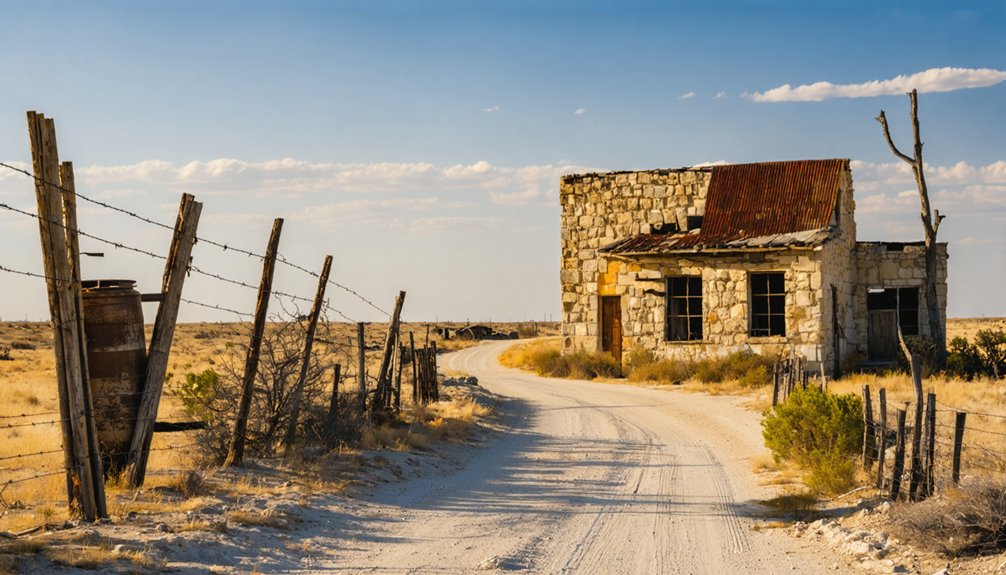
Since Orient sits within Tom Green County’s broader network of diminished rail towns, it makes a natural anchor for a multi-stop ghost-town route through the region. Start in San Angelo, gather your maps, then head out toward Orient as your first stop.
From there, trace the old Mexico and Orient Railway corridor to uncover other scattered communities that share similar railroad-linked histories. Each stop carries its own local legends and, in some cases, urban legends tied to abandoned structures and forgotten residents.
You’re free to shape the route around your pace, stopping wherever a roadside marker or crumbling building catches your eye. Keep Tom Green County ghost-town listings bookmarked on your phone so you can pivot easily and make every mile count.
Frequently Asked Questions
Is Orient, Texas Listed on Any Official Historic Registers?
You won’t find Orient on official historic registers, but it’s recognized in Texas ghost town tourism listings. Explore its historic preservation story through Tom Green County records and Texas Escapes, where you’ll uncover its rich railroad heritage.
Did Orient Ever Have a Church or Religious Gathering Place?
The records don’t confirm a church in this ghost town community, yet Orient’s religious history remains unwritten—not absent. You’ll find silence where faith once may have quietly gathered among scattered railroad homes.
Are There Any Known Photographs of Orient During Its Active Years?
No confirmed ghost town photography or historic Orient images have surfaced in available records. You’d likely find your best leads by exploring Tom Green County archives or Texas railroad history collections for any surviving visual documentation.
Was Orient Ever Considered for Incorporation as a Formal Texas Municipality?
Like a spark that never caught fire, Orient wasn’t ever formally incorporated. You’ll find no abandoned mining sites or local ghost town legends tied to municipal ambitions—it remained a quiet railroad stop throughout its entire history.
Did Any Notable Individuals or Families Settle Permanently in Orient?
No records highlight famous residents or notable families who permanently settled in Orient. You’ll find the town’s identity shaped more by its railroad roots and small transient community than by any lasting prominent figures.
References
- https://www.conchovalleyhomepage.com/community/ghost-towns-of-the-concho-valley-coke-and-sterling/
- https://en.wikipedia.org/wiki/List_of_ghost_towns_in_Texas
- https://authentictexas.com/texas-ghost-towns/
- https://987kissfmsanangelo.com/tom-green-county-ghost-towns/
- https://www.texasescapes.com/TexasTowns/Orient-Texas.htm
- https://www.tshaonline.org/handbook/entries/texon-tx
- https://www.facebook.com/groups/2258312500/posts/10163619642567501/
- https://www.tshaonline.org/handbook/entries/girvin-tx