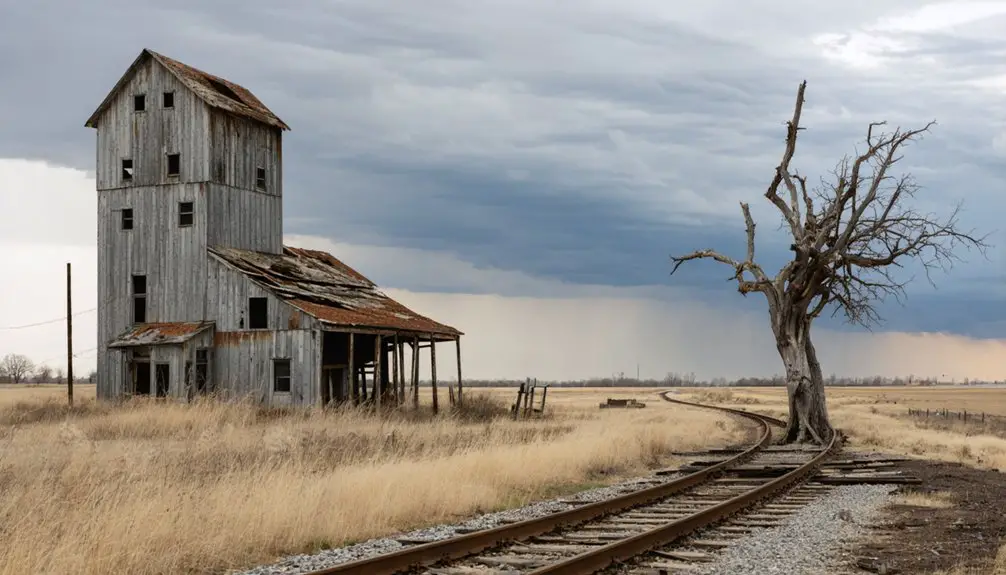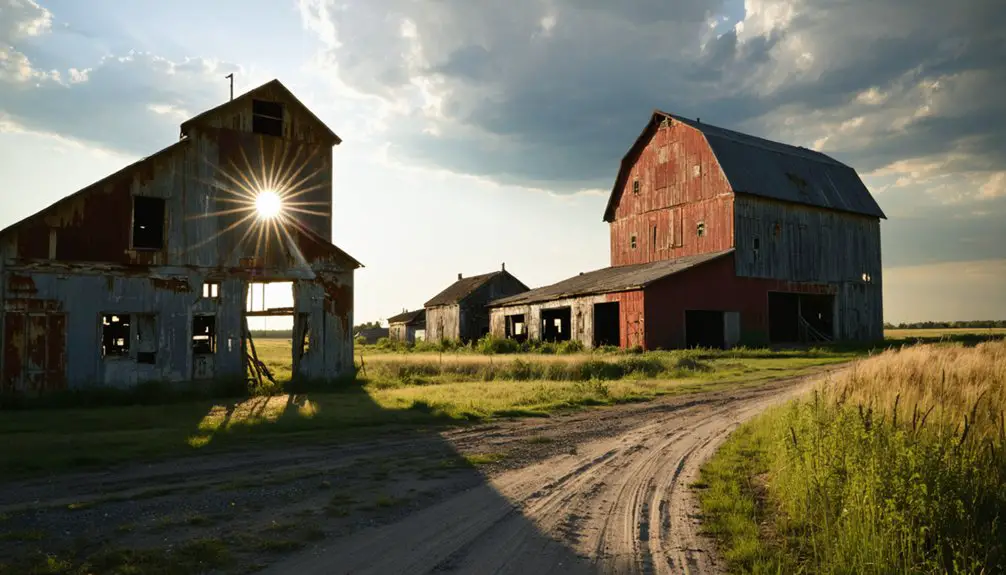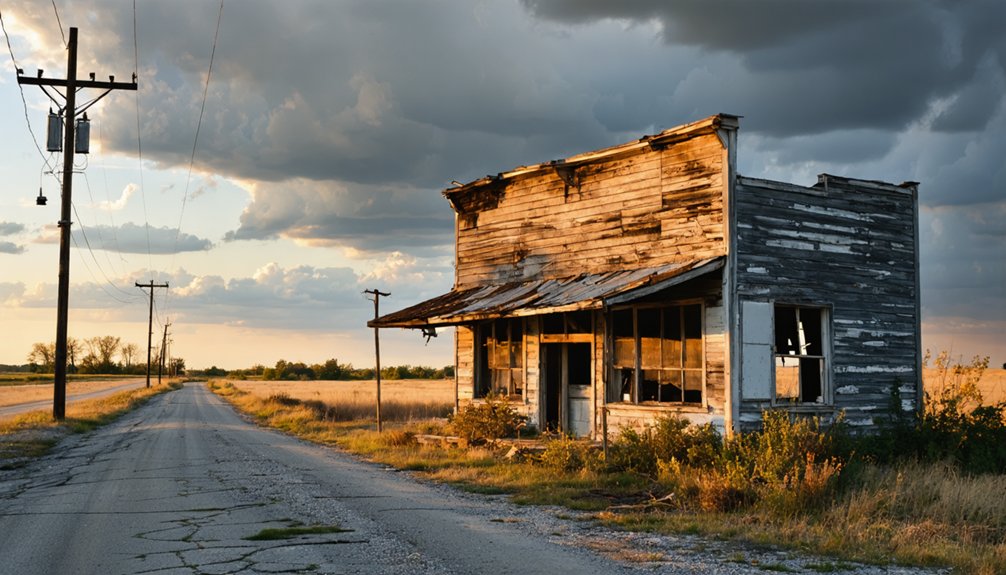
Planning a ghost town road trip to Pomme de Terre means heading into Grant County’s remote western Minnesota prairie, where one of the state’s earliest frontier villages has nearly vanished. Founded in 1868, this once-promising settlement collapsed after the railroad bypassed it, leaving behind a brick schoolhouse and pioneer cemetery. Visit between late May and October for the best road conditions. There’s much more to uncover about what remains and how to get there.
Key Takeaways
- Pomme de Terre is located in Grant County, Minnesota, accessible via township roads in the western prairie region.
- Visit between late May and early October for the best road conditions, weather, and daylight hours.
- The site features a brick schoolhouse (~1876) and pioneer cemetery as its primary surviving landmarks.
- Pack food, water, fuel, insect repellent, and printed maps, as the site has no amenities and poor cell service.
- Pair the trip with nearby ghost towns like Dorothy or Forestville for a richer historical road trip experience.
What Is Pomme De Terre and Why Visit This Ghost Town?
Tucked into section 24 of Pomme de Terre Township in Grant County, Minnesota, this extinct frontier village stands as one of the state’s earliest settlements, founded in 1868 when Timothy Heald laid out a townsite on his claim near the Pembina Trail.
You’ll find a place where local legends of frontier ambition linger alongside crumbling historical artifacts — a brick schoolhouse built around 1876 and a pioneer cemetery.
The town flourished briefly as a commercial hub, politically platted in 1874 as Grant County’s first village. But when the railroad bypassed it, decline followed swiftly.
Today, the surrounding prairie has quietly reclaimed what settlers built.
If you crave wide-open history on your own terms, Pomme de Terre delivers an unfiltered glimpse into Minnesota’s raw frontier past.
What Remains at Pomme De Terre Today?
Although time has stripped Pomme de Terre of its homes, businesses, and bustling frontier energy, two survivors still anchor the site: a small brick schoolhouse erected around 1876 and a nearby pioneer cemetery. These historical artifacts quietly hold local legends of a community that once thrived along the Pembina Trail.
Two survivors remain — a brick schoolhouse and pioneer cemetery — quietly anchoring the ghost of Pomme de Terre.
When you visit, you’ll find nature steadily reclaiming what settlers built.
Here’s what you can expect to discover:
- The brick schoolhouse — one of Grant County’s earliest educational structures, partially merged with surrounding prairie vegetation
- The pioneer cemetery — weathered markers preserving the names of early frontier families
- Open prairie landscape — where homes and commerce once stood, now restored to raw, unfiltered wilderness
It’s a place that rewards curious, freedom-seeking explorers.
How Pomme De Terre Went From Frontier Outpost to Abandoned Prairie
How does a frontier outpost go from bustling prairie hub to silent, windswept ghost town in just a few decades? At Pomme de Terre, the answer is simple: the railroad bypassed it.
Timothy Heald founded the town in 1868 along the Pembina Trail, a crucial government road connecting St. Cloud to Fort Abercrombie. Stagecoaches, ox carts, and wagon trains kept commerce alive.
By 1874, it became Grant County’s first platted village, carrying enormous historical significance for the region.
Then the railroad came — just not here. Without rail access, businesses collapsed, residents left, and nature quietly reclaimed the land.
Today, you won’t find pioneer artifacts scattered across manicured streets. You’ll find open prairie, a lone brick schoolhouse, and a cemetery whispering stories of ambitious settlers who simply ran out of road.
How the Railroad Bypass Killed Pomme De Terre’s Future
When the railroad bypassed Pomme de Terre, it didn’t just reroute trains — it rerouted the town’s entire future. Without rail access, businesses couldn’t compete, trade dried up, and the economic engine that once hummed along the Pembina Trail ground to a halt.
You can almost feel the abandonment when you visit today, where only a brick schoolhouse and a pioneer cemetery stand as quiet witnesses to the town’s rapid collapse.
Railroad Bypass Sealed Fate
The railroad didn’t just pass by Pomme de Terre — it passed a death sentence. Once the tracks bypassed this frontier settlement, its commercial lifeline snapped. You can almost feel the abandonment walking through what remains today.
The consequences unfolded fast:
- Trade collapsed — merchants followed the rails, leaving businesses shuttered permanently
- Population fled — residents relocated to railroad-accessible towns without hesitation
- Historical architecture crumbled — only the brick schoolhouse survived nature’s reclamation
Local legends suggest residents held out hope, believing the railroad might reroute. It never did. What thrived as Grant County’s first platted village in 1874 dissolved into prairie silence within decades.
The Pembina Trail that once delivered promise couldn’t compensate for what iron rails denied this determined little community.
Economic Collapse Followed Quickly
Once the railroad bypassed Pomme de Terre, economic collapse didn’t creep in — it crashed down. Businesses that once thrived along the Pembina Trail had no reason to stay. Merchants packed up, families relocated, and the population vanished almost overnight.
You’d have watched an entire community dissolve within years. The mill that August and Minna Schaeffer built with such urgency became worthless without reliable transport. Local legends say residents left so quickly that buildings stood abandoned mid-use.
Today, you’ll find almost no historical artifacts confirming the town ever bustled with frontier ambition. The prairie swallowed everything. Only a brick schoolhouse from around 1876 and a pioneer cemetery survived.
Freedom means choosing your own path — Pomme de Terre never got that second chance.
Population Abandoned The Town
Watching a town die happens faster than most people imagine. Once the railroad bypassed Pomme de Terre, residents didn’t wait around. They packed their lives and chased opportunity elsewhere, leaving behind empty buildings and fading dreams on the Minnesota prairie.
Three brutal realities accelerated the abandonment:
- No rail access meant no competitive commerce — merchants couldn’t survive without efficient freight movement.
- Population collapse erased cultural preservation efforts — community institutions crumbled alongside the buildings.
- Historical significance faded alongside the people — memories dissolved as families relocated to railroad towns.
You’re visiting what remained after that exodus. Only a brick schoolhouse and pioneer cemetery survived nature’s reclamation.
Standing there, you’ll understand how quickly freedom-seeking people abandon places that no longer serve their ambitions.
How to Get to Pomme De Terre, Minnesota?
Nestled in Grant County, Pomme de Terre sits in section 24 of Pomme de Terre Township, and you’ll want to set your navigation toward the township roads threading through Minnesota’s western prairie landscape.
From Herman, the nearest significant town, head south along county roads cutting through open farmland. You won’t find modern signage pointing toward this forgotten settlement, so download offline maps before leaving.
The old Pembina Trail once guided travelers through this exact corridor, and you’re fundamentally retracing those historic landmarks on pavement instead of dirt.
Pack your own food since local cuisine options disappear quickly in this sparsely populated region. Bring water, a full tank of gas, and curiosity — the brick schoolhouse and pioneer cemetery reward those willing to navigate Grant County’s quiet, unhurried backroads independently.
When Is the Best Time to Visit Pomme De Terre?
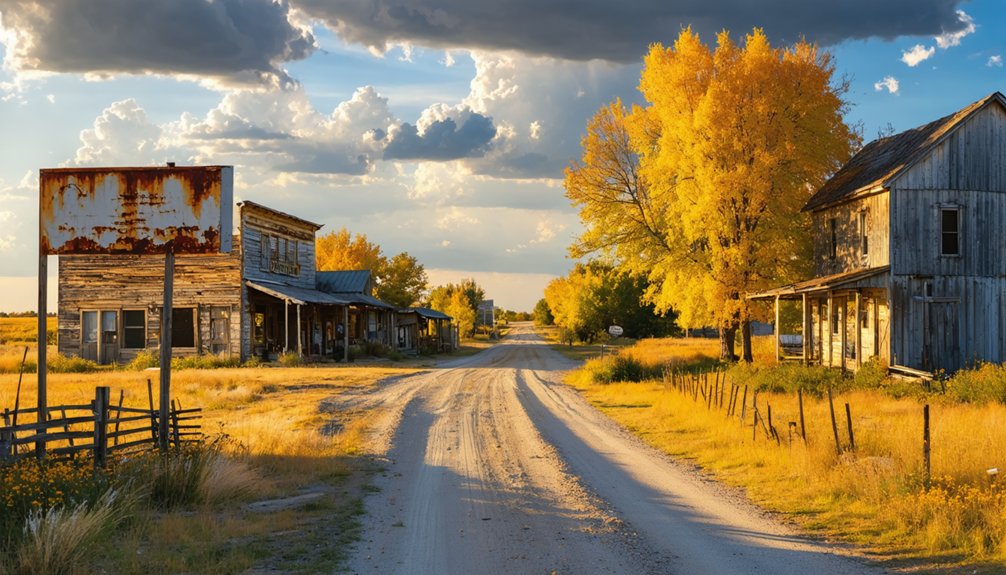
You’ll find Pomme de Terre most accessible and enjoyable during late spring through early fall, when mild temperatures and dry roads make the rural drive manageable.
Summer months offer the clearest views of the remaining brick schoolhouse and pioneer cemetery, though you should expect warm, humid conditions typical of Minnesota’s prairie landscape.
Winter visits are possible but risky, as unpaved rural roads can become dangerously icy or muddy during freeze-thaw cycles, potentially leaving you stranded far from help.
Ideal Visiting Seasons
Although Pomme de Terre sits quietly on the Minnesota prairie year-round, late spring through early fall gives you the best conditions for exploring what remains of this ghost town. Mild temperatures and longer daylight hours let you move freely through the site, uncovering historical artifacts and chasing local legends without weather cutting your adventure short.
The three best windows for visiting are:
- Late May through June – wildflowers frame the old brick schoolhouse, and roads are clear after spring thaw
- July through August – peak visibility for photographing cemetery markers and prairie remnants
- September through early October – cooler air, fewer insects, and golden prairie light perfect for exploration
Avoid winter visits, as snow obscures surviving structures and unpaved rural roads become nearly impassable.
Weather And Road Conditions
Weather shapes your entire experience at Pomme de Terre, so knowing what to expect before you go saves you from a frustrating—or outright dangerous—visit. Minnesota winters are brutal, burying rural Grant County roads under heavy snow and ice from November through March.
Spring thaw turns unpaved township roads into muddy traps that’ll swallow a low-clearance vehicle whole.
Late spring through early fall gives you the best shot at reaching the historic landmarks still standing—the brick schoolhouse and pioneer cemetery.
Summer offers long daylight hours perfect for exploring and chasing local legends surrounding this forgotten prairie settlement.
September delivers cooler temperatures and firmer roads without winter’s threat.
Always check Grant County road conditions before departing, and keep a paper map handy since cell coverage remains unreliable throughout the region.
What to Pack for Pomme De Terre’s Remote Prairie Site?
Visiting a remote prairie ghost town like Pomme de Terre means preparing for a site with no amenities, no shade structures, and no paved paths — just open grassland, a brick schoolhouse, and a pioneer cemetery. You’re exploring genuine historical artifacts without guardrails or gift shops, so pack smart:
- Sun protection — wide-brimmed hat, sunscreen, and UV-blocking layers for exposed prairie terrain
- Navigation tools — printed maps and a charged GPS, since cellular service is unreliable in Grant County
- Documentation gear — a camera and notepad to capture local legends tied to the Pembina Trail era
Wear sturdy boots, bring at least two liters of water, and carry insect repellent.
Freedom tastes better when you’re prepared.
Which Minnesota Ghost Towns Pair Well With a Pomme De Terre Visit?

Once you’ve packed your gear and mapped out Pomme de Terre, it’s worth stretching the trip into a fuller ghost town circuit — Minnesota holds at least 300 abandoned settlements, and two pair especially well with a Grant County visit.
Forestville, in Fillmore County, mirrors Pomme de Terre’s story almost exactly — a railroad bypass killed it, yet historic preservation efforts transformed it into a state historic site rich with local legends and restored 1890s buildings.
Dorothy, in Kandiyohi County, offers a quieter stop — its post office closed in 1956, and nature has reclaimed nearly everything.
Both towns reward explorers who crave raw, unfiltered history rather than polished tourist traps.
Together, these three sites build a road trip that genuinely earns your time and miles.
Frequently Asked Questions
Is There an Entrance Fee to Visit the Pomme De Terre Site?
You’ll find no entrance fee here! Historical preservation keeps this site freely accessible, so you can explore the pioneer cemetery and brick schoolhouse without restrictions. Visitor amenities are minimal, but freedom to roam this hauntingly beautiful ghost town is absolutely yours.
Are Pets Allowed at the Pomme De Terre Ghost Town Location?
Like uncharted territory, pet policies for Pomme de Terre remain undocumented in available records. You’ll want to contact Grant County authorities directly to confirm whether the site’s pets friendly before bringing your furry travel companion.
Can Visitors Legally Enter the Old Brick Schoolhouse Building?
The knowledge doesn’t confirm whether you can legally enter the old brick schoolhouse. For historical preservation and building accessibility details, you’d want to contact Grant County authorities directly before exploring this fascinating remnant of Minnesota’s frontier past.
Is the Pomme De Terre Cemetery Still Maintained by Anyone Today?
The knowledge doesn’t confirm who maintains the cemetery today, but you’ll find that historical preservation efforts often rely on the local community to keep such pioneer burial grounds respectfully tended and free for explorers like you to visit.
Are There Guided Tours Available at the Pomme De Terre Site?
No guided tours are available, but you’ll discover Pomme de Terre’s historical significance independently. Explore the brick schoolhouse and cemetery, where preservation efforts keep memories alive. You’re free to experience this hauntingly beautiful ghost town on your own terms.
References
- https://www.facebook.com/groups/125978938019838/posts/1340334399917613/
- https://www.youtube.com/watch?v=O5o19MoARvo
- https://thievesriver.com/blogs/articles/ghost-towns-in-minnesota
- https://en.wikipedia.org/wiki/Pomme_de_Terre
- https://storage.googleapis.com/mnhs-org-support/mn_history_articles/38/v38i02p063-071.pdf
- https://foodmuseum.typepad.com/potato_museum_blog/2006/05/pomme_de_terre_.html
- https://www.tcdailyplanet.net/minnesota-ghost-towns-haunt-500-endangered-small-cities/