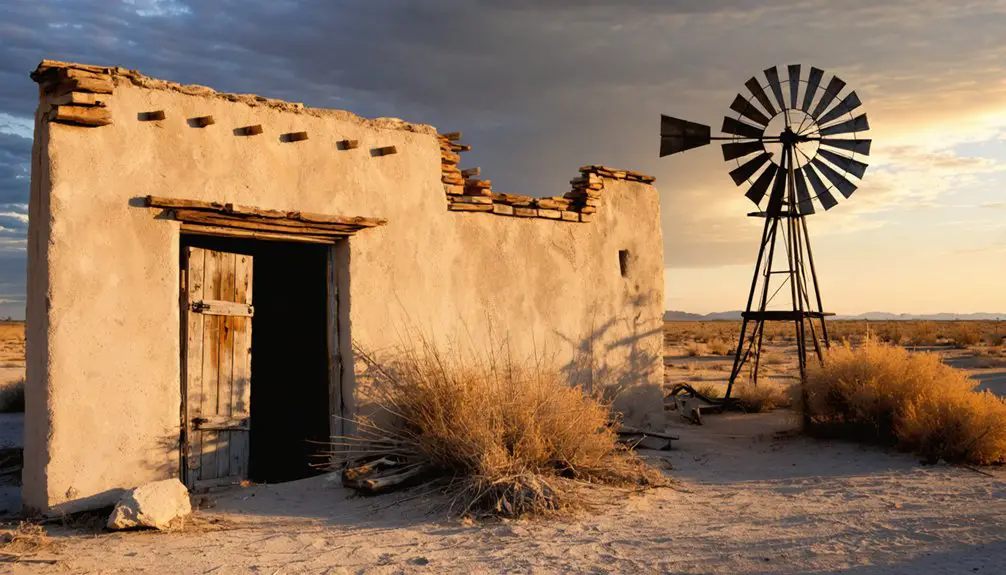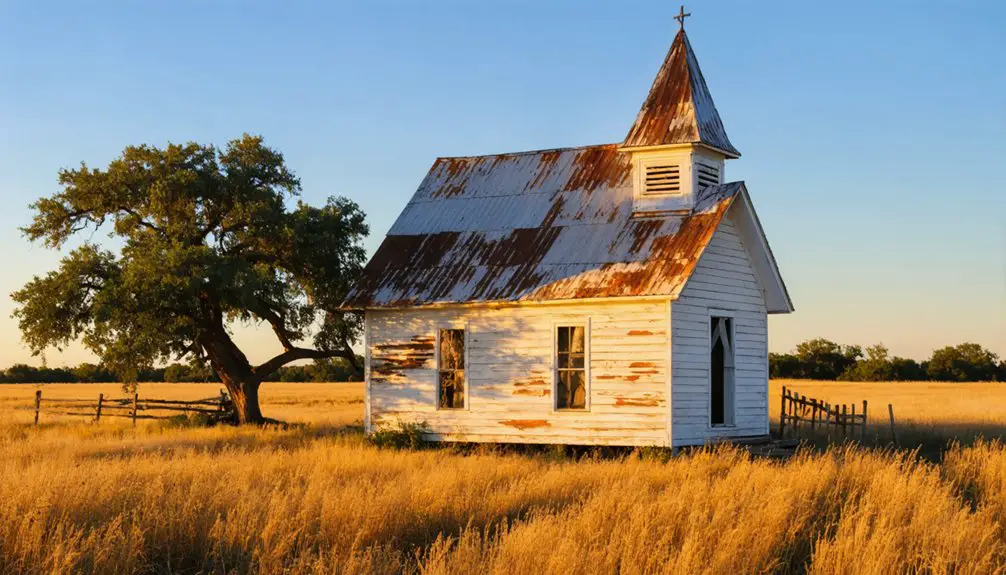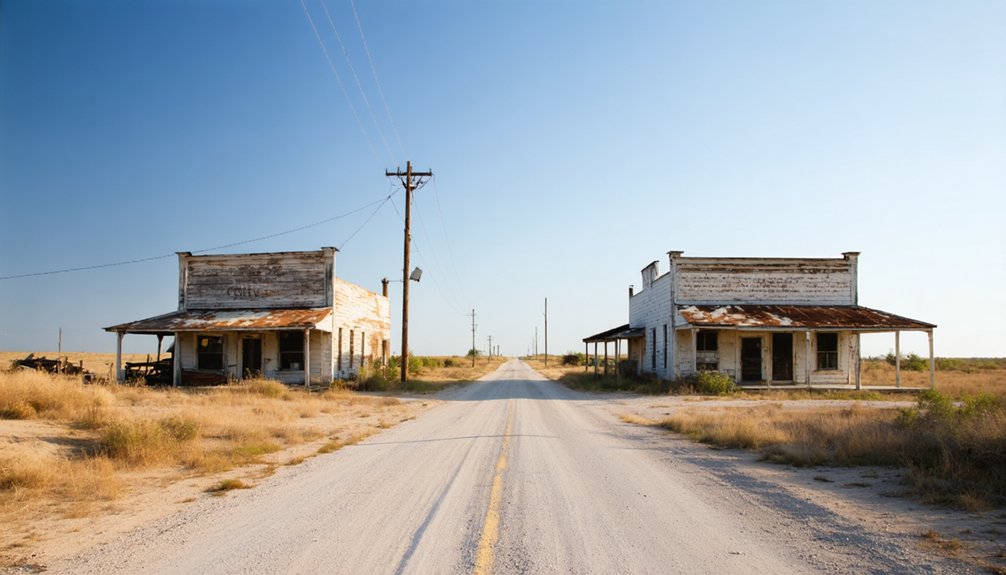
Planning a ghost town road trip to Praha, Texas starts with setting up base in Flatonia, just three miles west on Farm Road 1295. You’ll find no crowds or main street here—just open land and the striking Gothic stonework of St. Mary’s Church rising against the Texas sky. Pack snacks, fuel up in Flatonia, and arrive on a weekend morning for the best experience. There’s far more history layered into this quiet place than first meets the eye.
Key Takeaways
- Praha, Texas, sits on Farm Road 1295, three miles east of Flatonia, making it easily accessible via Interstate 10 in southern Fayette County.
- The town’s main attraction is St. Mary’s Church, a Gothic-style stone structure completed in 1892 and featuring frescoes by Gottfried Flurry.
- Three memorial chapels on church grounds honor WWII soldiers; Praha reportedly had the highest wartime death ratio per resident.
- Praha has no dining or shopping options, so eat in Flatonia beforehand and pack water and snacks for your visit.
- Visit on weekend mornings for a peaceful experience and allow extra time to absorb the Czech immigrant heritage and historic details.
What Makes Praha, Texas Worth a Ghost Town Road Trip?
Praha, Texas doesn’t look like much at first glance — a quiet stretch of Farm Road 1295, three miles east of Flatonia, with little more than a handful of structures breaking the South Texas horizon. But look closer, and you’ll find a place packed with layered history.
Once a thriving Czech immigrant settlement of nearly 700 residents, Praha carries local legends of outlaws, frontier hardship, and wartime sacrifice unlike almost anywhere else in the country. Its Gothic stone church, painted by a fresco artist, stands as a stunning example of historic architecture rising unexpectedly from open ranchland.
If you’re chasing road trips that trade tourist traps for genuine discovery, Praha delivers something rare — a ghost town that still has a soul worth finding.
How to Get to Praha and What to Expect When You Arrive
Getting to Praha is straightforward — it sits on Farm Road 1295 in southern Fayette County, just three miles east of Flatonia off Interstate 10. You won’t find a bustling town center when you arrive, so don’t expect gas stations or restaurants.
What you’ll find is a hauntingly quiet landscape anchored by St. Mary’s Church, a stunning example of Gothic historic architecture rising unexpectedly from the Texas countryside. The painted interior, crafted by fresco artist Gottfried Flurry, rewards anyone who steps inside.
Wander the grounds, read the memorial chapels honoring fallen WWII soldiers, and soak in the local folklore that shaped this once-thriving Czech settlement. Praha rewards the curious traveler who values authenticity over convenience — pack water, fuel up in Flatonia, and arrive ready to explore.
The Czech Immigrants Who Actually Built Praha
When you look into Praha’s origins, you’ll find that Czech immigrants shaped nearly everything about the town. Matěj Novák was among the first to arrive in the mid-1850s, purchasing 100 acres and opening his home for early Masses before any church existed.
Names like John Baca, Joseph Vyvjala, Andreas Gallia, and others followed, collectively laying the foundation for what would become one of Texas’s most distinctly Czech communities.
First Czech Settlers Arrive
Though Anglo settlers had arrived first, it was the Czech immigrants of the mid-1850s who truly shaped Praha’s identity. Matěj Novák purchased 100 acres and opened his home for early Masses, laying the groundwork for what would become remarkable historical architecture.
Other determined settlers followed, each contributing something essential:
- John Baca and Joseph Vyvjala helped establish the community’s early social fabric.
- Andreas Gallia and Joseph Hajek supported the religious foundation that defined local legends.
- Frank Vacl and George Morysek strengthened Praha’s growing Czech character.
These weren’t passive settlers — they were builders of culture. Their collective effort transformed a rough frontier outpost into a distinctly Bohemian community, one whose spirit you can still feel walking Praha’s quiet, historic grounds today.
Building Praha’s Community
Building a community takes more than just individual settlers putting down roots — it takes organized, collective effort. When you dig into Praha’s history, you’ll find local legends like John Baca, Joseph Vyvjala, Andreas Gallia, Joseph Hajek, Frank Vacl, and George Morysek shaping something lasting from the Texas frontier.
These Czech immigrants didn’t just survive — they built. They established St. Mary’s parish in 1865, constructed a frame chapel, then upgraded to a larger church in the 1870s, and finally broke ground on the present stone structure in 1892.
That commitment to architectural preservation is exactly why you can still stand inside a stunning Gothic-style church today. Their hands built something worth your road trip, and Praha’s remaining structures stand as proof of their enduring vision.
Czech Names Behind Praha
Every community has names worth remembering, and Praha’s founding story carries a handful that deserve yours. Czech heritage took root here through real people who cleared land, built homes, and held Mass before any church stood.
Mathias Novák arrived first, purchasing 100 acres and opening his home for early worship. Others followed, each adding something permanent:
- John Baca and Joseph Vyvjala helped establish early community infrastructure.
- Andreas Gallia and Joseph Hajek expanded the settlement’s Czech identity.
- Frank Vacl and George Morysek strengthened the social and religious foundation.
These local legends didn’t just survive frontier Texas — they shaped it into something distinctly Bohemian.
When you walk Praha’s grounds today, you’re standing on land those families claimed with purpose and intention.
Inside Praha’s St. Mary’s Church, the Most Stunning Stop on the Route
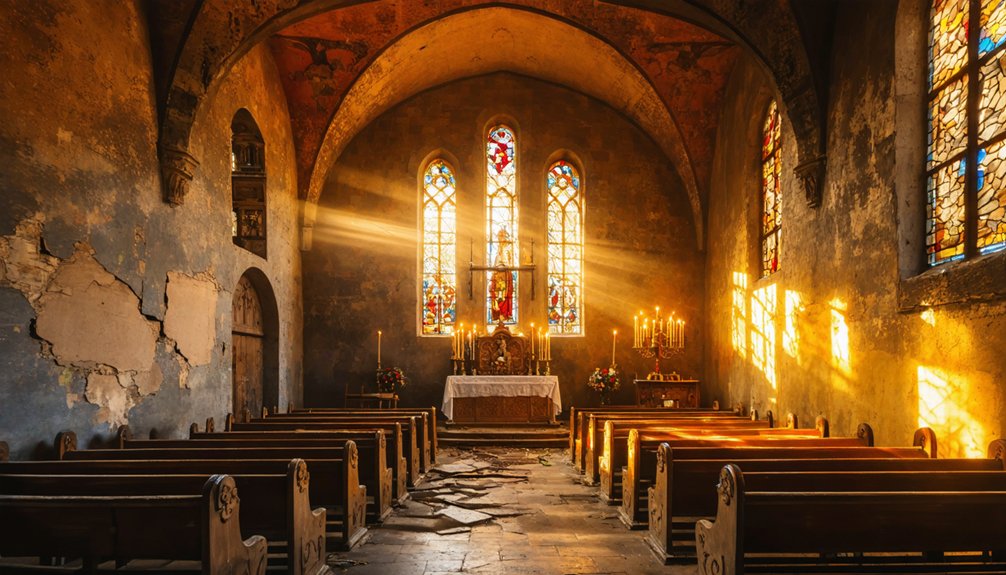
When you step inside St. Mary’s Church, you’ll immediately understand why this stop anchors the entire road trip. The interior showcases remarkable historic architecture, with ceiling and wall frescoes painted by artist Gottfried Flurry that have survived decades of rural isolation. Every brushstroke reflects a community that poured extraordinary effort into building something lasting on the Texas frontier.
The Gothic-style stone church, completed in 1892, stands as one of Texas’s most impressive rural religious structures. Its survival represents ghost town preservation at its finest — a fragile piece of Czech-Texan heritage still standing despite Praha’s dramatic population decline.
Three small memorial chapels on the grounds honor local soldiers lost in World War II, adding a deeply personal layer to your visit. Don’t rush through this place — it rewards careful attention.
The WWII Memorial Chapels Hidden in Plain Sight
Just beyond the main church, three small chapels stand quietly on the grounds — easy to walk past if you don’t know what they represent. Each one honors the Praha soldiers lost in World War II, a sacrifice that earned this tiny community a sobering distinction: the highest ratio of wartime deaths per resident of any U.S. town.
In 1944 alone, nine men from Praha died. Local legends surrounding their service shaped the community’s identity long after the war ended, and preservation efforts have kept these chapels standing as genuine memorials.
Three things worth knowing before you visit:
- Each chapel is individually dedicated
- The deaths were concentrated in a single year
- The chapels sit directly on church grounds
Take a moment. These aren’t decorations — they’re grief made permanent.
Praha in 2025: What Survives and When to Go
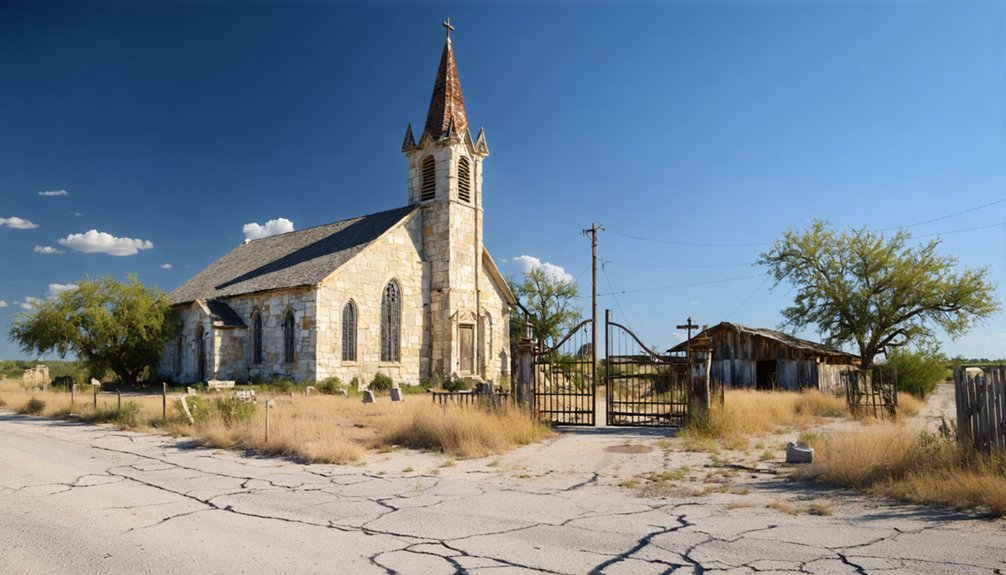
Praha hasn’t grown since you last heard of it — and that’s exactly why it’s worth visiting. What survives is lean but powerful: St. Mary’s Church, its painted interior still vivid, and three small WWII chapels standing as quiet monuments to local legends who never came home.
Historical preservation here isn’t polished or commercialized — it’s raw and honest, held together by a tight-knit community that values memory over development.
Visit on a weekend morning when the light hits the stone facade cleanly and the grounds stay peaceful. Bring water, a camera, and enough curiosity to linger.
Praha won’t entertain you — it’ll move you. That distinction makes all the difference on a ghost town road trip worth taking.
Using Flatonia as Your Base for a Praha Day Trip
Since Praha sits just three miles east of Flatonia, you’ll want to use that small railroad town as your launching pad for the day.
Flatonia offers lodging options that put you close to the action without requiring you to rough it, and several local diners serve a solid breakfast before you head out to the ghost town.
Fuel up on a plate of eggs and biscuits, check out of your room, and you’re on Farm Road 1295 within minutes.
Flatonia’s Proximity To Praha
Nestled only three miles east of Flatonia on Farm Road 1295, Praha is close enough to make Flatonia a natural home base for your visit. You’ll find lodging, restaurants, and fuel in Flatonia that Praha simply can’t offer.
This proximity gives you real flexibility:
- Drive to Praha in under ten minutes to explore local architecture and historic preservation at St. Mary’s Church.
- Return to Flatonia for meals without rushing your experience.
- Revisit Praha a second time if you want more time absorbing the details.
You’re not locked into a single rushed stop. Instead, you can move freely between a functioning small town and a genuine ghost town, experiencing both on your own schedule.
Lodging Options In Flatonia
Flatonia keeps your logistics simple: you’ll find a handful of motels and bed-and-breakfast options that put Praha just minutes from your door.
Chain motels along I-10 offer reliable, no-frills overnight stays, while smaller local inns give you a warmer connection to the region’s Czech-Texan roots.
Staying in Flatonia means you can explore Praha’s historic architecture at your own pace — arriving early when the light hits St. Mary’s stone walls beautifully, then returning after sunset without a long drive.
Your hosts often know local legends tied to the area’s frontier past, adding texture to what you’ve seen.
With flexible check-in options and easy highway access, Flatonia functions as a practical, comfortable launching point for your ghost town adventure.
Dining Before Your Visit
Before you make the short drive east on Farm Road 1295 to Praha, fuel up in Flatonia, where local diners and cafés serve the kind of hearty, unpretentious Texas cooking that fits a morning on the road. Eating locally keeps your energy up for exploring historic landmarks like St. Mary’s Church and the memorial chapels.
Keep these tips in mind:
- Arrive early — breakfast spots fill quickly on weekends.
- Ask locals about daily specials featuring regional ingredients rooted in Czech-Texan tradition.
- Pack water and snacks, since Praha offers no dining options of its own.
Flatonia’s local cuisine reflects the same immigrant heritage you’ll discover in Praha, making your meal feel like the natural first chapter of the trip.
Frequently Asked Questions
Was Praha, Texas Ever Officially Incorporated as a Municipality?
Praha never gained official incorporation as a municipality—you’re exploring one of Texas’s most enthralling ghost town legends. Its historical landmarks, like St. Mary’s Church, stand as enduring testimonies to a community that thrived without formal municipal status.
What Were Praha’s Earliest Anglo Settler Families Doing in Fayette County?
You’ll find Praha’s early settlers — James Duff and the Criswell family — were pioneering Fayette County alongside German heritage communities, actively carving out frontier lives as early settlers claiming land and building the region’s foundational roots.
Who Exactly Was Gottfried Flurry, and Where Else Did He Paint?
You’ll find Gottfried Flurry’s artistic influence enchanting — he’s the fresco artist who painted Praha’s stunning church ceiling and walls. Unfortunately, his other artistic locations remain undocumented in available records, leaving his broader legacy beautifully mysterious.
Did the Catholic School in Praha Outlast the Town’s Population Decline?
Like a fading candle, the Catholic school couldn’t outlast Praha’s decline. It opened in 1896, leaving behind historic architecture and cultural influences, but as the town emptied, you’d find its spirit survived only in memory.
How Did Praha Get the Nickname Hottentot Before Becoming a Ghost Town?
Praha earned the nickname Hottentot from its rowdy frontier reputation — you’d have found outlaws and misfits shaping local legends long before historical architecture defined the town’s identity. It’s a wild origin story worth exploring!
References
- https://www.texasescapes.com/CentralTexasTownsSouth/PrahaTexas/PrahaTexas.htm
- https://www.tshaonline.org/handbook/entries/praha-tx
- https://en.wikipedia.org/wiki/Praha
- https://www.ghosttowns.com/states/tx/praha.html
- https://jamesmoore.substack.com/p/the-boys-of-praha
- https://cs.wikipedia.org/wiki/Praha_(Texas)
- https://en.wikipedia.org/wiki/List_of_ghost_towns_in_Texas
- http://www.texasescapes.com/CentralTexasTownsSouth/PrahaTexas/PrahaTexas.htm