Planning a ghost town road trip to Quigley, Texas, means venturing deep into East Texas pine country to explore a logging camp that rose and fell in just four years. You’ll want a four-wheel drive vehicle, a county map, and a visit timed between March and May or September and November for the best conditions. There’s more to uncover about Quigley’s history, directions, and nearby ghost towns worth adding to your route.
Key Takeaways
- Quigley, Texas, a ghost town since 1909, was a short-lived logging camp that exhausted its pine forests within just four years.
- Visit during March-May or September-November to avoid brutal summer heat, sudden storms, and winter flooding for the safest exploration.
- From Jasper, take US 190 or SH 147, then transition to rural roads, requiring a four-wheel drive vehicle for rough terrain.
- Bring local county maps since Quigley’s roads are unmarked, boundaries undefined, and terrain features soft, marshy soil with overgrown clearings.
- Extend your trip by visiting nearby ghost towns Quincy and Jefferson for a broader East Texas historical road trip experience.
What Was Quigley, Texas?
Deep in the piney woods of Jasper County, Quigley, Texas, was a short-lived logging camp that rose and fell within just four years. Established in 1905, it operated a sawmill that devoured the surrounding pine forests until the timber ran out by 1909.
Once the resources dried up, everyone left, and no one came back.
Today, Quigley stands as a forgotten piece of logging heritage, swallowed by the same forest it once harvested. It’s now classified as a ghost town on state historical lists, with no structures, no population, and no tourism infrastructure to speak of.
Swallowed by the very forest it once harvested, Quigley exists today as little more than a name on a ghost town list.
If you’re drawn to places where history quietly fades into the trees, Quigley offers you an authentic, unfiltered glimpse into East Texas’s timber boom era.
Quigley’s Four-Year Rise and Fall as a Logging Camp
When the first axes swung in 1905, Quigley wasn’t built to last — it was built to extract. The logging techniques used here stripped the surrounding pines fast, leaving little behind. The economic impact was swift but short — a classic boom-bust cycle you’d recognize across East Texas.
Here’s how Quigley’s four years played out:
- 1905 — Logging camp established; sawmill operational
- 1906–1907 — Peak timber extraction exhausts surrounding forest
- 1908 — Sawmill operations become unsustainable
- 1909 — Camp fully abandoned; no revival attempted
Once the trees were gone, so was everything else. No diversification, no reinvention — just silence.
Quigley’s story reminds you that unchecked extraction never builds lasting freedom; it only borrows time.
When Is the Best Time to Visit Quigley, Texas?
Quigley’s story ended in 1909, but your road trip there doesn’t have to feel like a struggle against the elements.
Seasonal considerations matter here, especially since East Texas rural roads can turn treacherous. Spring and fall offer the sweetest windows — mild temperatures, manageable humidity, and firm ground underfoot.
Summer brings brutal heat and sudden storms, while winter’s wet spells create flooding that cuts off remote access entirely.
Weather impacts your experience considerably. Heavy rainfall transforms already rough terrain into impassable mud, leaving even capable vehicles stuck.
You’ll want dry conditions for exploring overgrown ground safely. Plan your visit between March and May or September and November for the best balance of comfort and accessibility.
Check local forecasts before heading out — Jasper County weather shifts quickly.
How to Get to Quigley From Jasper
From Jasper, you’ll head out on rural roads branching off major arteries like US 190 or SH 147, winding deeper into East Texas’s dense pine forests.
The routes are scenic but unforgiving, so you’ll want a four-wheel-drive vehicle to handle the rough, unpaved stretches near the old settlement site.
Before you go, check local road conditions, since seasonal flooding can make certain paths impassable, especially after heavy spring rains.
Routes From Jasper
Since Quigley sits deep in the forested backroads of Jasper County, you’ll want to start your route from Jasper city, using either US 190 or SH 147 as your primary artery before moving onto rural roads heading toward the site.
Both best routes offer scenic views of East Texas pine forests that make the drive worthwhile on its own.
Follow these steps for a smooth approach:
- Head east from Jasper on US 190 toward the county’s interior.
- Shift onto SH 147 south for deeper forest access.
- Switch to unmarked rural roads using a local county map.
- Keep four-wheel drive engaged once pavement ends.
Cell service gets spotty fast, so download offline maps before you leave civilization behind.
Road Conditions Ahead
Once you’ve got your route locked in, the road itself becomes the next challenge worth preparing for. Road conditions out here aren’t forgiving, and that’s part of the adventure. Paved roads shift quickly into rutted dirt paths the closer you get to Quigley’s old grounds.
After heavy rain, those paths turn muddy and unpredictable, so timing matters.
Follow these driving tips before you roll out: bring a four-wheel-drive vehicle, check recent rainfall reports, and pack recovery gear just in case.
Spring and fall offer the driest, most manageable conditions. Summer heat bakes the ground hard but attracts flooding from sudden storms.
Keep your speed low on unmarked rural roads, watch for downed branches, and trust your instincts. The forest doesn’t wait for the unprepared.
What’s Left at Quigley: Terrain, Remnants, and Site Conditions
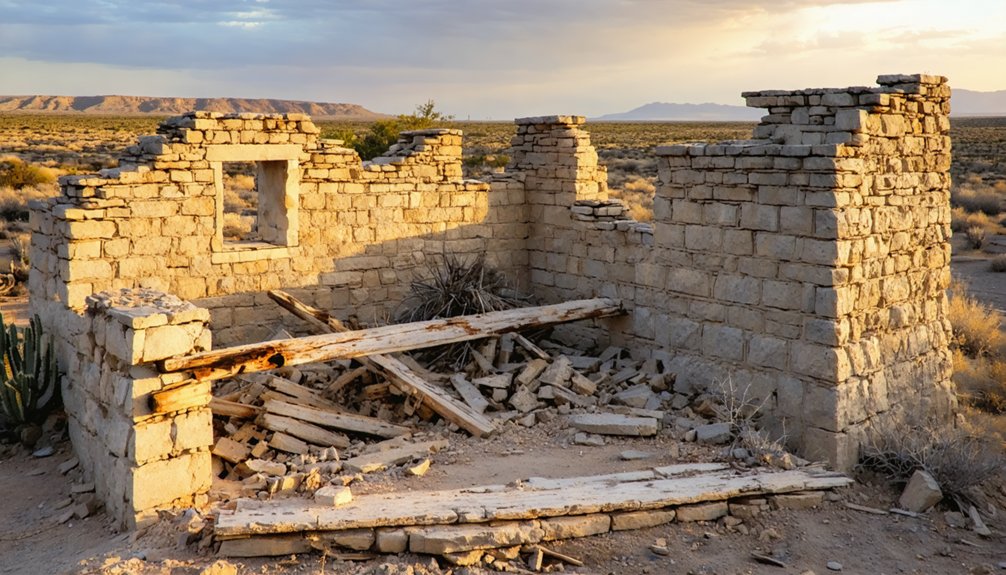
When you arrive at what was once Quigley, you’ll find nature has thoroughly reclaimed the land. The site conditions reveal dense East Texas forest where a bustling logging camp once stood. Expect uneven terrain features, thick undergrowth, and no standing structures.
Here’s what you’ll likely encounter:
- Dense pine forest covering former camp grounds completely
- Soft, marshy soil making footing unpredictable after rainfall
- Overgrown clearings hinting at where sawmill operations once ran
- No marked boundaries requiring careful navigation with local maps
You’re fundamentally reading the landscape itself as your historical document.
Bring sturdy boots, patience, and a sharp eye. The freedom of exploring untouched wilderness comes with responsibility — respect the terrain and tread carefully.
Which Ghost Towns Near Quigley Are Worth Adding to Your Route?
Quigley doesn’t have to be your only stop — East Texas hides several ghost towns worth folding into your route. Quincy, also in Jasper County, sits nearby and shares similar historical significance as a once-active settlement swallowed by time.
Jefferson, further north, offers haunted sites and preserved architecture that give nearby ghosts a more tangible, immersive feel. Both destinations reward curious travelers who appreciate layers of regional history rather than sanitized tourist experiences.
You’ll find that each stop adds context to Quigley’s own story — short timber booms, rapid abandonment, and forests reclaiming what settlers left behind.
Plan your mileage carefully, since rural East Texas roads stretch longer than maps suggest. String these towns together, and you’ve built a genuinely compelling route through forgotten history.
How to Plan an East Texas Ghost Town Road Trip Around Quigley
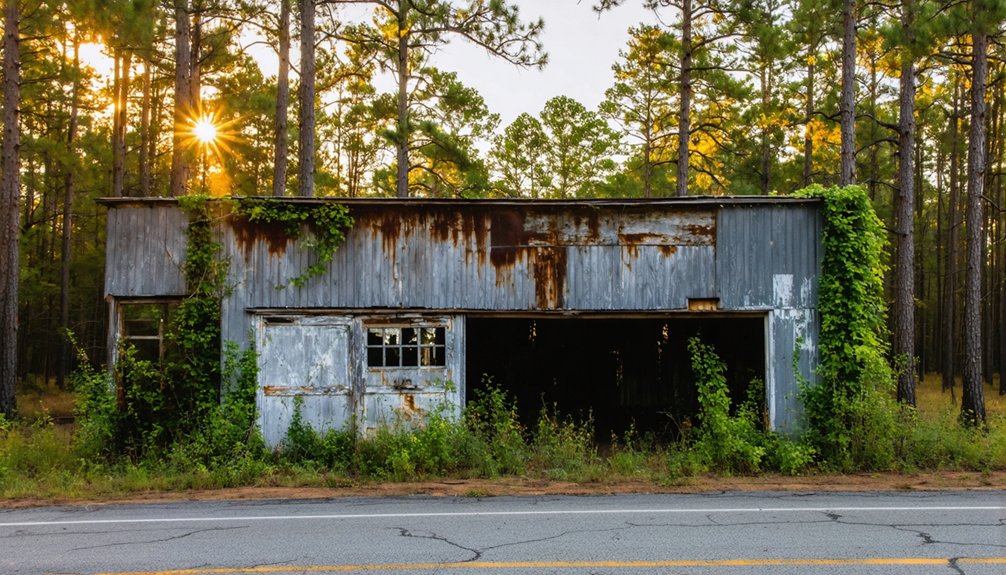
Building a route around Quigley means turning a single obscure stop into a full East Texas experience.
You’re not just chasing one abandoned logging camp — you’re threading together history, wilderness, and ghost town photography across a forgotten landscape.
Follow these four steps to build your ideal route:
- Start in Jasper — fuel up and grab local maps showing rural access roads.
- Hit Quigley first — explore its historical significance during morning light for better photography.
- Add Quincy — another nearby ghost town worth documenting.
- Finish at Big Thicket or Lake Sam Rayburn — decompress with nature after a day of history hunting.
Travel spring through fall, pack four-wheel drive capability, and move at your own pace — that’s real freedom.
Frequently Asked Questions
Is a Permit Required to Visit Quigley’s Abandoned Site Legally?
Ah, the bureaucratic dream! No permit’s confirmed required, but you’ll want to check local legal guidelines before exploring Quigley’s historically significant remnants. Respect private property boundaries and Texas trespassing laws to keep your adventure truly free.
Are There Any Known Photographs Documenting Quigley During Its Operation?
You won’t find known photographs capturing Quigley’s operational days. Historic imagery of this vanished camp remains elusive, leaving its abandoned architecture undocumented visually. Explore local Jasper County archives — you might uncover rare, hidden photographic treasures waiting for discovery!
What Wildlife Species Currently Inhabit the Overgrown Quigley Site Area?
You’ll discover rich local fauna thriving at Quigley’s overgrown site, including white-tailed deer, wild turkey, and various songbirds. Watch for endangered species like the red-cockaded woodpecker, as East Texas forests shelter remarkable biodiversity you can freely explore.
Did Quigley Ever Have a Post Office During Its Short Existence?
Like Brigadoon vanishing without a trace, Quigley’s history reveals no postal services ever graced this fleeting camp. You won’t find any record of Quigley establishing a post office during its brief 1905–1909 existence.
Are Metal Detectors Allowed When Exploring Quigley’s Ghost Town Grounds?
You’ll want to check local metal detecting regulations before exploring Quigley’s grounds. Given its historical significance as an 1800s logging camp, Texas laws may restrict artifact removal, so always research permissions to protect your adventurous freedom responsibly.
References
- https://www.youtube.com/watch?v=HVWjyzoPiNE
- https://en.wikipedia.org/wiki/List_of_ghost_towns_in_Texas
- https://www.ghostsandgetaways.com/blog-1/27-fascinating-ghost-towns-in-texas
- https://www.youtube.com/watch?v=9A_sYyp7yk0
- https://www.tshaonline.org/handbook/entries/quigley-tx
- https://www.youtube.com/watch?v=A93hqemeh6Y
- https://www.youtube.com/watch?v=IECzqQ-jIEM