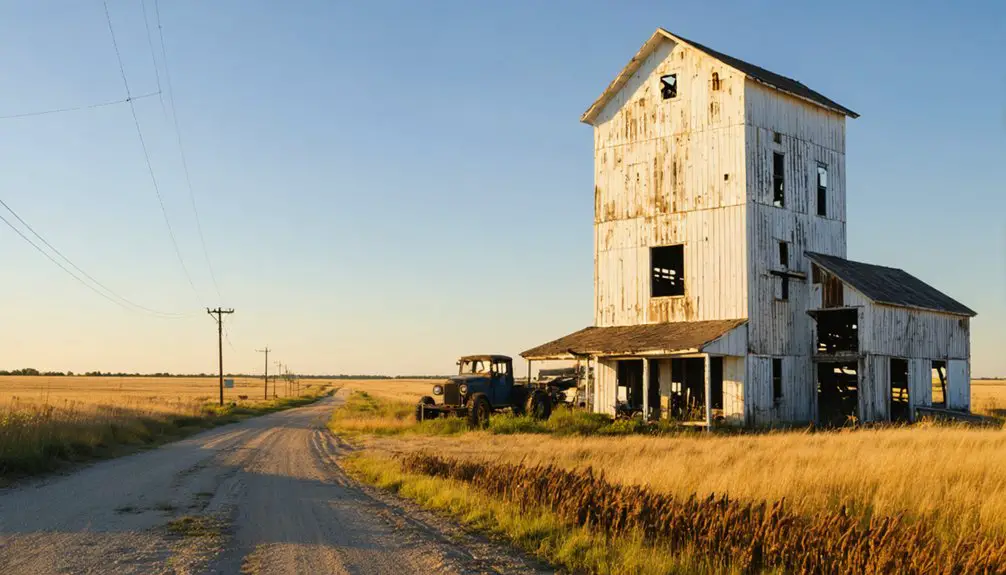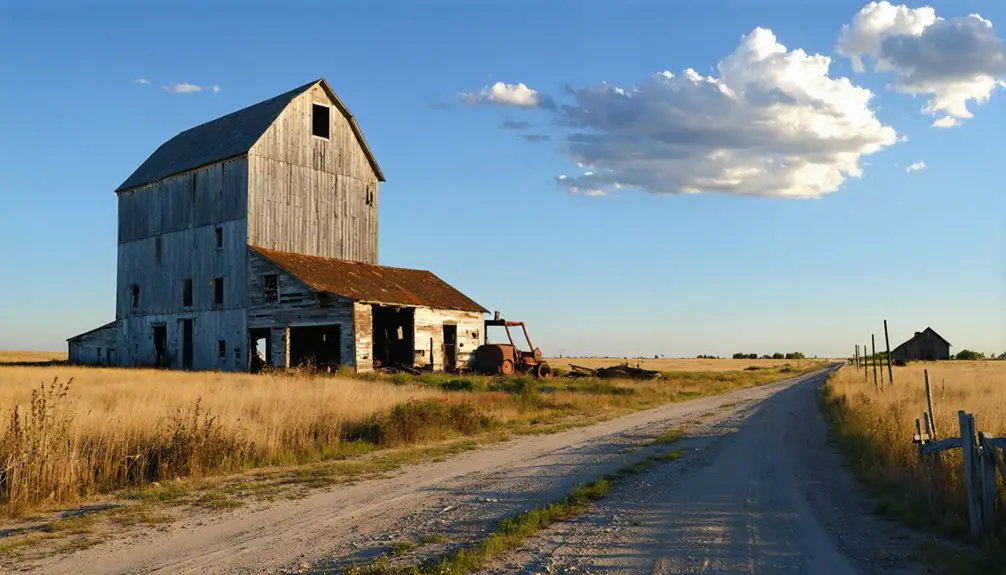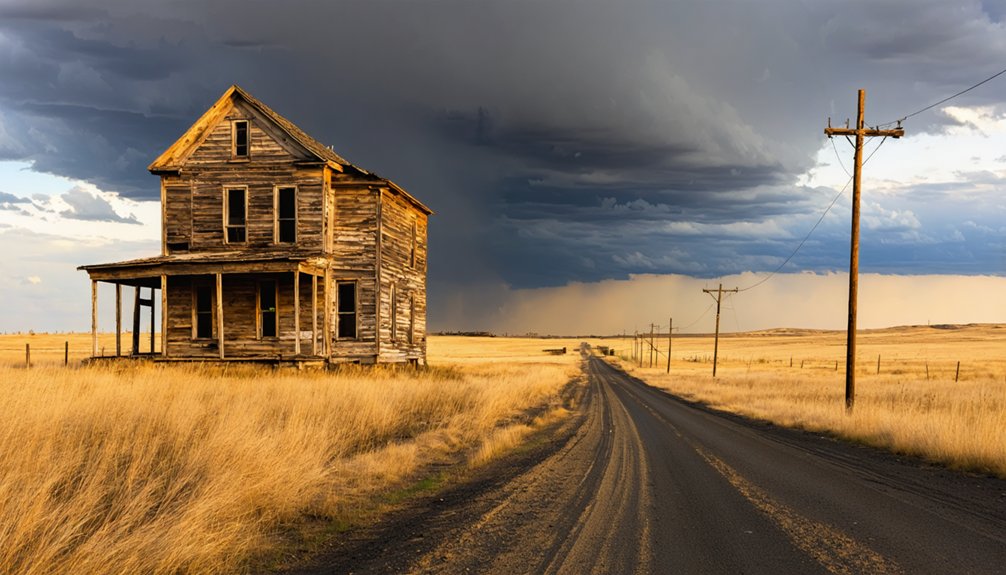
Tagus, North Dakota sits about 40 miles west of Minot on Highway 2 — exit and drive two miles north, and you’ll find yourself face-to-face with one of the state’s most haunting ghost towns. You’ll walk past crumbling buildings, scorched earth where St. Olaf’s Lutheran Church once stood, and a silence that feels heavier than it should. Pack water, sturdy boots, and a charged phone before you go. There’s far more to this eerie place than meets the eye.
Key Takeaways
- Tagus is located approximately 40 miles west of Minot on Highway 2, then two miles north after exiting.
- Fuel up in Minot or Stanley beforehand, as no local services or food are available near the ghost town.
- Visit between late spring and early fall for the best weather, longest daylight hours, and accessible roads.
- Pack water, snacks, a first aid kit, sturdy boots, a flashlight, and a fully charged phone before exploring.
- Respect unstable structures, avoid private property, never remove artifacts, and inform someone of your plans before visiting.
Why Ghost Town Hunters Keep Making the Trip to Tagus, North Dakota
Tagus, North Dakota doesn’t look like much from the highway — a cluster of sagging rooflines and empty windows barely visible across the plains — but ghost town hunters can’t seem to stay away.
What pulls you in is the combination of historical preservation and raw, unfiltered local folklore that most sanitized tourist destinations can’t offer.
You’ll find a town that peaked at 140 residents in 1940 and quietly collapsed into near-nothing by the 1970s. That honest decay tells a real story.
Layer on top of that the legends — glowing gravestones, ghost trains, whispered screams — and Tagus becomes something harder to dismiss.
It’s not manicured or curated. It’s abandoned, strange, and completely on your own terms.
That’s exactly why you keep hearing about it.
How to Get to Tagus From Highway 2
Getting there is straightforward once you know what to look for. From Highway 2, roughly 40 miles west of Minot, exit and drive two miles north. You’ll spot the remnants of Tagus without much trouble — abandoned structures don’t exactly blend into the flat North Dakota landscape.
Tagus is easy enough to find — exit Highway 2 about 40 miles west of Minot, head north two miles, and look for the ruins.
Before you head out, fuel up in Minot or Stanley, as you won’t find local cuisine or any services near the ghost town.
If you’re pairing this stop with other outdoor activities like hiking or exploring the surrounding plains, pack accordingly. The isolation is real.
Stanley sits about 22 miles west and offers your closest Amtrak connection via the Empire Builder, though the train doesn’t stop in Tagus itself.
Plan your route before you leave cell service behind.
Abandoned Buildings, Memorials, and What Survives in Tagus Today
What’s left of Tagus tells a quiet, weathered story. As you walk through, you’ll encounter crumbling buildings and deteriorating abandoned infrastructure that once supported a thriving agricultural community. Empty structures lean against the prairie wind, offering urban exploration opportunities that feel both eerie and historically rich.
The most meaningful stop is the brick memorial plaque marking the foundation of St. Olaf’s Lutheran Church, destroyed by fire in 2001. It’s a grounded reminder of what this town once held.
Watch your step carefully — uneven ground and unstable structures make navigating the site genuinely hazardous. A few residents still live here, so respect their space. Don’t remove artifacts or disturb memorials.
Tagus rewards curious, respectful visitors who take time to observe rather than intrude.
The Dark Legends Behind Tagus’s “Stairway to Hell”
Beyond the crumbling structures and quiet memorials, Tagus carries a darker reputation that’s drawn thrill-seekers and paranormal enthusiasts for decades. Local legends nickname the area the “Stairway to Hell,” referencing a rumored spiraling underground stairway hidden somewhere beneath the town.
St. Olaf’s Lutheran Church sits at the center of the darkest urban myths. Stories claim the church hosted Satanic rituals throughout the 1980s and 1990s before fire destroyed it in 2001.
Locals describe glowing gravestones, ghostly hellhounds snapping at visitors, phantom train sounds, and even screams rising from underground.
Skeptics dismiss most of these tales as pure folklore. You’ll find no confirmed evidence supporting the ritual claims.
Still, whether you believe them or not, these legends add an undeniably eerie atmosphere to an already haunting destination.
The Fire That Destroyed St. Olaf’s Lutheran Church
Whether the legends are real or invented, they all circle back to one physical anchor point: St. Olaf’s Lutheran Church. Built to serve Tagus’s early settlers, it held deep cultural significance for the community.
A fire destroyed it in 2001, erasing one of the town’s last standing symbols of historical preservation.
What remains today:
- A brick memorial plaque marking the original foundation
- Scorched earth where the structure once stood
- A quiet, sobering reminder of the town’s faded identity
- The focal point of most paranormal stories and visitor curiosity
- Evidence that nature and neglect claim everything eventually
When you visit, take a moment at that plaque. You’re standing where generations once gathered—before fire, legend, and time reduced it to memory.
Is the Satanic Ritual History of Tagus Real or Urban Legend?
Few ghost towns carry legends as vivid and unsettling as Tagus’s alleged history of Satanic rituals—but locals and researchers can’t agree on whether any of it actually happened.
Urban legends surrounding the old St. Olaf’s Lutheran Church claim that dark gatherings occurred there throughout the 1980s and 1990s, fueling Tagus’s eerie reputation. These historic controversies have attracted curious visitors for decades, yet concrete evidence remains elusive.
Dark legends cling to St. Olaf’s Lutheran Church, but concrete evidence of the alleged rituals remains elusive.
You’ll find passionate believers and equally passionate skeptics when you dig into the story. Some longtime residents dismiss the entire narrative as fabricated folklore designed to spook outsiders. Others insist something genuinely disturbing happened there.
What you choose to believe is entirely up to you—but knowing the debate exists before you visit helps you approach Tagus with open, clear-eyed curiosity.
Best Time of Year to Road Trip to Tagus, North Dakota
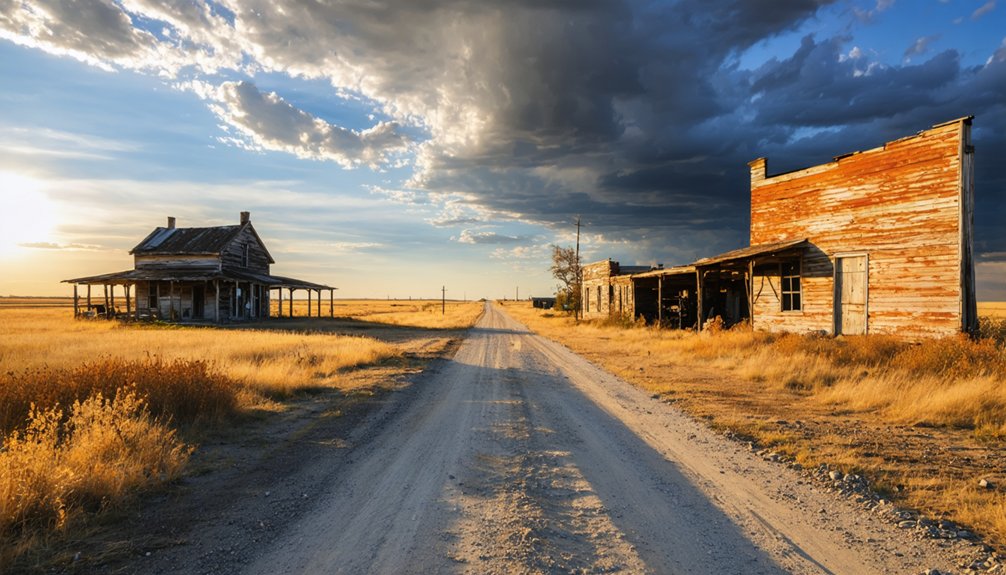
If you’re planning a road trip to Tagus, late spring through early fall offers the most comfortable conditions, with warm temperatures and manageable road access off Highway 2.
Summer visits give you the longest daylight hours to explore the abandoned structures and locate the brick memorial marking St. Olaf’s former foundation.
However, you should prepare for North Dakota’s unpredictable weather swings even in summer, and know that winter trips risk brutal cold and hazardous driving conditions across the open northern plains.
Ideal Visiting Seasons
Timing your visit to Tagus can make or break the experience, since North Dakota’s humid continental climate swings between brutal extremes.
Late spring through early fall gives you the best access to historical landmarks and lets you soak in the local folklore without freezing.
Plan around these seasonal advantages:
- May–June: Mild temps, longer daylight hours, great for exploring ruins
- July–August: Warmest months, but pack water since there’s no shade or services
- September: Cooler air, dramatic skies, fewer visitors
- Avoid winter: Ice, snow, and bitter cold make isolated roads genuinely dangerous
- Avoid spring mud season: Unpaved access roads become impassable after snowmelt
You’re free to visit anytime, but smart timing means you’ll spend less time surviving and more time exploring.
Weather Challenges To Expect
North Dakota’s humid continental climate doesn’t mess around, and Tagus sits fully exposed to everything the northern Great Plains can throw at you.
Summer heat brings humidity that makes urban exploration uncomfortable, while sudden storms roll across open land with little warning.
Winter temperatures plunge brutally, turning already unstable abandoned structures into genuine hazards.
Ice and snow conceal broken ground, making historical preservation sites even more treacherous underfoot.
Spring thaw softens the earth, creating muddy, unpredictable terrain around crumbling foundations.
Fall offers perhaps the most manageable conditions, but even then, early blizzards aren’t impossible.
Whatever season you choose, dress in layers, monitor weather forecasts obsessively, and never assume the sky will stay clear.
This landscape rewards prepared travelers and punishes careless ones without hesitation.
What to Pack for a Safe Visit to Tagus
Since Tagus offers zero services, you’ll need to pack smart before heading out — bring plenty of water, snacks, and a basic emergency kit to handle the isolation safely.
Sturdy, ankle-supporting boots are non-negotiable, as broken pavement, uneven ground, and debris-filled structures make every step a potential hazard.
Round out your safety gear checklist with a flashlight, first aid kit, fully charged phone, and a paper map, since cell service this far into rural North Dakota can disappear without warning.
Essential Survival Supplies
Packing 5 essential supplies could make the difference between a memorable ghost town adventure and a dangerous ordeal in Tagus. No services exist here, so you’re completely on your own once you leave Highway 2.
Responsible urban exploration means respecting historical preservation while keeping yourself safe in this isolated, crumbling environment.
Don’t head out without these critical supplies:
- Water – Bring at least two liters per person
- Food – Pack non-perishable snacks and a full meal
- First aid kit – Uneven terrain and broken structures create real injury risks
- Flashlight with extra batteries – Darker interiors demand reliable lighting
- Emergency contact plan – Share your location and expected return time with someone trusted
Prepare smart, explore freely, and respect what remains.
Proper Footwear Matters
Sturdy footwear isn’t optional when you’re steering through Tagus — it’s your first line of defense against the hazards hiding beneath every step. Broken glass, rusted metal, and rotting floorboards cover the ground where buildings once stood. You’re walking through active historical preservation territory, meaning unstable foundations can give way without warning.
Wear ankle-supporting boots with thick, puncture-resistant soles. Sneakers won’t cut it here. The terrain shifts constantly between cracked concrete, loose gravel, and uneven soil softened by North Dakota’s harsh winters.
Local legends draw curious visitors toward shadowy corners and collapsed structures — places where footing gets genuinely dangerous. Respect both the mystery and the reality.
Your boots keep you mobile, safe, and free to explore Tagus on your own terms without an injury cutting your adventure short.
Safety Gear Checklist
Good boots get you moving safely through Tagus, but they’re only part of what you’ll need out there. This isolated ghost town offers abandoned architecture, urban legends, and zero services — so you’re entirely on your own. Pack smart before you go.
- Water and snacks — No stores exist anywhere nearby
- First aid kit — Uneven terrain and broken structures cause injuries fast
- Flashlight with extra batteries — Dark interiors hide serious hazards
- Fully charged phone and portable charger — Emergency communication is non-negotiable
- Emergency car supplies — Jumper cables, blankets, and a spare tire matter here
The nearest real help sits miles away. Tagus rewards prepared visitors with an unforgettable experience — it punishes unprepared ones with dangerous consequences. Your freedom to explore depends entirely on your readiness.
How to Visit Tagus Without Getting in Trouble
Although Tagus draws curious visitors with its eerie legends and crumbling structures, you’ll need to approach the site respectfully and responsibly to stay out of trouble. Urban legends make this ghost town magnetic, but they don’t grant you permission to vandalize or trespass on private property.
Stick to publicly accessible areas and don’t remove artifacts or disturb the brick memorial marking St. Olaf’s Lutheran Church foundation. Historical preservation matters here — every remnant tells Tagus’s story.
Respect whatever private property boundaries exist, since a few residents still live nearby.
Avoid visiting after dark, when unauthorized activity increases your risk of confrontations with real dogs or local law enforcement. Bring identification, travel with a companion, and let someone know your itinerary before exploring this remote, isolated location.
Frequently Asked Questions
When Was Tagus, North Dakota Officially Founded and Incorporated?
You’ll discover that Tagus was founded in 1900 as Wallace before it’s renamed, then officially incorporated in 1908. Its historical landmarks and local legends make it a fascinating, freedom-calling destination worth exploring!
What Was Tagus Originally Named Before It Was Renamed?
You’ll find that this ghost town history begins with the name origin of Wallace, founded in 1900. It was renamed Tagus to avoid confusion with Wallace, Idaho, giving this fascinating North Dakota settlement its unique identity.
What Was the Peak Population Tagus Ever Reached?
You might think ghost town tourism lacks real history, but Tagus peaked at 140 residents in 1940. Today, its abandoned town attractions whisper that forgotten past, inviting you to explore what time quietly swallowed whole.
Is There a Working Train Station Located Directly in Tagus?
You won’t find a working railroad station history site directly in Tagus. Historic train routes pass through, but you’ll need to drive about 22 miles west to Stanley to catch Amtrak’s nearest active station.
What Type of Climate Does Tagus, North Dakota Experience Year-Round?
You’ll experience a humid continental climate with dramatic seasonal weather variations. Historical climate patterns show you’re dealing with hot summers and brutally cold winters — perfect rugged conditions for your adventurous, freedom-seeking ghost town exploration!
References
- https://www.uicradio.net/post/stairway-to-hell-the-ghost-town-of-tagus-north-dakota
- https://en.wikipedia.org/wiki/Tagus
- https://ghostsofnorthdakota892857007.wordpress.com/2016/03/22/tagus-nd/
- https://www.youtube.com/watch?v=FJVZIt9f2Xw
- https://kids.kiddle.co/Tagus
- https://the-line-up.com/creepy-history-the-stairway-to-hell-in-tagus-north-dakota
- https://www.youtube.com/watch?v=5UbBaWJWKnI
- https://urbex-maps.com/en/blog/abandoned-places-north-dakota-6-iconic-urbex-spots
- https://myamericanodyssey.com/the-gateway-to-hell-in-tagus-north-dakota/