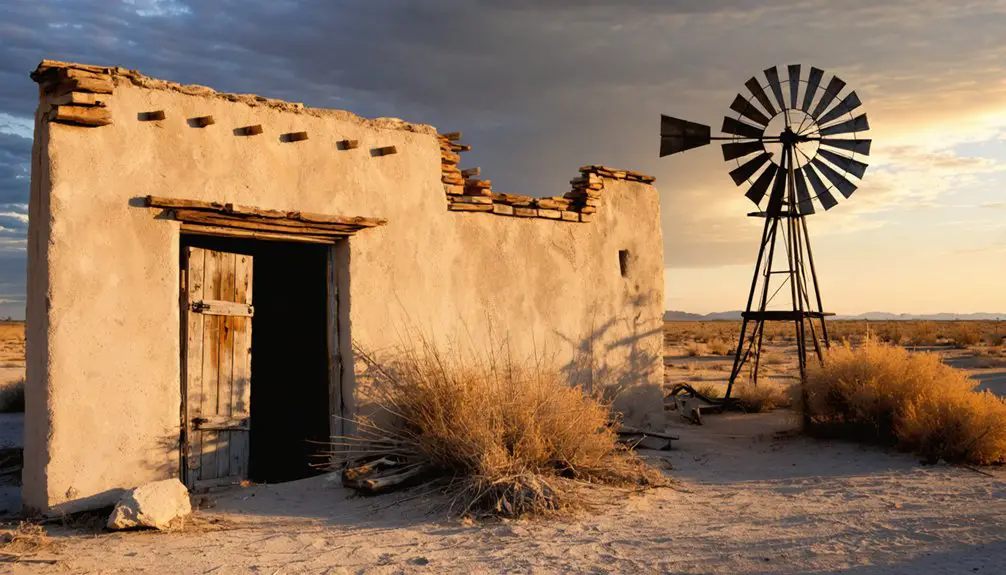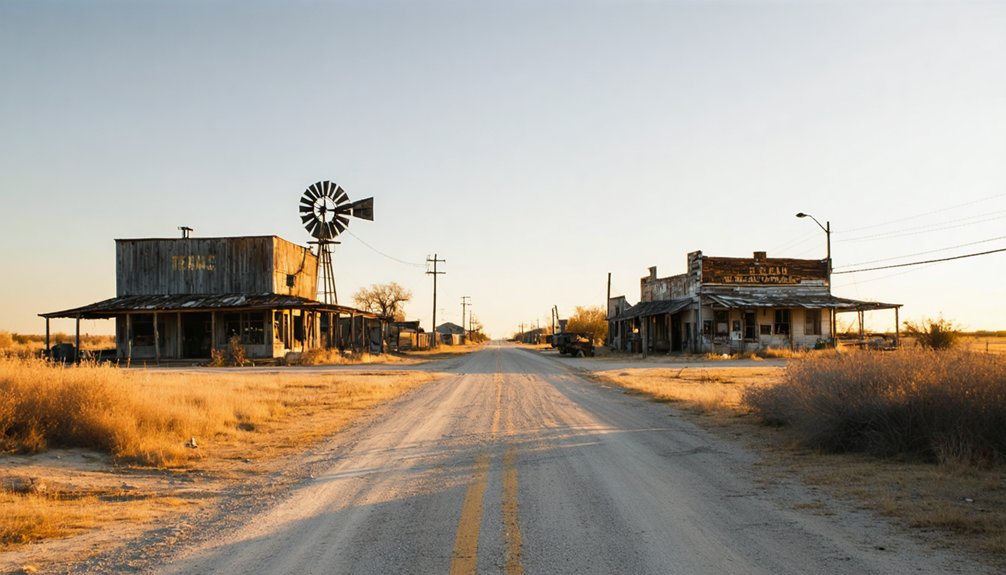
Texana, Texas isn’t a town you visit — it’s a town you interpret. Once a strategic hub during the 1835–36 Texas Revolution, it vanished when the Navidad River and human ambition moved on. Today, there’s no signage, no ruins, just open terrain in Jackson County holding centuries of buried memory. Pair it with nearby ghost towns, pack extra water, and go outside summer. The land still has plenty left to say.
Key Takeaways
- Texana, located in Jackson County near the Navidad and Sandy Creek rivers, has no standing structures—only buried foundations and scattered artifacts remain.
- Visit outside summer months; spring offers wildflowers and mild temperatures, while fall provides cooler weather and fewer crowds.
- Bring extra fuel, water, and a toolkit, as cell service is limited and the remote terrain demands self-reliance.
- Study regional maps and consult local historical societies before visiting to navigate rural county roads and understand the site’s revolutionary significance.
- Pair Texana with nearby ghost towns like Terlingua, Marathon, and Valentine to build a fuller picture of Texas’s vanished past.
What Was Texana, Texas: and Why Did It Disappear?
Though it’s vanished entirely from the modern map, Texana, Texas once stood as a strategically vital settlement during the 1835–36 Texas Revolution. Its name carrying the weight of a young republic’s struggle for independence.
Ancient legends of patriots and revolutionaries echo through its forgotten soil, where freedom wasn’t just desired — it was fought for and bled over.
Today, no structures remain. No roads mark its presence. Census records don’t acknowledge it. You won’t find a sign pointing toward it.
What you’ll find instead are ghostly whispers carried across the Texas wind, remnants of a cause that shaped an entire nation’s southwestern boundary.
Texana disappeared because history moved on, but its revolutionary significance never truly faded — it simply waited for someone willing to remember.
Where Is the Texana Ghost Town Site Located Today?
You’ll find the Texana ghost town site in Jackson County, Texas, near the confluence of the Navidad and Sandy Creek rivers, a landscape that once hummed with revolutionary-era ambition.
No preserved structures, paved access roads, or census markers greet you today — just open terrain where a once-strategic settlement quietly vanished.
If you’re planning to visit, you’ll want to cross-reference historical county maps before heading out, since the site exists more as a geographic memory than a navigable destination.
Texana’s Current Geographic Location
While Texana no longer stands as a physical place you can walk through, its ghost lingers in Jackson County, Texas, where the town once played a pivotal role during the 1835–36 Texas Revolution. No preserved structures, paved roads, or census-designated markers identify the site today. What remains lives primarily in historical records and the quiet land itself.
Cultural preservation efforts keep Texana’s memory alive, even without standing walls to photograph or ruins to explore. Researchers rely on archaeological methods to piece together where settlers once gathered, strategized, and fought for independence.
If you’re drawn to places where history breathes beneath the soil rather than above it, Jackson County rewards that instinct. You won’t find a trading post here, but you’ll find something rarer: unfiltered historical silence.
Access Routes Nearby
Jackson County, Texas anchors the vanished site of Texana, and if you’re steering toward it, U.S. Highway 59 runs closest to where the town once stood proud along the Navidad River. No signs greet you. No preserved storefronts line your path.
What remains carries archaeological significance rather than postcard charm — buried foundations, scattered artifacts, and soil layered with revolutionary-era memory. You’ll navigate rural county roads that demand patience and a reliable map.
Historic preservation efforts haven’t transformed this corridor into a curated destination, and that rawness is precisely its pull. You’re tracing ghost geography here, following instinct more than infrastructure.
Edna, the current Jackson County seat, serves as your practical launching point before you push toward where Texana’s silence waits.
Modern Site Conditions
What greets you at Texana’s modern site isn’t a town — it’s an absence shaped like one. No structures remain. No roads mark where families once walked. The census ignores it entirely, and urban decay never even got the chance to set in — there’s simply nothing left to decay.
What you’re standing near is a ghost town in the truest sense: erased rather than abandoned.
Yet that erasure carries weight. Texana held strategic ground during the 1835–36 Texas Revolution, and cultural preservation advocates argue that historical significance doesn’t require standing walls to deserve recognition.
You won’t photograph ruins here. You’ll feel the silence instead — the particular kind that forms when history refuses to leave a place, even after everything physical already has.
What Can You Actually See at a Site With Nothing Left Standing?
Visiting a site like Texana means confronting a particular kind of silence — no crumbling walls, no rusted hinges, no faded signage to anchor your imagination. What remains lives beneath the surface, locked in soil layers that hold archaeological insights about families, merchants, and revolutionaries who shaped the 1835–36 Texas Revolution.
You’re standing on ground where history preservation once felt urgent, where voices carried weight before the town vanished entirely. Let that absence work on you. Read whatever markers exist nearby. Study regional maps. Consult local historical societies before you arrive.
The freedom of a site like this is strange — nothing directs your gaze, so everything becomes possible. You’re not touring ruins; you’re reconstructing a world entirely through imagination, research, and open land.
Why Texana Still Draws Ghost Town Hunters Despite Having No Ruins
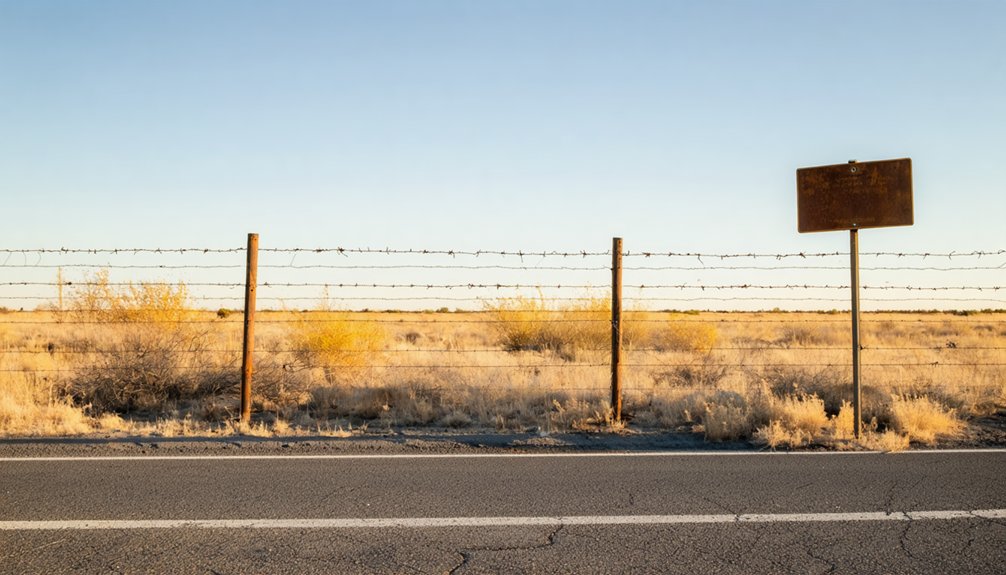
You don’t need standing walls to feel the weight of 1835 when Texas was still fighting to exist, and Texana’s role in that revolution pulls ghost town hunters toward a site that history claimed before neglect ever could.
The land itself carries the story — a strategic flashpoint during the Texas Revolution that shaped the early republic’s fate, even if no courthouse or cemetery survives to prove it.
You’re not chasing ruins here; you’re chasing something rarer, a place where the absence *is* the artifact.
History Without Physical Trace
Though Texana left no ruins behind, ghost town hunters still make the pilgrimage to its unmarked coordinates in Jackson County, drawn by something harder to photograph than crumbling adobe or rusted iron — the weight of historical consequence.
There’s no urban decay to document here, no walls to frame against a sunset. Yet Texana played a genuine role in the 1835–36 Texas Revolution, a strategic site where real decisions shaped a young republic’s survival.
Historical preservation can’t save what time erased completely, but it can keep the story alive. When you stand on that flat coastal prairie ground, you’re not looking for something to see — you’re feeling for something that happened.
That absence is exactly what pulls certain travelers back.
Revolutionary Significance Remains
What pulls ghost town hunters to Texana isn’t the promise of ruins — it’s the pull of revolutionary consequence. You’re standing on ground where the 1835–36 Texas Revolution took shape, where ordinary people made irreversible decisions about freedom. No courthouse remains, no courthouse steps, yet the land carries that weight.
Archaeological insights occasionally surface through careful survey work, quietly confirming what oral histories have long preserved — that Texana mattered when mattering counted most. You don’t need crumbling walls to feel that. The absence itself becomes the artifact.
Ghost town hunters understand this instinctively. You come not to photograph preserved structures but to reckon with consequence. Texana reminds you that revolutionary significance doesn’t require a monument. Sometimes the open field says everything the ruins cannot.
Ghost Town Hunter Appeal
Ghost town hunters carry a particular instinct — they’re drawn not by what stands, but by what once stood and why it fell silent. Texana offers no urban decay to photograph, no crumbling courthouse to frame against a west Texas sky.
What it offers is rarer: pure historical weight on open ground.
You’re standing where revolution breathed, where ordinary people made irreversible decisions during 1835–36. Cultural preservation here isn’t about restoring walls — it’s about honoring memory without scaffolding.
That absence is the draw. You’re not consuming a curated ruin; you’re reading silence like a primary source.
For hunters who crave unfiltered history over staged atmosphere, Texana delivers something most ghost towns can’t — the freedom to imagine everything from nothing.
Which Ghost Towns Should You Pair With a Texana Visit?
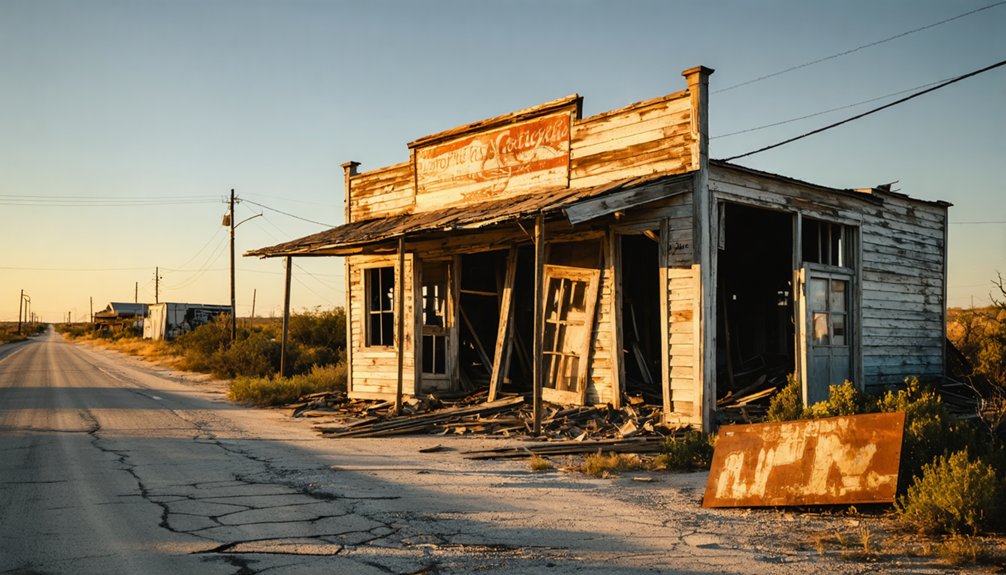
Since Texana itself leaves little more than memory and open land, pairing your visit with nearby ghost towns transforms the trip into a fuller reckoning with Texas’s vanished past. Each stop layers mining history, collapse, and ghost town preservation into something you can actually walk through.
Consider anchoring your route around these three destinations:
- Terlingua – mid-1880s mining settlement turned tourist haven, featuring jail ruins, adobe remnants, and Rio Grande access
- Marathon – Big Bend’s quiet gateway, where frontier atmosphere lingers without demanding much infrastructure
- Valentine – a railroad relic from 1882 that time quietly abandoned
You’re not chasing spectacle here. You’re reading the silence between collapsed walls, tracing what ambition, exhaustion, and open land eventually produce when nobody’s watching anymore.
Which Order Should You Visit These West Texas Ghost Towns?
Driving west from San Antonio, you’ll want to let geography set the sequence: start in Marathon, where the silence of Big Bend’s gateway eases you into the region’s pace.
Then push south through Terlingua’s corrugated steel and adobe ruins before looping back north to Valentine, where a railroad town’s 1882 bones sit quietly beside the tracks.
This order isn’t arbitrary. It follows the land’s logic and rewards your momentum.
Terlingua’s ghost town architecture hits harder once Marathon has calibrated your eye for emptiness.
Valentine then delivers something spare and unhurried.
Historic preservation varies sharply across these stops, so read every marker, walk every cemetery, and resist rushing.
The road itself is part of what you’re here to feel.
When Is the Right Time to Visit Texana and the Surrounding Region?
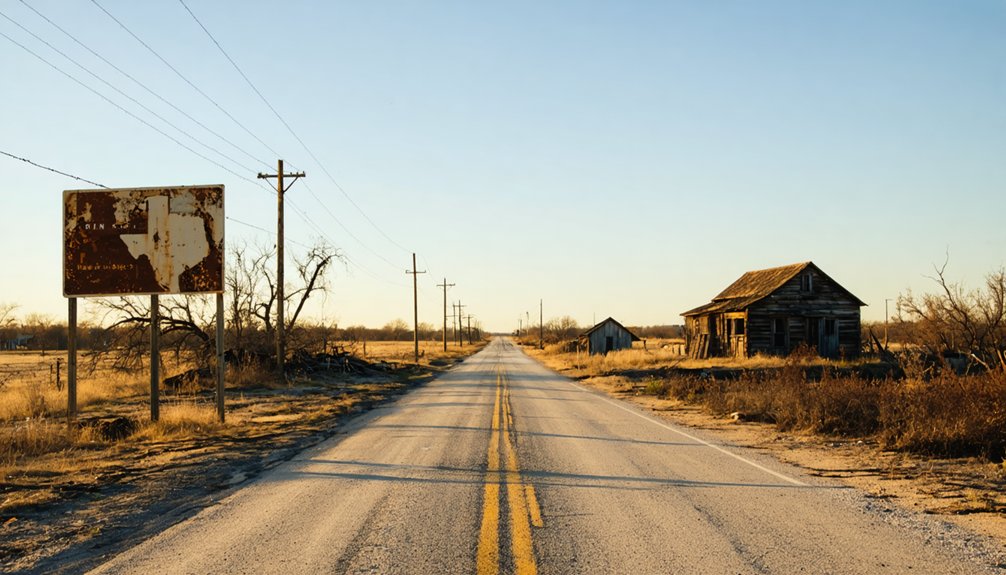
You’ll want to plan your visit outside of summer, when June, July, and August push temperatures to punishing extremes and drive even seasoned locals temporarily away from towns like Terlingua.
Spring and fall offer the most forgiving conditions for walking cemeteries, reading historical markers, and standing on ground that once shook with revolutionary urgency during the 1835–36 Texas conflict.
The land itself hasn’t changed much, but your comfort in crossing it certainly will depending on when you choose to arrive.
Best Seasons To Visit
Though Texana itself has vanished from the landscape, the surrounding West Texas region rewards visitors most generously in spring and fall, when temperatures soften and the harsh desert light turns golden rather than punishing.
Plan your timing carefully:
- Spring (March–May): Wildflowers bloom across the high desert, wildlife encounters peak, and photography tips favor early morning golden-hour shoots near cemetery ruins.
- Fall (September–November): Crowds thin, temperatures drop, and the landscape exhales after summer’s intensity.
- Avoid June–July–August: Many Terlingua residents temporarily leave, infrastructure thins further, and the heat becomes genuinely dangerous.
You’re chasing something old and mostly gone — treat that pursuit with patience. The right season doesn’t just make the drive comfortable; it makes the silence feel earned.
Summer Departure Patterns
When summer arrives in West Texas, even the locals clear out — many Terlingua residents temporarily abandon the town during June, July, and August, leaving behind a settlement that feels emptier than usual, which is saying something. The heat becomes relentless, and the landscape turns unforgiving.
For you, this creates a strange opportunity. You’ll wander without crowds, absorbing the cultural significance of a region shaped by miners, revolutionaries, and desert survivors.
Historical preservation efforts mean the jail ruins and adobe structures remain, quietly holding stories even when no one’s watching.
Texana itself never needed summer visitors — it disappeared long before tourism arrived.
But understanding these seasonal rhythms helps you time your trip for spring or fall, when the land breathes easier and history feels closer.
Regional Weather Considerations
Timing shapes everything about a West Texas road trip. Weather patterns here aren’t subtle — they’re defining. Summer’s brutal heat drives locals out and tests unprepared travelers hard. Seasonal impacts shift the entire tone of what you’ll experience on the ground.
Plan around these realities:
- Spring (March–May): Mild temperatures, wildflowers along forgotten roads, and ghost towns that feel genuinely alive with wanderers chasing history.
- Summer (June–August): Intense heat exceeds 100°F regularly; infrastructure thins as residents temporarily leave Terlingua and surrounding areas.
- Fall (September–November): Crowds thin, temperatures drop mercifully, and the landscape carries a worn, cinematic quality perfect for exploring abandoned ground.
You’ll absorb Texana’s revolutionary ghost better when the land itself isn’t fighting you. Choose your window deliberately.
What to Bring When the Nearest Gas Station Is 40 Miles From Texana
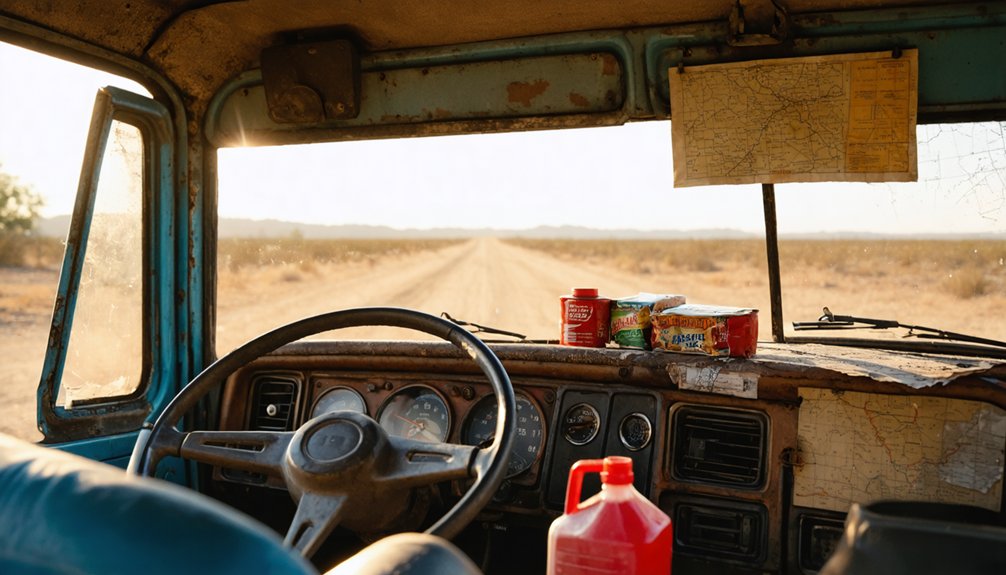
Packing for a remote stretch of West Texas isn’t just practical planning — it’s a quiet nod to the self-reliance that defined every soul who once settled Texana.
Carry extra fuel — at least five gallons — because 40 miles of empty highway punishes assumptions.
Bring more water than you think you’ll need, a paper map, and a basic toolkit.
The historical artifacts scattered across forgotten sites face preservation challenges partly because unprepared visitors disturb fragile ground while searching for shade or shelter.
You’re heading somewhere that no longer exists on any current map, which means cell service won’t save you.
Pack food, a first-aid kit, and cash.
Out here, freedom isn’t a feeling — it’s a supply list you actually followed.
Where to Eat and Sleep When You’re Passing Through Texana Country
Eating and sleeping in Texana country means accepting the land’s terms before your own. Local cuisine isn’t plentiful, but what exists carries honest weight — BBQ trailers, grilled cheese, iced coffee served under corrugated steel roofs in Terlingua.
Lodging options range from tent camping beneath genuinely dark skies to modest rooms near Big Bend‘s gateway towns.
Plan around these anchors:
- Terlingua offers a cafe, trading post, and campgrounds where miners once collapsed after brutal shifts
- Marathon provides the closest conventional lodging heading into Big Bend country
- Valentine gives you railroad-town stillness if you need somewhere quiet to rest
You’re traveling through land that swallowed entire economies. Eat simply, sleep lightly, and let the silence remind you why you came.
How to Read a Vanished Town When the Land Is All That Remains
When the structures are gone, you read the land itself — the slight depression where a foundation settled, the line of trees that once shaded a main street, the silence that feels too deliberate to be accidental.
Texana doesn’t hand you its story. You earn it by slowing down, crouching near disturbed soil, and letting archaeological insights surface through careful observation rather than signage.
The cultural significance here isn’t preserved in walls or courthouse steps — it lives in the terrain’s memory. The 1835–36 revolution moved through this ground. Strategy was plotted here. People fled and fought here.
Walk the site deliberately. Trust what feels shaped by human intention. The land remembers what maps have forgotten, and you’re free to listen.
Frequently Asked Questions
Is Texana’s Ghost Town Site on Public or Private Land?
The knowledge doesn’t confirm Texana’s land ownership status, so you’ll want to research accessibility restrictions before visiting. That forgotten revolutionary ground may carry private land boundaries that limit your freedom to roam its vanished, history-soaked soil.
Are There Guided Tours Specifically Focused on Texana’s Revolutionary History?
No guided tours specifically focused on Texana’s revolutionary history exist today. You’ll find the echoes of 1835–36 freedom fighters fading into unmarked land, where the spirit of Texas independence lives only in your imagination.
Can Texana’s Site Be Accessed by Standard Vehicles or Only Four-Wheel Drive?
Dusty trails whisper forgotten stories beneath your tires. Vehicle accessibility remains uncertain, as road conditions to Texana’s vanished site aren’t documented. You’ll want to research locally before rolling out, since no paved infrastructure survives this ghost town’s erasure.
Are There Any Museums Nearby That Display Texana Artifacts or Documents?
You won’t find dedicated Texana displays, but local archives and historical exhibits in nearby Jackson County preserve documents and artifacts that’ll carry you back to those fierce, freedom-forged days of the 1835–36 Texas Revolution.
Does Visiting Texana Require Any Permits or Landowner Permissions Beforehand?
Like stepping into a faded photograph, you’ll need landowner permission before visiting Texana. Historical preservation and visitor safety matter here — always contact local authorities beforehand to guarantee you’re respecting this ghost town’s forgotten, sacred ground.
References
- https://middlejourney.com/road-trip-terlingua-the-texas-ghost-town-by-big-bend/
- https://www.youtube.com/watch?v=6u47HvHWZXM
- https://en.wikipedia.org/wiki/List_of_ghost_towns_in_Texas
- https://www.unscaledtravelshow.com/texas-ghost-town-road-trip/
- https://www.click2houston.com/news/texas/2020/06/18/the-ghost-towns-of-texas-5-abandoned-texas-towns-to-check-out-on-your-next-road-trip/