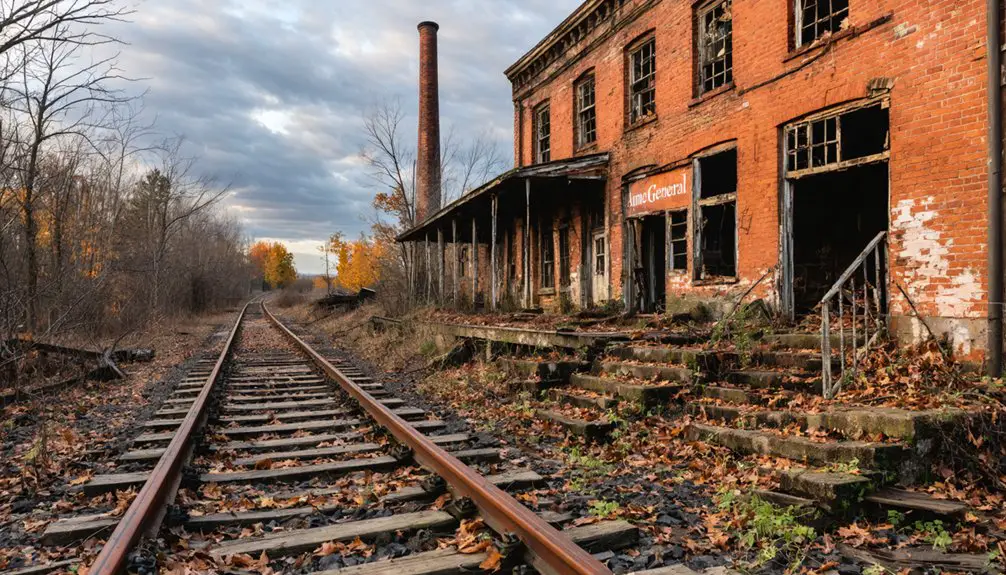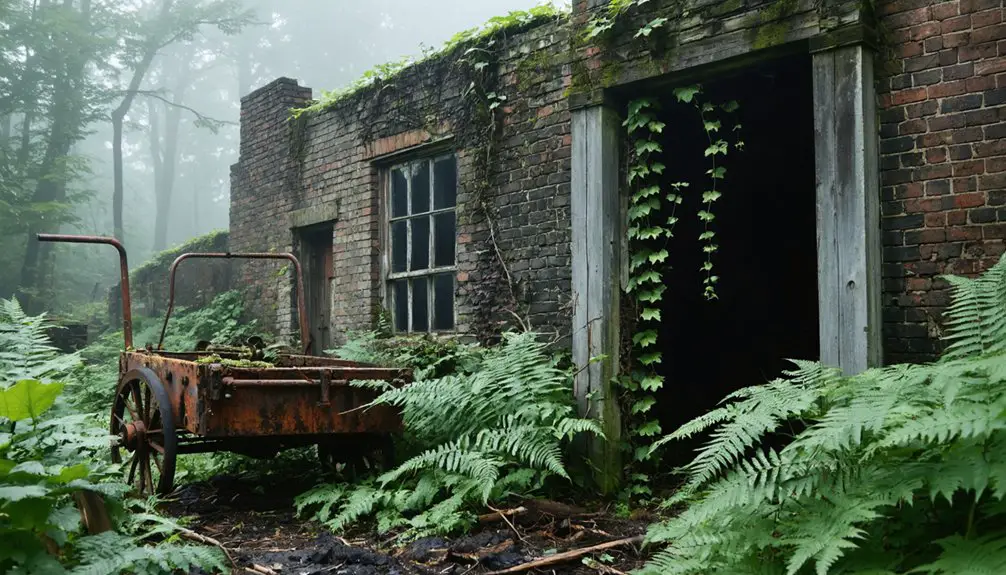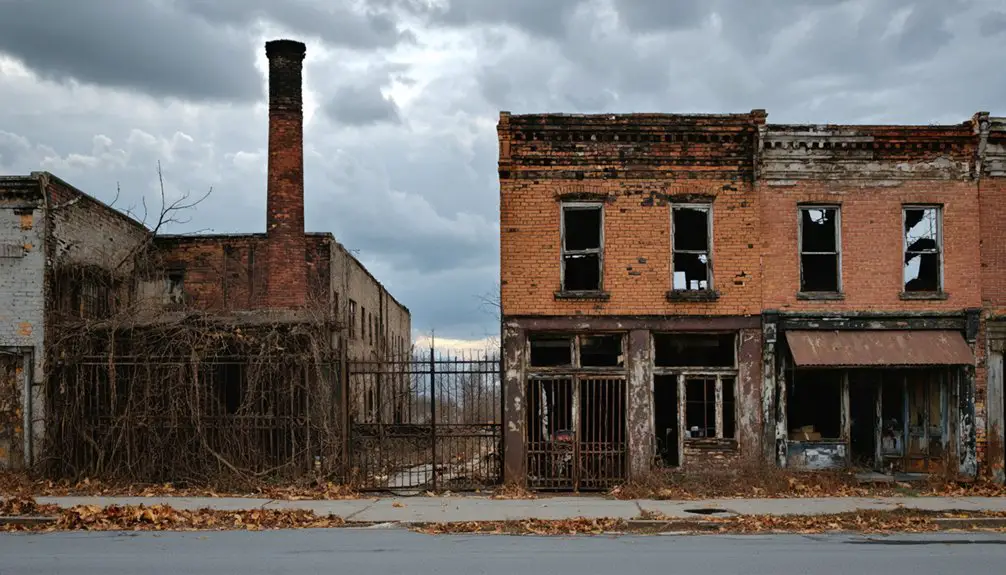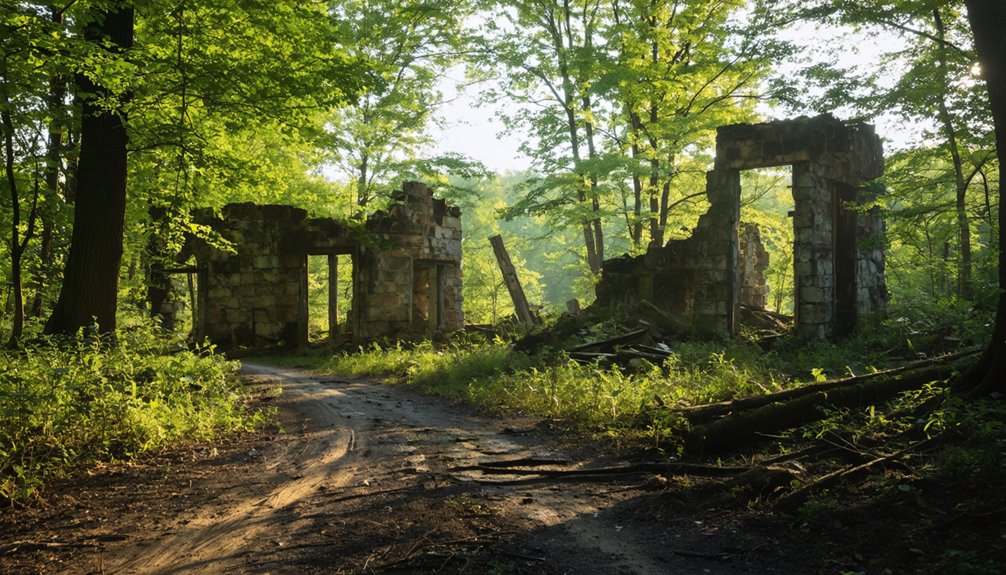
Planning a ghost town road trip to Alice, Pennsylvania means exploring a haunted Cambria County landscape frozen in industrial decay. Founded in 1884, Alice thrived on gold, silver, and lead extraction before collapsing after World War II. A 1962 underground coal fire still burns beneath the surface, creating sinkholes and toxic gases. Pair Alice with nearby ghost towns like Wehrum and Bracken for an all-encompassing route. There’s far more to uncover before you go.
Key Takeaways
- Alice, Pennsylvania, founded in 1884, is a ghost town in Cambria County, accessible via rural roads and Cambria County Route 219.
- The town declined after World War II, worsened by a 1962 underground coal fire creating persistent hazards.
- Nearby ghost towns Wehrum and Bracken can be combined with Alice for a comprehensive industrial history road trip.
- Bring safety gear including respirator masks, hard hats, steel-toed boots, and a first aid kit before visiting.
- Watch for sinkholes, toxic gases, smoke columns, and unstable ground caused by still-smoldering underground coal seams.
What Turned Alice, Pennsylvania Into a Ghost Town
When Alice, Pennsylvania was founded in 1884, it thrived as a bustling Cambria County mining town built on gold, silver, and lead extraction. At its peak, roughly 1,400 residents supported a 100-ton milling operation that kept the local economy alive.
At its peak, Alice, Pennsylvania was home to 1,400 residents powering a thriving gold, silver, and lead mining economy.
But mining decline hit hard after World War II, stripping the town of its economic foundation and pushing residents out.
Then came the devastating blow. In 1962, an underground coal fire ignited beneath the region, creating dangerous fire hazards that made recovery virtually impossible. The flames didn’t just threaten structures — they permanently sealed Alice’s fate.
You’ll find no rebuilding efforts, no restoration projects, just crumbling foundations and abandoned mine shafts marking where a once-productive community stood. Alice didn’t fade slowly; it collapsed under the weight of industrial collapse and uncontrollable fire.
How to Reach Alice in Cambria County
You’ll find Alice tucked away in Cambria County, Pennsylvania, where rural roads lead you directly to its forgotten coordinates. Once you arrive, crumbling foundations and abandoned mine shafts emerge from the landscape, marking the boundaries of what was once a thriving industrial community.
Keep your eyes open for the deteriorating coke ovens, as they’ll confirm you’ve reached one of Pennsylvania’s most quietly haunting industrial relics.
Cambria County Location Overview
Nestled in Cambria County, Pennsylvania, Alice sits in a region that’s accessible but requires some navigational preparation before you hit the road. Cambria County offers a rugged, authentic backdrop where historical preservation meets the raw beauty of Pennsylvania’s industrial past.
You’ll find the county itself provides a solid base for your exploration, with nearby towns offering local cuisine that fuels your adventure before venturing into more remote terrain.
Alice rests within a landscape shaped by decades of mining activity, meaning the roads leading there reflect that industrial heritage — functional but unpolished. Bring a reliable map or GPS coordinates, since signage near abandoned sites is minimal.
Understanding the county’s layout helps you move efficiently, leaving more time to explore Alice’s crumbling foundations and abandoned mine shafts firsthand.
Road Access And Coordinates
Getting from Cambria County’s main arteries to Alice itself demands a bit more intentionality than a standard road trip stop. You’ll want reliable coordinates and a flexible mindset since paved roads give way to rougher terrain near the site.
- Pin coordinates for Alice, Pennsylvania before leaving cellular coverage areas.
- Use Cambria County’s Route 219 as your primary navigational anchor.
- Download offline maps supporting ecotourism initiatives in rural Pennsylvania.
- Expect unpaved access roads requiring cautious, low-speed driving.
- Note visible landmarks like abandoned mine shafts to confirm your arrival.
Historical preservation awareness shapes how you’ll approach this destination. No signage welcomes you, no attendant directs your parking, and no services await.
Your freedom here is real, but so is your responsibility to navigate carefully through genuinely hazardous, forgotten terrain.
Visible Landmarks Upon Arrival
Once you’ve parked and stepped out, the landscape itself becomes your guide. Crumbling foundations stretch across the terrain, outlining where homes and industrial buildings once stood. You’ll spot deteriorating coke ovens almost immediately, their iron frames weathered but still commanding.
Abandoned mine shafts punctuate the ground, reminding you that historical preservation here means witnessing raw, unfiltered decay rather than polished exhibits.
Walk carefully between structures, reading the earth like a map of lives once lived. Community legends don’t haunt this place with ghost stories, but the silence carries its own weight. Every collapsed wall and rusted remnant tells Alice’s true story: a mining community that rose hard, worked harder, and disappeared almost completely.
Let the ruins speak without needing embellishment.
The Ruins, Mine Shafts, and Coke Ovens Still Standing
When you arrive at Alice, you’ll find crumbling foundations scattered across the landscape, outlining the skeletal remains of what was once a thriving mining community.
Abandoned mine shafts punctuate the terrain, offering a striking visual reminder of the gold, silver, and lead extraction that once defined this town’s identity.
You’ll also spot deteriorating coke ovens still standing amid the ruins, their weathered forms serving as tangible relics of Alice’s industrial past.
Crumbling Foundations Remain
Although nature has slowly reclaimed much of Alice, Pennsylvania, the remnants of its industrial past still jut from the earth in haunting silence. Structural degradation hasn’t erased everything — you’ll still find tangible evidence of what once thrived here.
Historical preservation isn’t active, but the foundations themselves tell the story.
As you explore, watch for:
- Crumbling stone foundations outlining former homes and industrial buildings
- Sunken floor layouts revealing the community’s original footprint
- Broken walls partially buried beneath decades of overgrowth
- Scattered debris fields marking where structures once stood proudly
- Open cellar pits offering glimpses into domestic and industrial life
You’re walking through an open-air archive. Nothing’s roped off, nothing’s curated — just raw, unfiltered history waiting beneath your feet.
Abandoned Mine Shafts Visible
Beyond the crumbling foundations, the landscape opens into something far more industrial and raw — abandoned mine shafts puncture the earth at irregular intervals, their dark openings a direct window into Alice’s extraction-driven past.
You’ll find these shafts scattered unpredictably across the terrain, each one representing decades of gold, silver, and lead extraction that once fueled an entire community.
Structural decay has claimed much of what surrounded these openings, but the shafts themselves remain stubbornly present.
Mining artifacts occasionally surface near their edges — rusted equipment, fragmented timber supports, scattered industrial remnants. They’re compelling but dangerous.
You should maintain careful distance and stay alert to unstable ground nearby.
These shafts don’t just mark where miners worked — they mark where Alice’s entire economic identity lived and ultimately collapsed.
Deteriorating Coke Ovens Stand
Scattered among those mine shaft openings, you’ll find another industrial remnant that tells a different part of Alice’s story — the coke ovens. These structures once converted raw coal into coke fuel, powering the region’s industrial engine.
Today, structural deterioration has left them as haunting, arched stone shells frozen in industrial decay.
When you explore these ovens, you’ll notice:
- Arched stone chambers still holding their curved shape
- Crumbling mortar revealing decades of weathering and neglect
- Blackened interiors hinting at intense past heat
- Scattered debris surrounding each deteriorating structure
- Natural vegetation slowly reclaiming the stonework
You’re standing where workers once endured brutal heat and physical labor. These ovens don’t just crumble — they communicate. Every crack and collapsed wall speaks directly to Alice’s rise and quiet, irreversible fall.
Why the Underground Coal Fire Still Makes Alice Dangerous
Since an underground coal fire ignited beneath Alice in 1962, the ground itself has become one of the site’s most serious hazards. These mining hazards aren’t relics of the past — they’re active threats still burning beneath your feet. The fire continues smoldering through abandoned coal seams, weakening the earth above and creating unpredictable sinkholes.
You’ll notice warning signs the moment you approach. Thin columns of smoke sometimes rise from cracked ground, and certain areas emit intense heat. Fire hazards extend beyond visible flames, since toxic gases like carbon monoxide can accumulate in low-lying areas without warning.
If you choose to explore Alice, stay on firm ground, avoid depressions in the soil, and never enter abandoned mine shafts. This ghost town demands serious respect.
What to Pack for Hazardous Abandoned Mine Sites
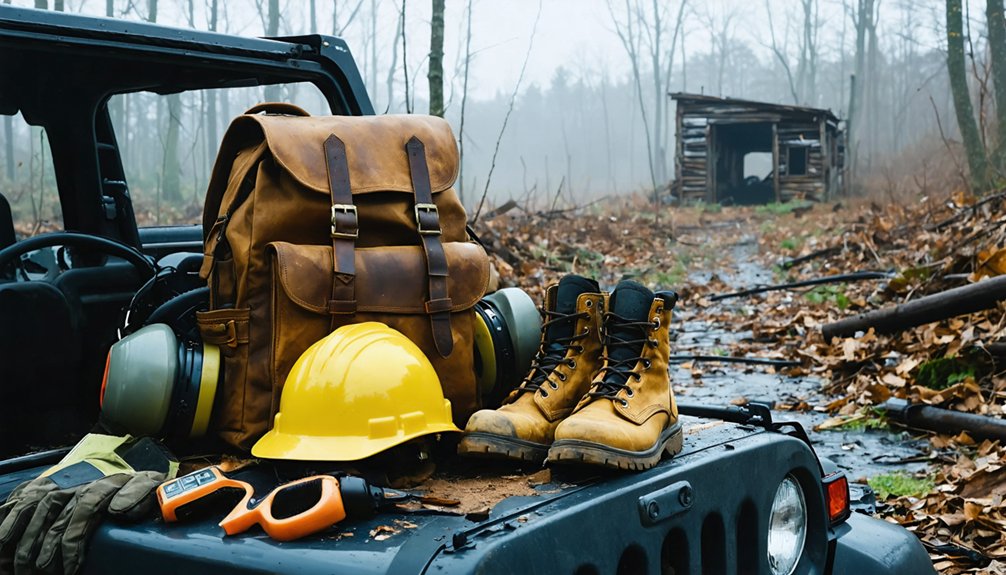
Exploring a hazardous site like Alice demands the right safety gear before you ever leave home. Environmental hazards here aren’t theoretical — collapsed shafts, unstable ground, and residual fire damage make preparation non-negotiable.
Pack these essentials before hitting the road:
- Respirator mask — filters toxic gases and particulate matter from old combustion zones
- Steel-toed boots — protects against unstable debris and sharp mine remnants
- Hard hat — shields you from falling material near deteriorating structures
- Heavy-duty gloves — handles rough surfaces without cutting your hands
- First aid kit — addresses cuts, burns, or injuries far from medical facilities
You’re choosing freedom when you explore forgotten places, but smart preparation keeps that freedom from turning into an emergency.
Other Cambria County Ghost Towns Near Alice
Cambria County doesn’t limit your ghost town curiosity to Alice alone — the surrounding region holds several abandoned communities shaped by the same coal and industrial collapse that swallowed Alice after World War II. Towns like Wehrum and Bracken offer crumbling remnants that reward curious travelers willing to explore beyond Alice’s foundations.
Wehrum, once a company coal town, delivers striking ruins that make it a standout stop for cultural tourism enthusiasts. Historical preservation efforts remain minimal across these sites, so you’ll encounter raw, unfiltered decay rather than curated exhibits. That rawness is exactly the draw.
Cluster these stops into a single route through Cambria County, and you’ll piece together a vivid, ground-level portrait of Pennsylvania’s industrial rise and collapse that no museum can replicate.
Frequently Asked Questions
Did Alice, Pennsylvania Ever Have a School or Church?
The available records don’t confirm a school or church, but you’ll find Alice’s historical architecture tells its own story through crumbling foundations. Explore local legends as you uncover this mining community’s forgotten past firsthand.
Are There Any Paranormal Tours Offered at Alice Ghost Town?
Ironically, you won’t find haunted legends or paranormal investigations drawing crowds here. Alice doesn’t offer paranormal tours because confirmed supernatural activity simply doesn’t exist, leaving you free to explore its raw, industrial ruins undisturbed.
What Minerals Were Extracted From Alice During Peak Mining Years?
You’ll discover that miners extracted gold, silver, and lead as the primary mineral types from Alice’s rich deposits. Their mining techniques supported a massive 100-ton milling operation, defining the region’s bold industrial identity.
How Many Residents Lived in Alice During Its Industrial Peak?
At Alice’s industrial peak, you’d have found approximately 1,400 residents thriving, working, and living boldly. Its rich mining history once drew crowds, but population decline swept through, leaving silence where life once roared.
Are There Any Historical Photographs of Alice During Its Mining Era?
You won’t find confirmed historical photographs of Alice during its mining era in the available records, but you can explore Cambria County historical archives, where you’ll likely uncover fascinating visual treasures documenting this vanished industrial community.
References
- https://en.wikipedia.org/wiki/List_of_ghost_towns_in_Pennsylvania
- https://www.shmoop.com/study-guides/doll-bones/setting.html
- http://freepages.rootsweb.com/~gtusa/history/usa/pa.htm
- https://www.youtube.com/watch?v=EH6eBc_mmDs
- https://www.youtube.com/watch?v=ktXMDPxcXUo
- https://www.youtube.com/watch?v=Vz-ZeE7nJwI
- https://en.wikipedia.org/wiki/Category:Ghost_towns_in_Pennsylvania
- https://www.ghosttowns.com/states/pa/pa.html