Planning a ghost town road trip to Britton, Texas means stepping into a place the modern world left behind. You’ll find roofless bank walls, scattered homes, and a quiet cemetery holding stories of early settlers. Once called Hellandville, this Ellis-Tarrant county border town peaked at 300 residents before Highway 287 bypassed it into near-oblivion. Visit soon, because Mansfield’s expanding city limits are closing in fast. There’s far more to this forgotten town’s story than meets the eye.
Key Takeaways
- Britton, Texas, sits on the Ellis and Tarrant county border near Mansfield, making Highway 287 a reliable navigation reference for your trip.
- Visit in spring for cooler temperatures, dry roads, and ideal photography lighting while exploring the roofless bank, scattered homes, and cemetery.
- Allow ample daylight to thoroughly explore key remnants, including the abandoned bank’s standing walls and the historically significant settler cemetery.
- Suburban expansion from Mansfield threatens to absorb Britton’s remaining structures, so visiting soon is strongly recommended before development erases the site.
- Nearby ghost town Bluffton offers an additional stop, making Britton an easy addition to a broader Dallas-Fort Worth area ghost town road trip.
What Is Britton, Texas and Why Visit?
Tucked along the border of Ellis and Tarrant counties, Britton, Texas is a ghost town with just enough left standing to make the detour worthwhile. Founded in 1885 under the name Hellandville, it once peaked at over 300 residents before Highway 287 bypassed it and drained the population down to around 30.
What you’ll find today is raw, honest historical architecture — a roofless bank still holding its walls, scattered homes, and a quiet cemetery carrying local legends from generations past. It’s not polished or curated. It’s a place where you can move freely through real history without a ticket booth in sight.
If you’re planning a Texas ghost town road trip, Britton earns its spot on the map.
Why This Town Was Called Hellandville Before It Became Britton
Before it carried the respectable name Britton, this Ellis County settlement went by something far more colorful: Hellandville. Nobody recorded exactly why early settlers chose that fiery label, but local legends suggest the name reflected the brutal Texas heat, rough frontier conditions, or simply the stubborn character of the people who built here.
When the post office opened in 1885, the community began taking shape around practical needs — mail, trade, and connection. A few years later, the name quietly shifted to Britton, leaving Hellandville behind as little more than a curious historical footnote.
That original name, though forgotten by most, adds an unexpected layer to the historical architecture of this town’s identity. You’re not just visiting ruins — you’re standing inside a story that started with a name nobody dared ignore.
How Highway 287 Bypassed Britton and Ended Its Growth
When Highway 287 was built, planners routed it away from Britton, cutting the town off from the traffic and commerce that kept small Texas communities alive.
You can trace that decision’s consequences directly in the population numbers — a town that once held over 300 residents shrank to roughly 30.
That single infrastructure choice turned Britton from a thriving settlement into the quiet, fading place you’ll find when you visit today.
Highway 287 Bypasses Britton
Like many small Texas towns, Britton thrived until a single infrastructure decision quietly sealed its fate. When Highway 287 bypassed Britton, traffic stopped flowing through, and residents followed the road elsewhere.
That single bypass triggered a chain reaction you can still trace today:
- Businesses lost customers to towns along the new highway corridor
- Families relocated toward Mansfield and other growing communities
- Population collapsed from over 300 residents to roughly 30
Local legends suggest Britton’s people fought hard to stay relevant, and scattered preservation efforts kept landmarks like the roofless bank and cemetery from disappearing entirely.
You’re visiting a town that didn’t vanish overnight — it faded slowly, one departure at a time. That slow unraveling makes Britton’s surviving remnants feel more haunting than a fully abandoned site ever could.
Population Drops Dramatically
Highway 287’s bypass didn’t just reroute traffic — it quietly dismantled Britton’s reason to exist. Residents followed the road, abandoning businesses and homes as nearby cities pulled opportunity away. A town that once held over 300 people during its 1920s peak shrank to roughly 30 souls.
What the bypass left behind tells its own story. The historical architecture still standing — roofless bank walls, silent homes — carries local legends of a community that genuinely thrived. When you walk those grounds, you’re reading the physical record of a town the modern world simply outpaced.
That population collapse is exactly why Britton draws road trippers like you. Freedom means chasing places history nearly erased, and Britton offers that experience with raw, unpolished honesty.
Is Britton Being Absorbed Into Mansfield?
If you visit Britton soon, you may be witnessing one of the final chapters in its ghost-town story. Recent construction activity near Mansfield is creeping steadily toward Britton, and the expanding city limits could eventually swallow what little remains of the old settlement.
The town that Highway 287 quietly abandoned may soon find itself absorbed into a growing suburb rather than fading away on its own terms.
Mansfield’s Expanding City Limits
One of the quieter ironies of visiting Britton today is that this fading ghost town may not stay remote for long. Mansfield’s expanding city limits are creeping closer, and local legends about Britton’s independence may soon collide with suburban reality. Preservation efforts remain thin, leaving the bank walls and cemetery vulnerable to development pressure.
Before that happens, here’s what you should know:
- Mansfield’s growth corridor runs directly toward Britton’s location on the Ellis-Tarrant county border.
- New construction already signals suburban encroachment near the town’s edges.
- Once absorbed, unrestricted access to Britton’s remaining structures could disappear entirely.
You’re visiting a place caught between two worlds — rural decay and suburban expansion. Go now, while Britton still belongs to the open road.
Britton’s Uncertain Future
Britton’s days as a remote ghost town may be numbered. Recent construction is pushing Mansfield’s city limits closer, and Britton could soon fall within suburban boundaries.
That shift changes everything — what’s now a quiet, half-forgotten settlement may face pressure from community redevelopment that prioritizes new housing over crumbling bank walls and unmarked lots.
For you, that makes visiting sooner rather than later the smarter call. The tension between historical preservation and modern expansion is real here.
Once developers move in, the remaining homes, the roofless bank, and the cemetery could disappear or become inaccessible.
Britton’s story isn’t finished yet, but the ending feels closer than it once did. If you want to walk this ground on your own terms, don’t wait too long.
The Bank Walls, Cemetery, and Homes Still Standing in Britton
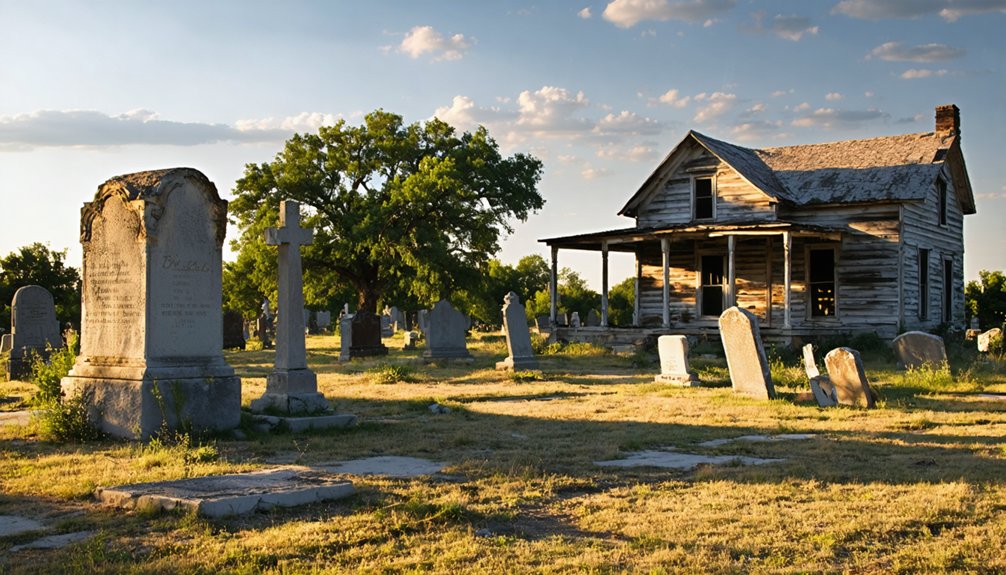
Although Britton has faded from its 1920s peak of over 300 residents, it hasn’t vanished entirely — and that’s exactly what makes it worth the drive. You’ll find genuine historic architecture still holding its ground, telling stories without a single tour guide.
Here’s what you can explore on-site:
- The abandoned bank — its walls and foundation still stand, though the roof is gone and the interior holds scattered junk.
- The cemetery — cemetery preservation here means a quiet, tangible connection to Britton’s earliest settlers.
- Remaining homes — several structures still dot the landscape, hinting at the community that once thrived.
Walk these remnants slowly. Britton rewards the curious traveler who respects what time has left behind.
What the Abandoned Britton Bank Looks Like Inside
When you step inside the abandoned Britton bank, you’ll find the walls still standing firm despite decades of neglect. Though the roof has long since disappeared, leaving the interior open to the Texas sky.
You can see junk and stored items scattered throughout the space, giving the place a strange, layered feeling—part ruin, part accidental storage unit.
The roofless walls frame a glimpse into the town’s commercial past while reminding you just how completely Britton’s economy collapsed after Highway 287 pulled traffic away.
Standing Walls, Missing Roof
What’s left of the Britton bank stands as one of the most striking remnants in Ellis County — its walls still upright, its roof long gone. You’re walking through open sky when you step inside. These historic remnants hold their ground while everything else has faded.
Here’s what you’ll encounter among these abandoned structures:
- Standing walls — solid masonry that has outlasted decades of Texas weather
- No roof — the open ceiling exposes the interior to full sun and sky
- Interior junk — stored items and debris fill the floor space
You can move around the site freely, reading what the structure tells you without any guided tour. It’s raw, unfiltered history standing in plain sight.
Interior Junk And Storage
Step inside those standing walls and the story shifts from architecture to accumulation. The interior of Britton’s abandoned bank isn’t empty — it’s cluttered with interior debris and storage clutter left behind by whoever passed through last. Junk fills the floor space, and stored items suggest someone once used the structure as a makeshift holding area rather than letting it sit completely idle.
There’s no roof filtering the light, so you’ll see everything clearly: the forgotten objects, the weathered surfaces, the layered evidence of neglect. It’s a rawer experience than a clean ruin.
You’re not just reading history here — you’re stepping through what people left when they stopped caring. That unfiltered honesty is exactly what makes ghost town exploration worth the drive.
What to Know Before You Visit the Britton Cemetery
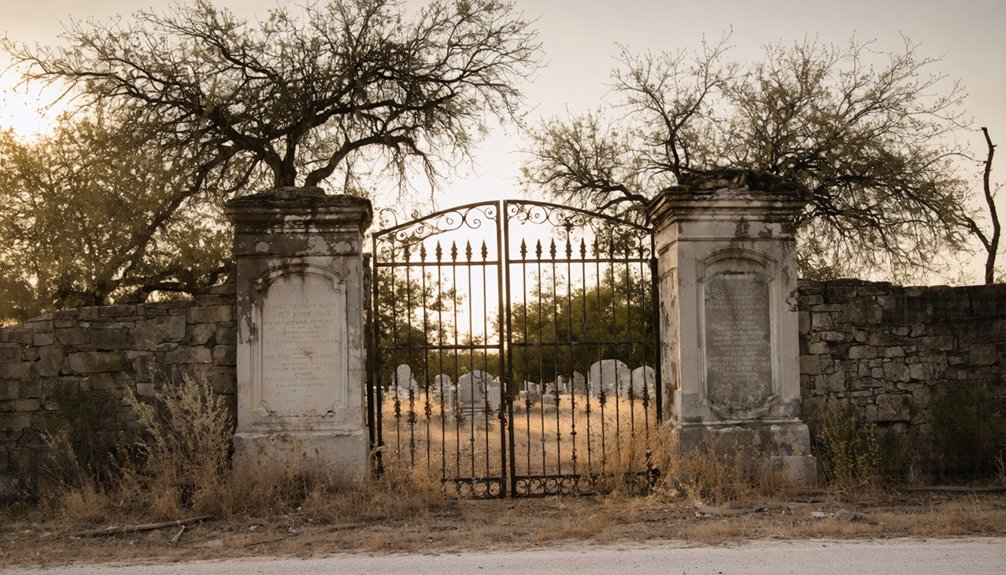
Though it doesn’t draw the same attention as the abandoned bank, the Britton Cemetery is one of the most enduring remnants of the community and worth a respectful stop. It quietly holds the town’s layered past, connecting historical architecture, local legends, and real families who built something here.
The Britton Cemetery quietly holds the town’s layered past — enduring, overlooked, and worth a respectful stop.
Before you walk the grounds, keep these three things in mind:
- Respect the space — this is an active cemetery, not a tourist attraction.
- Watch your step — uneven ground and aging markers make careful footing essential.
- Visit in spring — cooler temperatures make exploring far more comfortable than summer heat.
You’re free to roam, but treat it with the same care you’d want for your own community’s history.
When Is the Best Time to Visit Britton?
Spring is your best window for visiting Britton — the temperatures are manageable, the roads stay dry, and you’ll actually want to linger rather than sprint back to your car. The mild weather gives you space to properly examine the historical architecture still standing, particularly the roofless bank walls that tell the town’s quiet story of decline.
Avoid summer if you can. The heat turns every outdoor exploration into an endurance test, and Britton’s open landscape offers little shade.
Fall works as a secondary option, though spring remains ideal for photography and unhurried wandering. Local legends are easier to absorb when you’re not battling the elements.
Give yourself enough daylight to explore the cemetery and surrounding homes without feeling rushed.
How to Get to Britton, Texas
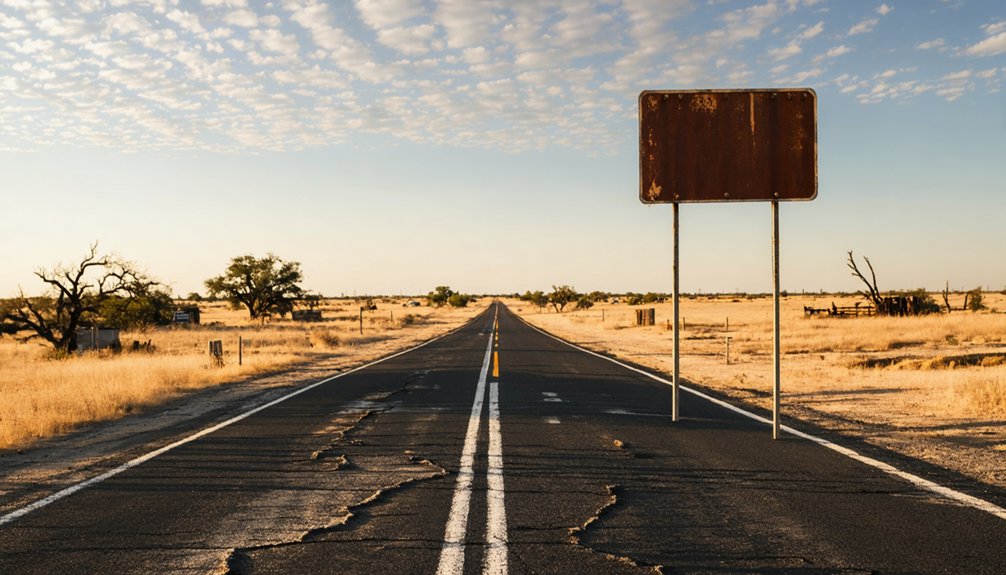
Britton sits on the border of Ellis and Tarrant counties, putting it within striking distance of the Dallas-Fort Worth metro — close enough that you won’t need a multi-day commitment just to reach it. The roads are 2WD-accessible, so you don’t need a specialized vehicle to chase down local legends or witness firsthand the quiet preservation efforts keeping Britton’s memory alive.
When plotting your route, keep these points in mind:
- Use Mansfield, Texas as your nearest major landmark and navigate outward toward the Ellis-Tarrant county line.
- Highway 287 runs nearby — the very road that contributed to Britton’s decline.
- Standard mapping apps will get you close, but confirm rural road details before departing.
Pack water, fuel up early, and hit the road.
Texas Ghost Towns Near Britton Worth Adding to Your Route
Once you’ve checked Britton off your list, Texas rewards the curious traveler with a string of fading settlements worth weaving into your route. Bluffton stands out as a compelling stop, where historical preservation efforts keep the memory of a drowned town alive beneath reservoir waters.
Each site carries its own weight of community nostalgia, reflecting the railroad shifts, highway bypasses, and economic tides that quietly erased entire neighborhoods from the map. Texas ghost towns rarely repeat themselves, so every detour delivers something distinct — a crumbling foundation, an overgrown cemetery, a lone standing wall.
Plan your route along historic corridors, keep your tank full, and embrace the open road between stops. The state’s forgotten places are generous with stories if you’re willing to seek them out.
Before You Go: Safety at Abandoned Sites
Ghost town structures have stood without maintenance for decades. Floors, stairs and roof timbers fail without warning, and a building that looks solid from outside may not hold your weight. Stay out of standing structures unless the site is actively maintained and open to visitors.
Mine workings are the more serious hazard. Vertical shafts can be hundreds of feet deep, are often unfenced, and may be hidden by brush or capped with rotted boards. Never enter an adit, tunnel or shaft: abandoned workings can hold oxygen-poor or toxic air that gives no warning before you lose consciousness.
Enclosed spaces with rodent droppings carry a risk of hantavirus, which is contracted by breathing contaminated dust. Do not sweep or stir up dust inside old cabins and outbuildings.
Cell coverage at these sites is usually poor or absent. Tell someone your route and expected return time, and carry more water than you think you need.
Frequently Asked Questions
What County Does Britton, Texas Officially Belong To?
You’ll find Britton officially belongs to Ellis County, though it straddles the Ellis-Tarrant county border. Explore its ghost town preservation efforts and historic landmarks — you’re chasing freedom through Texas’s forgotten, beautifully weathered past.
How Many People Currently Live in Britton, Texas?
You’ll find only about 30 people still calling Britton home today. Its ghost town history whispers through empty streets, and local legends keep the spirit of this once-thriving 300-person community hauntingly, beautifully alive.
What Was Britton’s Peak Population During Its Busiest Years?
You’ll find that Britton’s peak population surpassed 300 residents during the roaring 1920s. Those bustling days shaped the ghost town attractions and historic landmarks you can still explore today.
When Did Britton, Texas First Establish Its Post Office?
You’ll find that Britton’s post office first opened in 1885, sparking the town’s early heartbeat. It’s a historic ghost town detail worth knowing as you pack your road trip essentials and chase Texas freedom.
Is Britton, Texas Accessible by a Standard Two-Wheel-Drive Vehicle?
You don’t need special vehicle requirements for this journey — Britton’s roads welcome standard two-wheel-drive vehicles, so you can skip the off road adventures gear and freely chase this ghost town’s haunting, historic soul.
References
- https://www.youtube.com/watch?v=PTjcD-e7kEg
- https://www.youtube.com/watch?v=W3PQeBFxxmo
- https://en.wikipedia.org/wiki/List_of_ghost_towns_in_Texas
- https://www.hipcamp.com/journal/camping/texas-ghost-towns
- https://www.ghosttowns.com/states/tx/britton.html