Plan your Justiceburg road trip by heading 55 miles southeast of Lubbock on U.S. Highway 84. You’ll find abandoned buildings, a weathered depot, and an old schoolhouse standing quietly against the wide West Texas sky. Spring and fall offer the best light and mild temperatures for photography. Combine your visit with a stop at Lake Alan Henry for a full day trip. Keep going to uncover everything this forgotten town has to offer.
Key Takeaways
- Justiceburg lies 55 miles southeast of Lubbock via U.S. Highway 84, making it an easy day trip through scenic West Texas ranch country.
- Spring and Fall offer the best conditions, with mild temperatures, optimal lighting, and wildflowers enhancing photography opportunities.
- Historic abandoned structures include a railroad depot, schoolhouse, church, and homes, many still containing personal effects left behind.
- Combine the visit with Lake Alan Henry for fishing and hiking, maximizing your day trip experience.
- Start your loop from Post, grab food at a local cafe, then head southeast on Highway 84 toward Justiceburg.
Why Justiceburg Is One of West Texas’s Most Photogenic Ghost Towns
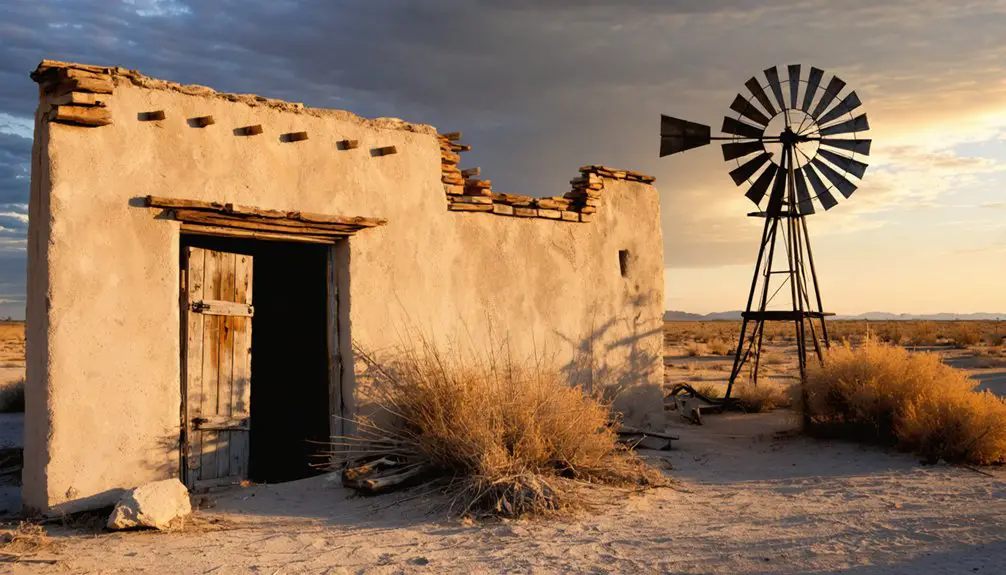
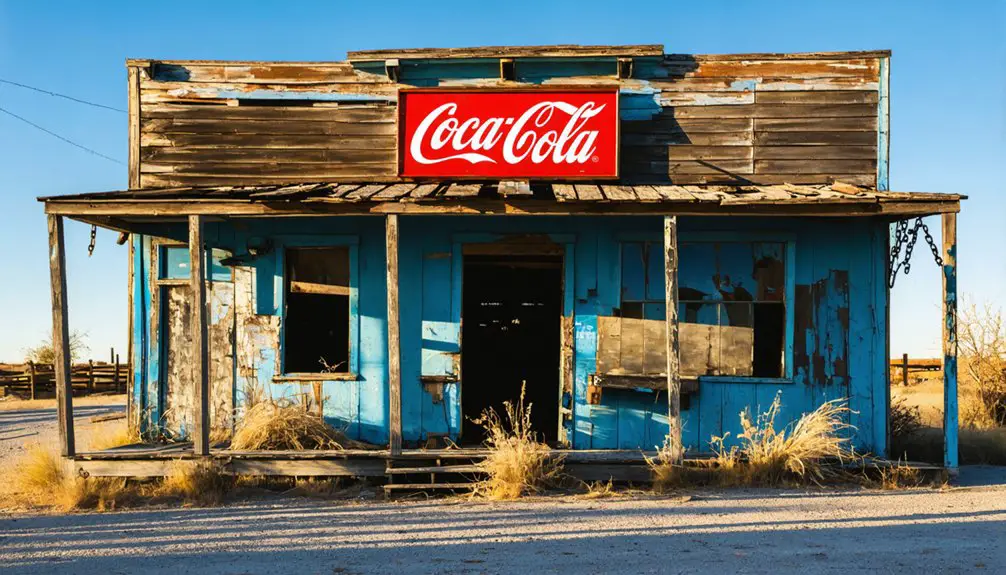
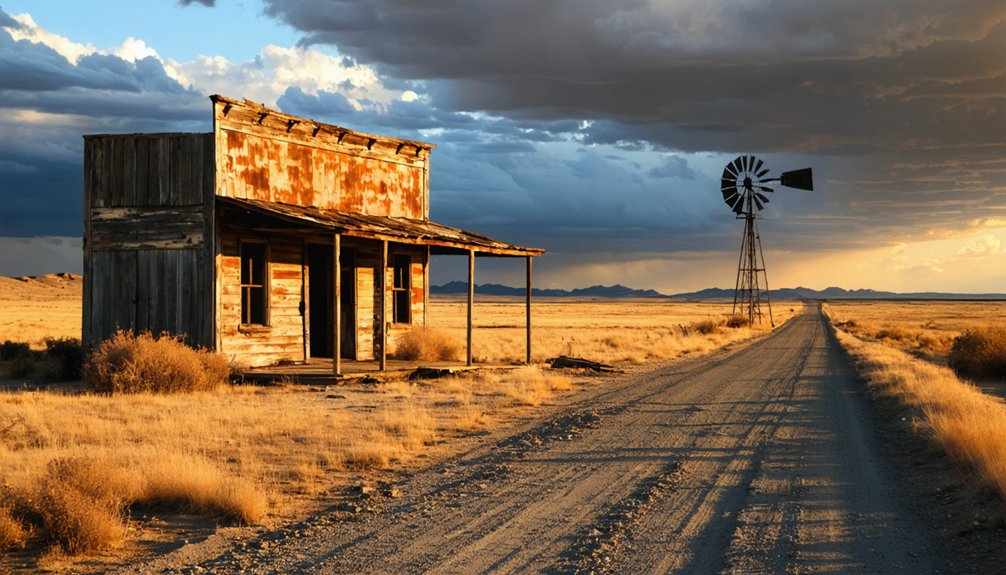
When you roll into Justiceburg along U.S. 84, the landscape hits differently. Abandoned buildings stand against open West Texas sky, their weathered walls telling decades of local history without a single word.
The old schoolhouse and railroad depot sit frozen in time, offering raw, unfiltered photographic opportunities that polished tourist towns simply can’t deliver. Nothing here is staged.
Frozen in time, Justiceburg delivers raw, unfiltered shots that no polished tourist town can stage.
You’ll find peeling paint, forgotten structures, and the quiet drama of a settlement that once thrived along the Double Mountain Fork Brazos River. With wide-open space surrounding every frame, your camera captures something honest — a place that existed on its own terms.
Justiceburg rewards curious travelers who value authenticity over comfort, making it one of West Texas’s most compelling stops for ghost town photography.
How to Get to Justiceburg From Lubbock, Post, or Snyder
Justiceburg sits about 55 miles southeast of Lubbock along U.S. Highway 84, making it an easy straight shot through open West Texas terrain.
If you’re coming from Post, you’ll drive just 15 miles southeast, which makes Justiceburg a natural add-on to any visit to that small Garza County seat.
From Snyder, you’ll head northwest on U.S. 84 for roughly 40 miles, passing through rolling ranch country before the scattered remnants of Justiceburg come into view.
Driving From Lubbock
Whether you’re coming from Lubbock, Post, or Snyder, reaching Justiceburg is a straightforward drive through classic West Texas ranch country.
From Lubbock, head southeast on U.S. Highway 84 for roughly 55 miles. The drive takes just under an hour, and you’ll pass through open range where rural landscapes stretch endlessly toward the horizon.
Keep your eyes open for local wildlife along the roadside — pronghorn and mule deer aren’t uncommon sightings through this stretch of Garza County.
The highway rolls through small communities and working ranches before Justiceburg quietly appears near the Double Mountain Fork Brazos River.
There are no confusing turns or complicated routes. Just follow Highway 84 southeast out of Lubbock, and the ghost town will meet you on the way.
Driving From Post
If you’re starting from Post, you’ve got the shortest drive of any of these three routes — Justiceburg sits just 15 miles to the southeast. Simply head out on U.S. Highway 84, and you’ll arrive in roughly 20 minutes.
Before you leave Post, consider grabbing a bite at one of the local dining spots in town, since Justiceburg itself offers nothing in that department.
The drive is straightforward and cuts through open West Texas ranch country, giving you an early taste of the landscape you’ll explore.
Once you arrive, the Double Mountain Fork Brazos River provides a natural backdrop for outdoor activities like hiking or photography alongside the ghost town‘s abandoned structures.
It’s a quick trip, but the experience punches well above its mileage.
Driving From Snyder
Snyder offers another solid starting point for reaching Justiceburg, sitting roughly 40 miles to the south. Head north on U.S. Highway 84, and you’ll roll through open ranchland and wide Texas sky before the scattered buildings of Justiceburg appear ahead.
The drive is straightforward and takes under an hour, leaving you plenty of time to explore. Once you arrive, you’ll find abandoned structures that practically invite local legends and ghost stories — a derelict schoolhouse, a silent depot, and homes frozen in time.
The Double Mountain Fork Brazos River nearby adds to the eerie, isolated atmosphere. If you’re chasing that raw sense of freedom that comes with open roads and forgotten places, the route from Snyder delivers exactly that.
How the Railroad Turned a Ranch Stop Into Justiceburg
Before the railroad arrived, this stretch of West Texas was little more than ranchland and a small settlement known as LeForrest, anchored by a post office that opened in 1902.
Then rancher Jefferson Davis Justice bought land here in 1910, granted the railroad a right-of-way, and donated the townsite. By 1911, the tracks had arrived, and LeForrest became Justiceburg.
That shift carried real historical significance. Businesses and residents relocated from the old settlement to the new rail-linked town, which quickly developed a depot, school, mercantile, and church.
You’re walking ground where commerce and local wildlife coexisted along the Double Mountain Fork Brazos River. The Justice family name now marks the land permanently, reminding you that one rancher’s decision reshaped this entire corner of Garza County.
What’s Left to See in Justiceburg Today
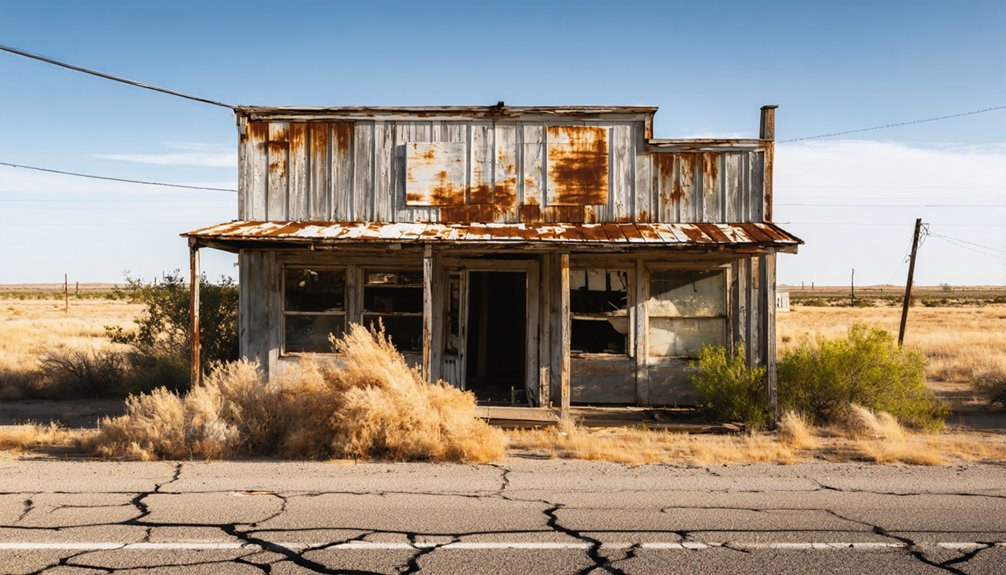
When you roll into Justiceburg today, you’ll find a scatter of abandoned buildings that make the town’s ghost-town reputation easy to believe. The old railroad depot still stands as one of the most striking remnants, a direct link to the 1911 rail arrival that put Justiceburg on the map.
Walk the grounds and you’ll see structures frozen in time, some still holding personal effects left behind by people who simply moved on.
Abandoned Buildings Still Standing
Though much of Justiceburg has faded with time, a handful of abandoned structures still stand along U.S. Highway 84, rewarding curious travelers with raw, unfiltered history. Abandoned architecture rarely tells a story this honestly.
Here’s what you can still spot:
- The old schoolhouse – a quiet reminder of when families put down roots here
- The railroad depot – once the town’s economic heartbeat, now silent
- Abandoned homes – some still containing personal effects left behind
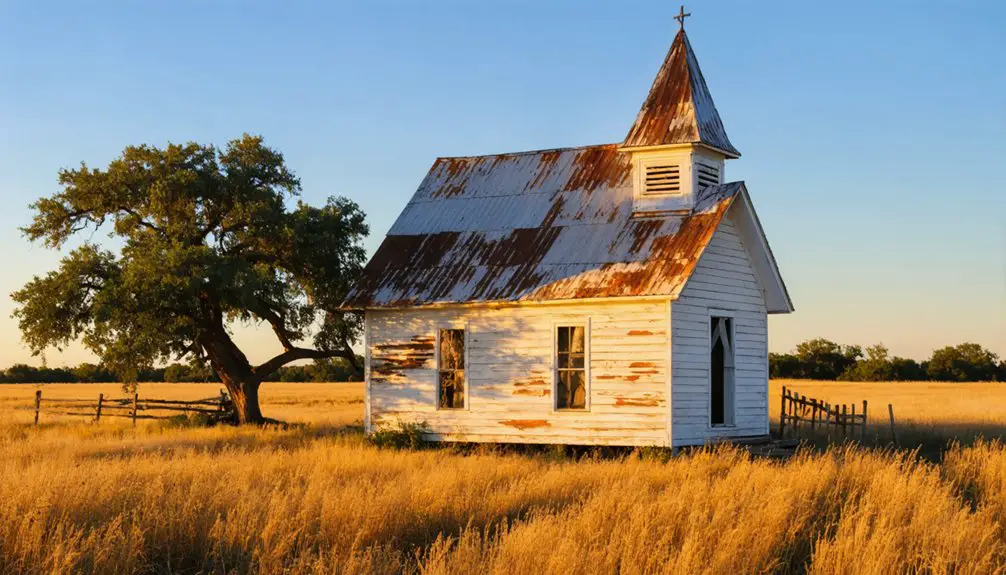
- A church standing east of the highway – separated from the main cluster of buildings
These remnants carry real historic preservation value. You won’t find polished museum displays here — just weathered wood, crumbling walls, and the kind of stillness that makes West Texas ghost towns worth seeking out.
The Railroad Depot Remains
Once the economic heartbeat of Justiceburg, the old railroad depot now stands as one of the most compelling stops along U.S. Highway 84. When the railroad arrived in 1911, this depot connected a remote West Texas community to the broader world.
Today, it sits abandoned, quietly collecting local legends about the ranchers, merchants, and travelers who once passed through its doors.
You’ll notice the structure’s weathered bones still holding their shape against the open sky — a testament to rugged construction and fortunate neglect. Historic preservation efforts haven’t reached Justiceburg in any formal way, which ironically keeps the place raw and authentic.
For travelers chasing genuine ghost-town experiences, that unpolished reality is exactly the proof. Walk the grounds, take your photos, and let the silence do the storytelling.
When to Visit Justiceburg for the Best Weather and Light
Spring and fall are your best bets for visiting Justiceburg, when mild temperatures and lower winds make wandering the abandoned streets far more comfortable than the punishing West Texas summer heat. Golden-hour light in October bathes the crumbling structures beautifully, while spring brings local flora to life against the rugged Double Mountain Fork Brazos River backdrop.
Plan your timing around these four considerations:
- Spring (March–May) – Wildflowers bloom, temperatures stay mild, and morning light is soft and golden.
- Fall (September–November) – Cooler air, rich warm light, and sparse crowds make exploration easy.
- Winter – Cold and windy, but dramatic skies reward patient photographers.
- Summer – Avoid midday heat; arrive early or near sunset for tolerable conditions.
How to Plan a West Texas Ghost Town Day Trip Around Justiceburg
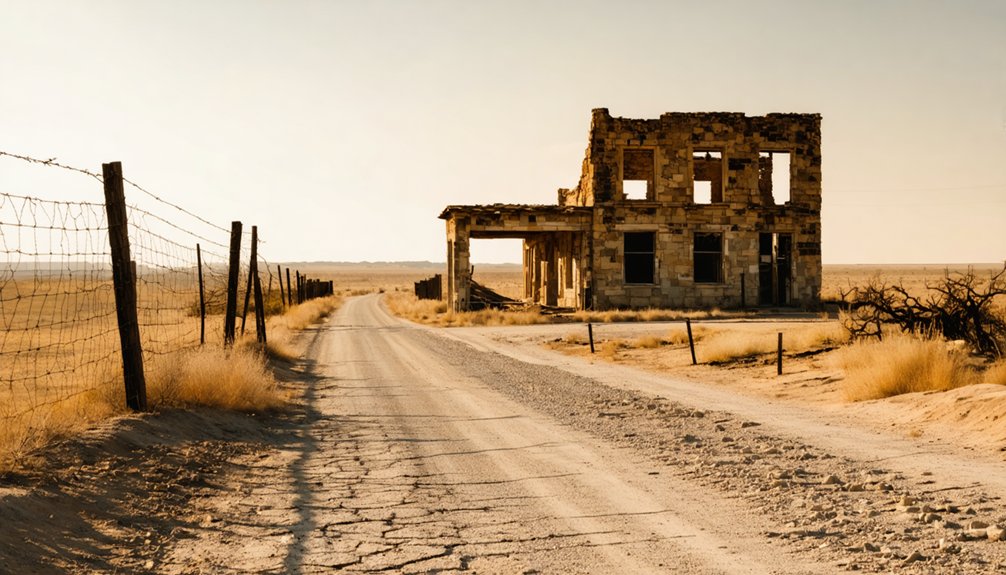
Justiceburg works best as one stop on a broader West Texas loop rather than a standalone destination, so building a day trip around it means stringing together the right highway miles and nearby points of interest.
Start in Post, grab local dining at one of its small-town cafes, then head southeast on U.S. 84 toward Justiceburg.
Walk the abandoned structures, take in the Double Mountain Fork Brazos River setting, and photograph the old depot and schoolhouse.
From there, push toward Lake Alan Henry for outdoor activities like fishing or hiking before looping back through Slaton or Lubbock.
The drive itself rewards you with open plains, raw sky, and genuine West Texas solitude — exactly what a road trip built around freedom should deliver.
Before You Go: Safety at Abandoned Sites
Ghost town structures have stood without maintenance for decades. Floors, stairs and roof timbers fail without warning, and a building that looks solid from outside may not hold your weight. Stay out of standing structures unless the site is actively maintained and open to visitors.
Mine workings are the more serious hazard. Vertical shafts can be hundreds of feet deep, are often unfenced, and may be hidden by brush or capped with rotted boards. Never enter an adit, tunnel or shaft: abandoned workings can hold oxygen-poor or toxic air that gives no warning before you lose consciousness.
Enclosed spaces with rodent droppings carry a risk of hantavirus, which is contracted by breathing contaminated dust. Do not sweep or stir up dust inside old cabins and outbuildings.
Cell coverage at these sites is usually poor or absent. Tell someone your route and expected return time, and carry more water than you think you need.
Frequently Asked Questions
What Was Justiceburg Called Before It Was Renamed?
You’ll find that Justiceburg was originally called LeForrest! This historical landmark’s earlier identity ran a post office from 1902 to 1905, making it one of the area’s most fascinating tourist attractions to explore freely.
Who Was Jefferson Davis Justice, and Why Is He Significant?
You’ll find Jefferson Davis Justice was a rancher who carried Civil War-era heritage in his name. His historical significance? He donated land and railroad rights-of-way, literally building Justiceburg’s foundation and earning the town his legendary name.
Has Justiceburg’s Population Ever Exceeded 100 Residents?
While records vary, Justiceburg’s population trends have never crossed 100 residents. Census history confirms it’s stayed remarkably small — you’re visiting a true ghost town where solitude and wide-open West Texas freedom define the experience.
Is Justiceburg a Fully Abandoned Ghost Town Today?
Justiceburg isn’t fully abandoned—you’ll find a few residents still calling it home. Yet you can explore haunted attractions, crumbling buildings, and local legends that make this eerie West Texas community feel gloriously frozen in time.
Which Book Documents the History of Justiceburg, Texas?
You’ll uncover ghost town legends and historical landmarks in “More Ghost Towns of Texas” by T. Lindsay Baker, where Justiceburg’s fading story breathes freely through documented history, letting you explore its forgotten past on your own terms.
References
- https://en.wikipedia.org/wiki/Justiceburg
- https://www.texasescapes.com/TexasPanhandleTowns/Justiceburg-Texas.htm
- https://www.historictexas.net/city/justiceburg-texas
- https://kids.kiddle.co/Justiceburg
- https://allacrosstexas.com/texas-ghost-town.php?city=Justiceburg
- https://www.facebook.com/groups/1784294158550093/posts/4232941553685329/
- https://en.wikipedia.org/wiki/List_of_ghost_towns_in_Texas
- https://www.facebook.com/petechristykcbd/posts/texas-town-history-22-estacado-texas-not-the-high-school-estacado-is-now-a-ghost/867239558107031/
- https://justiceburgcommunitychurch.com/?page_id=66