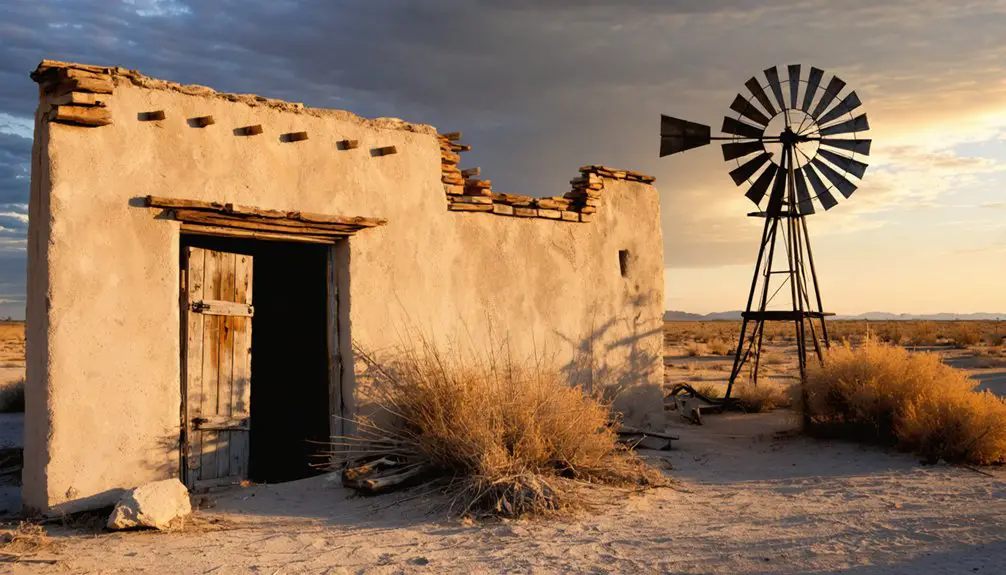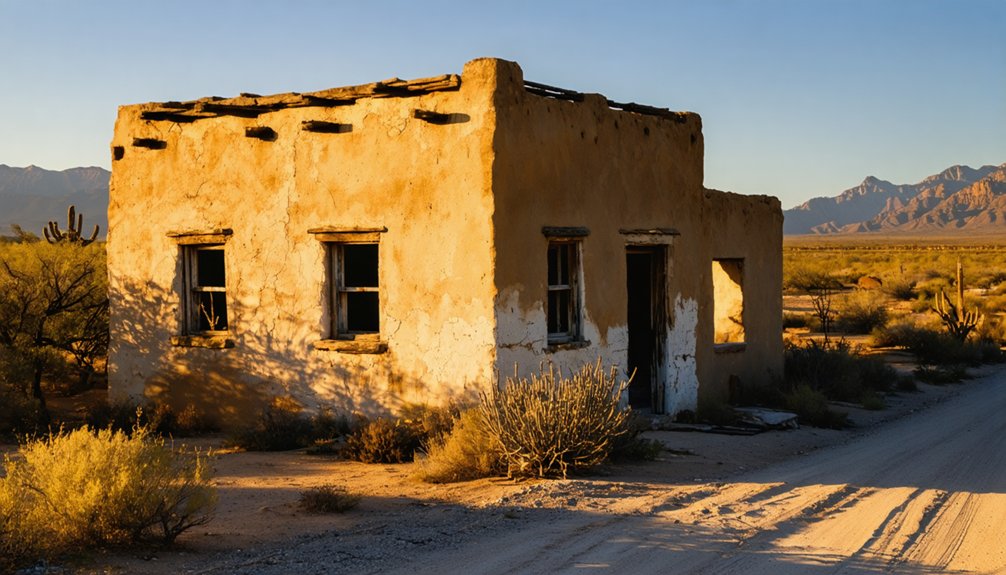
To plan your ghost town road trip to Castolon, Texas, head 35 miles inside Big Bend National Park along Ross Maxwell Scenic Drive. You’ll find a century-old trading post, weathered adobe walls, and former Army buildings that survived revolution, cotton’s collapse, and time itself. Visit in fall or spring for comfortable temperatures, combine it with Santa Elena Canyon nearby, and bring water and a full tank. There’s a lot more to this forgotten borderland community than first meets the eye.
Key Takeaways
- Castolon is 35 miles inside Big Bend National Park via Ross Maxwell Scenic Drive, accessible from Panther Junction Visitor Center.
- Bring a reliable vehicle, full fuel tank, and water, as the remote location offers no shortcuts or nearby services.
- Visit during fall or spring for moderate temperatures, fewer crowds, and the best scenic atmosphere.
- Combine your trip with Santa Elena Canyon, nearby volcanic formations, and historic ranches along Ross Maxwell Scenic Drive.
- Castolon’s surviving adobe structures, former Army buildings, and La Harmonia Store offer authentic glimpses into layered borderland history.
What Makes Castolon Worth a Ghost Town Road Trip?
Tucked deep inside Big Bend National Park along the Rio Grande, Castolon packs more history into its crumbling adobe walls than most ghost towns manage across entire counties. You’ll find layered cultural influences at every turn — Mexican Revolution refugees, U.S. Army soldiers, and frontier traders all left their marks here.
The site operated as a military encampment, a cotton trading hub, and a borderland community before the desert finally reclaimed its streets.
Local legends trace the town back to 1901, when early settlers farmed the Rio Grande floodplain and built lives far from any paved road. That raw isolation still defines Castolon today.
If you’re chasing authentic ghost town experiences without tourist gloss, Castolon delivers something rare — genuine frontier history on your own terms.
Castolon’s History: From Rio Grande Farm to Forgotten Border Town
When you visit Castolon, you’re walking through more than a century of layered history that began in 1901, when Cipriano Hernandez first farmed the Rio Grande floodplain and built the settlement’s original store.
The U.S. Army moved in around 1919, constructing Camp Santa Helena to patrol the border, but abandoned the post before troops ever made serious use of it.
The La Harmonia Company then claimed those empty military buildings in the early 1920s, transforming them into a trading hub that kept remote ranching families supplied until falling cotton prices and strict immigration enforcement slowly choked the town out of existence.
Rio Grande Farming Roots
Before Big Bend became a national park, Castolon was a working Rio Grande farming community with deep roots in the borderland soil. Cipriano Hernandez first settled the area around 1901, farming the fertile floodplain and establishing the original trading post. That agricultural heritage shaped everything that followed.
Refugees fleeing Mexico’s 1910 revolution brought their own farming knowledge and traditions, deepening the site’s cultural fusion. Hispanic, Mexican, and Anglo-American families worked the land side by side, trading goods and building a genuine borderland community.
Families like the Silvas put down roots here, turning raw river bottomland into productive cotton fields.
You’re looking at a place where survival meant cooperation, where the Rio Grande wasn’t just a boundary — it was a lifeline.
Military Presence And Decline
As border violence escalated after Mexico’s 1910 revolution, the U.S. Army established Camp Santa Helena at Castolon, constructing permanent buildings by 1920. However, by the time troops arrived, border conditions had already quieted, leaving the post largely unused. The Army soon withdrew, abandoning the structures they’d built.
That withdrawal actually opened the door for something remarkable. The La Harmonia Company moved into those empty military buildings in the early 1920s, transforming them into a thriving trading post. This changeover became a powerful example of cultural influence reshaping a space originally built for conflict.
Today, the site’s artistic preservation efforts honor that layered history, letting you walk through buildings that shifted from military outpost to frontier marketplace — a tribute to the resilience woven into this remote Texas borderland.
Border Town Commercial Era
How does a former military outpost transform into a thriving frontier marketplace? In Castolon’s case, the La Harmonia Company stepped in during the early 1920s, converting abandoned Army buildings into an essential trading hub. You can almost picture the energy of that era while exploring the grounds today between wildlife observation walks along the Rio Grande.
The company shaped daily borderland life through three key contributions:
- Supplying remote ranching communities like La Coyota and El Ojito
- Supporting cotton farming across the isolated floodplain
- Opening a post office in 1926, officially anchoring Castolon on Texas maps
Local cuisine, trade goods, and bicultural exchange defined this remarkable period. The store connected Hispanic, Mexican, and Anglo-American families across a rugged landscape that rewarded only the most independent spirits.
How the Mexican Revolution Changed Life Along the Rio Grande?
When the Mexican Revolution erupted in 1910, you can imagine the waves of refugees streaming across the Rio Grande and into remote border settlements like Castolon. Those families fleeing violence and instability didn’t just seek shelter — they actively reshaped the community’s culture, labor force, and daily rhythms.
The revolution fundamentally transformed Castolon from a quiet farming outpost into a bicultural borderland settlement with deep, lasting ties to both sides of the river.
Revolution Drives Border Refugees
The Mexican Revolution of 1910 didn’t just reshape politics south of the border — it reshuffled lives along the Rio Grande. Thousands fled violence, uncertainty, and upheaval, crossing into settlements like Castolon carrying their cultural influences and agricultural practices with them.
These refugees didn’t arrive empty-handed. They brought:
- Farming knowledge that strengthened Castolon’s cotton and subsistence agriculture
- Cultural traditions that wove Hispanic and Mexican identity into the community’s daily rhythm
- Labor that helped build and sustain a remote borderland economy
You can still feel that layered history when you walk Castolon’s dusty grounds. The people who fled revolution didn’t just survive — they helped shape a settlement that outlasted the chaos that created it.
Refugees Reshape Castolon’s Community
Castolon didn’t just absorb refugees — it was rebuilt by them. Families fleeing the Mexican Revolution crossed the Rio Grande and brought deep cultural influences that permanently changed daily life along this stretch of the border.
They introduced farming techniques, trade practices, and traditions that blended with existing Anglo-American settler culture, creating something distinctly bicultural.
You can still feel that layered history when you walk the grounds today. These weren’t passive arrivals — they were skilled, determined people who shaped Castolon’s identity and drove real economic shifts.
Cotton farming expanded, small trade networks strengthened, and the settlement evolved into a functioning frontier community.
Their contributions turned an isolated floodplain outpost into a place worth remembering, and worth visiting on your road trip through Big Bend.
Border Life After Revolution
After the Mexican Revolution reshaped the borderlands, life along the Rio Grande became something far more complicated than simple frontier survival. Refugees crossed over carrying cultural influences, farming knowledge, and deep survival instincts that permanently changed Castolon’s identity.
You’ll notice this transformation through three defining shifts:
- Agricultural practices evolved as displaced Mexican farmers introduced crops and techniques suited to the harsh floodplain environment.
- Bicultural community bonds formed between Hispanic, Mexican, and Anglo-American settlers sharing limited resources.
- Trade networks expanded, connecting isolated settlements like La Coyota and El Ojito to Castolon’s growing trading post.
This wasn’t just survival — it was community-building under pressure. The Rio Grande stopped being just a boundary and became a lifeline connecting two worlds into one resilient borderland culture.
The Military Buildings That Outlasted the Army
When the U.S. Army constructed Camp Santa Helena starting in 1919, they built permanent structures meant to anchor a long-term border patrol presence. By 1920, the buildings stood complete — but the border had already quieted. Troops never fully occupied the post, and the Army withdrew, leaving behind military relics that would serve an entirely different purpose.
Rather than crumbling into the desert, these abandoned structures got a second life. In the early 1920s, the La Harmonia Company moved in, converting the former military buildings into a working trading post.
What soldiers never truly used, frontier merchants transformed into a crucial supply hub for remote ranching families.
Walking through Castolon today, you’re stepping through layers of history that the Army’s construction accidentally preserved.
What Happened to Castolon’s People and Why They Left?
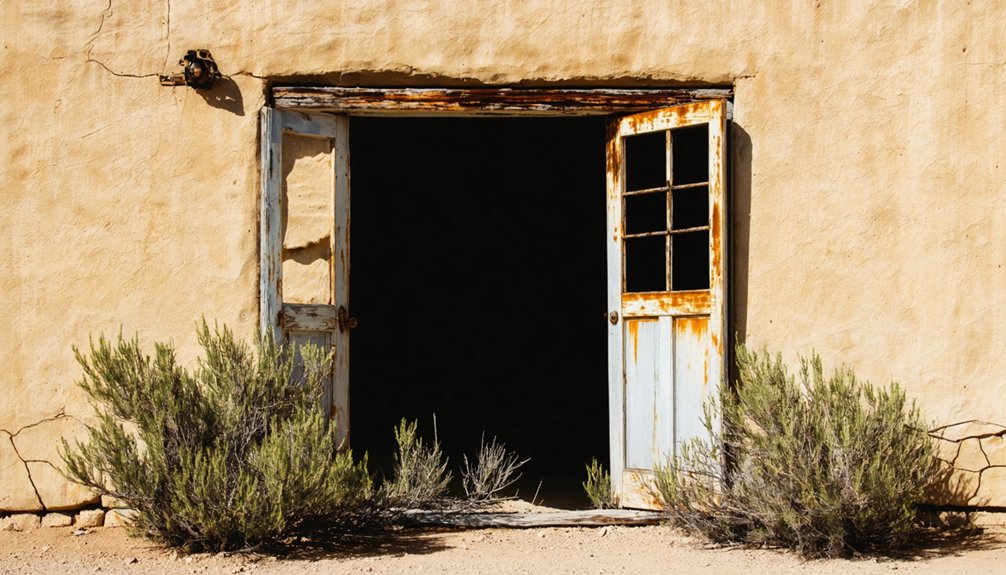
The community that once thrived around Castolon’s trading post didn’t vanish overnight — it eroded slowly under two compounding pressures: collapsing cotton prices and tightening immigration enforcement. The cultural influences that built this bicultural borderland couldn’t shield residents from economic decline.
By the 1930s, only 25 people remained. Here’s what drove them out:
- Falling cotton prices eliminated the region’s primary income source.
- Stricter immigration enforcement pushed Hispanic and Mexican families to leave, fearing deportation.
- Geographic isolation made survival without steady trade nearly impossible.
The post office closed in 1954, confirming what everyone already knew — Castolon was emptying. La Harmonia Company held on until 1961 before selling to the National Park Service.
Freedom had once drawn people here; circumstances ultimately took it away.
The 2019 Fire and What Survived at Castolon
When you visit Castolon today, you’re seeing a place still recovering from a devastating 2019 fire that heavily damaged the historic store and visitor center. The blaze tore through structures that had stood for over a century, erasing irreplaceable pieces of the borderland’s pioneer and military past.
Yet several buildings survived, and you can still walk among them to piece together the layered history that makes Castolon one of Big Bend’s most compelling stops.
Fire’s Destruction And Impact
A devastating fire tore through Castolon in 2019, heavily damaging the historic store and visitor center that had stood as the heart of the community for over a century. The blaze struck one of Big Bend’s most significant cultural preservation sites, threatening irreplaceable historical artifacts and the stories they carried.
The fire’s impact left visible scars across three critical areas:
- The main store structure suffered severe interior damage, gutting decades of borderland history.
- The visitor center lost key displays showcasing the region’s pioneer and military past.
- Surrounding historic structures faced smoke and heat damage, complicating restoration efforts.
When you visit today, you’ll witness both the resilience of what survived and the sobering reality of what fire can erase from a community’s irreplaceable legacy.
Structures That Survived
Despite the fire’s destruction, several historic structures still stand at Castolon, offering you a direct connection to the settlement’s layered past. These architectural remnants span multiple eras, from early farming and ranching to military occupation and frontier commerce.
You can walk among adobe and frame buildings that reflect the cultural influences of Hispanic, Mexican, and Anglo-American communities who shaped this borderland settlement. The former military structures built around 1919 and 1920 remain visible, giving you a rare look at a short-lived Army presence along the Rio Grande.
Each surviving wall and roofline tells a story that no museum exhibit can replicate. Exploring these structures puts you face-to-face with the real, unfiltered history of a remote Texas border community.
What to See at the Castolon Historic District Today
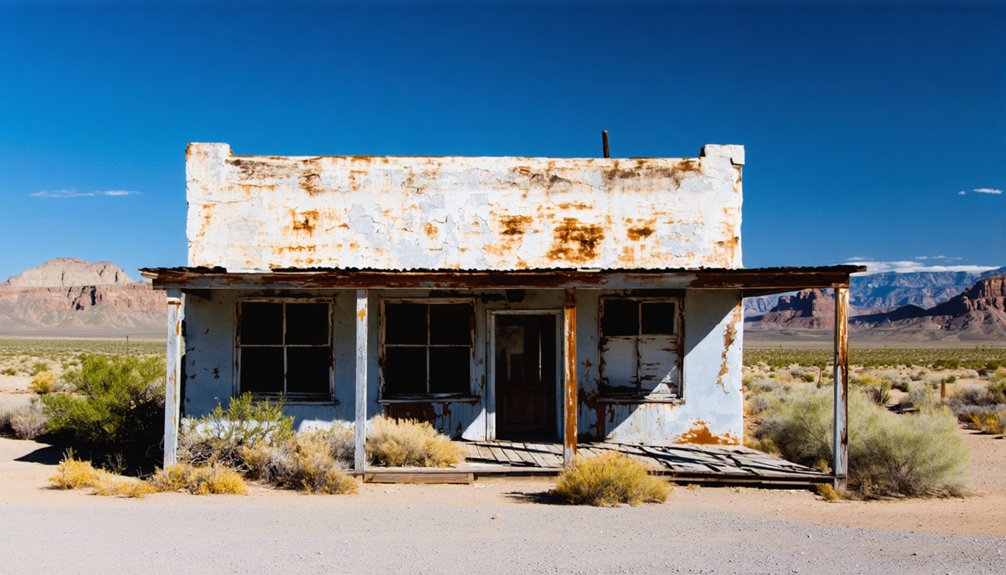
Though much of Castolon’s working life has faded, the historic district inside Big Bend National Park still holds a compelling collection of surviving structures that tell the story of a borderland community. Walking through it, you’ll encounter cultural traditions and artistic expressions embedded in adobe walls and weathered timber.
Castolon’s adobe walls and weathered timber quietly preserve the cultural soul of a vanishing borderland community.
Here’s what deserves your attention:
- The La Harmonia Store – A former trading post reflecting frontier commerce and bicultural exchange.
- Former Army Buildings – Constructed around 1919–1920, these structures reveal the military’s brief but defining presence.
- The Floodplain Landscape – The Rio Grande setting frames everything, connecting you to the isolation early settlers navigated daily.
Ranger programs occasionally enhance the experience, giving you deeper context for what you’re exploring.
How to Get to Castolon Inside Big Bend National Park
Reaching Castolon takes commitment — it sits deep inside Big Bend National Park, roughly 35 miles from the Panther Junction Visitor Center via Ross Maxwell Scenic Drive. That drive rewards you with sweeping desert views before delivering you to a preserved borderland community shaped by layered cultural influences and generations of frontier farming techniques.
You’ll need a reliable vehicle, a full tank, and water — services are extremely limited this far into the park. Stop at Panther Junction first to grab maps and check current road conditions.
The Rio Grande and Santa Elena Canyon frame Castolon’s western edge, so arriving with extra time lets you explore both the historic district and the dramatic landscape surrounding it. No shortcuts exist — but that isolation is exactly the point.
How to Build a Big Bend Road Trip Around Castolon and Santa Elena Canyon
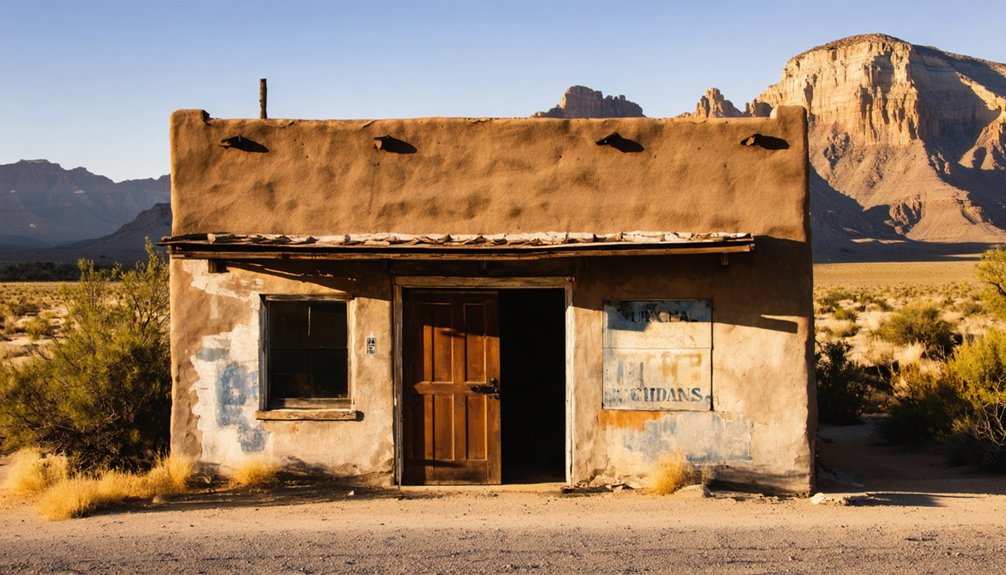
Once you’ve made the drive out to Castolon, it makes sense to build the rest of your Big Bend itinerary around what’s already nearby rather than backtracking unnecessarily. The southwestern corner of the park rewards explorers who plan deliberately.
Plan deliberately around Castolon — the southwestern corner rewards those who resist the urge to backtrack.
- Walk Santa Elena Canyon – The trailhead sits just minutes from Castolon, delivering dramatic limestone walls rising 1,500 feet above the Rio Grande.
- Cross into Boquillas, Mexico – Sample local cuisine and browse artisan crafts at this small border village accessible by rowboat ferry.
- Drive the Ross Maxwell Scenic Drive – This paved route connects Castolon to volcanic formations, historic ranches, and sweeping desert views.
Anchoring your road trip around this corridor keeps your miles efficient while maximizing everything Big Bend’s borderland landscape genuinely offers.
When to Visit Castolon for the Best Experience
Timing your visit to Castolon makes a genuine difference in how much you enjoy the experience. Fall and spring offer the most comfortable temperatures, letting you explore the historic district, hike toward Santa Elena Canyon, and linger without brutal heat cutting your day short.
Winters stay mild and crowd levels drop, giving you genuine breathing room at the river’s edge. Avoid summer if you can — triple-digit heat turns the floodplain into an endurance test.
Spring occasionally aligns with cultural festivals in the broader Big Bend region, where local cuisine and borderland traditions come alive along both sides of the Rio Grande.
Whatever season you choose, arrive early in the day. The desert light at dawn over Castolon’s weathered adobe walls is something you won’t forget.
Frequently Asked Questions
Is There an Entrance Fee to Visit Big Bend National Park?
Yes, you’ll pay an entrance fee to explore Big Bend’s stunning historical landmarks and incredible wildlife viewing opportunities. The fee grants you freedom to roam this vast, untamed landscape at your own adventurous pace.
Are Pets Allowed on Trails Near Castolon?
Like a leash keeping you close to adventure, pet safety rules restrict your freedom here — trail regulations in Big Bend limit pets to roads and campgrounds, so you’ll want to leave them behind near Castolon’s trails.
Is There Camping Available Near Castolon Inside Big Bend?
You’ll find camping options near Castolon inside Big Bend National Park! Cottonwood Campground sits close by, offering a rugged, freeing experience. Remember pet restrictions apply, so keep your furry companions leashed and off most trails.
Are There Food or Water Facilities Available at Castolon Today?
Despite its remote feel, you’ll find essential Castolon amenities waiting for you. Visitor facilities once included a store, but a 2019 fire caused damage — so pack extra food and water before arriving.
Is Cell Phone Service Available Along the Road to Castolon?
Don’t count on cell service along the road to Castolon — signal coverage is extremely limited in Big Bend’s remote wilderness. You’ll want to download maps, notify someone of your plans, and embrace the liberating disconnect.
References
- https://en.wikipedia.org/wiki/Castolon
- https://www.tshaonline.org/handbook/entries/castolon-tx
- https://www.texasescapes.com/TexasGhostTowns/CastolonTexas/CastolonTexas.htm
- https://www.nps.gov/places/castolon-historic-district.htm
- http://www.texasescapes.com/TexasGhostTowns/CastolonTexas/CastolonTexas.htm
- https://www.forgottenfrontiers.com/big-bend-revealed/
- https://en.wikipedia.org/wiki/List_of_ghost_towns_in_Texas
- https://www.ghosttowns.com/states/tx/tx_ghst_twns_sect1345.doc
- https://greaterbigbend.wordpress.com/2017/01/18/letters-to-castolon/